A good vegan chicken salad needs soy strips that are tender when cold, short enough to bite cleanly and drained well enough to hold a creamy dressing. Prepare the protein completely before mixing it with vegan mayonnaise, celery and herbs; dressing cannot soften a dry center or compensate for excess preparation liquid.
The recipe below starts with dry strips and makes four modest servings, with some variation in yield depending on the ingredient and drainage. Choose the protein format first, then carry that choice through preparation, cutting and dressing.
Choose soy strands that are easy to bite in a salad
For a shredded-style filling, start with soy protein strands. Baichuan’s shredded soy protein strands for catering are a strand-shaped ingredient described as having a smooth mouthfeel and rapid water absorption. Their shape makes them a relevant starting point for this salad, but the final cold bite still depends on complete preparation and manageable lengths.
If you prefer more distinct pieces, the sliced soy protein steak ingredient offers a different starting shape. The supplier describes it as tender with meat-like elasticity. Prepare it fully, then cut it into strips or smaller bites for the filling. It is an ingredient, not ready-to-eat vegan chicken, and its suitability for this chilled recipe needs a small recipe-specific trial.
Both products combine soy ingredients with wheat gluten and wheat starch. They are not pure soy isolates or gluten-free choices. That formulation also means you should assess these specific blends after chilling instead of assuming they will behave like another brand’s soy curls. For the strip-based recipe here, strands are the more direct starting format; the steak option requires additional cutting.
Prepare and chill the protein before adding dressing
Use the following amounts as a starting recipe. Keep the dry protein at 80 g, but use its current package directions for preparation liquid, water temperature, hydration and any required cooking. Baichuan lists a hydration window of 60–65 minutes for both products above. Allow for that lead time separately from any required cooking, cooling and the optional resting time after dressing; it is not a complete preparation instruction.
| Ingredient | Starting amount | Purpose |
|---|---|---|
| Dry soy-protein strips | 80 g | Main salad texture |
| Water or vegan vegetable stock | As directed on the protein package | Hydration and preparation |
| Vegan mayonnaise | ⅓ cup, plus more if needed | Creamy coating |
| Celery, finely diced | ½ cup | Crunch |
| Scallion, finely sliced | 2 tablespoons | Fresh onion flavor |
| Lemon juice | 1 tablespoon | Acidity |
| Dijon mustard | 1 teaspoon | Tang |
| Onion powder and dried thyme | ¼ teaspoon each | Savory seasoning |
| Fresh dill or parsley, chopped | 1 tablespoon | Herbal finish |
| Black pepper and salt | To taste | Final seasoning |
- Wash your hands, utensils and work surfaces. Rinse the celery, scallion and fresh herbs under running water before cutting.
- Prepare the strips with water or vegan vegetable stock, following all package hydration and cooking instructions. Cut a thick piece open to check that it is hydrated through, without a hard, dry center. This texture check does not replace required cooking.
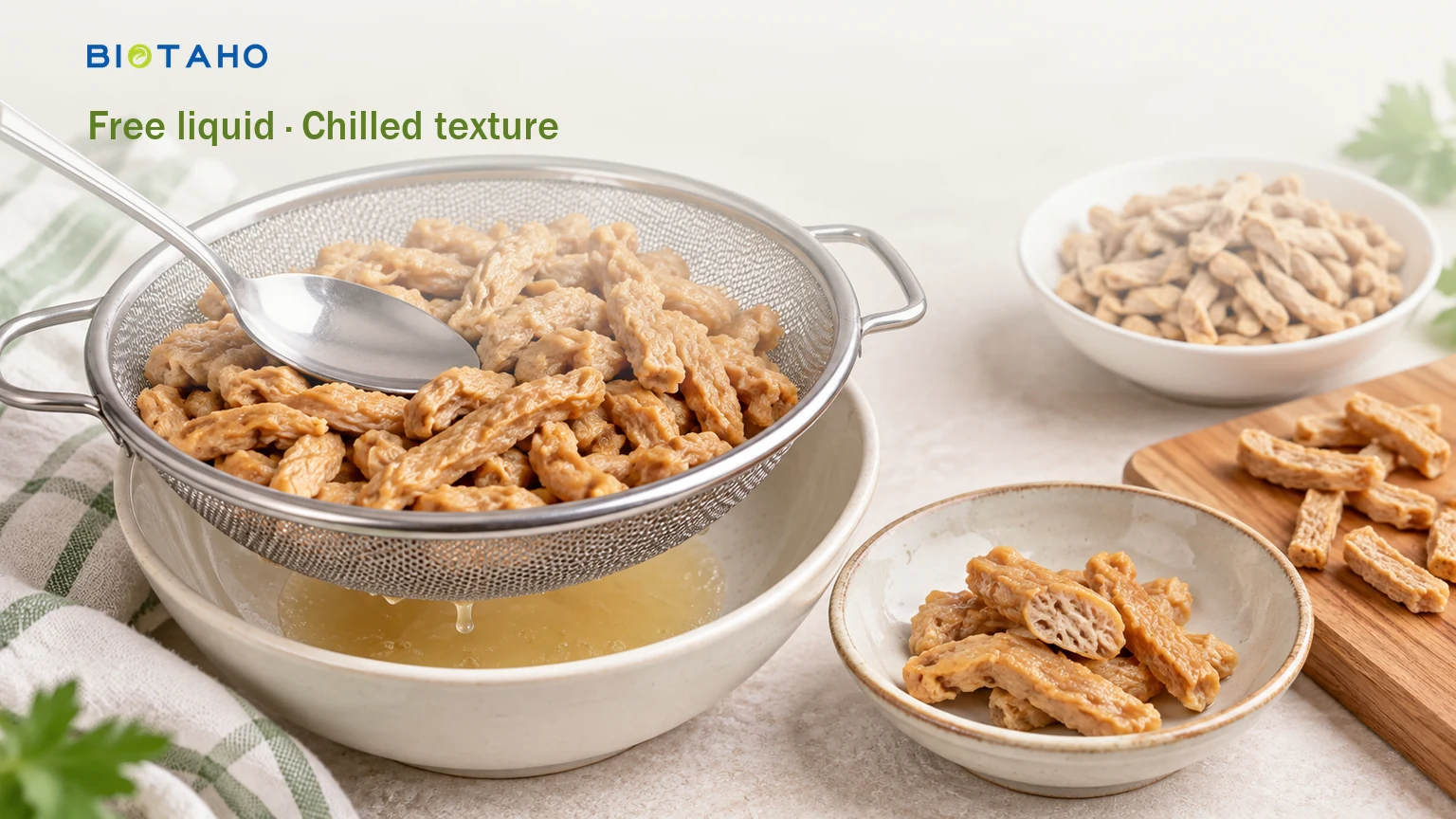
- Drain in a sieve. Once the strips are cool enough to handle, press gently with a clean utensil to release free liquid. Leave the pieces moist and flexible; do not wring them tightly.
- Cut into roughly 2–3 cm lengths. Toss with the onion powder and thyme, then transfer to a shallow container and refrigerate promptly. Do not leave the batch on the counter to cool completely.
Before dressing the whole batch, taste a chilled piece. It should be tender but distinct, without a firm, dry center. Check the container for liquid released during cooling and drain that away. Drainage and cold texture need separate checks: a well-drained strip still needs to be tender enough to enjoy in a chilled filling.
For repeat batches, record the dry weight, preparation liquid, hydration or cooking time and drained weight. These observations help you reproduce a useful result without assuming that equal dry volumes of different formats will produce equal amounts of salad.
Cut the strands to suit a sandwich or a bowl
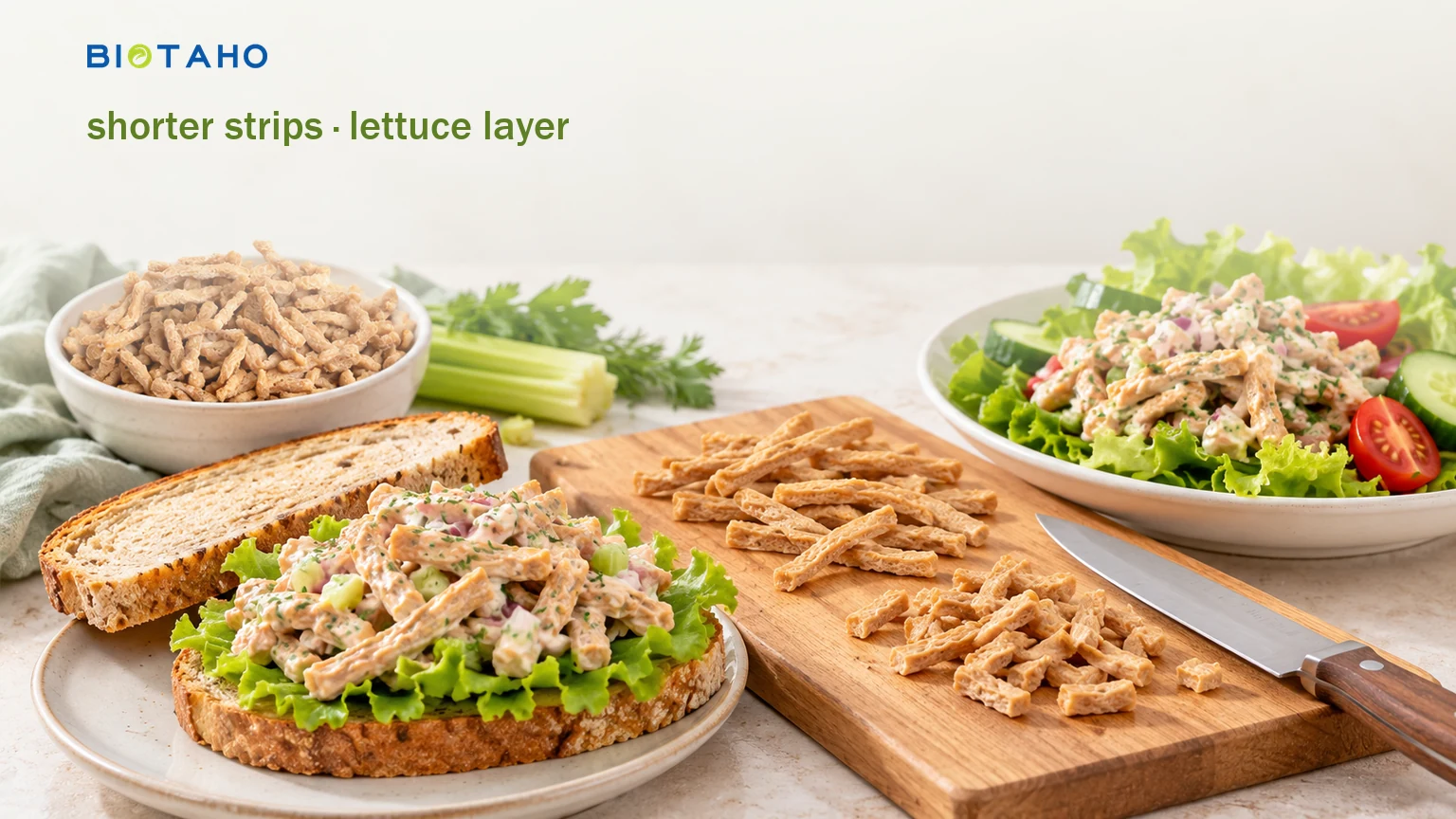
The initial 2–3 cm cut keeps the batch manageable while it chills. Now check whether those pieces suit the way you plan to serve it. For a sandwich, shorten any strands that would bridge several bites or pull neighboring pieces out of the bread. Cut prepared steak pieces to a similarly manageable size, keeping their thickness in mind as well as their length.
A bowl served with a fork can accommodate more distinct strips, provided they are tender and easy to pick up. Keep the same basic mixture for either serving style; the useful adjustment is the cut, not a different recipe. Avoid chopping so finely that the filling loses the separate pieces intended here.
For sandwiches, plan a lettuce layer and add the filling shortly before eating. For a salad plate, use dry greens with cucumber and tomatoes so surface water does not dilute the dressing. Shorter strips are easier to bite through, while the lettuce layer helps keep the filling away from the bread.
Add dressing gradually to the drained soy
With the pieces chilled, drained and cut to suit, stir together the recipe’s ⅓ cup vegan mayonnaise, 1 tablespoon lemon juice, 1 teaspoon Dijon mustard and pepper. Fold this dressing into the strips gradually, along with the celery, scallion and herbs, watching how much coating the prepared protein needs. Add salt only after tasting, especially if you prepared the strips in stock.
The target is a light, continuous coating without liquid pooling underneath. If the fully hydrated salad feels dry after folding, add a little more mayonnaise as allowed in the recipe. Do not use extra dressing to conceal a hard center. If convenient, refrigerate the mixed salad for about 30 minutes, then stir and taste again.
Moisture control matters particularly with textured soy protein: preparation adds water to the dry ingredient, and some free water may remain between pieces even after the surface looks drained. More mayonnaise can make a watery batch richer without fixing the drainage problem. Check for liquid before dressing, then assess coverage after mixing.
Use vegan mayonnaise, since conventional mayonnaise commonly contains egg, and check the stock and mustard ingredients too. Plain unsweetened plant-based yogurt, tofu mayonnaise or cashew mayonnaise can provide alternative dressings. Nora Cooks uses these options in a chickpea-based salad; they offer dressing ideas, not a prediction of how these soy blends will behave. Thickness and acidity vary, so introduce a substitute gradually and add lemon cautiously if it is already tart.
Keep the salad chilled and check its texture before serving
Once dressed, keep the salad refrigerated until serving. Stir gently before filling sandwiches or spooning it over greens, checking whether the coating still clings and whether liquid has collected underneath. Use the observations below to distinguish a dressing adjustment from a preparation issue.
| What you notice | Likely point to check | Practical response |
|---|---|---|
| A hard center in a chilled piece | Hydration and required cooking | Resolve during protein preparation, before dressing; extra mayonnaise will not hydrate the center. |
| Liquid beneath the salad | Drainage and moisture from vegetables | For the next batch, drain the protein thoroughly and use dry produce before mixing. |
| Pieces pulling out of bread | Strand length | Shorten the prepared pieces to make the filling easier to bite. |
| A dry coating on otherwise tender pieces | Dressing coverage after chilling | Fold in a little more vegan mayonnaise and taste again. |
Follow FDA guidance for perishables: refrigerate within two hours of preparation, or within one hour when the surrounding temperature is above 90°F, and keep the refrigerator at 40°F or below. Use shallow containers for prompt cooling and an insulated bag with cold packs for transport. Follow the prepared protein’s storage directions and any shorter directions on the dressing; the dry ingredient’s shelf life does not apply to the hydrated salad.
For a packed lunch, carry the filling separately from the bread and assemble shortly before eating. Check all labels for relevant allergens: the two protein ingredients discussed here contain soy and wheat, while bread and alternative dressings may introduce others. Keeping the cut, drainage and cold storage consistent makes the final serving check more useful from batch to batch.
Frequently asked questions
What can I use as a vegetarian substitute for chicken in a chicken salad?
Prepared soy strands or a soy steak ingredient cut into strips can provide distinct bites. For this recipe, choose strands first, prepare them completely and assess their texture cold before adding dressing.
What is vegan chicken salad made of?
This version combines prepared soy strips with celery, scallion, dill or parsley, and a vegan mayonnaise dressing. Lemon, Dijon mustard, onion powder, thyme and pepper provide its familiar savory, tangy flavor.
How to make 4 ingredient chicken salad?
A simplified vegan version can combine fully prepared, chilled soy strips, vegan mayonnaise, diced celery and lemon juice. Add the dressing gradually to taste. Water or stock required to prepare the dry protein is additional.
What can I put in my chicken salad besides mayonnaise?
Plain unsweetened plant-based yogurt, tofu mayonnaise or cashew mayonnaise are options. Their thickness and acidity differ, so expect a different coating and adjust gradually instead of assuming a direct match.
How to make soy chunks taste like chicken?
If the package permits, prepare them with vegan stock, then use onion powder, thyme, pepper and mustard for a chicken-salad-style flavor. Complete preparation and good drainage help those seasonings work without making soy taste identical to chicken.
Does TVP need to be refrigerated?
Store dry TVP according to its package. Once hydrated, treat it as perishable and refrigerate promptly. Keep the finished salad cold during storage and transport, following the ingredient labels.
References
- FDA: Safe Food Handling — produce washing, refrigeration temperatures, prompt chilling and shallow-container cooling.
- FDA: Food Allergies — major food allergens and reading ingredient labels.
- Nora Cooks: Vegan Chicken Salad — chickpea-based salad with dressing alternatives and serving ideas.
To trial strands or cut steak in your chilled filling, contact Baichuan for ingredient samples and current preparation guidance.