For pulao with soya chunks, prepare the soy separately, drain and squeeze it, then add it to the aromatics before cooking the rice in measured liquid. This keeps excess soaking water from turning fragrant, separate grains into a wet rice mixture.
The ingredient decision comes first. Choose chunks that make manageable bites among the rice, and allow enough preparation time for that particular product. The aim is moist, seasoned soy alongside tender basmati, with no stock pooling at the bottom of the pan.
Choose soya chunks that fit between the rice grains
Small soya chunks are easier to distribute through pulao than large pieces that dominate each forkful. Judge their size after hydration; if necessary, cut prepared larger pieces into manageable bites before seasoning. Shape alone does not tell you how quickly the center will hydrate.
Baichuan offers small cubed fibrous soy protein chunks for catering. Their small-chunk form makes them a relevant starting candidate for this rice application. Its cylindrical textured vegetable protein chunks have a tight fibrous structure and are listed chiefly for formed foods such as meatballs and sausages. For pulao, assess whether that form, once hydrated and cut if needed, gives the bite you want.
Both ingredients combine soy materials with wheat gluten and wheat starch; neither is a pure soy isolate or suitable for a gluten-free dish. Soy and wheat are major allergens, so check the actual product label along with the stock and accompaniments. These ingredients need recipe-specific trials before adopting them for a finished pulao.
The following amounts are a starting recipe for about three people as a main dish, depending on accompaniments. Use a covered, heavy-bottomed saucepan on the stovetop and, ideally, a basmati rice you already know. Current product directions govern soy hydration and cooking.
| Ingredient | Starting quantity |
|---|---|
| Basmati rice | 1 cup, about 200 g |
| Dry soya chunks | 40 g; hydration water separately, as directed |
| Oil or ghee | 2 tablespoons |
| Onion | 1 medium, thinly sliced |
| Ginger and garlic | 1 teaspoon each, finely grated |
| Vegetables | 1 cup total: small carrot dice and peas |
| Whole spices | ½ teaspoon cumin seeds, 2 green cardamom pods, 2 cloves, 1 small cinnamon piece |
| Optional heat | 1 slit green chilli |
| Water or vegetable stock | 1¾ cups initially; adjust for your rice |
| Salt and finish | ½ teaspoon salt initially, less with salted stock; 2 tablespoons chopped coriander; lemon wedges |
Hydrate the chunks and drain them before cooking rice
With the chunk form selected, plan its hydration before starting the saucepan. The catering cubes have a listed hydration window of 60–65 minutes, while the cylindrical chunks list 50–55 minutes. Allow that preparation lead time separately from the rice cooking time below. These windows do not specify a complete method: use the current directions for water quantity, temperature and any required cooking.
Rinse the basmati until the water becomes much less cloudy, soak for 20–30 minutes, then drain thoroughly. Schedule this toward the end of a longer soy preparation so the rice does not sit soaking throughout. Dassana’s vegetable pulao method also uses rinsed, soaked and drained rice, with liquid adjusted to the rice and vessel.
Prepare the chunks according to their directions, then drain and rinse if directed. Let them cool enough to handle before squeezing out excess water. They should remain moist and yielding without dripping. Cut open a larger piece to check for a firm, dry center; complete preparation before combining it with rice if one remains.
Keep the drained rice and prepared chunks in separate bowls, with the discarded water out of the recipe. This gives you a consistent starting point for measuring the rice liquid.
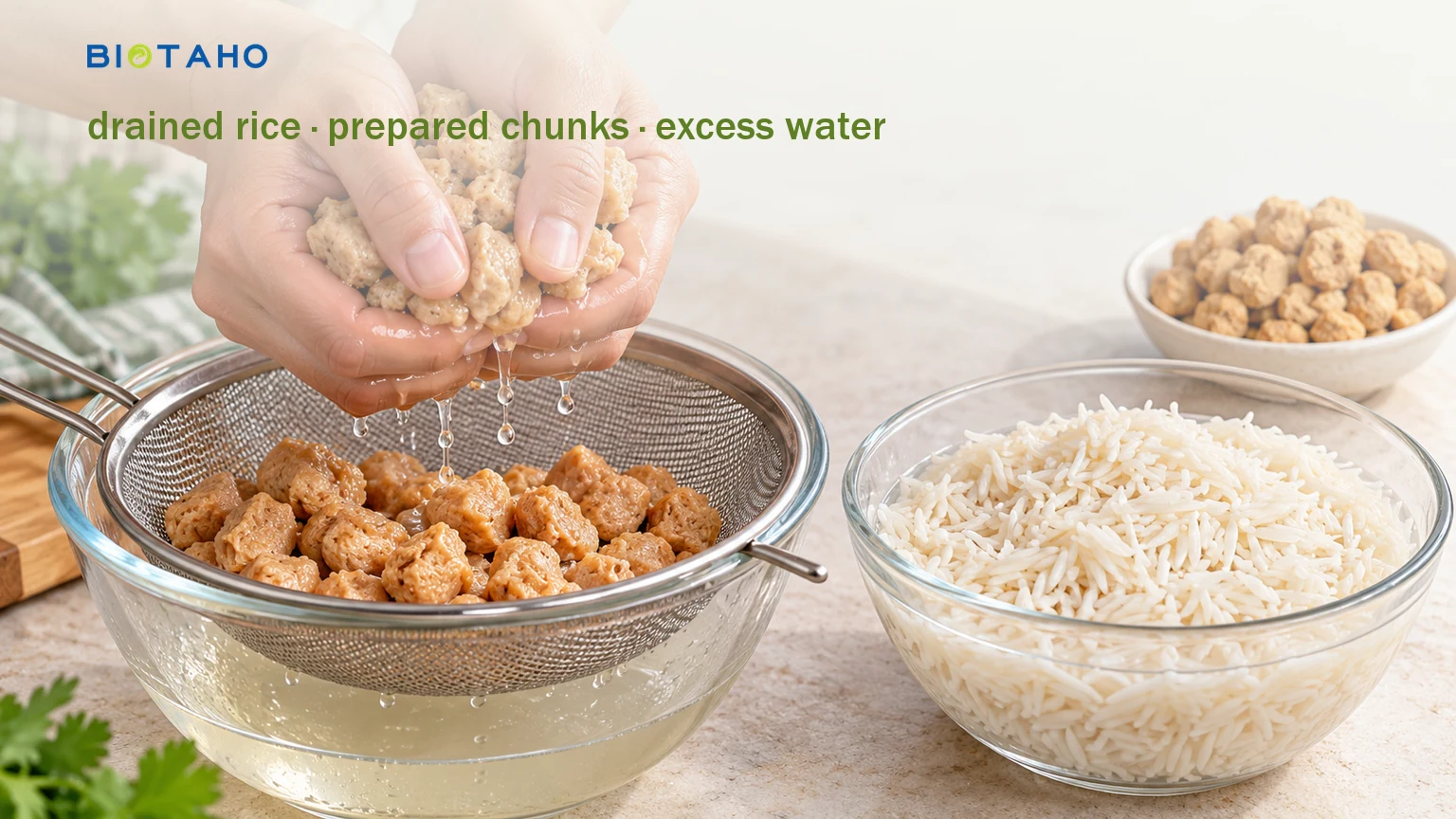
Dassana’s soya chunks curry provides a culinary example of boiling chunks for five minutes, then draining, rinsing and squeezing them. That timing belongs to that recipe, not to every fibrous soy ingredient.
Season the prepared soy with the pulao aromatics
Once the chunks are hydrated and squeezed, build the seasoning around them. A wet chunk carries extra water into the pan and dilutes the onion-spice coating; a properly drained one can be mixed through the aromatics without bringing a bowlful of soaking liquid along.
- Heat the recipe’s oil or ghee in the heavy-bottomed saucepan over medium-low heat. Add the cumin, cardamom, cloves and cinnamon, and cook briefly until fragrant without scorching them.
- Add the sliced onion and cook, stirring, until golden. Stir in the ginger, garlic and optional green chilli, and cook until their sharp raw aroma softens.
- Add the carrots, peas and prepared chunks. Stir for about two minutes so the onions, fat and spices coat the vegetables and soy evenly.
- Add the drained rice and fold gently for about one minute. Avoid vigorous stirring, which can break the soaked grains.
This stage gives the soy direct contact with the seasoning before the rice liquid is added. If chunks taste bland despite fragrant rice, improve this coating step in the next batch instead of immediately increasing all the spices.
The recipe leaves out tomato and coconut milk, which would change both its moisture balance and lightly spiced character. A separate wet marinade is unnecessary here; the onion-spice mixture seasons the prepared soy without adding another liquid to track.
Measure the rice liquid separately from hydration water
Now that the drained ingredients are coated, add the measured water or vegetable stock. The recipe starts with 1¾ cups for soaked, well-drained rice and hydrated, squeezed chunks. Do not add the discarded hydration water or treat the chunks’ dry weight as a reason to pour extra liquid into the rice pot.
- Pour in the measured water or stock and add the initial salt, using less with salted stock. Taste the liquid and adjust cautiously.
- Bring to a gentle simmer, cover tightly and reduce the heat to low.
- Begin checking around 12 minutes. Cooking may take roughly 12–18 minutes or longer, depending on the rice and pan. Look for absorbed liquid, tender grains without a hard center, and moist, pleasantly chewy chunks.
If your rice packet supplies a stovetop method specifically for soaked rice, use its liquid quantity as the starting point. Rice age, lid fit, heat and residual moisture in the chunks all affect the result. Pressure-cooker quantities do not transfer directly to an ordinary saucepan.
If the pan is dry but the rice remains firm, sprinkle in 2 tablespoons of hot water, cover and cook briefly, then reassess before adding more. If the rice is tender with liquid remaining, uncover briefly over low heat without repeatedly stirring. Neither adjustment should become an attempt to finish hydrating a dry soy center while the rice overcooks.
Rest the pulao before checking grain separation and soy texture
When the rice is cooked, turn off the heat and leave the pan covered for five minutes. Then fluff gently with a fork, scatter over the coriander and serve with lemon wedges. Remove visible whole spices as you portion the rice.
Assess the soya chunks pulao after this rest. The grains should be distinct, with no visible pool of liquid, and the soy should be moist without releasing excess water into the rice. Comparing grain separation and visible moisture helps decide whether a future batch needs less cooking liquid or more thorough drainage.
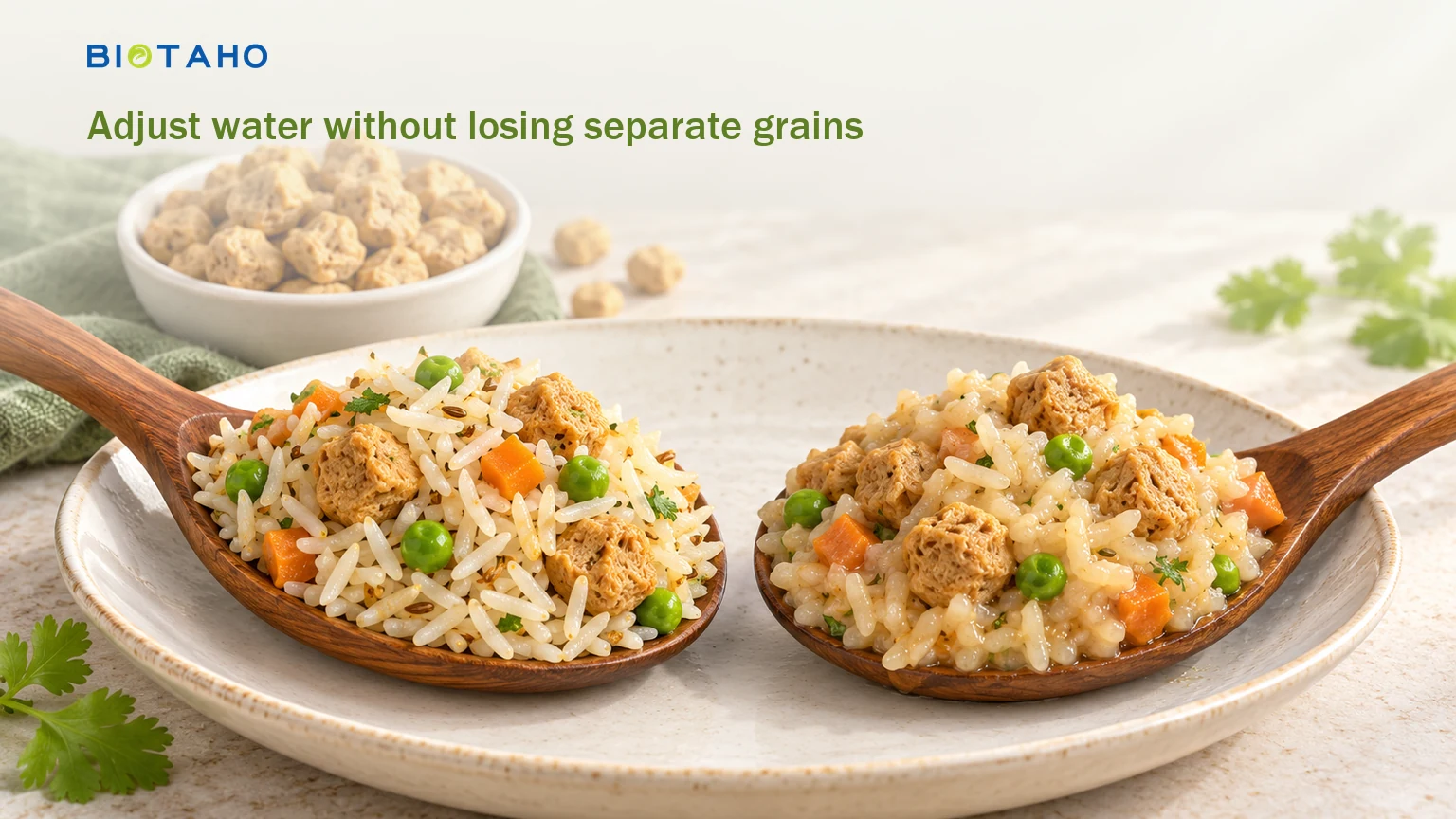
| What you notice | What to change next time |
|---|---|
| Soft rice with visible moisture | Drain both ingredients consistently and reduce measured liquid slightly if needed. |
| Wet or spongy chunks | Squeeze excess hydration water out more thoroughly before seasoning. |
| A firm, dry center in the soy | Complete the product’s hydration and preparation before adding it to the rice. |
| Bland soy beside fragrant rice | Coat the prepared chunks more evenly in the onion-spice mixture. |
Record the rice brand, dry chunk weight, measured liquid and final texture. Change one variable at a time so you can distinguish a drainage problem from a rice-water adjustment. Serve with cucumber raita or plain yogurt and a crisp salad; use oil and a dairy-free accompaniment for a vegan meal.
For leftovers, FDA guidance calls for prompt refrigeration in shallow containers within two hours, or within one hour when the temperature outside exceeds 90°F. Keep the refrigerator at 40°F or below and reheat leftovers to 165°F. Do not leave the covered saucepan on the counter to cool slowly; grain separation and soy tenderness are texture checks, not measures of food safety.
Frequently asked questions
How to use soya chunks for pulao?
Prepare them separately according to their directions, drain and squeeze, then coat them in the cooked onion and spices. Add the drained rice afterward, followed by measured cooking liquid.
Is soya chunks pulao healthy?
It combines rice, vegetables and a soy protein ingredient, but nutrition depends on the formulation, quantities and portion size. Use the actual labels to assess the textured soy protein you choose; dry-product nutrition cannot be transferred directly to an equal weight of hydrated chunks. Avoid ingredients containing your allergens.
Do I need to soak soya chunks before cooking?
They may require soaking, boiling or another specified preparation. Follow the product directions and finish this stage separately; a brief simmer with rice may not fully hydrate dry chunks.
What is the best way to cook soya chunks?
For this pulao, prepare them fully before assembly, squeeze out excess water and season them with the aromatics. This lets you manage soy hydration without extending cooking until the rice becomes too soft.
How to remove bad taste from soya chunks?
For an ordinary beany or soaking-water taste, drain and rinse if the directions allow, then squeeze before seasoning. Discard chunks with an unusual off odor or signs of spoilage; spices cannot make spoiled food usable.
What is the best way to marinate soya chunks?
Hydrate and squeeze them first so excess water does not dilute the seasoning. This pulao uses an onion-spice coating instead of a wet marinade. If you prepare marinated chunks ahead, keep them refrigerated.
References
- Dassana’s Veg Recipes: Vegetable Pulao — rice soaking, aromatic preparation and variable cooking-liquid requirements.
- Dassana’s Veg Recipes: Soya Chunks Curry — a recipe-specific example of boiling, rinsing and squeezing chunks before seasoning.
- FDA: Safe Food Handling — prompt chilling, shallow containers, refrigerator settings and leftover reheating.
- FDA: Food Allergies — soy and wheat allergen identification and label reading.
For ingredient development, contact Baichuan about chunk samples for pulao trials to compare prepared size, drainage and bite with your chosen rice.