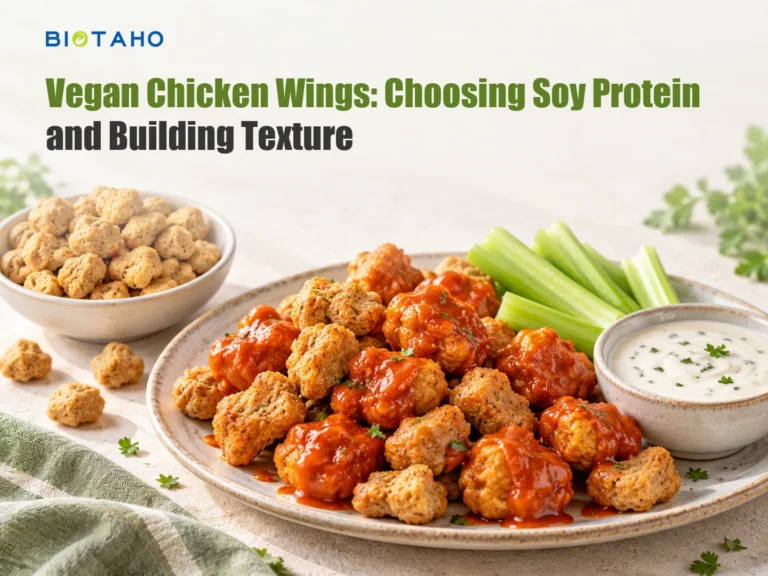
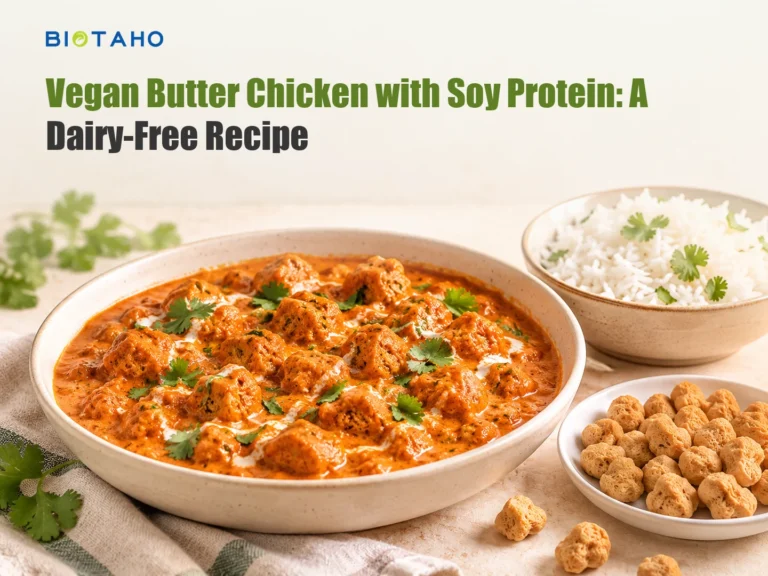
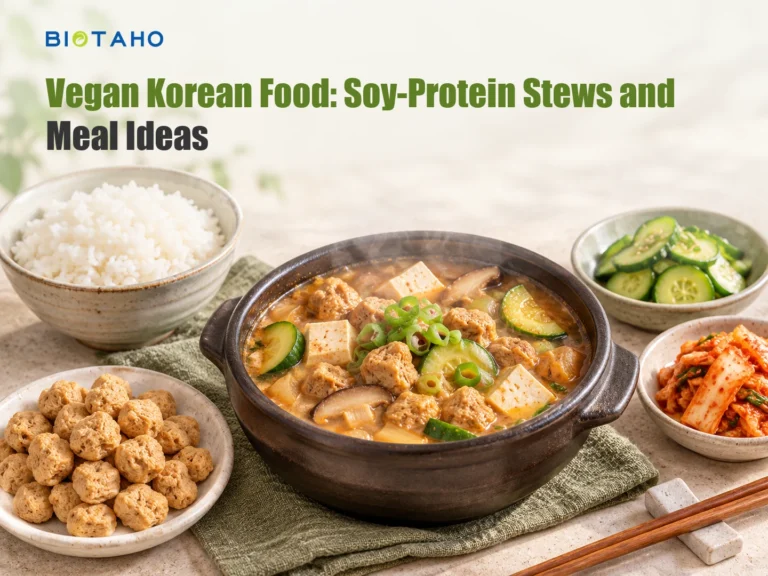
A vegan chicken recipe made with textured soy starts with fully hydrated pieces, a savory coating and controlled pan browning. It produces separate chicken-style bites for wraps, bowls or gravy dishes without kneading dough or adding a binder. The same base can serve different meals if you keep its seasoning mild and choose the final sauce or garnish afterward.
Start by choosing the shape you want to eat. Fibrous chunks suit distinct bites; strands suit a shredded or strip-like presentation. That decision also determines how you check hydration, drain the ingredient and arrange it in the pan.
Choose chunks or strands for the chicken-style dish
For the base recipe below, choose small or medium chunks of similar size. Baichuan’s cubed fibrous soy protein chunks for catering are listed as small chunks for catering and plant-based meat applications. Their cubed form makes them a relevant ingredient to trial when you want separate bites that can be turned individually during frying.
The company’s shredded soy protein strands offer a different starting shape for a pulled or narrow-strip dish. Keep strands loose when seasoning and cooking so you can assess their coating and moisture evenly. The chunk recipe is a starting point for development, not a tested formula for either supplier grade; current product directions govern preparation.
Both products combine soybean ingredients with wheat gluten and wheat starch. They are not pure soy isolates or gluten-free ingredients. Check the stock and sauce labels too, especially when preparing food for someone avoiding soy or wheat.
These are ingredients, not ready-made chicken. Hydrating them does not turn loose pieces into a cutlet or roast. This method works with their existing form and keeps the pieces separate throughout.
Hydrate the center before adding the seasoning
Once you have chosen the form, plan enough preparation time. Baichuan lists a hydration window of 60–65 minutes for both grades. Allow for that separately from the recipe’s refrigerated seasoning rest and pan-cooking time. The window alone does not specify a water ratio or temperature; use the current directions for the ingredient you have.
The recipe table’s 750 ml of water, or package-directed amount, is hydration water that is drained afterward, not a guaranteed absorption ratio. Use a saucepan large enough for expansion if your directions call for heating. Boil only when instructed. Dassana’s soya-chunk curry uses a five-minute boil followed by rinsing and squeezing, but that is a preparation method for that recipe’s chunks, not a shortcut for every fibrous grade.
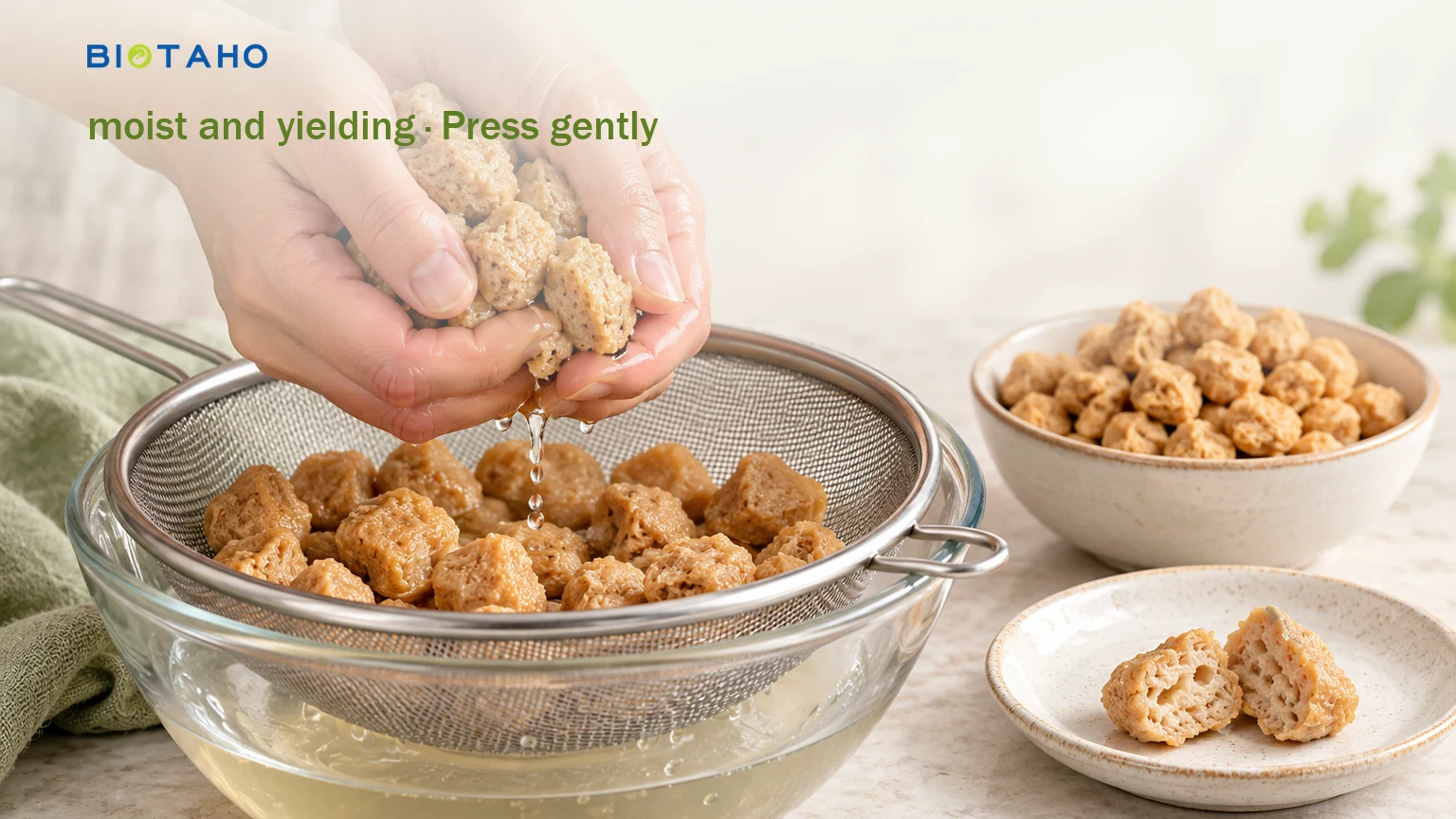
Check one of the largest pieces before adding seasoning. Cut it open and look for a center that is moist and yielding, with no firm, dry core. Continue hydration as directed if the center remains hard. For strands, check the thicker portions as well as the thin ends.
Drain, rinse if directed, and let the soy cool enough to handle. Press gently in a sieve or squeeze small handfuls until they stop dripping freely. Keep the textured soy protein supple instead of crushing it or wringing it completely dry. This removes the free water that would dilute the seasoning and keep the pan steaming.
Record the drained weight if you are developing a repeatable batch. The textured protein preparation guide provides further orientation on format-dependent preparation, but the useful benchmark here is your selected grade prepared consistently.
Build a savory base around the prepared soy
With the centers hydrated and excess water removed, add flavor in a small volume of liquid. The following base uses 100 g dry chunks and serves about two to three people with vegetables and a starch. Keep these quantities for the starting batch, then judge salt and moisture in the intended finished dish.
| Ingredient | Starting amount | Purpose |
|---|---|---|
| Dry soy chunks | 100 g | Separate, bite-sized pieces |
| Water for hydration | 750 ml, or package-directed amount | Soften; drain afterward |
| Vegan chicken-style or vegetable stock | 3 tablespoons, prepared | Savory seasoning liquid |
| Soy sauce | 2 teaspoons | Salt and savory depth |
| Nutritional yeast | 1 tablespoon | Rounded savory flavor |
| Onion powder and garlic powder | ½ teaspoon each | Aromatic base |
| Dried thyme or sage | ¼ teaspoon | Poultry-style herb note |
| Black pepper | ¼ teaspoon | Gentle warmth |
| Neutral oil | 1 tablespoon | Pan browning |
| Lemon juice | 1 teaspoon, optional | Finish after browning |
- Prepare the chunks using the hydration and draining process above. Follow the package’s soaking and cooking requirements, including any permitted boiling, rinsing or additional cooking.
- Even out the size. Leave small pieces whole and cut larger hydrated chunks into similar bites. Do not knead them or press them into one mass.
- Mix the prepared stock, soy sauce, nutritional yeast, onion and garlic powders, herbs and pepper. Toss thoroughly with the drained chunks. If the stock is very salty, start with half the soy sauce.
- Refrigerate the coated pieces for about 15 minutes, turning once. The coating should cling without leaving a deep puddle. If liquid collects, lift the pieces out with a spoon.
- Heat the oil in a wide frying pan over medium heat. Add the chunks in one layer with space between them. Brown in batches for roughly 6–10 minutes, turning as the undersides develop golden patches. Follow any additional package cooking requirements.
- Finish when the surfaces are lightly browned and the centers remain moist and chewy. For wraps or bowls, add the optional lemon juice off the heat. For a sauced dish, transfer the bites to the prepared sauce as described below.
The stock, onion, garlic and thyme or sage provide a familiar poultry-style flavor direction, while nutritional yeast rounds out the savory coating. Taste the finished base before adding more salt, particularly if it will go into soy-based dressing or a salty gravy. Keep stronger chili or curry seasoning for the finish when dividing one batch between dishes.
Choose a browned finish or a sauced finish
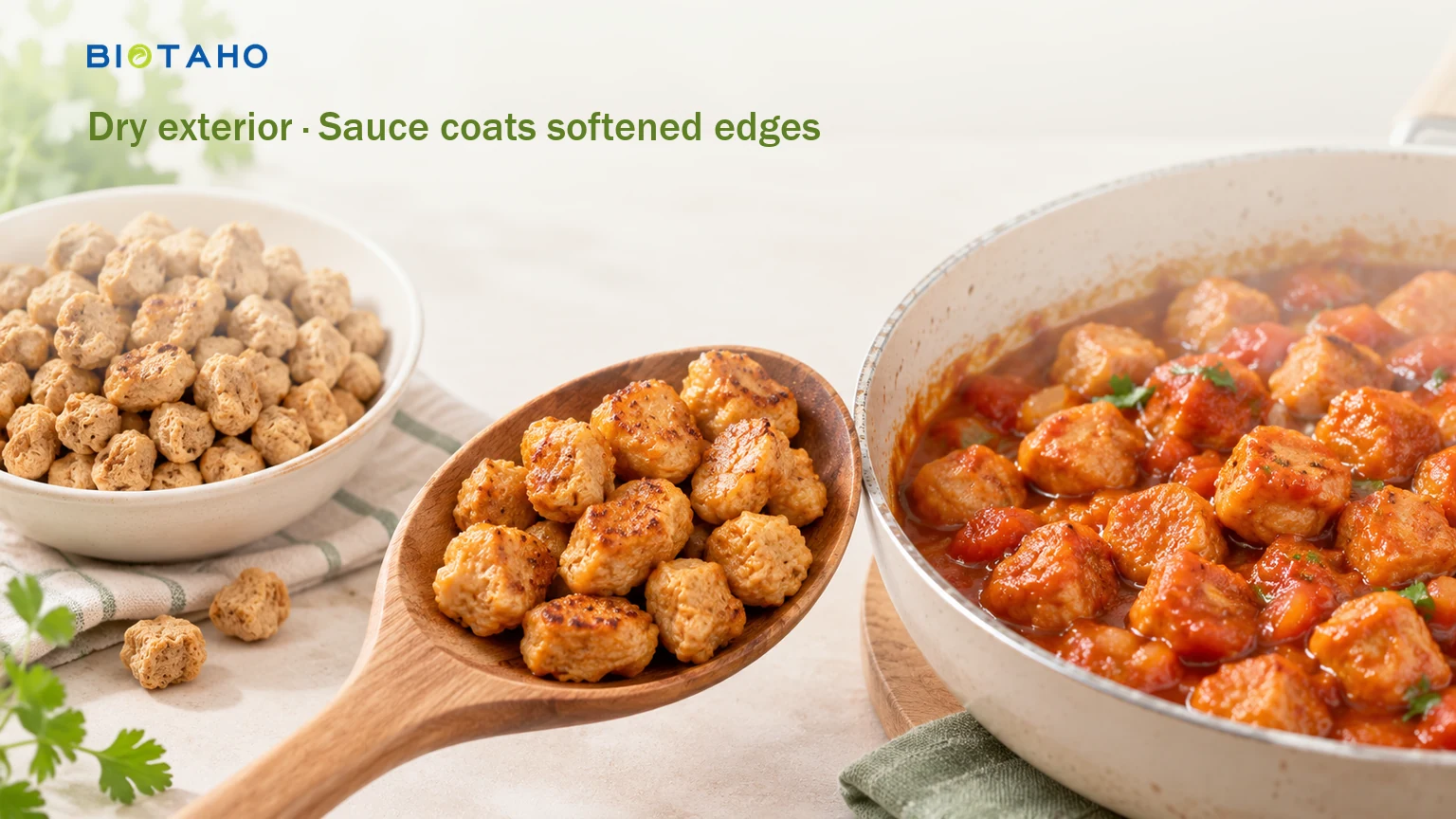
The browned base now has two useful paths. A dry exterior is worth preserving for a wrap or bowl, so serve it soon after pan cooking and add dressing at assembly. For gravy, accept that the sauce coats softened edges; the goal becomes a moist, coated bite, not a lasting crust.
| Finish | How to use the prepared base | Texture to look for |
|---|---|---|
| Wrap or grain bowl | Serve freshly pan-browned with vegetables and dressing. | Dry exterior with a moist center. |
| Stir-fry | Cook vegetables separately, then return the bites with sauce near the end. | A light glaze without submerging the pieces. |
| Tomato or mushroom gravy | Add the bites to prepared gravy and simmer gently for 3–5 minutes as a starting point. | Sauce coats and softens the edges. |
| Lightly crisp bites | Before pan-frying, toss seasoned, drained pieces with 1 tablespoon cornstarch. | A thin crust without loose dry starch. |
The cornstarch option changes the coating stage, so choose it before browning. It is not needed for the basic bites or gravy finish. Likewise, prepare the gravy separately before adding the soy; prolonged cooking to reduce a watery sauce also changes the texture of the pieces.
If the frying pan fills with liquid, use smaller batches and drain more thoroughly next time. If the bites become dry, shorten the browning stage and finish with a little sauce. A persistent hard center points back to incomplete hydration and will not be corrected by adding more oil.
Repeat the method with the same ingredient grade
Once you choose the finish, assess the soy protein chunks in that dish before changing the formula. Record the ingredient grade, dry and drained weights, hydration method, seasoning quantity, pan batch size and final finish. When comparing strands with chunks, keep the seasoning base consistent so the effect of shape and retained moisture is easier to judge.
For a later batch, use the same grade and preparation conditions first. If gravy softened the pieces more than you wanted, adjust the sauce contact time before changing every part of the recipe. If the dry finish was difficult to brown, review draining and pan crowding. A successful version with one ingredient does not establish the result for another grade.
Keep browning and softness as texture cues, not safety checks. Following FDA guidance, marinate in the refrigerator, refrigerate perishables within two hours—or one hour when the outside temperature exceeds 90°F—and divide larger batches into shallow containers. Keep the refrigerator at 40°F or below. Reheat leftovers to 165°F, and bring reheated sauces, soups and gravies to a boil.
Frequently asked questions
What is vegan chicken made of?
It can be made from textured soy, tofu, wheat gluten or other plant ingredients. This recipe uses hydrated soy chunks with stock and seasonings. The two fibrous supplier grades discussed here contain both soy and wheat ingredients.
What is an easy vegan chicken recipe?
Use the base above: hydrate and drain the chunks, coat with the measured savory mixture, refrigerate briefly and pan-brown. No shaping or binder is needed, although the ingredient’s hydration time must be planned separately.
How to make soy chunks taste like chicken?
Use vegan chicken-style stock with onion, garlic and thyme or sage. Drain the chunks first so excess water does not weaken that seasoning. The result is a chicken-style plant-based interpretation, not an identical replacement.
Do I need to boil soya chunks before cooking?
Only if the product directions call for or permit it. Some ingredients use soaking, while others require heating. Confirm that the centers have hydrated before seasoning and frying.
What is the best way to marinate soya chunks?
Coat hydrated, gently drained pieces with the concentrated seasoning mixture and refrigerate for about 15 minutes, turning once. Lift them out of pooled liquid before browning.
What can I make with plant-based chicken?
This separate-bite base suits wraps, bowls, stir-fries and gravy dishes. Choose strands for a shredded presentation. Nuggets, patties and molded cutlets need a different formulation to hold together.
References
- Dassana’s Veg Recipes — soya chunks curry: an example of boiling, draining and using soya chunks in gravy; its preparation is specific to that recipe.
- Nora Cooks — vegan chicken: a kneaded wheat-gluten recipe illustrating a different method from these loose soy bites.
- FDA — safe food handling: guidance on refrigerated marinating, cooling and reheating.
- FDA — food allergies: soy and wheat allergen identification and label reading.
To compare chunks and strands in your intended finish, contact Baichuan about ingredient samples and current preparation directions.