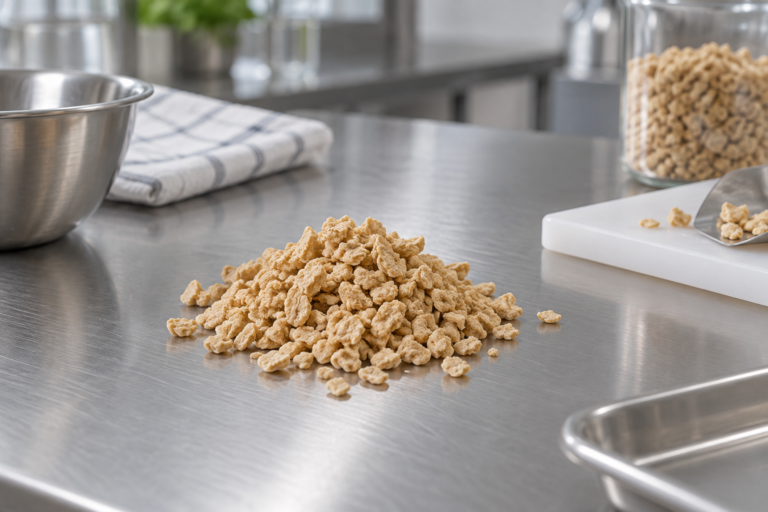
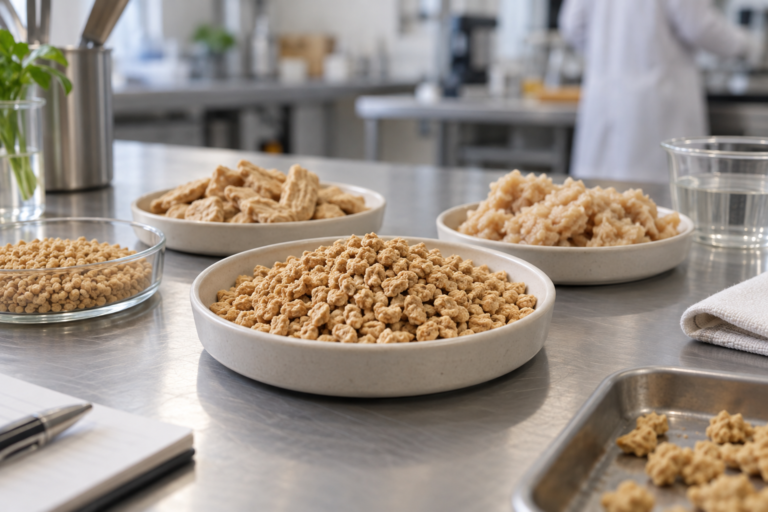
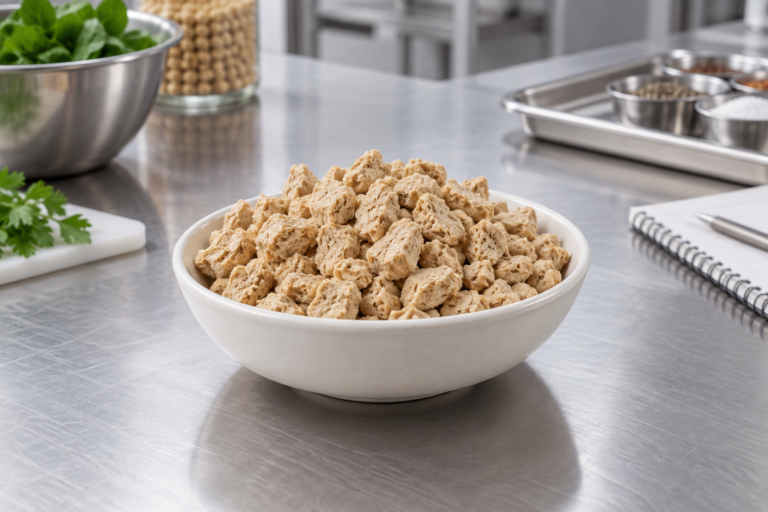
The outside of a soy chunk can feel soft while the center is still dry. That is why a timer alone is a poor way to decide whether a batch is ready. Use the packet instructions as your starting point, then cut open a larger piece before moving on to the recipe.
If you are learning how to cook soya chunks, treat preparation as three jobs: hydrate the center, remove unwanted loose water and finish the pieces in the dish. Changing the order or skipping the center check can leave a curry watery or a stir-fry chewy.
Should you soak or boil the chunks first?
Use the method specified for the product. Some dry chunks need simmering; others can be prepared by soaking in hot liquid. Fine granules, large chunks and fibrous pieces should not all receive the same treatment. Check the ingredient is suitable for the method the recipe suggests.
Measure a dry portion, prepare it in potable water or suitable broth, and note how long the center takes to hydrate. Follow any required cooking step on the pack even if the texture already seems soft. Softness does not establish that every food-safety instruction has been met.
What is the right TVP-to-water ratio?
There is no single TVP water ratio for all shapes. An absorption method, in which most liquid stays in the food, also differs from boiling in excess water and draining. Record whether your ratio uses grams or cups: a cup of water and a cup of dry chunks do not weigh the same.
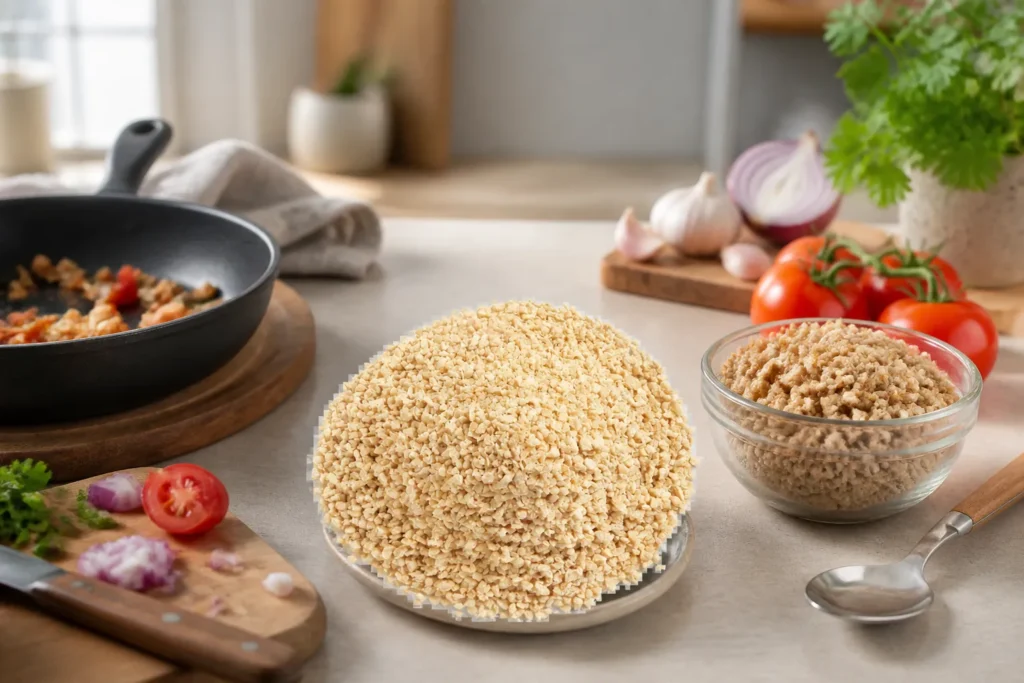
As a specific retail example, Bob’s Red Mill’s basic instructions use 1 cup of its fine TVP with 3/4 cup plus 2 tablespoons of boiling water or broth, followed by 5–10 minutes standing. This is that brand’s volume-based preparation for granules. It is not a Baichuan specification or a universal instruction for large chunks.
How do you know the center is ready?
Cut one of the largest pieces across its thickest part. A firm dry core means preparation is uneven. Continue according to the product instructions and check again. Do not judge the whole batch by a small piece that hydrates quickly.
If the outside starts breaking down before the center softens, check piece size, preparation method and product suitability rather than simply extending the same treatment indefinitely. Our guide to chunks that stay hard inside covers this problem separately.
When should you drain, press and add seasoning?
Drain after the specified preparation step. If the recipe needs a relatively dry filling or a browned surface, gently remove excess water without crushing the pieces. For a soup, some retained liquid may be part of the dish. Apply the same draining method when comparing batches.
Add a measured marinade or sauce after preparation, unless the product directions call for hydration in seasoned liquid. Taste the cooked result before adding extra salt. Broth, soy sauce and seasoning mixes can each contribute sodium. Textured soy protein needs flavor from the full recipe, including aromatics and fat where appropriate; a longer soak alone does not create a meat-like flavor.
How can you fix watery, rubbery or mushy pieces?
| Problem | Check first | Adjustment to try |
|---|---|---|
| Watery curry or filling | Loose liquid after draining | Standardize draining before adding sauce |
| Dry center | Largest piece cut open | Follow grade-specific hydration guidance |
| Pieces break apart | Cooking duration and stirring | Reduce unnecessary handling; review format |
| Persistent unpleasant odor | Package condition, date and storage | Discard suspect food; do not mask spoilage |
For an ordinary mild soy note in otherwise sound food, see the soy-chunk flavor guide. Smell reduction is not a treatment for spoiled ingredients.
How should dry and hydrated chunks be stored?
Keep dry stock as the manufacturer directs, sealed against moisture and away from contaminants. Shelf life comes from the label. Once water has been added, the dry-product storage instructions no longer apply.
FDA guidance says to refrigerate perishable food within two hours, or one hour when the temperature is above 90°F/32°C, and keep the refrigerator at 40°F/4°C or below. Cool in suitable small containers rather than leaving a deep warm batch out for hours. Follow any shorter manufacturer instructions. Plan the next meal before preparing more soy protein chunks than you need.
Frequently Asked Questions
Do I need to boil soya chunks before cooking?
Only if the product instructions require boiling. Some products use hot soaking, while others specify simmering and draining. Follow the particular packet rather than assuming every chunk needs the same pretreatment.
How do I cook dried soya chunks?
Measure a dry portion, hydrate or simmer as directed, cut a large piece open to check the center, then drain as the recipe needs. Finish in the intended sauce, curry or stir-fry and complete any specified cooking step.
How long do I cook soya chunks?
The required time depends on size, structure and the product’s instructions. There is no reliable single number for all chunks. Check the thickest piece and allow for the subsequent cooking in the dish.
How many minutes should I soak soya chunks?
Use the pack’s time as the starting point and check the center. The 5–10 minute example in this article applies to one brand of fine granules, not automatically to larger soya chunks.
Do boiling soya chunks remove protein?
Boiling does not make all the protein disappear. Some material may enter discarded liquid, and added water changes protein per 100 grams. Do not claim an exact nutrient loss without measurements for the product and method.
What is the ratio of TVP to water?
It depends on the grade and on whether liquid is absorbed or drained. State weight or volume units. Bob’s fine-granule example is 1 cup TVP to 3/4 cup plus 2 tablespoons liquid; use separate instructions for chunks.
What is the best way to marinate soya chunks?
Prepare the center first, drain consistently, then coat with the measured marinade and finish cooking. Follow the recipe’s temperature and storage directions. Marinating cannot make spoiled food safe.
How to remove bad taste from soya chunks?
Check that the ingredient is sound, prepare it fully, and try a brief rinse and gentle drain if compatible with its directions. Cook with aromatics and sauce. Discard moldy, rancid or otherwise suspect food rather than hiding the taste.
References
Which instructions should you use for your next batch?
Keep the product name and preparation notes with the recipe. If changing brands or moving from granules to chunks, repeat the hydration check instead of carrying over the old ratio.