Vegan butter chicken uses plant-based pieces in a creamy, gently spiced tomato sauce, with plant yogurt, vegan butter and coconut milk replacing the dairy. For a fibrous soy version, soften the pieces fully before marinating them, then finish them briefly in the gravy. The sauce should coat a tender centre, not supply the water needed to soften a dry one.
Start by choosing between small chunks and larger slices cut into serving pieces. That choice affects the bite, the surfaces available for browning and how carefully you need to handle the curry during its final simmer.
Choose a soy piece that can carry the butter-chicken sauce
Soy protein chunks are a practical starting point when you want separate, spoonable bites surrounded by gravy. Baichuan lists its cubed fibrous soy protein chunks as small chunks for catering and plant-based food applications. Their existing shape gives you a starting format without having to cut a larger piece into every portion.
The alternative is its sliced soy vegetable protein steak, described as a sliced catering ingredient with a tender, elastic texture. For this curry, hydrate it first and, where the current directions permit, cut it into comfortable bite-sized pieces. A cut slice offers a different shape and exposed surface from a cube; compare it in the same sauce before deciding which texture you prefer.
Both product pages list soybean ingredients alongside wheat gluten and wheat starch. These are formulated soy-and-wheat ingredients, not pure soy isolates, and neither is suitable for a gluten-free version. Their catering applications make them candidates for a recipe trial, not ready-made chicken substitutes with a validated butter-chicken method.
For the rest of the dish, choose plain unsweetened plant yogurt, vegan butter rather than dairy butter or ghee, and full-fat coconut milk. Sweetened yogurt can change the balance of the tomato sauce before you have a chance to season it.
Hydrate the protein before coating it in yogurt
This starting batch makes about four servings with rice. Keep the quantities below when comparing formats. The water or stock in the table adjusts the sauce; it is separate from the water needed to hydrate the dry protein.
| Ingredient | Starting amount | Use |
|---|---|---|
| Dry soy protein chunks | 100 g | Hydrate separately as directed |
| Plain unsweetened plant yogurt | 80 g | Marinade |
| Lemon juice | 2 tsp | Marinade; adjust at the end |
| Garam masala | 2 tsp, divided | Half in marinade, half in sauce |
| Ground cumin and coriander | 1 tsp each | Sauce |
| Mild paprika; cayenne | 1 tsp; optional pinch | Marinade; optional sauce heat |
| Vegan butter; neutral oil | 2 tbsp; 1 tbsp | Sauce; browning chunks |
| Onion | 1 medium, finely chopped | Sauce base |
| Garlic; fresh ginger | 3 cloves, minced; 1 tbsp grated | Aromatics |
| Tomato paste; passata | 2 tbsp; 300 g | Tomato base |
| Full-fat coconut milk | 250 ml | Creamy finish |
| Water or vegan stock | 100–200 ml, as needed | Loosen sauce |
| Salt; optional sugar | ½ tsp initially; up to 1 tsp sugar | Final balance |
| Cooked rice; coriander leaves | For serving | Accompaniment and garnish |
Both supplier pages give a hydration window of 60–65 minutes. Allow that preparation lead time separately from marinating and cooking, but use the current product directions for water quantity, temperature and any required boiling or cooking. This recipe is a starting point for the selected ingredient. The textured protein preparation guide offers further general preparation context.
Hydrate the pieces as directed, then cut one open to check that the centre has softened. Drain, cool until safe to handle and gently squeeze out excess water without crushing the structure. With steak-format pieces, cut to serving size after hydration if permitted. Keep the draining step consistent: water carried into the marinade will also enter the pan and can dilute the gravy.
Hydration and marination have different jobs. Water softens the dry structure; yogurt and spices coat the prepared pieces. A yogurt coating will not correct a centre that is still hard.
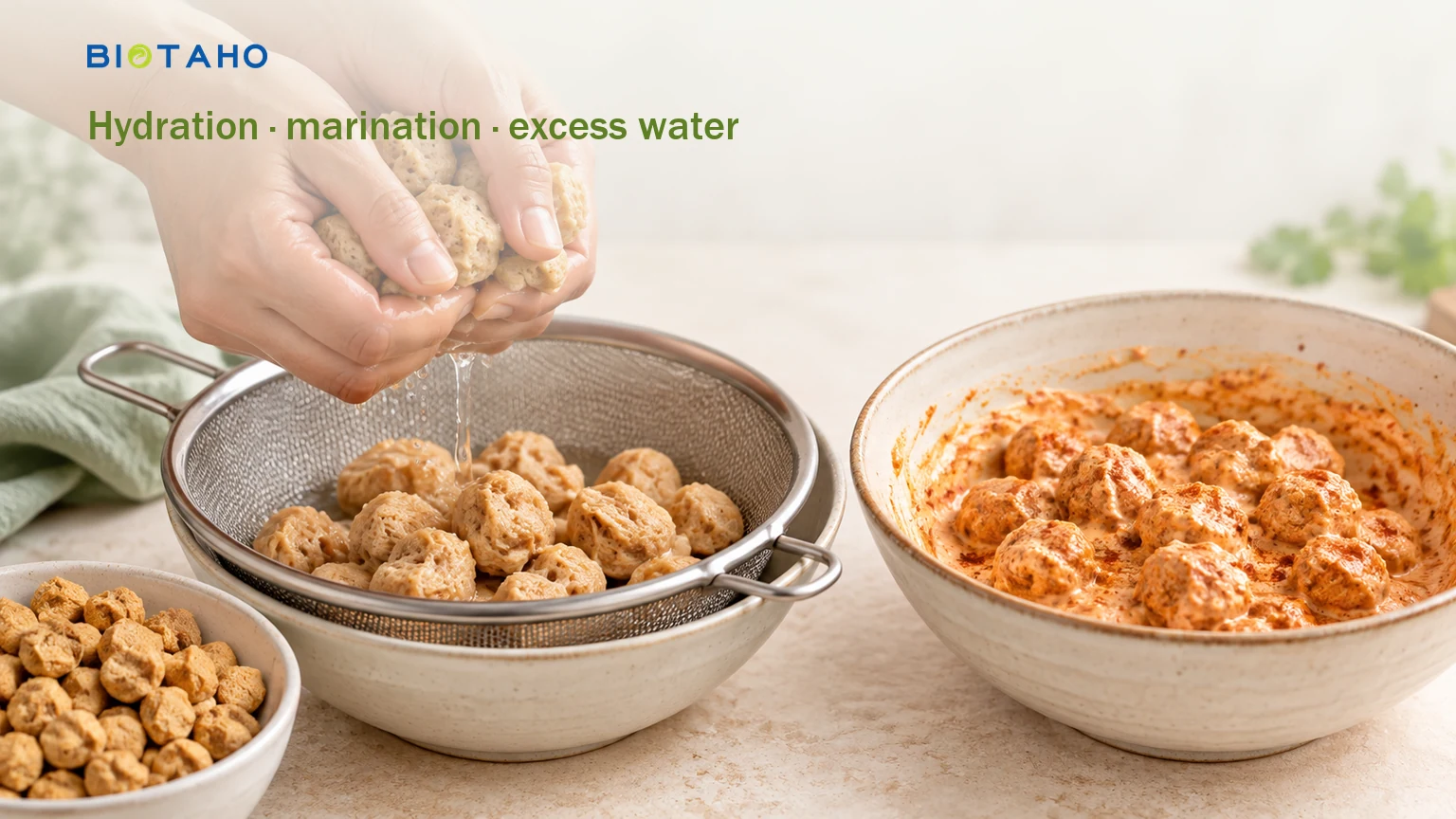
Mix the plant yogurt with the lemon juice, 1 teaspoon garam masala and the paprika. Coat the drained soy and refrigerate for 15–30 minutes. Use mild paprika for colour without much heat. While the pieces marinate, chop the onion and prepare the garlic and ginger so the pan work can proceed without leaving the spices unattended.
Brown the soy and build the tomato sauce
Use the marinating interval to measure the remaining spices, tomato paste, passata and coconut milk. The sauce will be built in the browning pan, so finish the soy’s refrigerated rest before starting that sequence. Reserve some of the initial salt if your vegan butter or stock is already salty.
- Heat the neutral oil in a wide pan over medium heat. Lift the soy from the marinade and let excess coating drip off. Brown the pieces in a single layer, turning gently until some surfaces colour. They do not need to become crisp. Transfer them to a plate and keep the remaining marinade separately.
- Reduce the heat and melt the vegan butter in the same pan. Add the onion and cook for about 8–10 minutes, stirring, until soft and lightly golden. Add the garlic and ginger and cook briefly until fragrant, without scorching them.
- Stir in the tomato paste, cumin, coriander, remaining garam masala and optional cayenne. Cook gently for about a minute. Add the passata, remaining marinade, initial salt and 100 ml water or vegan stock.
- Simmer for 8–10 minutes, stirring, until the tomato base thickens and no longer tastes raw.
This reduction establishes the sauce before the coconut milk goes in. If the base is still watery, adding the prepared soy immediately makes it harder to judge whether the extra liquid came from the tomatoes or insufficient draining. Garam masala blends vary, so taste before adding any extra spice.
Simmer the pieces just until the sauce coats them
Add the browned soy to the reduced tomato base and simmer gently for about 5 minutes. Stir in the coconut milk and heat gently for another 3–5 minutes. Avoid a vigorous boil at this stage, and meet any additional cooking requirements on the protein packet. Fold the pieces through the sauce instead of repeatedly stirring them against the pan.
For dairy-free butter chicken, aim for gravy that clings to the pieces but still flows around them. Coconut milk adds richness and its own flavour. Plain unsweetened plant cooking cream is an alternative, though its thickness and heating directions may differ.
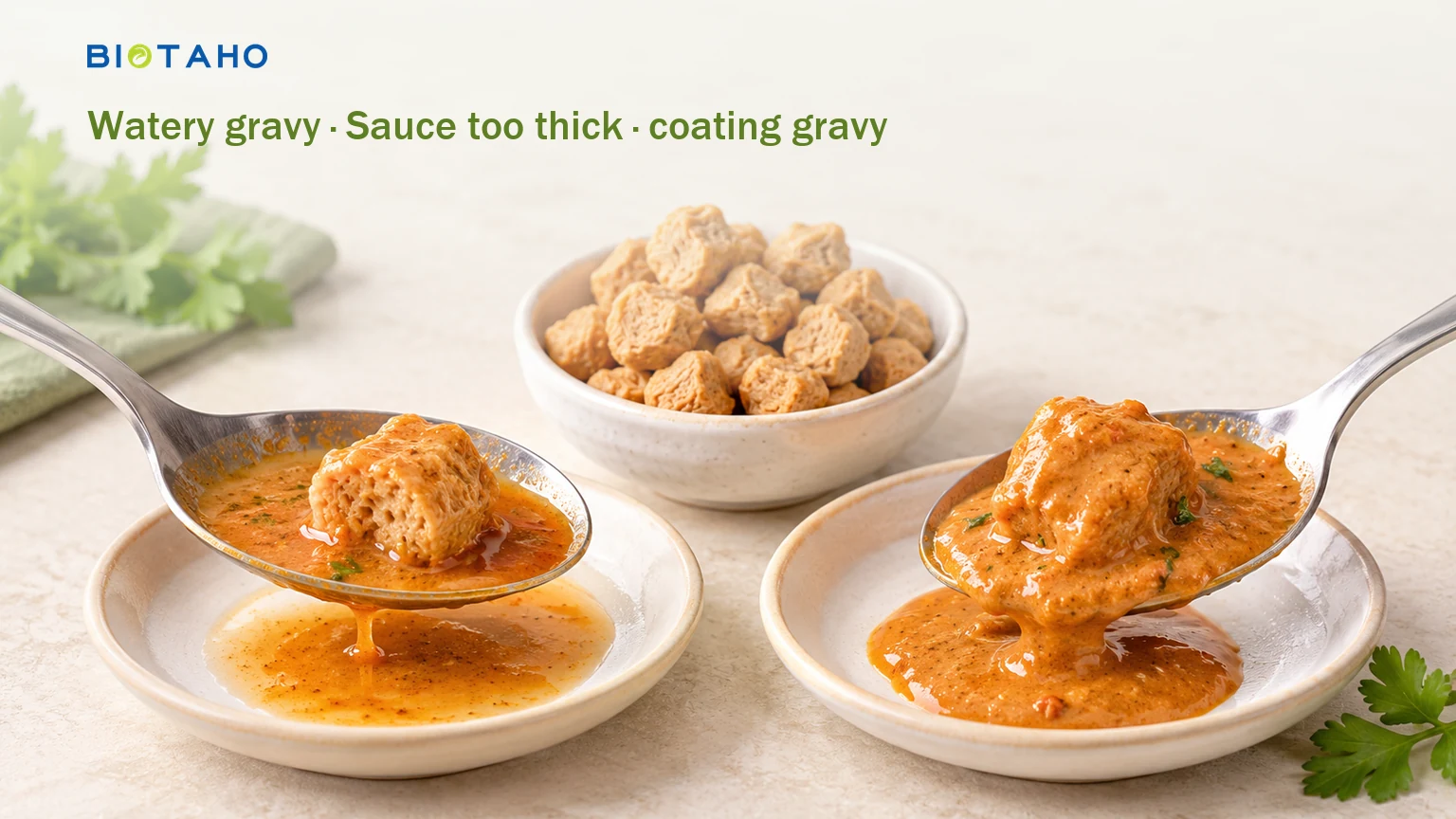
Cut a piece open and check for a tender centre with a light chew. Check the gravy separately with a spoon: it should coat the spoon without sitting like paste. These are texture checks, not measures of cooking safety.
| What you notice | Likely preparation issue | Practical adjustment |
|---|---|---|
| Hard centre | Incomplete hydration | Complete the product’s softening requirements before assembling the curry. |
| Watery gravy | Excess retained water or insufficient reduction | Drain consistently and reduce the tomato base before adding coconut milk. |
| Pieces breaking apart | Fragile pieces, vigorous stirring or prolonged cooking | Fold gently and limit final simmering where product directions permit. |
| Sauce too thick | Reduction or liquid uptake | Add water a tablespoon at a time until the sauce flows. |
| Sharp tomato flavour | Acidity needs balancing | Check salt and creaminess before adding optional sugar. |
Adjust the salt and lemon at the end, using up to the listed amount of optional sugar if needed. Serve with rice and coriander leaves, or bread made without dairy ingredients. Cook any additional vegetables separately first so their moisture does not unexpectedly thin the finished sauce.
Check the ingredients and reheated texture before repeating the batch
Before repeating the recipe, check the actual yogurt, spread, stock and bread labels as well as the protein specification. Vegetarian does not necessarily mean vegan, and dairy-free does not establish that every ingredient is plant-based. This version contains soy and, with either featured ingredient, wheat; almond or cashew substitutions introduce additional allergens.
Keep handling and reheating consistent. Following FDA guidance, marinate in the refrigerator, refrigerate perishables within two hours—or one hour when the outside temperature exceeds 90°F—and use shallow containers with the refrigerator at 40°F or below. When reheating, bring the sauce to a boil and heat leftovers to 165°F, stirring to distribute heat and checking with a thermometer. Safety takes priority over preserving a perfectly smooth coconut sauce.
Once safely reheated, assess whether the sauce has tightened and whether the pieces remain distinct or become softer than you want. Add a splash of water if needed. For a useful chunk-versus-slice comparison, keep the sauce quantities constant and record dry weight, drained weight, hydration method, cut size, marinade time and final heating time. Those observations help identify whether the next adjustment belongs in preparation or in the sauce.
Frequently asked questions
What is vegan butter chicken made of?
This version uses hydrated fibrous soy pieces, plant yogurt, vegan butter and coconut milk in an onion, tomato and spice sauce. The name describes the style of the dish; it contains no chicken.
What is the best vegan substitute for butter?
Choose a vegan butter whose savoury flavour you enjoy and check its ingredients. Neutral oil can cook the aromatics, while coconut milk supplies much of this sauce’s richness.
What are the basic ingredients for butter chicken?
Traditional versions generally combine chicken with a spiced tomato sauce, butter and cream. This recipe replaces the chicken with prepared soy pieces and replaces all dairy ingredients with plant-based alternatives.
What are the ingredients for dairy-free butter chicken?
Here they are soy chunks, plant yogurt, vegan butter, coconut milk, tomatoes, onion, garlic, ginger, lemon and spices. Check stock and serving bread too; removing cream alone does not make the whole meal dairy-free.
What is the secret ingredient in butter chicken?
There is no single essential secret ingredient. In this version, softened onion, gently cooked spices, reduced tomato and sufficient plant-based richness build the flavour, while separate hydration prepares the soy’s texture.
What can I use as a vegetarian substitute for butter chicken?
Fibrous soy chunks or cut soy slices suit this preparation sequence. Firm tofu and roasted cauliflower are other options but need different preparation. Paneer is vegetarian, but its dairy content makes it unsuitable for this vegan recipe.
References
- Nora Cooks: Vegan Butter Chicken — a tofu-based example of a vegan creamy tomato sauce, not preparation guidance for the featured fibrous soy ingredients.
- Dassana’s Veg Recipes: Soya Chunks Curry — a separate soy-chunk curry illustrating pre-softening, draining and coconut-based gravy techniques.
- FDA: Safe Food Handling — refrigeration, marination and reheating guidance.
- FDA: Food Allergies — major allergens and ingredient-label guidance.
To compare formats in your own curry trial, contact Baichuan about chunk and sliced protein samples.