Vegan Korean food can include a soybean-paste stew with vegetables and tofu, or a rice bowl with a spicy soy-protein topping. For these Korean-inspired adaptations, choose chunks for spoonable bites, strands for stir-fries and granules for small, evenly distributed spoonfuls. Then check the broth and fermented seasonings before they reach the protein.
The preparation principle is consistent across all three formats: hydrate separately, control the water carried into the dish, and make the final seasoning adjustment after cooking. Textured protein is an optional addition here, not a requirement of traditional Korean recipes.
Choose a soy format for the Korean-style dish
Start with how you want to eat the finished meal. Small soy protein chunks suit a stew in which each spoonful contains broth, vegetables and distinct bites. Baichuan’s small fibrous protein chunks for catering are listed as cubed pieces, making them a relevant starting format for the doenjang-style stew below.
For a pan dish, choose shredded soy protein strands that can be tossed through sliced vegetables. For a loose rice topping, the supplier’s compact textured protein granules are listed for sauces and fillings requiring distinct granules. That form is useful when you want small pieces throughout a mushroom topping, without shaping or binding them.
Baichuan lists hydration windows of 60–65 minutes for these chunks and strands, and 40–55 minutes for the granules. Allow for that preparation separately from the recipe’s pan cooking. Current product directions govern the water ratio, temperature and any required cooking; the recipes here are starting points that need recipe-specific trials with the selected ingredient.
These products are soy-and-wheat blends, not pure soy isolates. The chunks and strands list wheat gluten and wheat starch alongside soy ingredients, while the granules list wheat gluten and wheat flour. They are not gluten-free choices. Check the complete current label before selecting a format for anyone with allergies.
Check the broth and pastes before seasoning the protein
With the format selected, establish the flavor of the liquid or sauce it will meet. Chunks take on stew broth; drained strands carry a coating of paste; granules distribute sauce through many small bites. In each case, adding salty seasoning early leaves less room to adjust once the dish is cooked.
For the stew, use unsalted vegan vegetable broth, preferably kelp-and-mushroom based. Korean Bapsang’s vegetable-broth guide explains this approach as an alternative to meat or anchovy stock. Check the doenjang separately: a plain paste and a prepared stew seasoning mix may have different ingredients.
| Ingredient or dish | What to check | Plant-based approach |
|---|---|---|
| Kimchi | Fish sauce, salted shrimp or other seafood | Choose specifically vegan kimchi and check its ingredients |
| Soup stock | Anchovies, shellfish or meat extracts | Use kelp-and-mushroom vegetable broth |
| Gochujang and prepared sauces | Animal-derived ingredients in the specific product | Choose a suitable paste; season the dish yourself |
| Doenjang and stew seasoning mixes | Added seafood, meat stock and other seasonings | Check the paste and any separate seasoning sachet |
| Bibimbap and japchae | Meat, egg and sauce ingredients | Use vegetables, tofu or seasoned soy protein |
Apply the same check to kimchi served alongside the meal and to gochujang used in a stir-fry. Fish sauce, salted shrimp, seafood extracts or meat stock can appear in otherwise vegetable-centered preparations. Choose suitable products, then start modestly with the paste so its salt does not dominate the protein.
Vegan suitability and allergen suitability are separate checks. Soy, wheat and sesame are major allergens identified by the FDA, and all can be relevant to this meal through the protein, pastes or finishing ingredients. Read each package, including separate seasoning sachets.
Cook a doenjang-style stew with prepared soy chunks
This home-cooking adaptation serves about two people with rice and vegetable sides. Prepare the chunks before beginning the saucepan steps so the short vegetable simmer does not have to hydrate a dry center. Cut a hydrated piece open to inspect the middle, drain it, and gently press out excess soaking water. An evenly hydrated center is a texture check; complete any cooking required by the package as well.

Keep the broth unsalted at the start and use the initial doenjang amount below. This gives the prepared chunks time in the seasoned broth before you decide whether the stew needs more paste.
| Ingredient | Suggested starting amount | Preparation |
|---|---|---|
| Dry soy-protein chunks | 40 g | Hydrate according to package directions |
| Unsalted vegan vegetable broth | 650 ml, plus extra if needed | Preferably kelp-and-mushroom based |
| Vegan-suitable doenjang | 1½ tablespoons initially | Reserve more for final adjustment |
| Onion and zucchini | ½ small onion; 150 g zucchini | Slice onion; cut zucchini into bite-size pieces |
| Fresh mushrooms | 100 g | Slice or tear |
| Firm tofu | 150 g | Cut into cubes |
| Garlic and scallions | 2 garlic cloves; 2 scallions | Mince garlic; slice scallions |
| Gochugaru, optional | ½ teaspoon | Add for gentle heat |
- Prepare the dry chunks using the package’s soaking or simmering method. Check a cut piece for an evenly hydrated center, then drain and gently press out excess water.
- Put the broth, onion, mushrooms and garlic in a saucepan. Bring to a boil, then simmer for about 5 minutes, until the onion begins to soften.
- Mix the doenjang with a ladleful of hot broth in a small bowl, then stir it back into the pan. Add the prepared chunks and zucchini. Simmer gently for about 5–8 minutes, or until the zucchini is tender and the chunks have taken on the broth’s flavor. Ensure the chunks also complete any cooking required by their package.
- Add the tofu and optional gochugaru. Simmer gently until the tofu is hot throughout, handling the cubes carefully to keep them intact.
- Taste the broth before adding more paste. If it is too salty or concentrated, add a little extra broth. Finish with scallions and serve with rice.
The finished stew should remain spoonable, with tender zucchini, intact tofu and hydrated chunks. If the protein takes up more broth than expected, add liquid instead of allowing further reduction. Pair it with plain rice and a lightly seasoned cucumber or vegetable side; the stew already supplies the main fermented seasoning.
Use drained strands for stir-fries and rice bowls
The stew allows some retained moisture because broth belongs in the finished dish. A stir-fry needs a drier starting point. Hydrate fibrous soy protein strands as directed, drain well and gently press before frying. Also leave room in the pan: a crowded pan of wet strands, mushrooms and vegetables makes surface browning harder and can dilute the sauce.
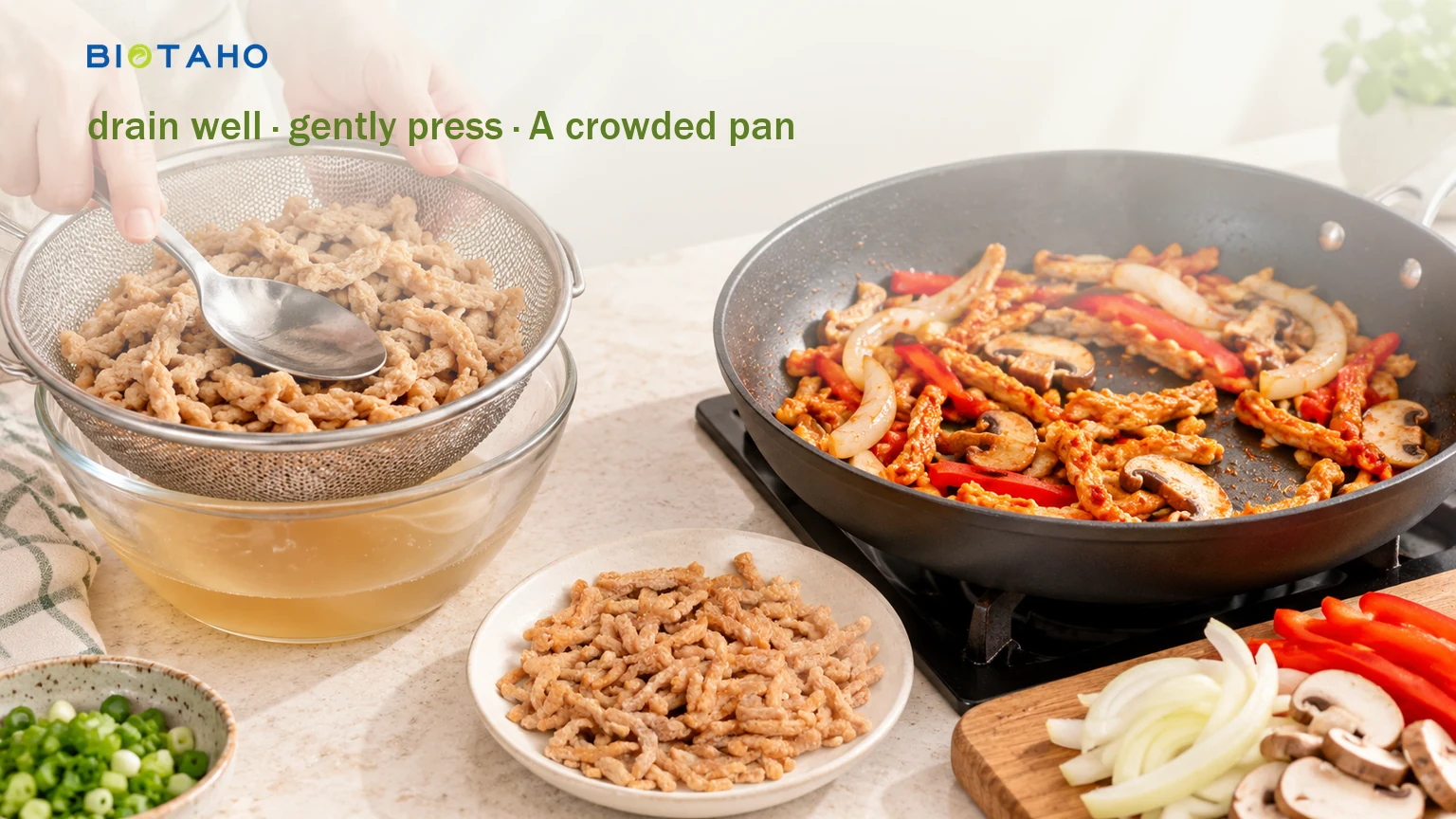
For a two-serving stir-fry, use 40 g dry strands, one sliced onion, one sliced pepper and a handful of mushrooms. Stir-fry the vegetables in a little neutral oil, add the prepared strands, then toss with a modest amount of vegan-suitable gochujang loosened with water. Taste before adding more sauce, and finish with scallions.
Add enough loosened paste to coat the ingredients without leaving them swimming. If there is already water collecting in the pan, do not immediately compensate with more gochujang: that adds salt as well as flavor. Let excess moisture cook away while avoiding overcooking the vegetables, then reassess the coating.
For a finer rice topping, prepare soy granules according to their directions and drain excess liquid. Cook with minced mushrooms, garlic and a sauce checked for vegan suitability. Spoon over rice with zucchini, carrots and cucumber for a bibimbap-style bowl without meat or egg. Their small form spreads the seasoned mixture through the bowl; it does not need to hold a patty shape.
The same drained-strand approach can be used when developing vegetable japchae with mushrooms. Check the noodle sauce and omit meat and egg. Korean Bapsang’s vegan collection provides vegetable and noodle ideas, while the moisture handling here remains specific to the chosen textured ingredient.
Taste the finished soy dish before adding more salty seasoning
Whether you have made stew, strands or a granule topping, taste a piece of protein with its surrounding broth or sauce. In the stew, compare a chunk with a spoonful of broth. In the stir-fry, taste a strand with vegetables. For the rice bowl, taste the topping with rice before judging it on its own.
If the stew is concentrated, loosen it with extra unsalted broth before considering more doenjang. If a stir-fry has enough sauce but seems flat, check whether excess water has diluted it before adding paste. Serve vegan kimchi separately so its acidity, crunch and salt can complement the meal without making every component equally strong.
For repeat batches, record the dry protein amount, hydration method, drained weight and final liquid adjustment. Those observations help distinguish a moisture problem from a seasoning problem when comparing formats or refining the recipe.
For leftovers, follow FDA guidance: refrigerate perishables within two hours, or within one hour above 90°F, using shallow containers for faster cooling. Keep the refrigerator at 40°F or below. Reheat leftovers to 165°F, checked with a food thermometer, and bring soups to a boil when reheating. Tenderness alone does not establish safe reheating.
Frequently asked questions
Which Korean dishes are vegan?
Vegetable pancakes, cucumber salad, braised potatoes and some tofu dishes can be vegan. Check the actual broth, sauce and garnishes; the dish name does not establish how a particular version was prepared.
Is Korean food vegan friendly?
Many grain, vegetable and legume dishes are vegan or adaptable. For the soy-protein meals here, vegetable broth and suitable fermented pastes are the key checks, followed by any kimchi or garnishes.
Is kimchi considered vegan?
Some kimchi contains fish sauce, salted shrimp or other seafood. Choose a vegan version and read its ingredient list, whether you serve it as a side or add it to a cooked dish.
Is gochujang always vegan?
No. Check the complete ingredient list, especially for prepared sauces containing gochujang. Also check relevant allergens, and add the sauce gradually because its saltiness affects the finished strands or rice topping.
Can I make doenjang jjigae without meat?
Yes. Use suitable vegetable broth and doenjang with mushrooms, zucchini and tofu. Prepared soy-protein chunks are optional for distinct bites, as in the Korean-inspired adaptation above.
Is soondubu jjigae vegan?
Not necessarily. Versions may contain seafood, meat broth or egg. A vegan version uses soft tofu, plant-based broth and suitable seasonings without those animal-derived additions.
References
- Korean Bapsang: vegetable broth for Korean cooking — kelp, mushrooms and vegetables as alternatives to meat or anchovy broth.
- Korean Bapsang: Korean vegan recipes — vegetable, tofu and noodle examples, not validation of these textured-protein adaptations.
- FDA: food allergies — major allergens and ingredient-label checks.
- FDA: safe food handling — refrigeration, cooling and reheating guidance.
To compare chunks, strands or granules in your own Korean-inspired recipe, contact Baichuan about ingredient samples and current preparation directions.