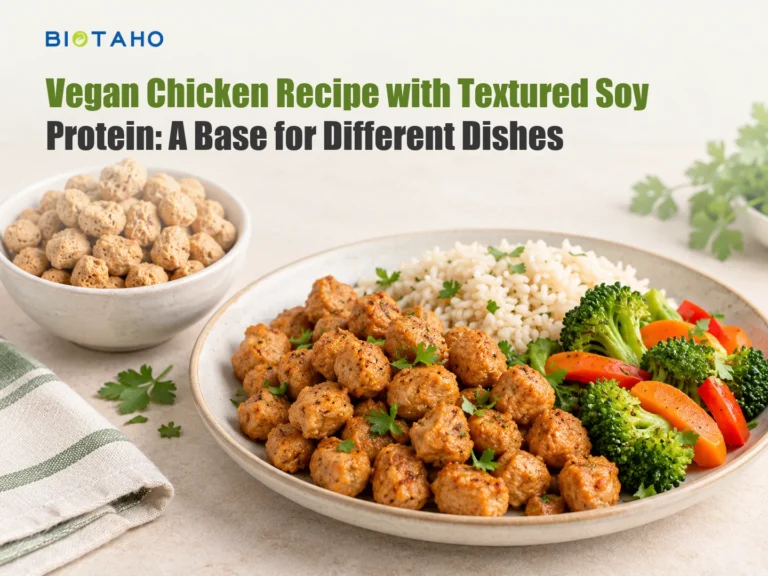
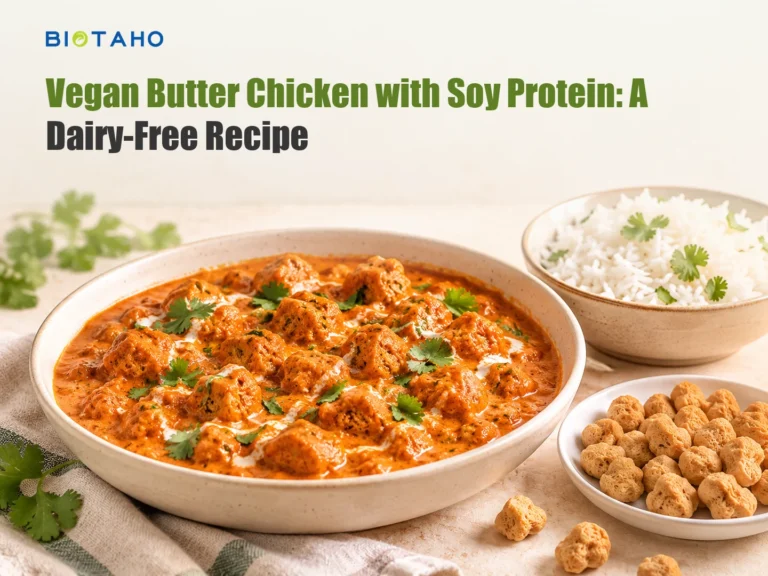
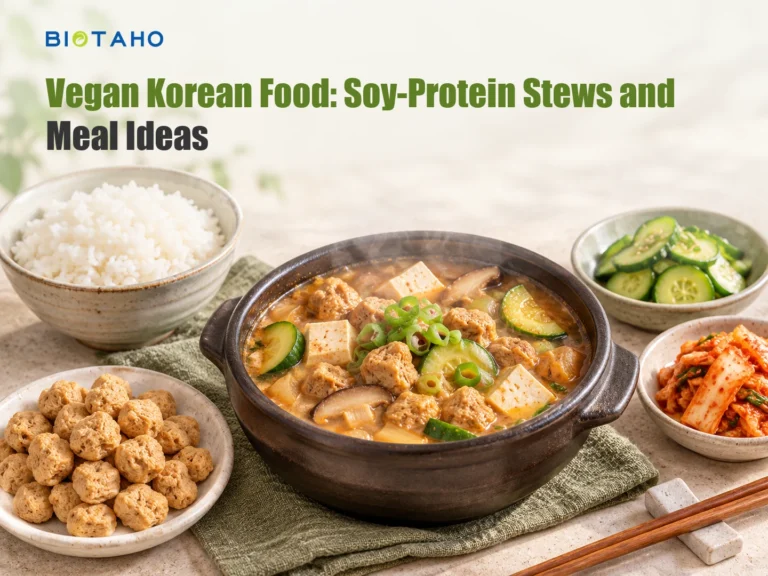
Vegan chicken wings can be made from intact soy protein pieces: hydrate the center, blot the surface, apply a thin coating, bake, and add sauce just before serving. The result is a boneless wing-style bite, without a fake bone, molded shape or binder.
The ingredient decision comes first. Small fibrous chunks offer individual bites, while larger sliced pieces can be cut to size after preparation. Both need a hydrated center before you start building a dry coating around them.
Choose intact soy pieces for wing-style bites
Choose textured soy protein that can remain whole through draining, coating and gentle tossing. Loose strands and granules require a different approach if they are to become larger, bound shapes; they are not direct substitutes in this whole-piece recipe.
Baichuan offers cubed fibrous soy protein chunks for catering and sliced soy protein steak pieces. Its product pages describe the first as small chunks with a meat-like chew and the second as sliced protein with a tender, elastic texture. For this application, the practical choice is between keeping individual chunks intact and cutting hydrated slices into comparable bites.
| Product form | How to use it here | What to compare during preparation |
|---|---|---|
| Small cubed fibrous chunks | Keep suitable pieces whole; trim oversized ones | Whether the thickest centers hydrate and pieces stay intact during coating |
| Sliced steak pieces | Cut prepared slices into similar bite sizes | Thickness, cut-edge integrity and ease of turning without tearing |
Both products contain soy ingredients alongside wheat gluten and wheat starch. They are blends, not pure soy isolates, and neither is gluten-free. The batter below also contains wheat; check the protein, broth and sauce labels when planning for allergens.
This method uses the structure already present in the pieces. It does not involve making a gluten dough. The seitan methods in the references use a separate dough-making and cooking sequence and cannot supply preparation instructions for these soy ingredients.
Hydrate the center before drying the surface
Once you have selected the form, prepare it before judging its size or coating needs. Baichuan lists a hydration time of 60–65 minutes for both products. Allow that lead time separately from the oven cooking below; the current product directions must determine water quantity, temperature and any required cooking. This recipe is a starting point for recipe-specific trials, not a tested result for either product.
Use vegetable broth only if those directions permit it. Otherwise, prepare with water and season afterward. Broth, hot sauce and bottled barbecue sauce can all contribute salt, so taste the seasoning mixture before adding the optional salt.
Split one of the thickest prepared pieces and check for a hard, dry core. If one remains, continue preparation according to the product directions. Extra baking at the coating stage is not a substitute for hydrating the center.
When the pieces are cool enough to handle, drain and press them gently without crushing their structure. Blot with a clean kitchen towel. The aim is a hydrated center with a blotted surface, not a piece squeezed into a dense paste.
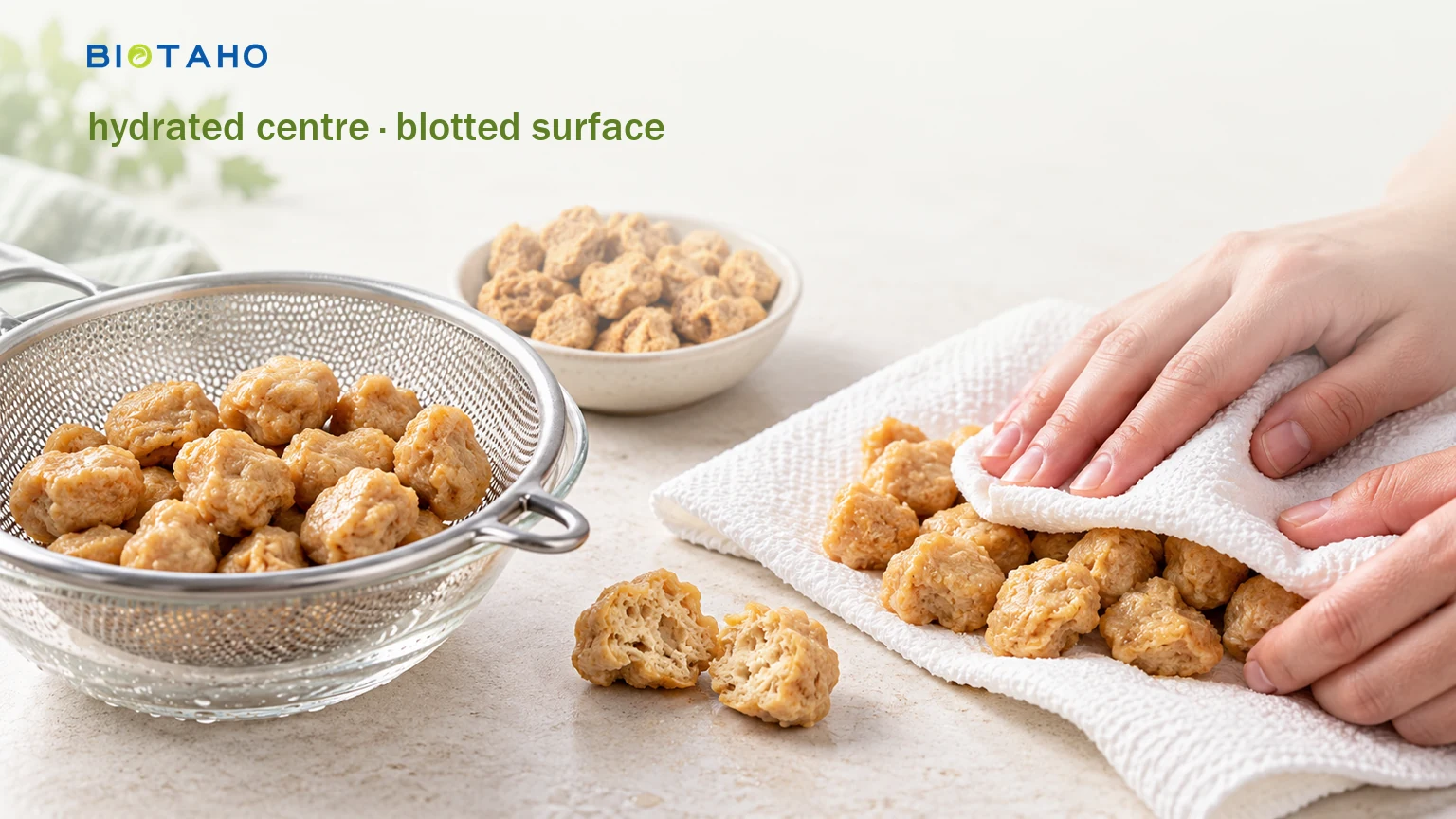
Now trim oversized pieces into roughly 4–5 cm bites of similar thickness. With sliced protein, compare thickness as well as length: a broad, thin piece and a thick chunk may carry different amounts of batter even when they look similar from above.
Apply a light coating to the prepared protein
The drained pieces are now ready for the coating. These amounts are a starting point for about two main-course portions or four snack portions, depending on accompaniments. Keep the ingredient quantities below, but adjust how much coating you apply to the hydrated volume and surface area of your chosen pieces.
| Ingredient | Starting quantity | Purpose |
|---|---|---|
| Dry soy chunks | 100 g | Whole-piece centre |
| Water or vegetable broth | As directed on the TVP package | Hydration and any required cooking |
| Plain flour | 40 g | Batter base |
| Cornstarch | 30 g, divided | Light dusting and batter |
| Garlic powder and onion powder | 1 tsp each | Savoury seasoning |
| Smoked paprika | ½ tsp | Seasoning |
| Salt | ¼ tsp, optional | Adjust to broth and sauce |
| Cold water | 80–100 ml initially | Adjust batter consistency |
| Neutral oil | 2 tbsp | Tray and coating surface |
| Vegan wing sauce | 3–4 tbsp | Finish or dipping sauce |
- Prepare the soy pieces as described above, including any required cooking. Drain, gently press, blot and trim before mixing the batter.
- Heat the oven to 220°C conventional or 200°C fan. Line a large baking tray with baking parchment and brush it with about half the oil.
- Reserve 10 g of the cornstarch for dusting. Whisk the remaining 20 g with the flour, garlic powder, onion powder, paprika and optional salt. Gradually whisk in 80 ml cold water, adding more as needed until the batter coats a spoon thinly and runs off slowly.
- Toss the blotted pieces with the reserved cornstarch. Dip each piece into the batter, let excess drip away and place it on the tray with gaps between pieces. Brush or drizzle the remaining oil lightly over the tops.
A light coating should follow the shape of the piece without hiding it under a thick shell. If batter pools beneath the first piece, let more drain from the remaining pieces before placing them on the tray. Do not compensate for a dripping-wet surface by burying it in extra flour.
Use a second tray if necessary to preserve the gaps. Touching pieces leave fewer edges exposed to the oven heat and can trap wet batter where they meet. This matters especially when cut slices lie flatter than the chunks beside them.
Cook the coating before adding the wing sauce
With the pieces spaced out, bake for an initial 15 minutes. Turn carefully, then bake for roughly another 10–15 minutes. These timings remain a starting point: look for a set, dry coating with golden patches, firm edges and no wet batter at the base. Follow any additional product-specific cooking requirements; crust appearance is a texture check, not a food-safety measurement.
Keep the sauce off while the coating sets. A wet glaze added too early changes the surface you are trying to dry, and a sweet sauce can darken before the coating underneath improves. If using a sweet sauce for a final oven finish, watch closely.
After baking, use the recipe’s 3–4 tbsp vegan wing sauce for a light finish or serve it alongside. For tossed bites, put them in a wide bowl and add sauce a spoonful at a time. Turn gently and stop when the surface is lightly covered. Sauce pooling in the bowl means the pieces are sitting in more liquid than they need.
A light drizzle leaves some dry coating exposed; dipping keeps sauce away from the coating until each bite. Those are useful alternatives when retaining crisp edges matters more than complete sauce coverage.
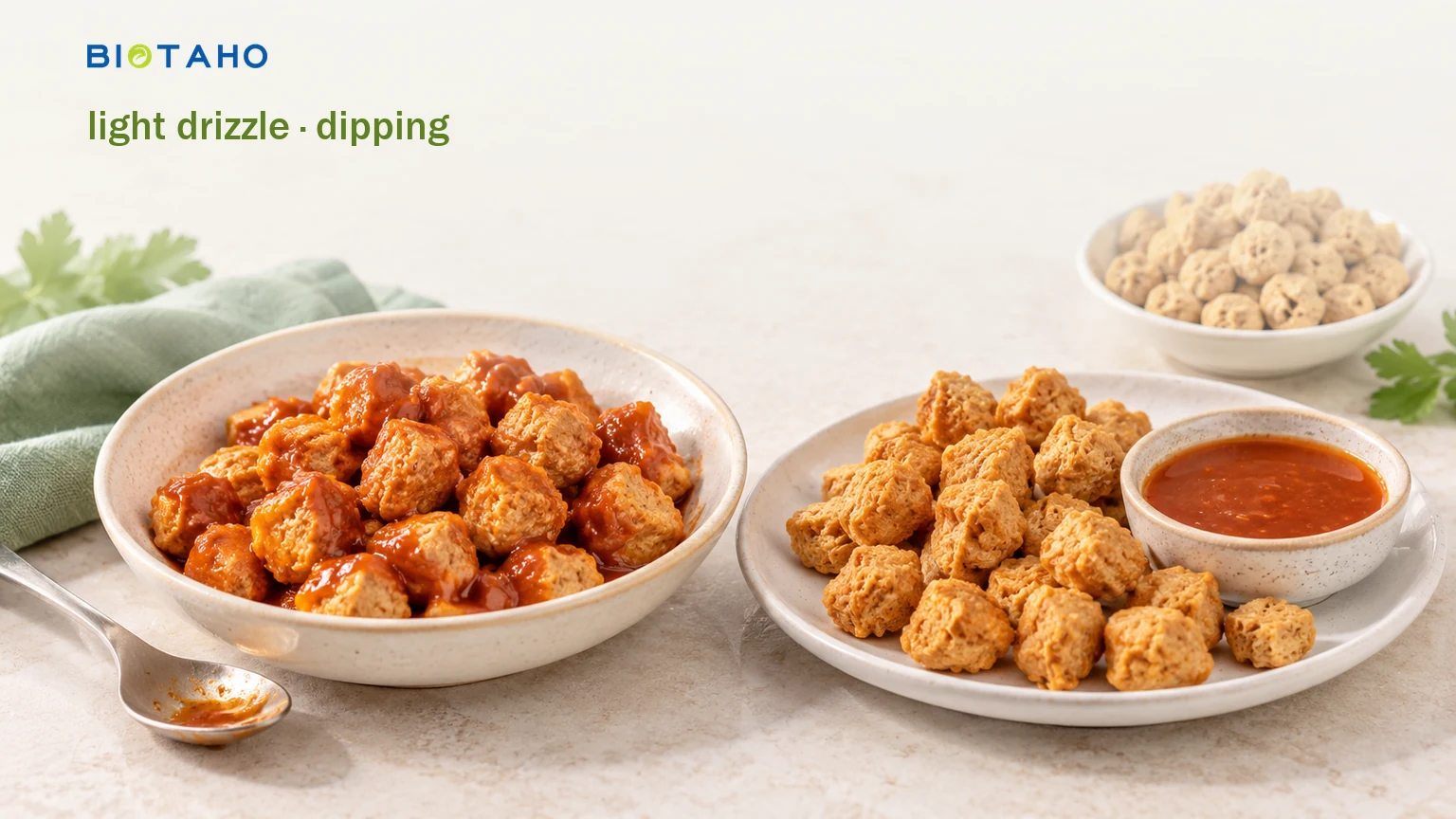
Buffalo-style, barbecue and sweet chilli sauces all offer possible finishes, provided their ingredients are vegan. The Hidden Veggies reference provides sauce ideas for seitan wings; it does not establish how these soy pieces will absorb or hold those sauces.
Judge the bite after saucing, not only straight from the oven
The finished soy wing-style bites need to work with sauce, not just look crisp on the tray. Serve promptly and assess whether the center is pleasantly hydrated, the piece stays intact when picked up, and the coating still contributes texture after the chosen finish. Add celery, carrot sticks and a vegan dip if desired.
If the unsauced piece works but the tossed version becomes too wet, first try less sauce, a drizzle or dipping. If the center is dry, revisit hydration. If a piece tears during tossing, compare gentler handling and a different cut size before changing the batter. These observations connect the finished bite to the preparation step that needs attention.
When comparing fibrous soy protein samples, keep the coating and finishing method consistent. Record the preparation directions, drained batch weight, coating used and sauce quantity. Compare chunks and cut slices after saucing so the ingredient decision reflects the food you actually intend to serve.
For leftovers, follow FDA guidance: refrigerate perishables within two hours, or within one hour when the outside temperature exceeds 90°F. Use shallow containers, keep the refrigerator at 40°F or below, and reheat leftovers to 165°F. Store sauce separately where possible to retain more control over the reheated coating.
Frequently asked questions
What are vegan chicken wings made from?
They can have soy protein, tofu, seitan or vegetable centers. This version uses intact soy pieces with an egg-free flour-and-cornstarch coating and vegan wing sauce.
Where can I buy vegan chicken wings?
Check supermarket plant-based chilled or frozen sections, specialist shops and restaurant menus. Ingredient suppliers sell soy protein that still needs preparation, coating and cooking, not necessarily ready-made wings.
What can I use as a vegan substitute for wings?
For this method, choose intact soy chunks or prepared slices cut into bites. Tofu and seitan are alternatives, but each requires its own preparation; do not transfer the soy hydration instructions to them.
What is the secret ingredient for crispy chicken wings?
There is no single fix. Cornstarch helps build this coating, but a blotted surface, thin batter, tray spacing and late sauce application all contribute to the result.
How to make wings without flour?
A light cornstarch dusting on prepared, blotted soy pieces, followed by a little oil and baking, is an alternative to the batter. Expect a thinner coating. Flour-free does not mean gluten-free: the featured proteins contain wheat.
How to make vegan batter for frying?
Flour, cornstarch, seasonings and water can make an egg-free batter that coats lightly. Check it on one prepared piece before coating a batch. The recipe above is an oven method, so its cooking times do not apply to frying.
References
- Nora Cooks: Vegan Chicken — a vital-wheat-gluten dough method, distinct from preparing intact soy pieces.
- The Hidden Veggies: Vegan Chicken Wings — seitan preparation and examples of wing-sauce finishes.
- FDA: Safe Food Handling — prompt refrigeration, cold storage and leftover reheating guidance.
- FDA: Food Allergies — major allergens, including soy and wheat, and label-reading guidance.
To compare chunks and sliced pieces for your recipe, contact Baichuan about samples and current preparation instructions.