Is soy protein bad for you? For most people, soy foods can fit into a varied, balanced diet, and research does not support avoiding them across the board. Soy allergy and individual dietary requirements matter, but so does identifying what you are eating. A textured cooking ingredient, tofu and a concentrated supplement are not interchangeable.
If you are choosing soy granules, chunks or flakes for a meal, start with the ingredient list and preparation directions. The useful question is whether that particular product suits you and how its prepared portion fits the dish—not whether every food containing soy deserves the same verdict.
Identify the soy product before judging its health effects
Textured soy protein is a cooking ingredient available in different shapes and formulations. Its appearance tells you something about its role in a dish, but not its full composition. Granules can provide a distributed crumble in a filling; chunks provide separate bites. Neither shape establishes protein content, allergen suitability or health benefits.
For example, Baichuan lists its textured vegetable protein granules for sauces and fillings as irregular, compact granules containing soybean meal, wheat gluten, soy protein isolate and wheat flour, among other ingredients. These are a soy-and-wheat blend, not pure isolate. That identity matters both when interpreting nutrition claims and when checking whether the ingredient is suitable for someone avoiding wheat.
| Product form | What it represents | Starting point for assessment |
|---|---|---|
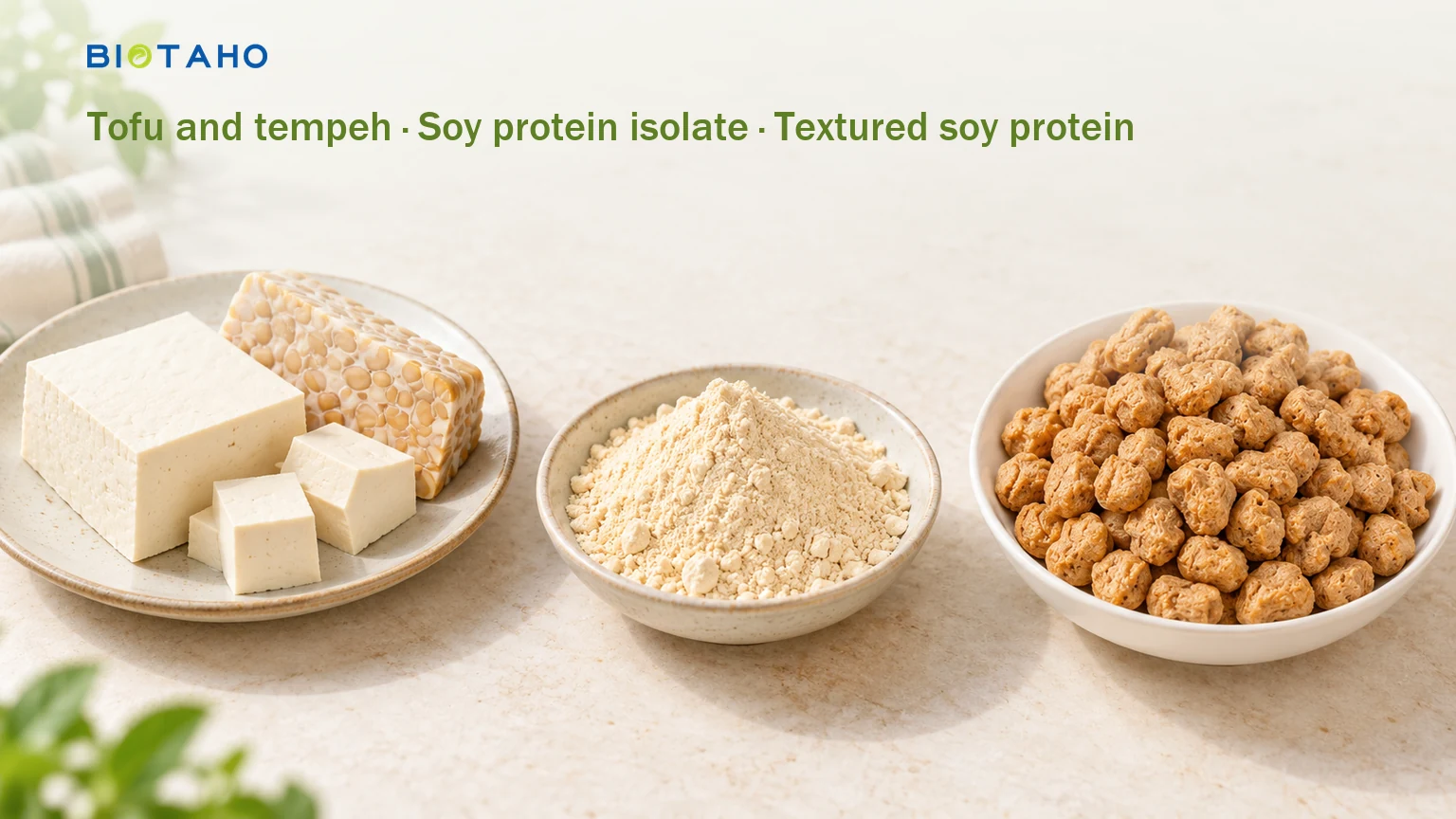
| Tofu and tempeh | Soy foods used directly in cooking | Check the specific food, seasoning and preparation. |
| Soy protein isolate | A separated, concentrated protein ingredient | Establish whether it is part of a food blend or a supplement. |
| Textured granules, chunks or flakes | Textured cooking ingredients that may combine soy and wheat ingredients | Check composition, nutrition information and hydration directions. |
| Protein powder or shake | A formulated product that may contain isolate and other ingredients | Check serving size, additions and intended use. |
These categories help separate the food you plan to cook from the ingredient names within it. A packet containing isolate alongside other ingredients should be assessed as that complete formulation.
Separate research on soy foods from claims about a finished product
Once you know the product category, you can judge which research is relevant. Harvard’s Nutrition Source describes soy foods as a nutrient-dense protein source that can safely be eaten several times a week, and probably more often. Its review finds that recent population studies generally suggest beneficial or neutral effects on health.
That supports including soy foods in a varied diet; it does not demonstrate a health outcome for a particular textured blend. Some reported soy protein benefits also depend on what soy replaces. Harvard discusses favourable findings when soy foods and other healthy protein sources replace red and processed meat. Simply adding a soy ingredient to an unchanged meal is a different comparison.
Concerns about hormones require similar care. Soy contains isoflavones, plant compounds with much weaker estrogen-like effects than human estrogen. Eating soy is not equivalent to taking estrogen. Animal or cell studies using concentrated exposures cannot simply be applied to ordinary meals.
Is soy protein isolate bad for you? Concentration or processing alone does not establish harm. Equally, finding soy protein isolate in a textured blend does not tell you the exposure, composition or purpose of a protein supplement. Assess the complete product and serving instead of treating the ingredient name as a warning—or a health claim.
Read the blend and nutrition information for textured soy
With those research boundaries in place, the product’s own information becomes the practical guide. Check protein, energy, fat, saturated fat, carbohydrate, fibre and sodium or salt on the same weight basis. Use the actual label or specification; values for tofu, cooked soybeans or another brand of TVP cannot supply missing figures.
The fibrous soy protein chunks for catering contain soybean meal, wheat gluten, soy isolate, soy concentrate and wheat starch. This differs from the granule formulation, even though both contain soy. Neither ingredient list gives enough information to assign a protein percentage or amino-acid score. Soy itself supplies all nine essential amino acids, but that fact does not quantify a particular blend.
The product-family name “Soya Fiber Protein” is also not a dietary-fibre measurement. Fibre content needs its own nutrition data, just as fortification needs confirmation on the label.
| Comparison basis | What changes | How to use it |
|---|---|---|
| Dry ingredient | No hydration water or recipe additions are included. | Compare dry products using their own dry-weight nutrition data. |
| Hydrated with plain water | Water increases weight without adding protein or energy. | Record the dry amount used and the prepared yield; do not apply the dry per-100-gram figure to hydrated weight. |
| Hydrated with stock or seasoned liquid | The liquid may contribute salt and other nutrients. | Include the retained additions when assessing the prepared ingredient. |
| Finished filling or meal | Sauce, oil and other ingredients change both weight and nutritional composition. | Assess the full recipe and the portion actually served. |
For recipe development, recording dry input and prepared yield makes comparisons useful. A wetter batch can show less protein per 100 grams simply because it contains more water, not because hydration removed protein.
Check allergies and individual dietary requirements
The blend you have identified now determines whether it belongs in the meal at all. Soy and wheat are both major food allergens under US labelling rules. The granules and catering chunks described above contain both; their plant-based identity does not make them suitable for someone with soy or wheat allergy.
They are not gluten-free either. Wheat gluten in their formulations makes that clear. The soy protein flakes for fillings list soy concentrate and soybean meal followed by “etc.” That abbreviated list cannot establish the absence of wheat. For a gluten-free requirement, use complete current ingredient and allergen information and an appropriate gluten-free declaration.
Check stock, sauces and other filling ingredients as well as the textured protein. Changing the main protein does not remove allergens elsewhere in the recipe. If an established medical restriction affects your choice, assess the specific product within that existing guidance; a general statement about soy cannot resolve individual needs.
Food-allergy symptoms can appear within minutes to hours and include hives, mouth itching, swelling, vomiting, diarrhoea, wheezing or difficulty breathing. Stop eating a suspected trigger and seek medical attention; throat swelling or breathing difficulty requires emergency care. A mild reaction can progress to a severe one.
Use the prepared soy ingredient as one part of the meal
After checking suitability, choose the format for the texture you need. For a tomato-and-bean filling, soy granules offer small pieces throughout the mixture. Chunks suit a dish that needs distinct bites, while flakes are listed for formed products and fillings. These are ingredient applications, not ready-made meals or confirmation that a particular recipe has been tested.
Allow time for hydration before finishing the dish. The supplier lists hydration windows of 40–55 minutes for the granules, 60–65 minutes for the catering chunks and 15–20 minutes for the flakes. These are planning information, separate from recipe cooking time. Current product directions must still govern water quantity, temperature and any draining step; a listed time alone is not a complete preparation method.
Moisture then becomes a cooking decision as well as a nutrition-comparison issue. Water retained in the hydrated ingredient contributes to the filling’s final consistency. Follow the specified draining procedure before judging whether the sauce needs more liquid or reduction. When developing a recipe, record that step so a change in moisture is not mistaken for a difference in the dry ingredient.
Keep the dry ingredient, hydrated ingredient and finished filling separate in your records. Plain water changes weight; stock can add salt; sauce and oil change the finished meal’s nutrient profile. Comparing these stages on equal terms gives a clearer picture than comparing the dry packet with a spoonful of cooked filling.
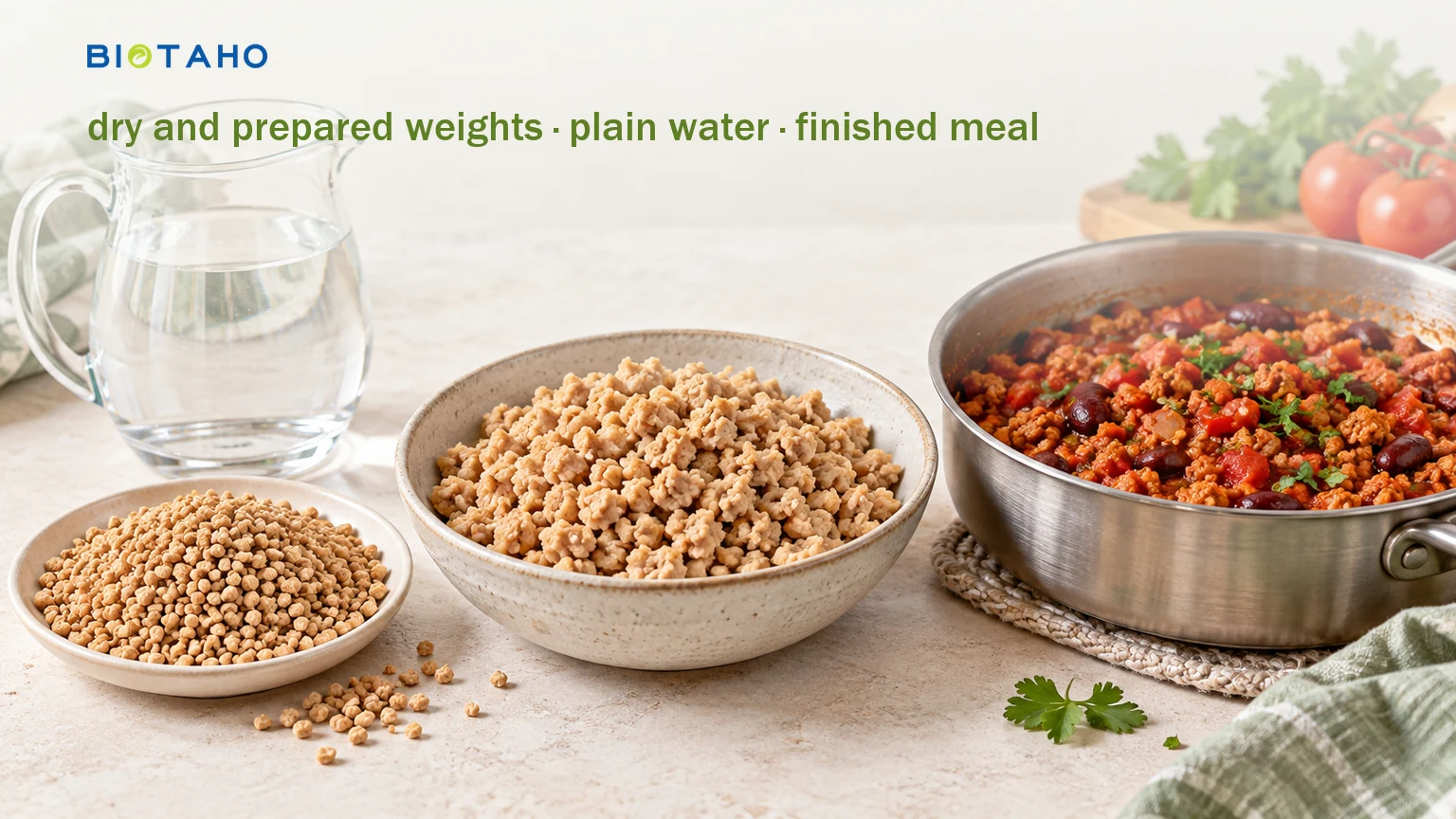
Finally, assess what accompanies the filling and what it replaces. Vegetables and a suitable starchy food can help build the meal, while stock, seasoning and oil affect its overall balance. For a vegan diet, NHS guidance also calls for attention to nutrients such as vitamin B12, iodine, calcium and vitamin D through appropriate fortified foods or supplements. A textured protein ingredient is not automatically fortified or nutritionally complete.
Frequently asked questions
Why do people say to avoid soy?
Concerns often combine isoflavones, processing and studies involving different exposures. Harvard’s review does not support blanket avoidance of soy foods. Allergy and the composition of the actual product remain relevant.
Is it okay to eat soy protein every day?
Soy foods can fit into a varied diet. Harvard describes eating them several times weekly, and probably more often, as safe. That is not an unlimited intake recommendation or a daily supplement dose; consider the specific product and meal.
Do men need to avoid soy?
Being male is not, by itself, a reason to avoid soy foods. Soy’s isoflavones are not equivalent to human estrogen, and Harvard’s review does not recommend that men avoid soy across the board.
What are the potential side effects of taking soy protein isolate?
Soy isolate can cause an allergic reaction in someone with soy allergy. Other reactions or tolerability concerns depend on the person and the complete formulation, including ingredients added to powders or blends. Symptoms alone cannot identify which ingredient caused them.
What are the symptoms of a soy protein allergy?
Possible symptoms include hives, mouth itching, swelling, vomiting, diarrhoea and wheezing. Breathing difficulty or throat swelling is an emergency. Follow an established allergy care plan and seek medical attention for a suspected reaction.
Who should avoid soybeans?
People with diagnosed soy allergy should avoid soybeans and relevant soy-containing products according to their allergy care plan. Suspected reactions need professional evaluation. Other dietary restrictions require individual assessment, not a general ban on soy.
References
- Harvard Nutrition Source: Straight Talk About Soy — soy foods, isoflavones and differences between research exposures.
- Harvard Nutrition Source: Protein — the nutritional protein package, food substitutions and protein powders.
- NHS: The vegan diet — dietary variety, fortification and nutrients requiring attention.
- FDA: Food Allergies: What You Need to Know — allergen labelling, symptoms and responses to reactions.
For a recipe-specific ingredient trial, contact Baichuan about samples, current composition and preparation directions.