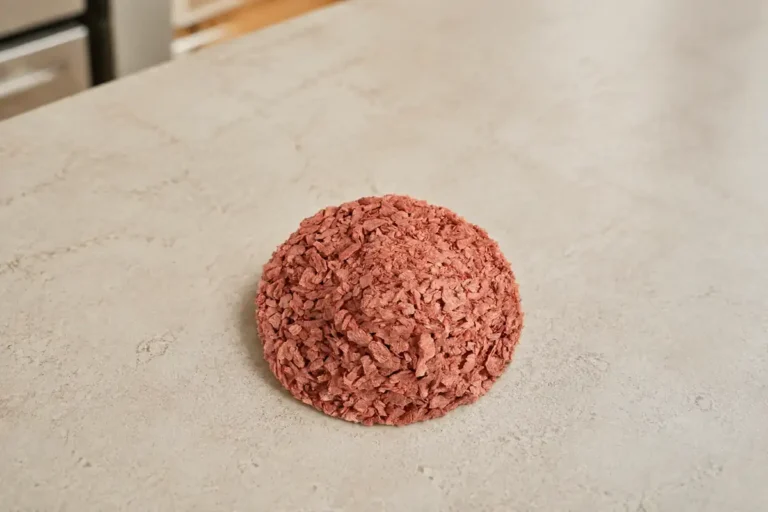
When a product developer in Rotterdam encountered a sharp bean note in a pilot tuna-style salad, she added more seasoning and blended the hydrated pieces again. The dressing became saltier, but the soy character still appeared after chewing. The turning point came when the team compared ingredient lots, hydration water and oil delivery: the problem was not simply a bad product, but a poor fit between specification, process window and flavour system.
Summary: Beany flavour in textured soy protein usually reflects soybean-derived volatile compounds, oxidation history and the way a finished food releases flavour; it rarely has one cause. Start with a controlled three-sample sensory screen, then test hydration, draining, fat addition and seasoning in a defined recipe. Codex distinguishes soy protein products by composition and intended use, so buyers should confirm the specification and application before judging flavour performance. A useful first trial compares a neutral control, an oil-supported version and a fully seasoned version prepared under the same conditions.
Textured vegetable protein (TVP) is a dry, structured ingredient that is commonly rehydrated for meat-style fillings, nuggets, pieces and ready meals. Depending on the raw material, heat history and recipe, its flavour can read as cereal-like, leguminous or beany. For buyers of high protein content soy protein, that distinction is commercially important: performance in a lean soup base may not predict performance in an emulsified chicken-style chunk or a dressed seafood alternative. For a broader product comparison, see this guide to fibrous soy protein versus textured soy protein.
Why can textured soy protein develop a beany flavour?
Soybeans naturally contain lipids and enzymes that can contribute to characteristic flavour compounds when the beans are damaged, processed or stored. Soy-flavour research often considers lipoxygenase activity and lipid oxidation because their products can be perceived at low levels. Extrusion uses heat, moisture and shear, yet it does not necessarily remove every volatile precursor. What a consumer notices also depends on particle size, hydration and the food surrounding the piece.
Freshness and handling can make a mild note more pronounced. Long storage, oxygen exposure, repeatedly opened liners or uncovered hydrated pieces can all work against a clean flavour profile. Ask suppliers for the current specification, storage conditions, lot traceability and a representative preparation method. Keeping a small reference sample from each approved lot gives a 30-day comparison more value than relying on memory from the previous run.
Texture also changes flavour release. A porous chunk may release absorbed liquid early in the bite, while a denser piece can hold flavour until chewing. That is why a dry-aroma check can look acceptable while the finished food disappoints. Use descriptive sensory profiling guided by ISO 13299 principles: agree on a short vocabulary—such as beany, cardboard-like, toasted, savoury and oily—and score coded samples in the same base. This is a development tool, not a certification of the ingredient.
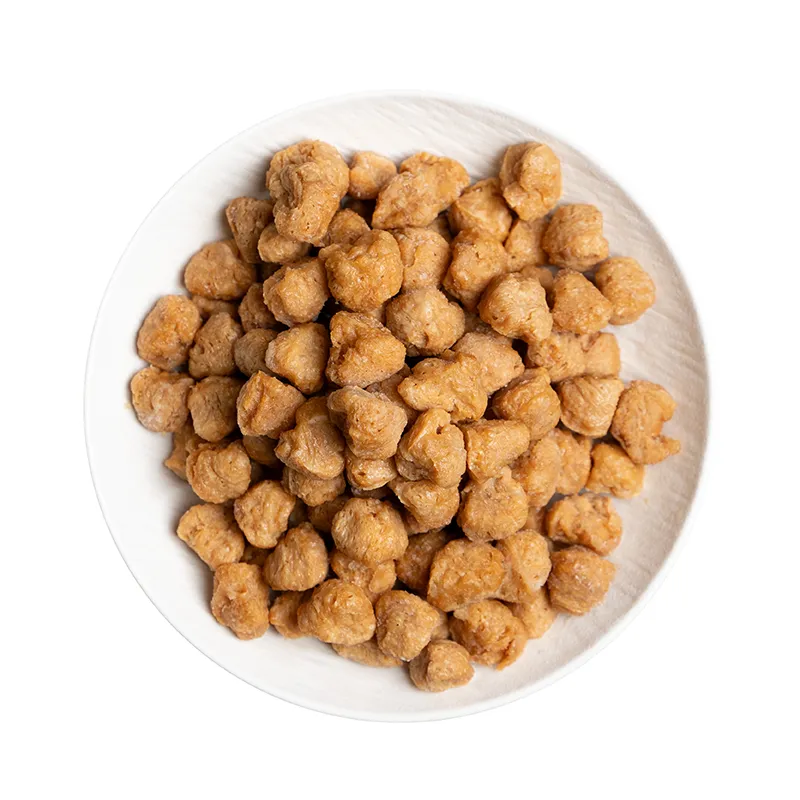
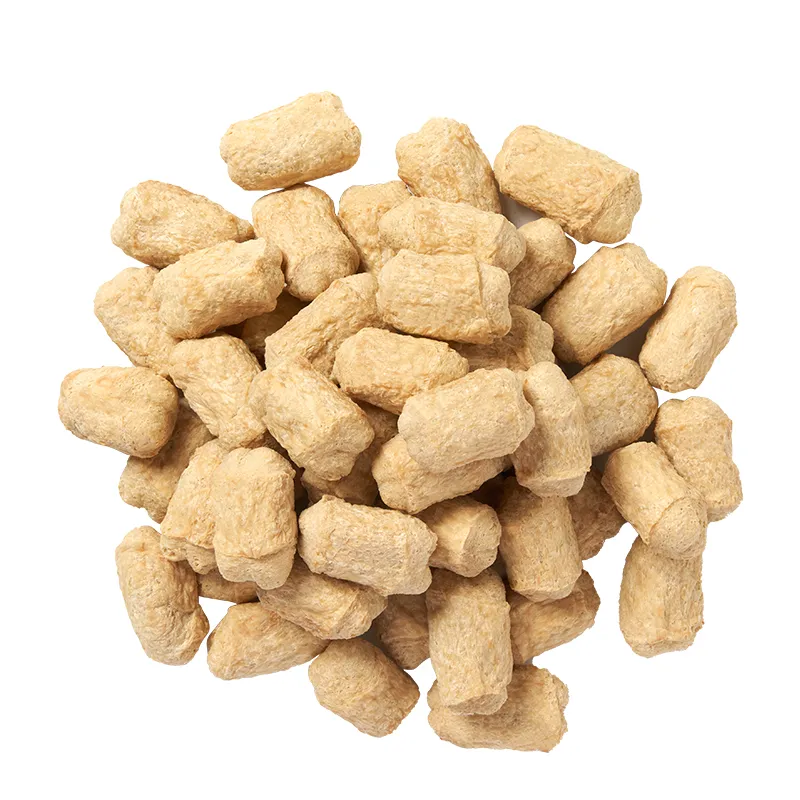
How do hydration and draining affect beany flavour?
Hydration is the first process lever to control. Liquid-to-piece ratio, water temperature, contact time, draining and post-hydration holding all affect what remains on the surface and what enters the structure. Instead of choosing one condition by instinct, run three small coded trials and change only one variable at a time. Record rehydrated yield by weight and free liquid after a fixed drain time; those figures distinguish a genuine flavour improvement from a change in uptake or cost per serving.
Draining deserves the same attention as soaking. If surface liquid remains, the first bite may deliver concentrated soy notes or seasoning that has not been properly distributed. If the pieces are over-drained, a lean formulation can taste dry and expose the legume note after cooking. Set the drain time as a documented process step, then assess the samples in the finished dish rather than in water alone.
Seasoning should be designed for absorption and distribution, not simply for a stronger top note. Salt, acid, yeast-derived savoury notes, spices and marine-style flavours can support a plant-based seafood alternative, but an aggressive flavour dose may fade during cooking or make the beany contrast sharper. Compare seasoning added before hydration with seasoning added after hydration, and evaluate the marinade after its real cook, chill and reheat cycle. ISO 11136 provides guidance for consumer hedonic testing; it does not prescribe a flavour.
How should fat, umami and heat treatment work together?
Fat is both a delivery system and a source of richness. A suitable, stable oil phase can soften a dry or floury impression, carry lipophilic flavour components and slow the immediate release of some notes. Savoury components can provide the body that a lean soy base lacks. The balance matters: adding more oil or umami without checking the full recipe can hide one issue while creating oxidation, heaviness or an unbalanced finish.
Appropriate heat treatment must be assessed in the intended application. For a vegan tuna-style filling, test the protein with the planned oil, acid and chilled shelf-life conditions. For vegan chicken chunks, test the same base after pan heating or a retort-style process simulation when that is the planned use. Heating can change both aroma release and juiciness, so a flavour decision made before the final thermal step is incomplete.
| Trial lever | What to compare | Useful observation | Commercial implication |
|---|---|---|---|
| Protein lot | Two approved lots in one recipe | Beany intensity and aroma consistency | Supports lot-release and supplier discussions |
| Hydration and draining | Three time or temperature conditions with one fixed drain time | Yield, drain loss and surface flavour | Changes ingredient use and line handling |
| Marinade | Pre-hydration versus post-hydration addition | Distribution after cooking | Can reduce rework and flavour overdosing |
| Fat and umami system | Lean control versus intended oil and savoury phase | Roundness, oxidation notes and juiciness | Must be weighed against shelf-life risk |
Which application trials reveal the right flavour system?
Post-extrusion optimisation begins after a structured soy ingredient has been selected: rehydration, washing where appropriate, blending, marinade contact, coating, cooking and packaging. It is especially useful when one base is expected to work in both a chilled seafood-style product and a hot chicken-style entrée. Applying one seasoning system to both can lead to avoidable reformulation cycles, returns and inventory complexity.
For a seafood-style formulation, clean salinity, controlled acidity and the fat phase often need to be in place before the final chilled hold. For a chicken-style application, assess browned and roasted notes after the intended thermal step. Use a matched control and record a 0–10 intensity score from a trained internal panel under fixed serving conditions. The score becomes meaningful only when it is paired with process records and repeat batches.
The total-cost question is broader than the dry ingredient’s unit price. An illustrative comparison includes dry inclusion, hydration yield, marinade loss, flavour dosage, line time, scrap and complaint risk. A more suitable structure may reduce seasoning rework or improve portion consistency, while a lower-cost input may require more masking ingredients. Procurement and R&D should calculate that trade-off from their own validated yields rather than assume a generic percentage.
| Target application | Primary flavour risk | Recommended trial focus | Decision checkpoint |
|---|---|---|---|
| Vegan tuna chunks | Bean note lingers in a cold, acidic matrix | Oil, acid and chilled hold together | Evaluate after final mix and refrigeration |
| Plant-based seafood pieces | Seasoning remains on the surface | Marinade uptake and gentle mixing | Check flavour after chewing, not aroma alone |
| Vegan chicken chunks | Dryness exposes legume notes after heating | Fat retention and cook loss | Assess hot and after a short hold |
| Frozen prepared meal | Flavour shifts after thermal and freeze-thaw stress | Finished-product shelf-life protocol | Approve only from the intended process |
What standards, claims and sourcing checks apply?
Standards and regulations serve different purposes. Codex CXS 175-1989 describes soy protein products and includes compositional and labelling provisions in its scope; it is not a universal product certification. In the United States, soy is one of the major food allergens subject to labelling requirements under FDA rules. Destination-market rules, the finished food’s ingredient list and any nutrition, protein or “high protein” claim determine the documentation and analysis needed.
Do not turn a favourable sensory result into a nutrition, allergen-free, clean-label or shelf-life claim. Those statements need evidence appropriate to the market and finished product. ISO 13299 and ISO 11136 are methods or guidance for sensory work, not badges for an ingredient label. A buyer selling across regions should ask regulatory staff or qualified advisers to review product names, allergen declarations, nutrition panels and marketing language before launch.
A practical sourcing brief has four parts:
- State the end use, including cold seafood-style or hot chicken-style preparation.
- Request the current specification, allergen information, storage instructions and lot documentation.
- Run matched application trials using the intended hydration, fat system and thermal process.
- Set acceptance limits for flavour, texture, yield and process loss before commercial approval.
BCTVP can be considered at this specification stage when a buyer needs structured soy ingredients and application-oriented sourcing support. Its contact team can discuss intended applications and the documentation a buyer needs to review; final claim and regulatory decisions remain the responsibility of the food business placing the product on its market.
Frequently asked questions about managing beany flavour
Why does textured soy protein have a beany taste?
Textured soy protein can taste beany because soybean-derived volatile compounds and lipid-oxidation notes remain perceptible in the finished food. Storage, hydration, recipe composition and cooking can all change how strongly that character is noticed. Compare controlled samples before increasing flavour dosage.
What does soy protein taste like?
Soy protein may taste mild, cereal-like, toasted or distinctly leguminous, depending on its processing history and the food around it. A dry aroma check is not enough, because hydration and chewing change flavour release. Assess it in the intended application and serving condition.
How do you reduce beany taste in soy protein?
Start by selecting a suitable ingredient and controlling storage, then optimise hydration, draining, fat delivery and seasoning in matched trials. Acid, savoury components and a stable oil phase may improve balance, but they should be checked after the planned thermal and shelf-life steps. Avoid treating a heavier flavour dose as the only solution.
Can TVP absorb seasoning and marinades?
Yes, TVP’s porous structure can take up liquid and dissolved seasoning during hydration or marination. Actual uptake depends on piece size, porosity, liquid ratio, time, temperature and draining. Measure yield and evaluate flavour after cooking to choose the most useful process.
Is textured soy protein good for you?
Textured soy protein can contribute protein to a food, but whether a finished product is a good dietary choice depends on its full recipe, serving size, sodium, fat, allergens and an individual’s needs. Soy is a major allergen in several regulated markets, including the United States. Use market-appropriate nutrition and allergen information rather than broad health claims.
How do you make TVP taste more like meat?
Build the target profile through texture, savoury flavour, fat distribution, aroma and the actual cooking step—not seasoning alone. For a chicken-style product, test browned notes and juiciness after heating; for a seafood-style product, test clean salinity and oil balance after chilling. Repeat pilot results with the intended production process.
References used in this guide
- Codex Alimentarius: Standard for Soy Protein Products (CXS 175-1989)
- U.S. Food and Drug Administration: Food Allergies
- ISO 13299: Sensory analysis—Methodology—General guidance for establishing a sensory profile
- ISO 11136: Sensory analysis—Methodology—General guidance for conducting hedonic tests with consumers
The dependable route to a less-beany product is to make the ingredient, process and flavour system prove themselves together. When you are ready to shortlist a structured soy ingredient for a seafood or chicken alternative, review BCTVP’s textured soy protein products and contact the team with your preparation and documentation requirements.