When Marina, a procurement manager in São Paulo, encountered a soy-based filling that collapsed during a pilot, she approved a second hydration run before changing the recipe. The 100 g sample absorbed water quickly, then broke apart in the mixer; within minutes, the cooked filling was pasty and the bun leaked. A review of particle size, density, and extrusion history reversed the initial conclusion: the ingredient was not automatically defective, but the grade and specification were misaligned with the process. This illustrative scenario captures the central buying issue—texture is created by structure, hydration, and processing together.
Summary: fibrous soy protein is a texturized soy ingredient whose performance depends on its protein base, geometry, density, and water behavior—not on protein percentage alone. A practical first check is a controlled 100 g hydration trial, supported by sieve analysis and a defined cooked-texture method. Codex CXS 175-1989 provides an international reference point for soy protein products, while destination-market labeling rules still apply. Before a bulk order, match a grade to the finished product, compare results on one test basis, and request lot-specific documentation.
What Is Fibrous Soy Protein?
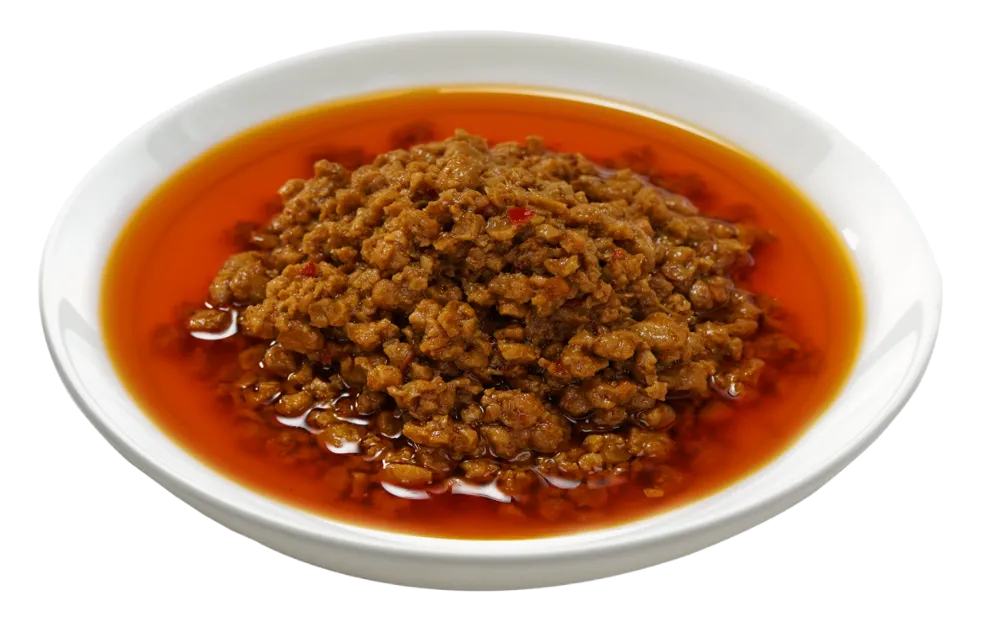
Fibrous soy protein is a texturized ingredient made from a protein-rich soy base. Depending on the product, that base may be defatted soy flour, soy protein concentrate, or another soy material selected for a target composition and structure. Extrusion changes the protein matrix so the finished pieces can be porous, layered, or strand-like.
The word “fibrous” describes a structure and eating quality; it does not, by itself, define protein content, particle size, density, moisture, or hydration yield. Two materials can look similar in a catalogue yet behave differently in a sauce, formed product, or frozen filling. The specification should therefore state the product form, the protein basis, the moisture range, the size distribution, and the performance tests that matter to the recipe.
Protein results also need a consistent basis. For illustration, a material reported at 60% protein as received and 10% moisture contains about 66.7% protein on a dry basis: 60 divided by 90, multiplied by 100. That conversion is not a product claim; it shows why a buyer should agree in advance whether figures are reported as received or on a dry basis. ISO 20483:2013 is one recognized reference for nitrogen and crude-protein determination by the Kjeldahl method.
How TVP Is Manufactured: Extrusion Builds the Matrix
Industrial TVP production commonly starts with a dry soy blend. Water or steam is added as the blend moves through a heated barrel, where rotating screws apply conveying, compression, and shear. At the die, the pressure drop can expand or orient the material; drying then reduces moisture to the level required for storage, packing, and the intended use.
Feed moisture, barrel temperature, screw configuration, residence time, die geometry, and drying conditions all influence density and pore structure. The result is why a protein number cannot predict bite by itself. A buyer should ask for the actual grade specification and certificate of analysis, then record the process conditions used to make the application sample.
A useful plant trial can be simple but must be repeatable. For example, a team may hydrate 100 g of dry material with a defined liquid, hold it for a defined period such as 20 minutes, drain it for a defined period, and weigh the retained water before cooking. The 20-minute value is an illustrative internal condition, not a universal TVP standard. Keep the same water temperature, salt level, vessel, drain method, and balance when comparing grades.
Protein Content and Water Absorption Answer Different Questions
Protein content helps with nutrition declarations and formulation calculations. Water absorption helps with mixer loading, seasoning concentration, filling yield, and the texture that reaches the consumer. Neither measure replaces the other.
Suppose 100 g of dry material retains 250 g of water in a controlled bench test. Its hydrated mass is 350 g before seasoning, cooking, or process loss. If another grade retains 200 g under the same conditions, the 50 g difference may change the amount of broth, the amount of dry ingredient in each batch, and the concentration of the surrounding sauce. These figures are illustrative calculations, not expected results for every product.
Water absorption should be reported with its method and conditions. State the dry sample weight, liquid ratio, temperature, holding time, drain procedure, and whether the result is measured before or after cooking. Then repeat the trial in the intended broth, because salt, oil, starch, acidity, and heating can change water movement. For composition, use ISO 20483:2013 or another method named in the agreed specification, and keep the moisture basis consistent.
Texture Grades and Their Commercial Trade-Offs
Texture grade combines particle geometry, density, porosity, and rehydration behavior. Fine mince can disperse through a filling; flakes or strands can create a visible layered bite; larger chunks can provide a distinct piece in a stew or foodservice portion. A 2 mm mince and an 8 mm chunk are illustrative size points only. The right range depends on the die, the downstream equipment, and the eating experience the formulation is designed to deliver.
Use sieve analysis to describe particle distribution rather than relying on a single nominal size. Then test hydrated and cooked samples with a defined texture profile analysis (TPA), recording sample temperature, compression settings, and other conditions. Hardness, cohesiveness, and chewiness are useful only when the method is held constant. If a sample will be frozen, formed, or reheated, include those steps before making a grade decision.
| Grade family | Typical production role | Performance to verify | Compatibility risk | Cost and efficiency effect |
|---|---|---|---|---|
| Fine mince or small granules | Fillings, sauces, formed mince | Sieve distribution, hydration yield, cooked cohesion | Can become pasty or disappear in the matrix | May increase binder, drain loss, or rework if the structure is too weak |
| Flakes or strands | Shredded formats and layered fillings | Water retention, strand integrity, TPA after cooking | May break during mixing or stay dry at the centre | Usable yield depends on retained water and drain loss, not dry cost alone |
| Chunks or larger pieces | Visible pieces, stews, foodservice portions | Size range, internal hydration, bite after the full cook cycle | Uneven hydration can leave hard cores or a rubbery exterior | May need longer hydration and tighter batch control |
Application Dimension: Choose the Process Window
The best grade is the one that stays within its useful process window. Reproduce the buyer’s salt, oil, sauce, forming, freezing, cooking, and holding conditions; otherwise, a successful beaker test may not predict a successful production run. Three repeat runs are a sensible internal starting point when the cost of a wrong grade is high.
| Application | Structure to prioritize | Process checkpoint | Useful supplier document |
|---|---|---|---|
| Plant-based mince or filling | Even hydration and cohesive small particles | Drain loss, seasoning uptake, cook-out, and final cohesion | Particle range plus a defined hydration protocol |
| Burger or formed product | Binding without a pasty bite | Forming strength, pan or oven cooking, and slice integrity | Sample recipe and TPA settings |
| Dumpling, bun, or quick-frozen filling | Freeze-thaw stability and controlled water release | Filling leakage, thawing, reheating, and wrapper compatibility | Storage, packing, and traceability information |
| Catering or foodservice format | Repeatable hydration at production scale | Batch time, vessel capacity, holding stability, and serving texture | Work instruction and technical support contact |
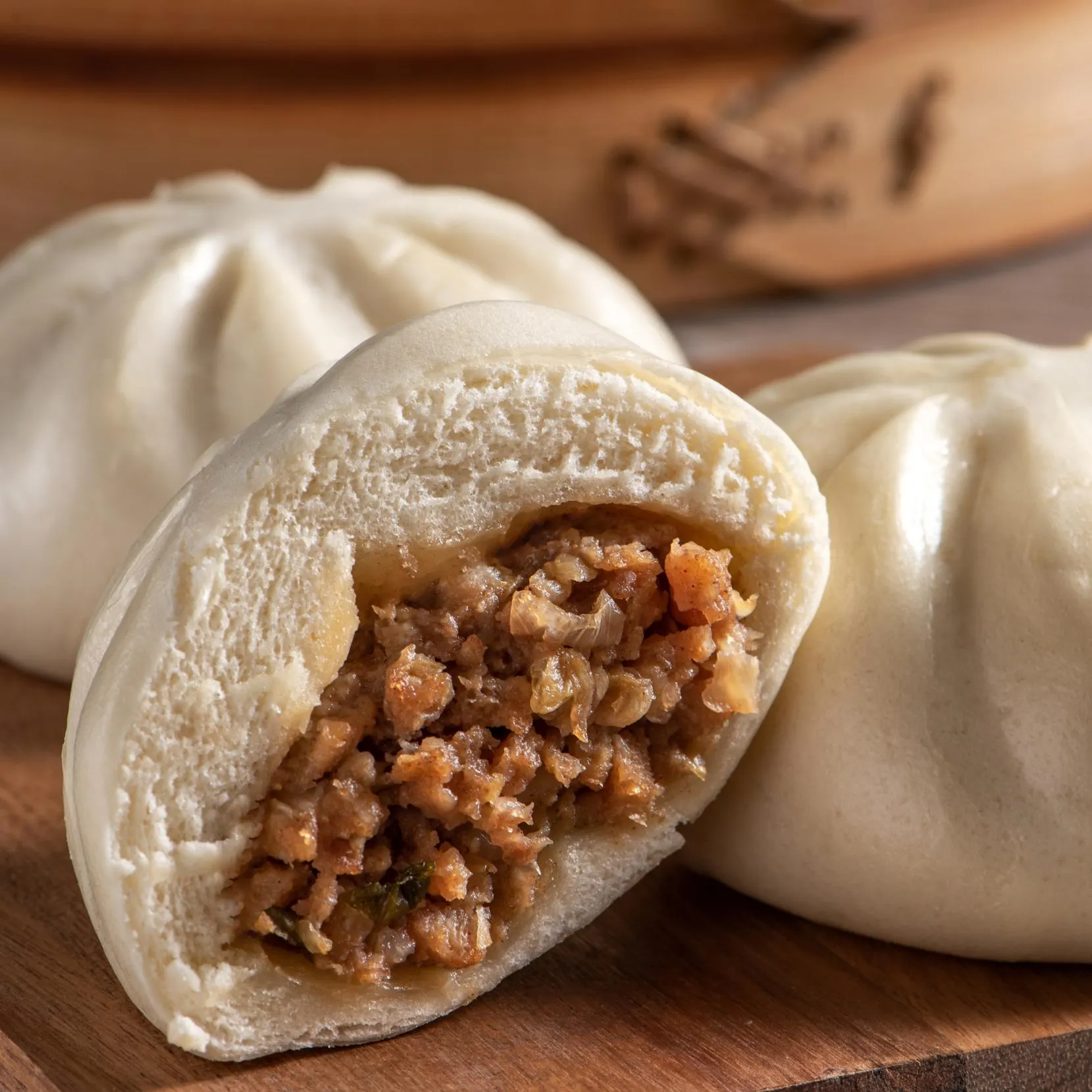
Terminology should be aligned before the trial begins. A purchasing team may use “texturized soy protein,” “TVP,” or “fibrous soy protein” for related products, while a regulatory team may need a more precise ingredient description. For an initial discussion, review Textured vegetable protein China application options alongside the actual process flow, then define the grade by measurable attributes rather than by a name alone.
Standards, Compliance, and the Evidence File
Standards and certificates do different jobs. Codex CXS 175-1989 is an international reference for soy protein products and related compositional and labeling context. ISO 20483:2013 describes a crude-protein test method; it is not a certification of product performance. ISO 22000:2018 addresses food-safety management systems, so its relevance depends on the certified site, scope, and validity.
For a U.S. label, review 21 CFR 101.4 for ingredient naming and declaration requirements, then confirm the current allergen rules for the finished product. Other markets may require different wording, thresholds, or precautionary statements. The destination market, intended use, and claims on pack should be fixed before the supplier sends a final compliance file.
For each critical parameter, request the method, sampling plan, result, and acceptance limit. The file may include moisture, crude protein, particle distribution, microbiological controls, heavy-metal controls, urease activity where relevant, allergen information, traceability, packaging details, and shelf-life support. If a supplier cites HACCP, ISO, Halal, non-GMO, or another status, check the issuer or evidence, site, legal entity, product scope, and validity; a company-level document does not automatically cover every product or shipment.
Unsupported claims create commercial risk even when the ingredient itself performs well. A missing allergen statement, an expired certificate, or a test result reported on a different basis can delay label approval, release, or import clearance. The buyer’s specification should state which documents are required before shipment and which changes require notification.
How to Qualify a Grade and Supplier
- Write the application brief first. Define the finished format, target bite, particle geometry, hydration liquid, cooking cycle, pack size, storage conditions, and destination market. Include the equipment that will mix, form, freeze, or cook the ingredient.
- Set one comparison basis. Ask for protein and moisture on an agreed basis, plus particle-size limits, density if relevant, water-absorption conditions, packaging, shelf life, and lot traceability. Avoid comparing a dry-basis number with an as-received number.
- Run a controlled pilot. Record retained water, drain loss, cooking yield, TPA values, sensory observations, and processing time. Keep any ratio or timing clearly marked as an internal trial condition; do not turn one bench result into a universal product claim.
- Review the evidence file. Match allergen, labeling, food-safety, and certification documents to the destination market and the exact product. Ask how a specification change, new lot, or packaging change will be communicated.
- Model total cost. Compare usable cooked yield, freight, minimum order, lead time, storage, rework risk, and technical support. A lower dry-ingredient cost is not automatically the lower cost per accepted finished batch.
Baichuan Biotechnology can be included in this qualification process when its product formats and documentation fit the brief. Use the public quality and safety information as a starting point, then request current product-specific documents, samples, and commercial terms for the intended application. The final decision should rest on reproducible trial results and a complete evidence file.
Frequently Asked Questions
How is TVP manufactured?
TVP is generally made by extruding a protein-rich soy base with controlled heat, moisture, shear, and pressure. The material expands or aligns as it leaves the die, then is dried and sized for the required format. The process window determines density, porosity, and hydration, so buyers should compare grades under one written test protocol.
Is soya fibrous?
Whole soya beans are not naturally fibrous in the same way as a dedicated plant-fibre ingredient. During extrusion, soy proteins can form a fibrous or layered structure that gives TVP a meat-like bite. The product specification should identify the ingredient form and structure rather than relying on the word “fibrous” alone.
What are the different types of soy protein products?
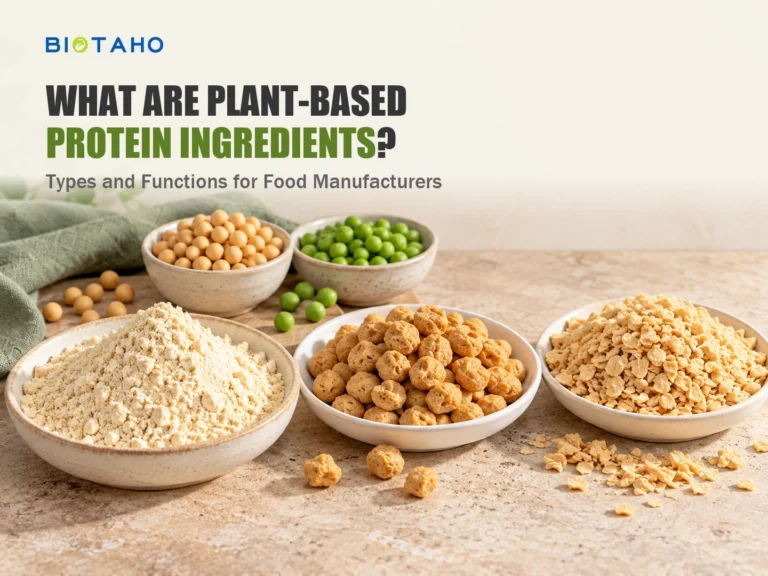
Commercial soy protein products include soy flour, soy protein concentrate, soy protein isolate, textured soy flour, and textured soy protein. They differ in composition, protein concentration, particle form, and functional behavior, so the names are not interchangeable. Choose by finished-product use and compare moisture, particle size, hydration, and cooked texture on the same basis.
Is TVP healthy to eat?
TVP can provide plant protein and fit many diets, but its nutritional value depends on the full formulation, serving size, sodium, added fat, fortification, and preparation method. People with a soy allergy should avoid it, and the label must follow the destination market. Review the ingredient specification and nutrition panel instead of judging the product from its name alone.
Is TVP more processed than tofu?
TVP and tofu are both processed soy foods, but they are made differently. Tofu is produced by coagulating soy milk and pressing the curd, while TVP is usually produced by extruding and drying a protein-rich soy base. “More processed” does not by itself show which ingredient is better for a recipe; compare the ingredient list, texture, sodium, and cooking use.
How to make textured soy protein?
For industrial production, a protein-rich soy base is combined with controlled moisture, extruded through a suitable die, and then dried and sized. The correct temperature, moisture, screw configuration, die, and drying settings depend on the grade and equipment, so a plant must validate them with its own method. For kitchen use, buy a finished TVP product and follow its pack or product specification rather than treating a home recipe as a manufacturing specification.
References
- FAO and WHO Codex Alimentarius standards list, including the framework used to locate standards such as CXS 175-1989.
- Electronic Code of Federal Regulations, 21 CFR 101.4, a U.S. reference for ingredient naming and declaration requirements.
- ISO 22000:2018, Food safety management systems, a management-system standard whose site and scope must be verified.
- ISO 20483:2013, Nitrogen and crude protein determination by the Kjeldahl method, a method reference for consistent protein-basis comparisons.
The reliable ingredient is the one whose structure, water behavior, test method, and compliance file still make sense after the recipe leaves the spreadsheet. Review the product range from a textured soy protein manufacturer, share your application brief, and contact Baichuan for a sample and sourcing discussion before committing to bulk volume.