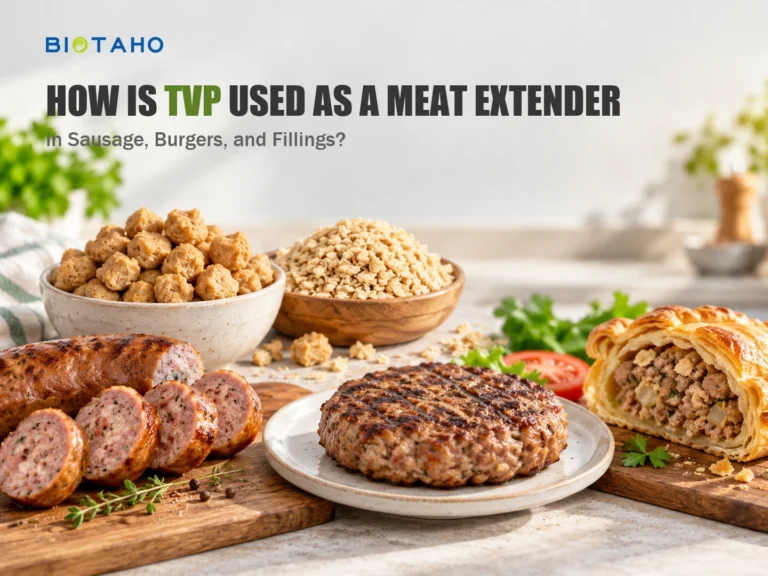
Food manufacturers can select a protein that looks suitable on a specification sheet and still lose time in formulation. A powder may disperse when the product needs visible structure; a large piece may survive hydration but fail during mixing or portioning; and a certificate may not cover the exact grade or destination market. These mismatches can lead to repeated trials, inconsistent texture, relabelling work, or a delayed customer approval. Choosing protein ingredients is therefore an application decision, not simply a search for the highest protein number. This guide explains how to define the finished food, match ingredient function and physical format, compare candidates under the intended process, and verify the documents needed before a commercial approval.
The short answer is that the right ingredient is the one that fits the finished product’s texture, process, formula, label, and supply requirements at the same time. Start with the required function—dispersed protein, water management, cohesion, or visible structure—then compare the exact grade in a controlled application trial. FDA ingredient guidance and Codex food-standard texts help frame the regulatory review, but they do not replace confirmation of the specification, allergen information, certificate scope, and destination-market requirements. This approach makes protein ingredient selection more defensible than choosing by category name or protein claim alone.

What should a product team define before choosing a protein ingredient?
The finished food should be described before the ingredient catalogue is opened. Record whether the target is a sauce, filling, formed product, ready meal, snack, or another application, and describe the desired texture in terms the development and production teams can evaluate. The target may require a dispersed contribution, a cohesive bite, a visible particulate, a fibrous impression, or a structured piece. These are application objectives rather than universal properties of a protein source.
The process brief should also record when hydration occurs, how the material will be mixed, whether it will be formed, how it will be heated, and how long the finished product will be held, chilled, frozen, or reheated before evaluation. A dry sample and a hydrated sample answer different questions. The candidate must be reviewed after the same handling and thermal steps used in production, because process stress can change the perceived bite and the stability of the formula.
Commercial boundaries belong in the first brief as well. They may include the destination market, intended label wording, allergen position, required certifications, packaging, minimum order quantity, lead time, traceability, and change-control expectations. A successful kitchen trial does not by itself prove that the proposed grade is commercially or regulatorily suitable. The technical trial and the document review should proceed together.
How do ingredient function and physical format affect product performance?
Protein is not a single functional category. Some materials are screened mainly for their contribution to the formula after dispersion, while textured materials are screened for the way they absorb liquid and create a particulate or fibrous structure. This is why functional protein ingredients should be compared by the job they must perform in the recipe, not only by their source or front-of-pack positioning.
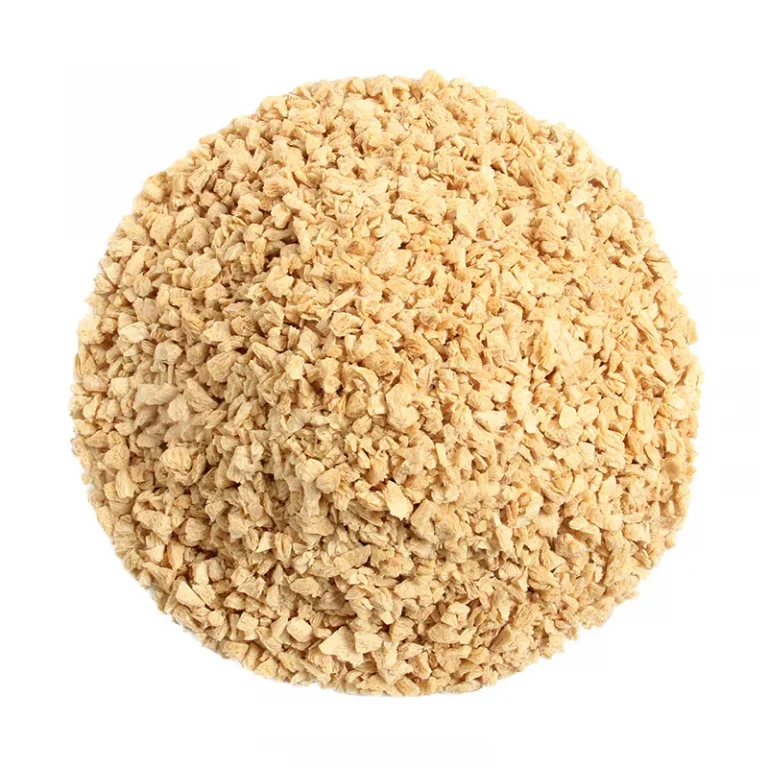
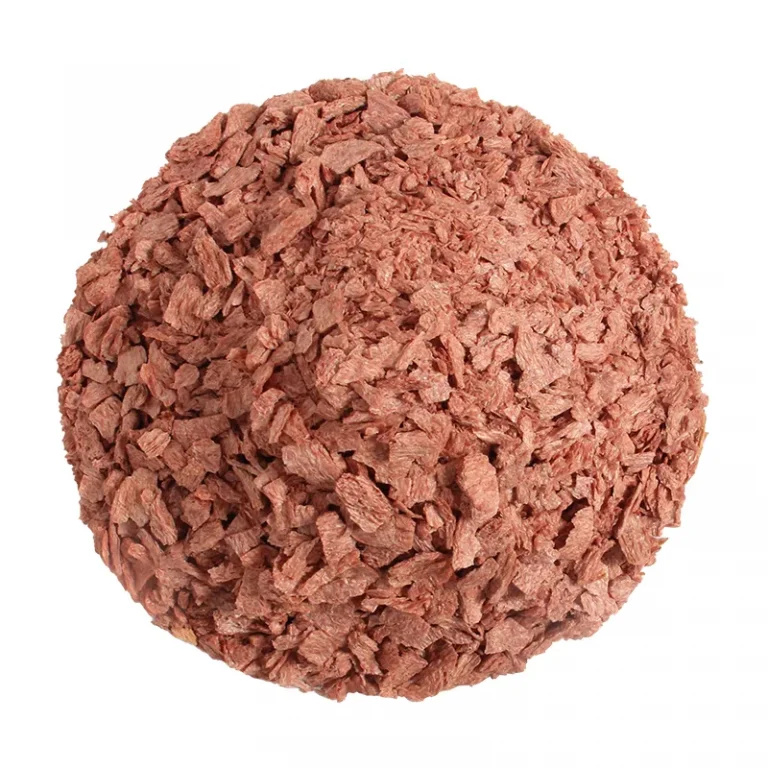
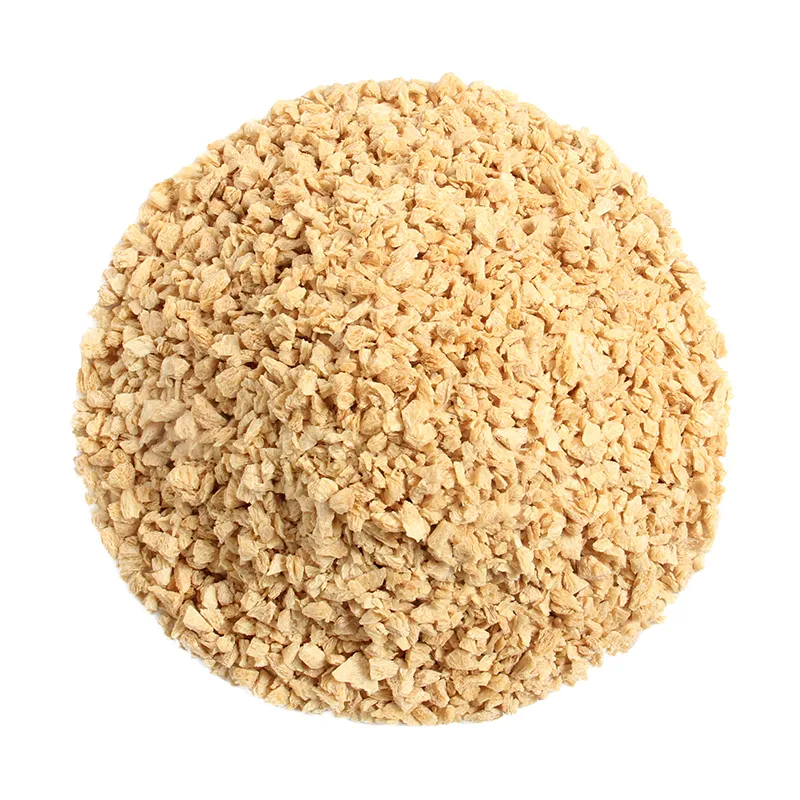
Format is an equally important screening variable. Granules can be considered when the product needs a distributed or minced appearance; flakes can provide a different starting point for blending and visible texture; chunks and cylinders can be screened when piece identity matters; and steaks or strands may be relevant when the product needs a larger or directional structure. These descriptions identify candidates for testing. They do not establish a fixed hydration ratio, a universal cooking result, or interchangeability between grades.
| Format to screen | Possible application role | Questions for the trial | What still requires confirmation |
|---|---|---|---|
| Granules | Distributed particulate texture in fillings, formed foods, or other minced-style systems | Does the material hydrate evenly, disperse through the formula, and retain the intended bite after cooking? | Exact particle size, preparation conditions, cohesion, and finished-product yield |
| Flakes | Visible but flexible pieces or a format blended into a broader matrix | Does the flake remain identifiable and fit the mixing, forming, seasoning, and cooking sequence? | Grade-specific water response, breakage during handling, and final texture |
| Chunks and cylinders | More apparent piece structure where bite and visual identity are part of the product brief | Does the centre hydrate, does the piece survive handling, and does the cooked texture remain acceptable? | Size, density, internal texture, process tolerance, and the appropriate preparation method |
| Steaks and strands | Structured or elongated formats for a more directional or portion-level texture | Does the format fit portioning, seasoning contact, forming, cooking, and serving? | Whether the proposed geometry suits the exact finished-food process and label position |
A shortlist should therefore distinguish between the ingredient’s source, its physical format, and its role in the finished product. A plant protein ingredient may be suitable for one formula and unsuitable for another even when the two products have similar protein-positioning goals. The useful question is not whether a category sounds appropriate; it is whether the exact material performs the required function under the intended process.
Which functional properties should be compared in a protein formulation?
Product developers should define the few functional properties that can change the commercial result. Depending on the application, the evaluation may include water uptake, hydration uniformity, dispersion, cohesion, visible piece retention, bite, seasoning contact, breakage, and behaviour after cooking or reheating. Not every property matters equally in every product, so the test sheet should reflect the finished-food brief.
Water management is often a practical dividing line. Uneven hydration can create a hard centre, a soft surface, or variable seasoning distribution. Excessive liquid release can affect the surrounding matrix, while insufficient preparation can make a candidate appear unsuitable when the real problem is an uncontrolled process. The trial should document the grade, preparation method, liquid basis, contact time, drain or transfer step, mixing sequence, and evaluation point. Broad category advice should not be treated as a specification for a particular material. The same discipline keeps functional protein ingredients tied to measurable application requirements.
Process compatibility must be assessed alongside texture. Mixing intensity, forming pressure, thermal treatment, cooling, storage, and reheating can all change the final result. A candidate that looks promising after hydration may not retain its intended structure after the complete production route. This is why functional protein ingredients need a finished-product test rather than an isolated ingredient tasting.
How can buyers compare protein ingredients without relying on price alone?
Price per kilogram is only one input into a procurement decision. The more useful comparison includes preparation, usable output, process loss, rework, documentation, continuity of supply, and the cost of repeating a trial when the approved grade changes. A disciplined comparison of protein ingredients keeps those variables visible instead of treating unit price as the complete commercial picture. The framework below is not a ranking of sources or suppliers. It is a way to keep each candidate tied to the same technical and commercial questions.
| Decision dimension | What to compare | Evidence to request or record | Decision question |
|---|---|---|---|
| Product function | Protein contribution, water management, cohesion, dispersion, or visible structure | Exact specification and a coded application trial | Does the candidate perform the job required by the finished food? |
| Texture and process | Hydration uniformity, bite, breakage, forming behaviour, cooking response, and reheating response | Written protocol, batch observations, and finished-product approval record | Does the result remain acceptable after the real process and hold conditions? |
| Formula compatibility | Interaction with water, oils, seasonings, binders, starches, fibres, and other ingredients | Version-controlled recipe trial and review of the complete formula | Does the material support the whole formulation rather than only a prepared sample? |
| Label and market fit | Ingredient declaration, allergen statement, intended claims, and destination-market requirements | Current grade documents and review of approved label wording | Can the proposed grade be used and described as intended in the target market? |
| Supply evidence | Specification control, lot traceability, packaging, MOQ, lead time, certificates, and change notification | Written supplier responses and current documents for the proposed grade | Can procurement approve the ingredient with a complete evidence file? |
Which protein formats should be screened for different food products?
Application-led screening prevents a development team from treating every product as the same texture problem. The categories below are starting points, not performance guarantees. A protein ingredient selection decision should move from the finished-food requirement to the candidate format, then to a controlled trial and document review. This sequence gives protein ingredient selection a clear evidence trail from brief to approval.
| Finished-food requirement | Formats to screen first | Primary risk to test | Next evidence step |
|---|---|---|---|
| Distributed mince or filling texture | Granules and other smaller particulate formats | Uneven hydration, weak cohesion, or a texture that disappears into the surrounding matrix | Run the complete filling through mixing, forming, cooking, and hold conditions. |
| Visible pieces in a prepared food | Chunks, cylinders, or flakes matched to the intended piece profile | Hard centres, excessive breakage, or a mismatch between piece size and portion | Check internal hydration and piece survival after the actual thermal and handling steps. |
| Directional or fibrous visual impression | Strands or other structured formats suited to the portioning method | Loss of structure during mixing, seasoning, forming, cooking, or reheating | Review the sample against the intended cutting, serving, and reheating sequence. |
| Portioned or steak-like presentation | Steaks or larger structured formats | Handling damage, uneven seasoning contact, or bite mismatch across the portion | Test the complete process and confirm the grade-specific preparation instructions. |
| Protein contribution with limited visible structure | A dispersed or smaller-format material selected for formula compatibility | Changes to viscosity, moisture balance, flavour perception, or label position | Review the finished formula, nutrition data, sensory result, and permitted claims together. |
How should process trials and supplier evidence be controlled?
A fair trial changes as few variables as possible. Use the same dry ingredient basis, preparation method, liquid basis, contact time, drain method, seasoning addition, mixing sequence, cooking route, and evaluation point for each candidate. Record observations that matter to the finished food: hydration uniformity, surface wetness, internal firmness, breakage during mixing, visible structure, cohesion, and texture after the planned hold or reheating step. If the team records a number, it should also record the method and basis so that a development observation is not mistaken for a supplier-wide guarantee.
The evidence file should be linked to the exact sample and grade tested. It should include the current specification, ingredient statement, allergen information, storage and packaging information where applicable, traceability details, relevant certificates, MOQ, lead time, and change-notification expectations. Product suitability, certificates, packaging, and destination-market compliance should be confirmed for the proposed grade and order rather than inferred from a general category page.
For teams evaluating protein ingredients, this connection between sample and documentation is a useful approval control. It prevents a technically acceptable prototype from being approved against the wrong specification, and it gives procurement a clear record of which changes require a new trial, customer review, or regulatory assessment.
What standards and compliance checks apply to protein ingredients?
The phrase “protein ingredient” does not by itself determine whether a material may be used in a particular food, how it must be declared, or which claims may be made. The review depends on composition, intended use, processing, claims, allergen status, and destination market. The U.S. Food and Drug Administration’s guidance on food ingredients provides general context for ingredient-use questions, while Codex provides international food-standard texts. These are reference points, not a replacement for a market-specific review of the exact formula and grade.
Allergen communication must be handled as a product and market requirement. A supplier document can support the review, but the finished product’s label and claims remain the manufacturer’s responsibility. The same care applies to any Non-GMO, HALAL, IFS, or other certification wording: check the current certificate, scope, site, product, and market relevance before using the statement. A company-level page should not automatically be generalized to every grade or shipment.
These checks are part of protein ingredient selection, not paperwork added after the technical decision. If the selected material changes the ingredient declaration, allergen position, claim language, or customer approval route, that impact should be identified before a commercial order is released. Public sources such as the Baichuan quality and safety information can start the review, but grade-specific confirmation remains necessary.
How can a buyer approve a protein ingredient for a finished product?
- Write the application brief: finished food, target texture, visible structure, process route, destination market, label position, and acceptance criteria.
- Shortlist formats that could plausibly deliver the required function, then request the matching grade specification instead of relying on a generic category description.
- Run coded samples under the same preparation, mixing, cooking, cooling, storage, and evaluation conditions, and record both sensory observations and process behaviour.
- Review ingredient, allergen, traceability, quality, certificate, packaging, MOQ, lead-time, and change-control documents for the exact grade and production site.
- Approve the sample and specification together, and define which future changes require a new application trial or customer and regulatory review.
Baichuan can be included in that evidence-based comparison as one supplier with public textured soy protein formats. The Baichuan TVP product range provides a starting point for reviewing the available format families, while the textured soy protein granules and textured soy protein flakes pages can help a team frame format-specific questions. Buyers should still confirm suitability, specification, MOQ, packaging, lead time, certificates, and destination-market compliance for the exact order.
What do buyers ask about protein ingredients?
What ingredients are high in protein?
Commercially, high-protein ingredients can include soy-derived materials and other plant or animal protein sources, but the relevant value depends on the exact grade, formulation, and declared serving basis. For a B2B project, the buyer should review the specification and finished-product nutrition data rather than infer a result from a category name. A plant protein ingredient must also fit the required texture, process, label, and allergen position.
What are 7 foods rich in protein?
There is no single list that answers every product-development question because a consumer food list and a commercial ingredient shortlist serve different purposes. Manufacturers should identify the intended food, target market, claims, and processing route first, then compare relevant protein materials using the same finished-product criteria. A food that is protein-rich in one serving context may not be a suitable functional ingredient for another formula.
What are the 20 sources of protein?
There is no universal set of 20 sources that determines a procurement decision. Sources can be grouped by origin, processing form, allergen status, function, or finished-food use, and those groupings lead to different shortlists. The practical next step is to define the product requirement and request grade-specific composition, functional, safety, and market documentation.
What are the 7 main proteins?
“The seven main proteins” is not a universal technical classification for commercial food formulation. Product teams usually need to distinguish source, physical format, functional role, processing behaviour, and regulatory fit instead of forcing all candidates into a fixed number of categories. For a specific project, a controlled trial and document review are more useful than a general list.
What is the practical conclusion for choosing protein ingredients?
The central distinction is between a protein source, the physical format supplied, the function required by the formula, and the finished food that the customer will evaluate. Start with the application and process; then compare hydration, texture, recipe compatibility, label fit, and supply evidence using the same criteria for every candidate. Do not approve a material because its name sounds close to the target product, and do not treat a general certificate or category statement as proof for every grade or market. A defensible plant protein ingredient decision connects the approved sample to the exact specification and destination requirements. Baichuan’s public range gives buyers one supplier set to screen, while the next step remains grade-specific testing and documentation review. For an application discussion, buyers can contact Baichuan with the product brief and evidence requirements.
Which sources support this protein ingredient selection guide?
- U.S. Food and Drug Administration: Types of Food Ingredients — general context for food-ingredient use and regulatory review.
- European Food Information Council: Plant-based protein — background on plant protein and dietary context.
- FAO/WHO Codex Alimentarius: Codex texts — international food-standard reference texts.
- PubMed Central — public archive for peer-reviewed biomedical and food-related research used for further source checking.