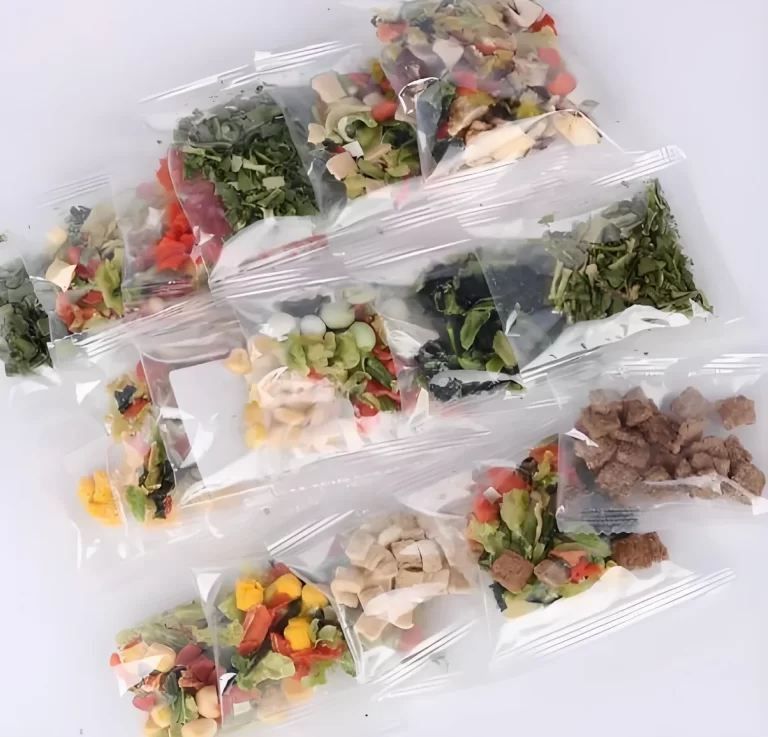
When a product developer in Chicago found a tough bite in a pilot batch of plant-based chili, she added broth and extended the simmer. Within minutes, the surface softened while the center remained chewy. It first looked like a poor ingredient lot, but side-by-side soak tests pointed elsewhere: a dense chunk had been put into a light-sauce process with no controlled hold time. The remedy was to match the texture and process, not simply change suppliers.
Summary: Rubbery TVP usually signals a mismatch among piece density, available water, soak time, and the mechanical or thermal treatment that follows hydration. Start with a controlled trial—three hydration ratios at a fixed 15-minute soak, for example—and record drained weight, center texture, and cooking loss before scaling. Moisture is a measurable quality variable: an oven-drying method such as AACC International Method 44-15.02 is commonly used for flour moisture, but any method needs validation for the specific TVP matrix and application.
Textured vegetable protein (TVP) is a dry, porous ingredient that takes up water and contributes a meat-like bite in finished foods. Formats do not rehydrate alike: size, wall thickness, pore structure, starting moisture, protein source, and formulation each influence the result. The Codex General Standard for Soy Protein Products (CXS 175-1989) provides useful terminology for soy protein products; the buyer’s own specification should still define the required texture and preparation method in the finished dish.
How can you tell whether density or preparation is causing the problem?
A rubbery result can arrive by two common routes. A dense piece may not absorb enough liquid at the core, leaving it firm. Alternatively, a fully hydrated piece can tighten after aggressive mixing, prolonged heat, or transfer to a low-moisture sauce. Separate these failure modes; otherwise, the team may keep extending the soak when the real damage occurs in the kettle.
How can a receiving and bench test identify the cause?
Work through the diagnosis in order. First, cut open pieces after a measured soak: a dry or chalky center points to underhydration. If pieces are uniformly soft before cooking and lose structure easily, reduce the ratio or soak time to test for overhydration. Next, compare the same soak on a less-dense or smaller format; if the center improves, grade density or particle size is the likely constraint. If the center is hydrated but the cooked sample is springy, review actual product temperature, cooking time, mixer speed, and mixing minutes before changing the ingredient.
For each candidate texture, weigh a fixed dry sample, hydrate it in a measured liquid amount, drain it consistently, and weigh it again. Percent mass gain is more useful for comparison than a subjective impression alone. Water absorption index (WAI) testing is widely used in extrusion research to compare hydration behavior; it is a comparative process test, not a universal product certification. Add a basic Texture Profile Analysis (TPA) compression check when the development team has access to a texture analyzer, and record the instrument settings and sample geometry.
| Observed result | Likely mechanism | First check | Practical correction |
|---|---|---|---|
| Firm center, soft surface | Liquid has not reached the core | Piece size, dry density, soak ratio | Use a smaller or more open texture, or increase controlled hydration time |
| Uniformly springy, chewy bite | Dense structure or heat-tightened protein network | Cooking temperature, hold time, mixing | Reduce agitation and shorten the high-heat hold |
| Soft then tough after saucing | Moisture migration into a low-water system | Free liquid in sauce and post-soak hold | Adjust sauce water phase and add hydrated TVP later |
| Dry, compact pieces | Insufficient absorption or uneven wetting | Liquid-to-TVP ratio and mixing coverage | Use measured additions and gentle, complete wetting |
How should hydration, seasoning, and fat be balanced?
Hydration ratio and soaking time should be written as a preparation specification, not left as a kitchen estimate. Begin with 1:2.0, 1:2.5, and 1:3.0 dry-TVP-to-liquid trials by weight, holding temperature and time constant. These are starting points, not universal instructions: the optimum changes with piece size, density, liquid viscosity, salt, and the next cooking step.
Let the sample drain for a consistent period before judging it. Measuring initial and drained mass provides an auditable view of uptake; a validated laboratory moisture method adds control at production scale. Then test the actual seasoning and fat system. Salt and a thick sauce can change how freely liquid reaches the piece, while fat can improve lubrication and flavour carry. Neither substitutes for a hydrated core, so assess oil retention and final bite after the same cook cycle rather than in plain water alone.
Which texture density fits the finished food?
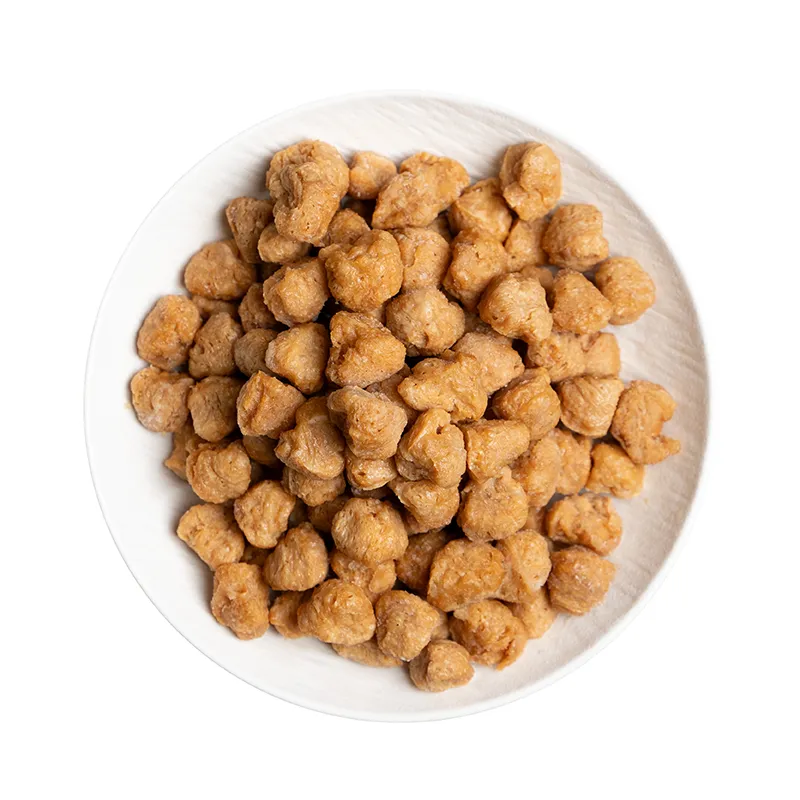
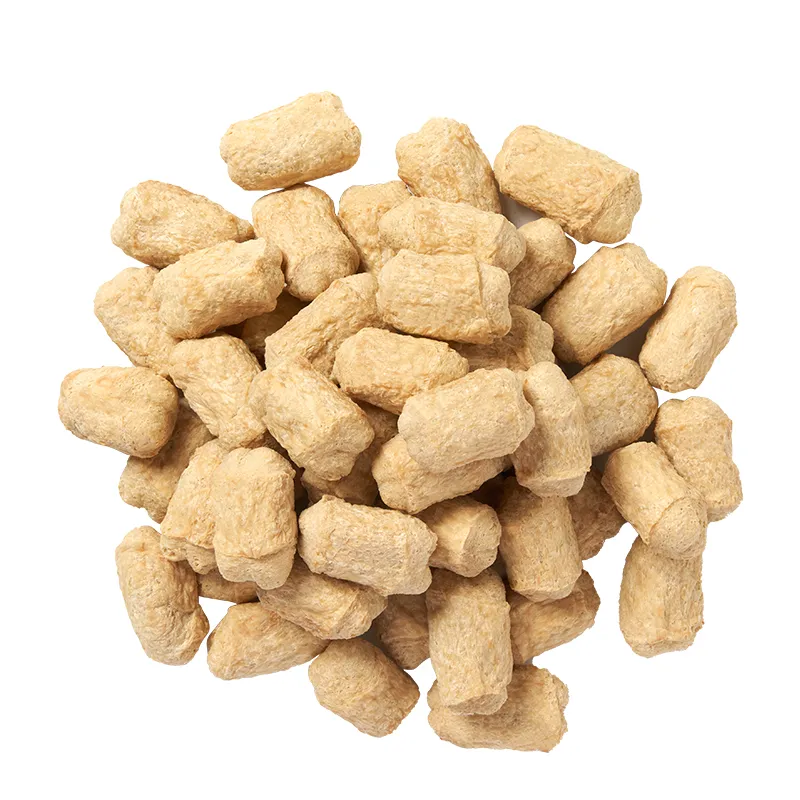
Texture selection should follow the application’s moisture budget. A porous, faster-hydrating format can be a better fit for a ready sauce, taco filling, or quick bowl assembly. A firmer piece may better tolerate a longer cook, retort development work, or a high-moisture braise—but it must still be validated after the full time-temperature history. The total-cost effect is easy to miss: an ingredient with a lower unit-cost tendency can create higher effective cost if its preparation causes rework, inconsistent portion weight, or customer complaints. Any yield or cost calculation should be labeled illustrative until the buyer’s own formula, trim loss, and serving process are tested.
When a formulation calls for low fat soy protein, ask the supplier to distinguish between an analytical fat target and expected functionality in the intended recipe. Likewise, a request for non-GMO soy protein should state the destination-market claim, evidence needed, and identity-preservation expectations; the phrase alone does not predict hydration performance.
How can mixing and cooking protect hydrated TVP?
Once TVP has absorbed liquid, mechanical energy becomes a major control point. High-shear mixing, repeated scraping, and extended stirring at high heat can break, compact, or toughen pieces. Add hydrated TVP after the sauce is uniform where the process allows, then use the lowest shear that still distributes it. Record the addition point, mixer speed, minutes of agitation, product temperature, and final hold; verify product temperature with a calibrated probe, not only the jacket setpoint.
A useful pilot plan changes one factor at a time after the baseline is established. Keep sample size, liquid composition, draining, and tasting timing consistent. A three-person blind sensory panel can identify directional differences, but it is not a substitute for a trained sensory program or a validated instrumental method. Pair the panel notes with TPA hardness or compression force when available, then review cooking loss and piece integrity.
| Test round | Controlled change | Measurements to record | Decision rule |
|---|---|---|---|
| Baseline | Current recipe and process | Dry and drained mass, center bite, cook loss | Define the defect in measurable terms |
| Hydration screen | Three liquid ratios; fixed time and temperature | Mass gain, unevenness, drained appearance | Choose the lowest ratio that fully hydrates the center |
| Thermal screen | Shorter versus longer post-addition hold | Probe temperature, TPA or bite score, integrity | Remove excess hold that adds toughness |
| Mixing screen | Reduced speed or fewer mixing minutes | Piece breakage, sauce distribution, texture | Use the gentlest setting that keeps the batch uniform |
| Confirmation | Repeat the selected conditions on another day | All above data plus operator notes | Release a written preparation specification only if repeatable |
What should a purchase specification include for repeatable results?
A buyer should specify format, piece-size range, density or particle-size target where relevant, hydration protocol, target finished texture, allergen needs, and evidence for each label claim. For applications using defatted soy flour protein as a raw material or ingredient basis, confirm what the commercial specification covers rather than assuming all soy-derived ingredients behave alike. BCTVP’s application solutions can help frame the discussion around the intended cook cycle and finished texture.
How should standards and claims be applied?
Codex CXS 175-1989 sets an international food-standard framework for soy protein products; it does not certify a particular supplier or guarantee a preferred sensory result. AOAC Official Methods are analytical methods that laboratories may use or adapt within validated quality systems; an analytical method is likewise not a marketing certification. In the United States, the FDA’s food-labeling requirements apply to the finished food and its claims, while the USDA National Bioengineered Food Disclosure Standard has its own disclosure scope. Destination market, intended use, and the exact wording on pack determine what documentation and review are needed.
Unsupported “high protein,” “non-GMO,” allergen, or quality claims can create relabeling, customer-contract, and regulatory risk even when the product performs well. Ask for current, product-specific documentation and have the responsible regulatory team evaluate the finished label. BCTVP can be a practical sourcing conversation when the buyer provides its target application, desired chunk density, and preparation constraints; use its contact team to request product and application information before committing a formula.
Frequently asked questions about TVP texture
Why does TVP texture change during preparation?
TVP absorbs liquid, and that changes its mass, pore filling, and bite. Heat, sauce viscosity, salt, oil, and the force of mixing continue to change the result after soaking. Use one written preparation method when comparing samples so the ingredient, rather than the procedure, is being evaluated.
Why does TVP become rubbery?
It can become rubbery when a dense piece is underhydrated at the center or when a hydrated piece receives too much heat or agitation. The correction depends on which mechanism is present. Compare a cut-open soaked piece with a sample taken after cooking before changing both the soak and recipe.
Why does TVP become mushy?
Mushiness often follows excess liquid, an overly long soak, prolonged cooking, or mechanical damage to a fragile format. It may also indicate that the selected texture is too open for the application. Reduce one exposure at a time and assess drained structure before adjusting the entire formulation.
How can I make TVP softer after soaking?
First confirm that liquid reached the center by cutting several pieces open after a measured soak. If the core is still dry, test a modestly higher liquid ratio, more time, or a more open texture while keeping temperature controlled. Avoid relying on extra stirring, because it can damage pieces without improving core hydration.
How do I prevent TVP from falling apart during cooking?
Choose a format suited to the cook cycle and add it at a point where it will receive enough, but not excessive, agitation. Use the lowest mixer speed that distributes the ingredient evenly and avoid long holds after the desired temperature is reached. Confirm piece integrity after the full process, including filling or packaging steps if applicable.
Can overhydration change TVP texture?
Yes. Too much available liquid or too long a soak can weaken the bite and make pieces more vulnerable to breakage during mixing. The right target is not the maximum water uptake; it is repeatable hydration that produces the intended finished texture in the actual sauce and cook cycle.
References and next step
- Codex Alimentarius: General Standard for Soy Protein Products (CXS 175-1989)
- AOAC INTERNATIONAL: Official Methods of Analysis
- U.S. Food and Drug Administration: Food Labeling Guide
- USDA Agricultural Marketing Service: National Bioengineered Food Disclosure Standard
The most reliable cure for rubbery TVP is not a longer soak; it is a repeatable match between the selected texture and the process it must survive. Review the BCTVP product range for the format you want to test, then contact BCTVP with the recipe, cook cycle, and finished-bite target so the discussion starts with usable process information.