When Maya Chen, a product-development manager in Chicago, encountered a mushy textured soy protein filling during an illustrative plant trial, she raised the heat and extended the mixing time. The filling released more liquid, lost its shape, and spread across the test pieces. The reversal came when her team mapped the water balance instead of blaming the ingredient: they had measured water by volume, left the hydrated material standing in liquid, and added a wet seasoning before browning. After they weighed the water, timed the soak, and standardized draining, the same format produced a firmer, more repeatable bite.
Summary: Mushiness usually points to excess free water, waterlogging, or moisture added during seasoning—not automatically to a defective raw material. As an illustrative pilot, test 100 g of dry material with the supplier’s approved water range, check it at 10 and 15 minutes, then drain and squeeze before seasoning; the correct setting depends on grade, particle size, and application. Record final mass, moisture, and water activity, and review the ingredient declaration and soy-allergen obligations against the destination market, including the U.S. rule in 21 CFR 101.4.
What a mushy texture actually indicates
Textured soy protein is porous by design. It can take up water and contribute structure, but the hydrated pieces still have a limit to how much liquid they can hold without losing definition. The same water-balance principle applies across textured vegetable protein formats: when surrounding liquid exceeds the structure’s capacity, free water remains between particles and the cooked filling can feel soft, pasty, or wet.
Start with a simple mass balance. Weigh the dry ingredient, weigh the water, record the water temperature, and note the time from addition to draining. Then weigh the hydrated and drained material separately. That sequence turns “the texture is too soft” into a measurable question: did the material absorb too much, did it retain free liquid, or did the finished formula add water later?
Do not ignore the rest of the process. Steam condensation, a wet sauce, a long mixing hold, and chilled storage can all return moisture after a good drain step. A moisture reading or water-activity measurement can help separate those effects; use a validated gravimetric moisture method or suitable laboratory method for the product, and document the sampling plan. ISO 22000:2018 supports documented food-safety management and process control, but it does not certify a particular bite or hydration setting.
How overhydration and waterlogging develop
Overhydration begins with too much water for the selected grade or recipe. Waterlogging can occur even when the initial ratio seems reasonable. Fine particles expose more surface area, large pieces can trap liquid in their geometry, and a long soak leaves the material immersed after it has already reached the desired state.
Temperature changes the speed of uptake. A warm soak may shorten the time needed to soften the pieces, while a holding delay gives liquid more opportunity to migrate into the surrounding formula. The goal is not maximum absorption. It is a repeatable hydrated state that leaves enough capacity for vegetables, sauces, oils, and the product’s cook-and-hold cycle.
Build a small pilot matrix before making a large process change. For example, compare two water levels and two hold times while holding particle size, mixing, seasoning, cooking, and holding constant. Weigh the drained yield and the liquid removed, then assess bite and shape at the point of use. If the material firms after draining but becomes mushy after sauce addition, the process has located the problem in moisture allocation rather than initial hydration.
Keep the pilot settings provisional. A 10–15 minute window may be useful for screening, but it is not a universal specification. The supplier’s grade guidance, your equipment’s heat transfer, and the finished product’s moisture target should set the approved range.
Water, time, and temperature: a controlled hydration sequence
A repeatable TVP hydration sequence has four checkpoints: dry mass, water mass, temperature, and elapsed time. Use the same vessel and loading depth during trials. A deep container can create a different thermal and drainage profile from a shallow tray, even when the water-to-dry ratio is unchanged.
- Weigh the dry material and water separately. Do not estimate either quantity with a scoop.
- Record water temperature and start the timer at the same point for every batch.
- Inspect a sample at defined intervals for core softness, surface wetness, and intact shape.
- Drain at the planned endpoint, then record hydrated mass before the squeeze step.
For process development, use a written TVP hydration window rather than “soak until soft.” Note the grade, piece size, water temperature, vessel, load, hold time, drain method, and acceptance criteria. The acceptance criteria might include a target bite, a maximum free-liquid observation, or a defined mass range; do not copy a value from one grade into another without a trial.
If the center is still firm while the outside is wet, the issue may be distribution or piece geometry rather than too little total water. If the whole batch is soft before draining, reduce water or time in a controlled trial. If it is acceptable before seasoning and fails afterward, audit the liquid seasoning and mixing hold next.
Squeeze and drain without damaging the structure
Drainage is a control point, not a cosmetic finishing step. Use a perforated basket, food-grade screen, or defined press so that free liquid can leave the material. Apply the same load, contact area, pressure, and residence time in each pilot; variable hand squeezing is difficult to reproduce when the process moves to a larger line.
Weigh the material before and after draining. The difference is a useful process signal, but it is not a target to maximize. Pressing too hard can flatten fragile pieces, reduce visual definition, or produce a dry edge that later absorbs sauce unevenly. The right endpoint removes unbound liquid while preserving the structure needed for the finished bite.
Keep three labeled samples: hydrated, drained before seasoning, and cooked. Compare them side by side, and record whether liquid appears during cooking or holding. If the drained sample is firm but the cooked sample is pasty, inspect the formula water, steam exposure, cook temperature, and hold time before changing the ingredient.
At production scale, a basket press, perforated conveyor, or equivalent equipment can make the step more consistent when its residence time and pressure range are defined. Validate the equipment with the actual grade and batch size. Moisture testing is an analytical method, not a product certification, and ISO 22000:2018 does not prescribe squeeze pressure.
Why browning and seasoning can hide the real cause
Wet material steams before it browns. A waterlogged mass also cools the cooking surface, so the first part of the cook cycle is spent evaporating water instead of developing color and roasted notes. Uneven pan loading makes the problem worse because some pieces contact the hot surface while others remain in a wet center.
Drain first, spread the material in a controlled layer, and keep the pan or cooking surface within the validated operating range. If the formula allows, brown before adding a high-moisture sauce. An illustrative calculation shows why the sauce matters: 120 g of sauce at an assumed 70% water contributes 84 g of water (120 × 0.70). Use the actual supplier specification and batch size in production.
Seasoning can create a false diagnosis. Soy sauce, marinades, brines, liquid flavors, and some vegetable preparations add water as well as flavor. Add them by mass after draining, define the mixing time, and test the real cooking and holding sequence. If texture fails only after a wet seasoning is added, changing the soy-protein grade may hide the symptom while leaving the moisture balance uncontrolled.
Compare process routes by control and total cost
When a trial fails, compare routes before changing the raw material. The lowest-step process is not always the lowest-risk process, and a route with an extra drain or browning step may reduce rework, shape loss, and inconsistent customer experience. Evaluate total cost of ownership, including labor, equipment, yield loss, hold time, and line space; do not assign a price advantage without current supplier and plant data.
| Process route | Moisture control | Efficiency profile | Main risk or hidden cost | Best pilot question |
|---|---|---|---|---|
| Direct dry addition | Depends on formula water and mixing distribution | Fewest dedicated steps | Dry spots, later migration, or uneven softening | Does the finished cook provide uniform hydration? |
| Hydrate, squeeze, and drain | Makes free-water removal visible | Adds labor or equipment | Variable pressure, load, or drain time | Can drainage be defined and reproduced? |
| Hydrate, drain, then brown | Limits steaming before surface browning | Adds a thermal step | Uneven loading or excess oil pickup | Does browning improve bite and flavor at the target yield? |
| Pre-seasoned or prehydrated input | May reduce plant-side water handling | Can simplify receiving and batching | Less recipe flexibility and greater specification dependence | Are moisture, shelf-life, and order-level conditions documented? |
For a format comparison, buyers can review textured soy protein vs. fibrous soy protein. The relevant question is not which route sounds best in general, but which route gives the required bite and yield after the actual cook, chill, reheat, and hold profile.
Review the grade when the process is under control
Process correction has limits. If water addition, timing, temperature, drainage, seasoning, cooking, and holding are all controlled but the result still misses the target, review the grade and format. Piece size, geometry, density, protein level, and intended application can change how quickly material hydrates and how well it survives mixing and thermal treatment.
Give the supplier a complete application brief: finished product, target bite, piece preference, water range, seasoning system, cooking method, hold time, packaging, destination market, and documentation requirements. Send paired samples when possible—one from the failed batch and one from the controlled trial—so the discussion starts with observable differences.
Baichuan publicly describes six major product series and more than 2,000 specifications. That breadth makes a precise application conversation more useful than choosing a grade from a generic description, but it does not establish that every specification fits every recipe. Use Baichuan’s product range as a starting point, then confirm the exact grade, test methods, pack, and order terms.
Match the specification to the application and purchase risk
“Good texture” is not a sufficient purchasing specification. Define the finished use, cook profile, hold conditions, and acceptable moisture behavior before requesting samples. The sample should be tested in the same formula and equipment that will make the commercial product.
| Application or buying dimension | Define before sampling | Pilot signal | Procurement follow-up |
|---|---|---|---|
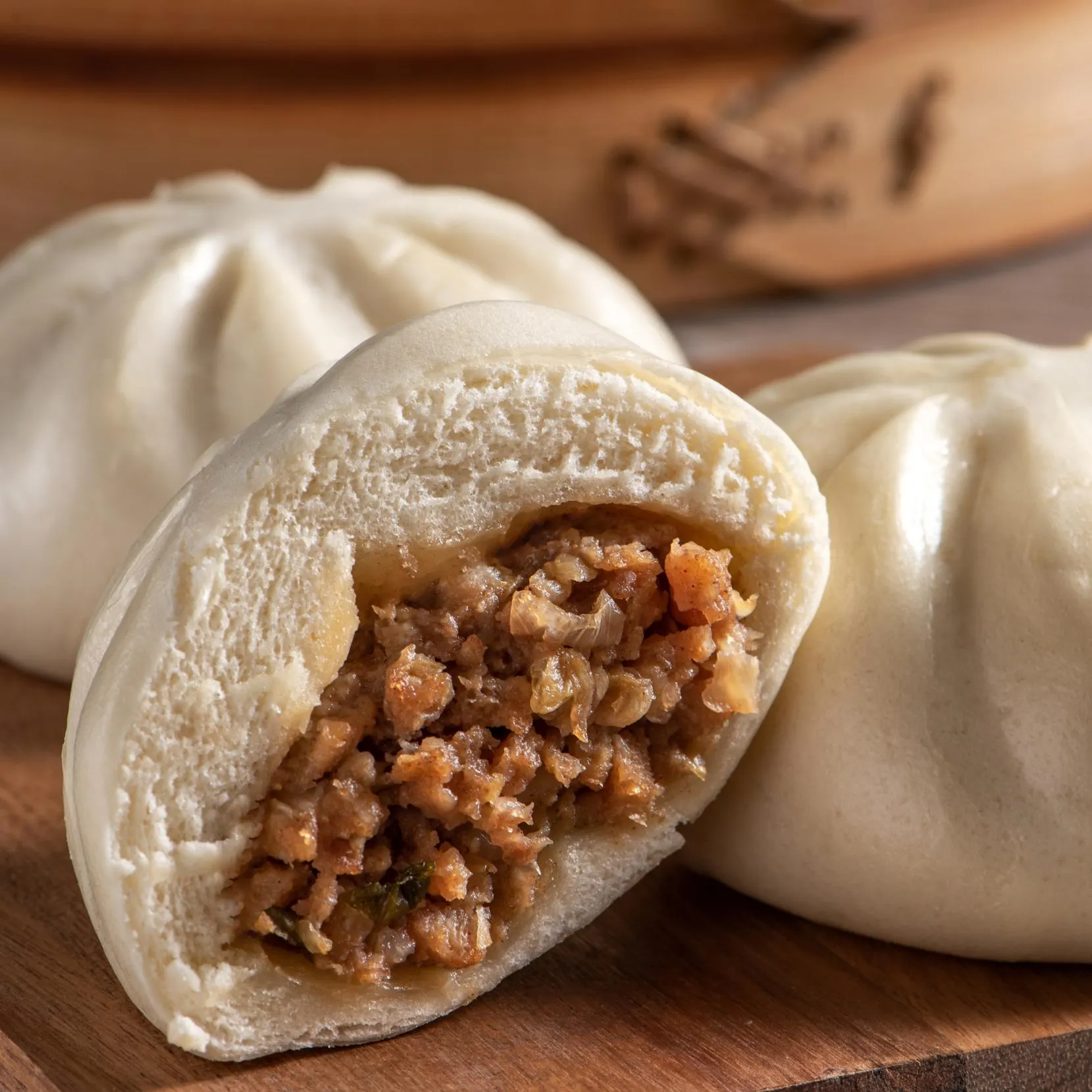
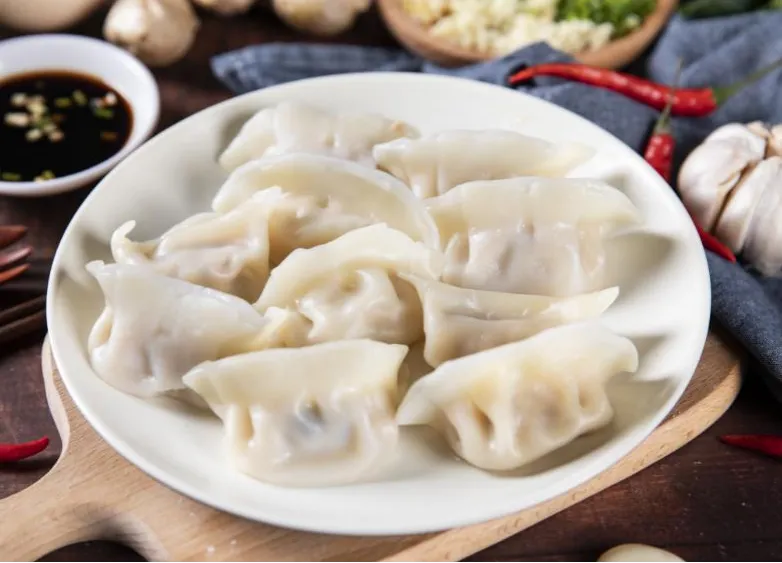
| Steamed-bun or dumpling filling | Cohesion, free liquid, steam exposure, and cook-and-hold time | Shape retention and liquid release after steaming | Confirm piece size, hydration window, drain method, and filling ratio |
| Formed meat-alternative product | Bite, yield, reheat behavior, and sauce interaction | Texture after cook, chill, and reheat | Request moisture, protein, microbiological, and particle-format criteria |
| Soup, sauce, or catering ingredient | Suspension, dispersibility, hot-hold stability, and mixing order | Clumping and free liquid during the hold | Define temperature, shear, packaging, and service time |
| Distributor or multi-market program | Destination market, labeling, allergen review, documents, and pack | Sample tested against each market’s recipe | Confirm scope, methods, traceability, and terms per order |
Standards, testing, and destination-market compliance
Begin with the market where the finished food will be sold, not only the market where the ingredient is manufactured. Codex publishes international food standards and related texts, while the U.S. Electronic Code of Federal Regulations sets the U.S. ingredient-listing rule in 21 CFR 101.4. These sources address food standards or labeling scope; neither guarantees a particular texture for a textured vegetable protein ingredient.
Separate four questions in the specification review: what the ingredient is, whether it is safe, which quality characteristics are controlled, and what any certificate actually covers. Ask how moisture, crude protein, urease activity, microorganisms, and heavy metals are tested. Record the method, laboratory, sampling plan, and acceptance criterion. An analytical method says how a property was measured; it is not HACCP, ISO 22000, Halal, or another certification.
For soy-based products, complete an allergen review for every destination market and compound ingredient, including sauces and seasonings. Confirm the ingredient name, allergen statement, traceability, and customer restrictions before artwork, import, or production approval. Unsupported claims or out-of-scope certificates can create relabeling, import, or customer-approval risk.
Public Baichuan information describes checks for microorganisms, heavy metals, moisture, crude protein, and urease activity. It also publicly lists company-level certifications including HACCP, ISO 9001, ISO 22000, ISO 14001, ISO 45001, Halal, MUI Halal, and IFS International Food Standard Certification. Verify issuer, validity, site, product scope, and shipment documents; this does not mean every product or shipment carries every certification.
A practical troubleshooting sequence
- Define the failure. Describe bite, shape, browning, free liquid, cook profile, and hold time at the point where the product fails.
- Lock the water input. Weigh dry material and water, and record temperature and time for each pilot.
- Standardize drainage. Record the screen or press, load, pressure, residence time, and pre- and post-drain mass.
- Audit added moisture. Weigh sauces, marinades, brines, vegetables, and steam or cooking inputs; include chill, reheat, and holding.
- Review the grade. If the controlled route still misses the target, compare format and specification with the supplier instead of extending the process indefinitely.
Baichuan describes itself as a China-based TVP manufacturer and integrated R&D, production, and sales provider, founded in 2008 and headquartered in Wenzhou, Zhejiang, with bases in Wenzhou and Xinxiang, Henan. Its public applications include meat products, quick-frozen food, leisure food, seafood products, catering ingredients, and pet food. Treat those public descriptions as company information, and confirm the grade, specification, documentation, terms, and shipment details for the order under review.
Frequently asked questions
How to rehydrate textured soy protein?
Weigh the dry material and water separately, add the water at a recorded temperature, and hold the mixture for a defined time. Check the pieces before they become waterlogged, then drain and squeeze with a repeatable method before adding seasoning. The supplier’s grade guidance and a finished-product trial should set the final ratio and time.
Can you eat TVP without rehydrating it?
Dry TVP may be eaten only when the product is specifically made and labeled for that use, such as a dry snack or topping. In most cooked recipes, it needs water from soaking or from the formula to develop the intended texture. Do not treat dry, expanded pieces as automatically ready-to-eat; follow the product specification and finished-food process.
How long can cooked TVP stay in the fridge?
For a manufactured food, use the validated shelf-life and HACCP plan for the finished product rather than assigning a date from TVP alone. As a cautious household guide, keep cooked TVP covered at 4°C/40°F or below and use it within 3–4 days when it was cooled without delay and protected from contamination. Discard it if time-temperature control was lost or its condition is questionable.
How do you cook textured soy protein?
First hydrate it according to the grade, then drain and squeeze if the recipe needs a firm bite or low free liquid. Brown it in a controlled layer when color matters, add sauces by weight, and complete the recipe’s validated cook and hold. The best sequence changes with piece size, formula moisture, equipment, and whether the product will be chilled or reheated.
How long does TVP take to hydrate?
There is no single time for every grade. A short pilot can compare 10 and 15 minutes, but piece size, water temperature, loading depth, and the target texture may move the endpoint. Inspect the center and surface, record the mass change, and approve a time window only after the actual cook-and-hold test.
Does TVP need to be cooked?
TVP is generally used as an ingredient that is hydrated and then included in a recipe with a defined thermal process, unless the supplier specifically documents another intended use. Extrusion heat alone should not be treated as proof that every product is ready to eat. Confirm the product specification, microbiological controls, labeling, and finished-food process for the destination market.
References
- FAO/WHO Codex Alimentarius: Codex texts
- Electronic Code of Federal Regulations: 21 CFR 101.4
- ISO: ISO 22000:2018
- ISO: ISO 9001:2015
The memorable rule: a stable bite is designed through a controlled water balance, not rescued by extra heat. When the material, moisture, seasoning, and cook profile are specified together, a mushy trial becomes a solvable process signal. For application questions or a sample discussion, review TVP hydration and application support, then contact Baichuan’s team with the target recipe, market, and documentation needs.