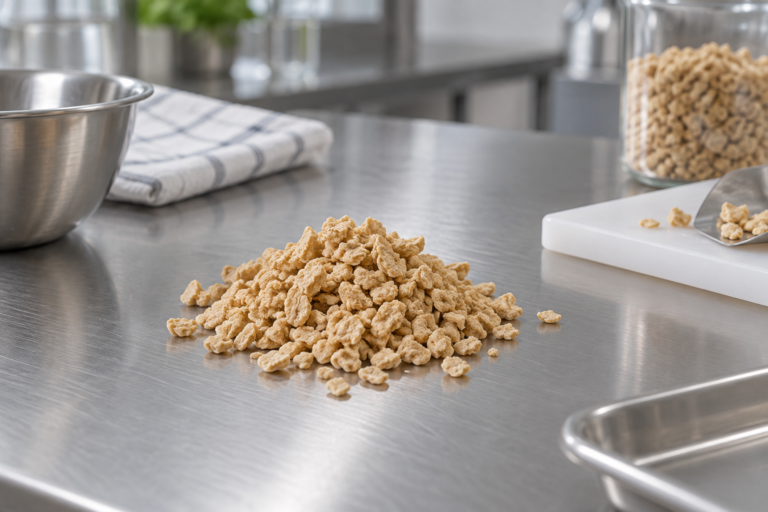
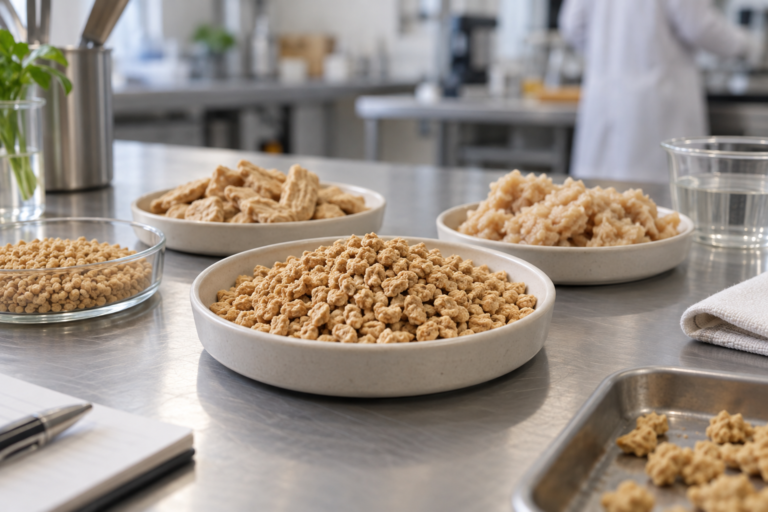
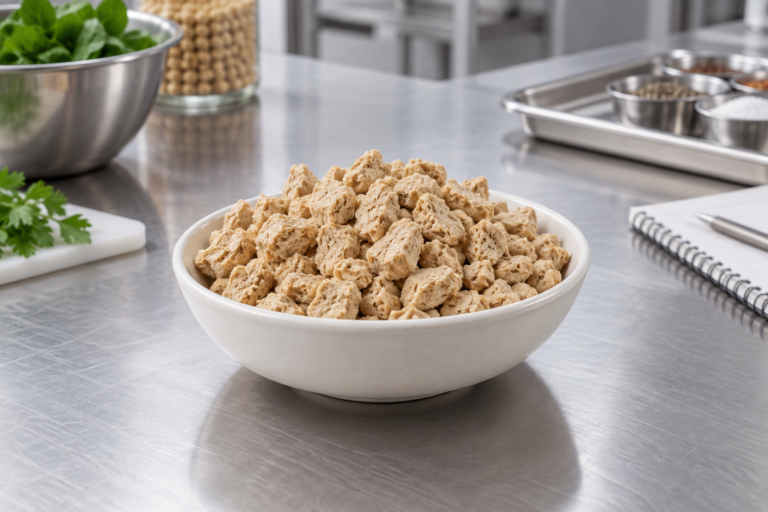
A curry needs a different protein shape from a fine dumpling filling. Choosing by dry-piece appearance or price alone can leave large chunks in a smooth sauce, or fine particles where the dish needs a visible bite. Start with the texture and serving size you want after cooking.
TVP granules are a useful starting point for mince-style applications, while flakes, chunks and strips provide different visible structures. The shape names do not establish a hydration ratio or cooking tolerance. Compare the exact grade in the recipe, then write down what survived preparation, mixing and the final heat treatment.
How do granules, flakes, chunks and strips compare?
| Format | Application starting point | What to check |
|---|---|---|
| Granules | Mince sauce, meatballs and small fillings | Particle distribution and cohesion |
| Flakes | Layered fillings or formed products | Visible structure after shear |
| Chunks | Curry, stew and ready meals | Size after hydration and center softness |
| Strips | Stir-fry and sliced meat alternatives | Length, tear and reheated bite |
These are sample directions, not an exclusive list of uses. Soy protein flakes from two producers can differ in thickness and density even when their names match. The same applies to granules and chunks.
When should you choose granules rather than larger pieces?
Choose a fine format when you need particles distributed through a sauce or a supporting binder matrix. In a burger, particle size affects how the surface forms and how the patty breaks when bitten. In dumpling filling, oversize pieces may interfere with portioning or sealing.
Start with the intended food and compare a small number of sizes using the same recipe. Record the amount of fines after mixing as well as the appearance before it. Baichuan’s granule category identifies products to sample; it does not replace that application comparison.
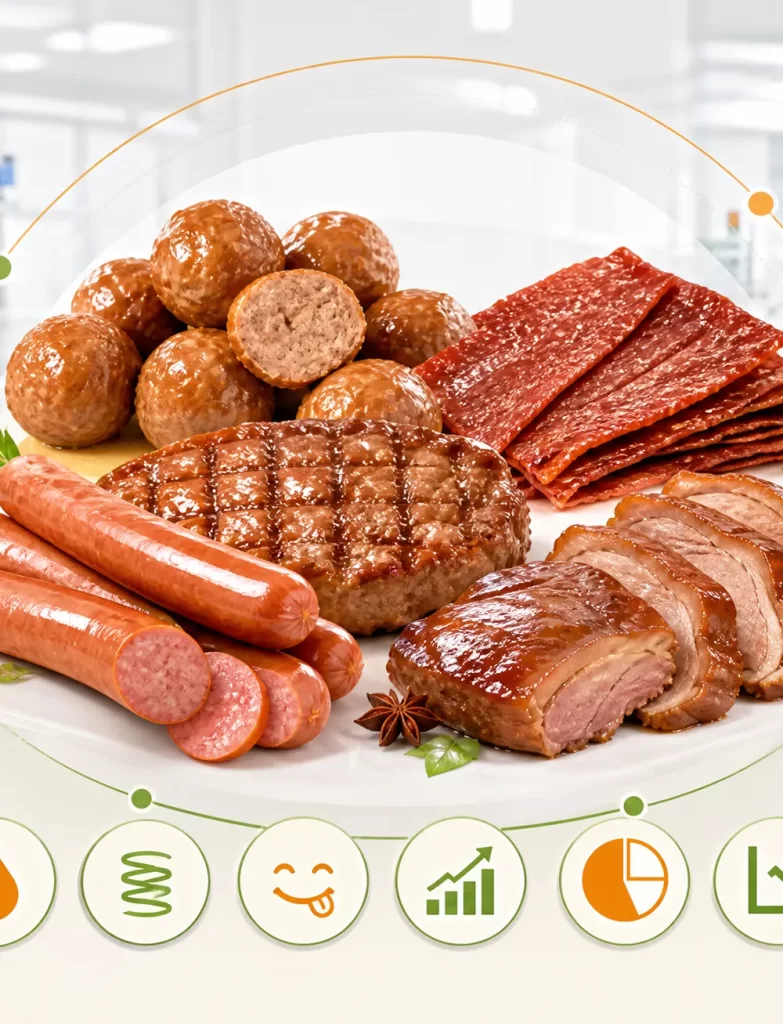
When do flakes, chunks or strips make more sense?
Larger pieces are useful when the protein is meant to be seen and eaten as an individual piece. Match chunk size to the vegetables and serving portion. A piece should hydrate through the center without requiring a cooking route that destroys its outside.
TVP strips should be assessed after the full stir-fry or reheat sequence, not just after soaking. For layered fillings, compare the flake range; for a distinct piece, start with the chunk range. Strands or strips with a directional structure require their own tear and integrity checks.
Does every format use the same amount of water?
No. Shape, density, formulation and the preparation route all matter. Follow the pack or supplier directions first, then inspect the result. Do not copy a household cup ratio for fine retail granules to an industrial fibrous chunk.
For an application trial, record dry weight, liquid added, time, temperature and drained weight. Cut open the largest pieces, then evaluate the food after its final cook. See the cooking and hydration guide for the distinction between soaking time and a useful endpoint.
What should a sample request include?
| Provide the supplier | Ask to confirm |
|---|---|
| Finished dish and target bite | Proposed source and exact grade |
| Piece size after cooking | Dry size distribution and density |
| Mixing, heating and reheating route | Suggested preparation method to trial |
| Dietary and destination-market requirements | Ingredients, allergens and relevant documents |
Source and shape are different selection decisions. Return to the TVP definition guide if you also need to distinguish soy, other plant proteins, tofu and gluten-based ingredients.
Frequently Asked Questions
Is TVP just soya chunks?
No. Soya chunks are one form; TVP also includes granules, flakes, strips and other textures.
How to make TVP granules?
They are normally manufactured by texturing a protein mixture through extrusion, followed by cutting and drying. At home, buy the granules and prepare them according to the pack.
What to make with TVP chunks?
Curries, stews, sauced ready meals and stir-fries are useful starting points. Match the piece size and preparation method to the dish.
What is the ratio of TVP to water?
There is no universal ratio. Use instructions for the exact product and distinguish a cup-volume recipe from a weight-based production trial.
How to cook TVP granules?
Rehydrate and cook them as directed, then adjust the surrounding sauce or binder. Fine granules and dense chunks should not be treated as identical.
Does TVP need to be soaked?
Many dry products need rehydration, either before addition or within a sufficiently liquid recipe. Follow the label rather than assuming soaking is always optional.
Does TVP need to be refrigerated?
Store the dry product as labelled. Once hydrated or cooked, treat it as prepared food and refrigerate promptly if it will not be served immediately.
Is TVP the same as tofu?
No. Tofu is typically a moist soy curd; dry TVP has a different structure and preparation requirement.
References
- Baichuan: existing TVP formats and categories
- Bob's Red Mill: product-specific preparation directions
- FDA: storage and refrigeration guidance
How do you choose a format without repeating the same trial?
Set the finished texture first, choose one or two plausible formats and compare them under the same conditions. Record the dry and prepared sizes, retained water, mixing exposure and result after the actual cooking route. This makes it possible to see whether a problem came from the grade, the preparation or the recipe around it. Keep household directions separate from manufacturing specifications, and do not treat a shape name as a performance claim. Once a format works, capture the accepted grade and method so the next sample or delivery can be judged against the same standard.