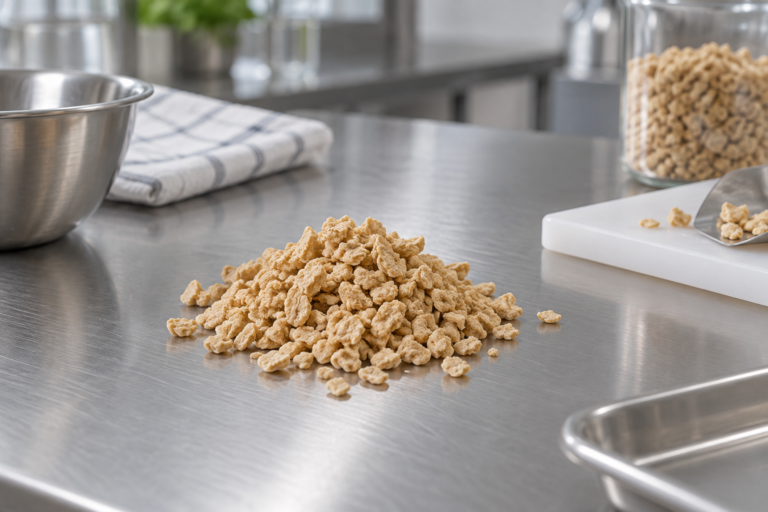
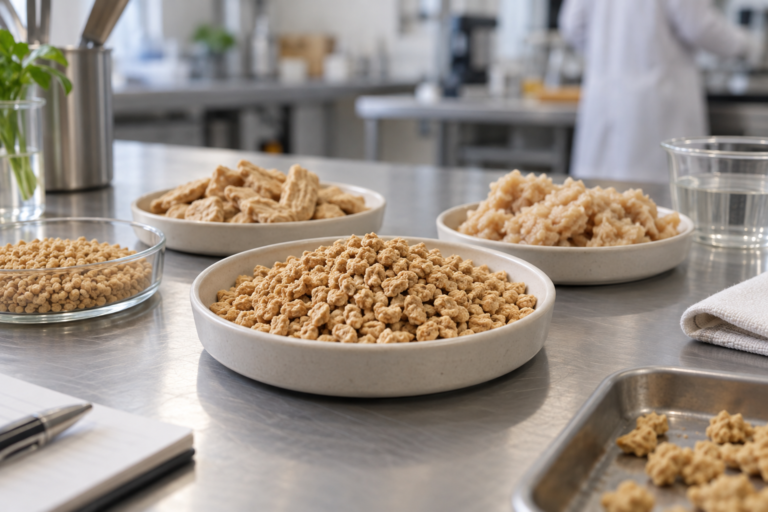
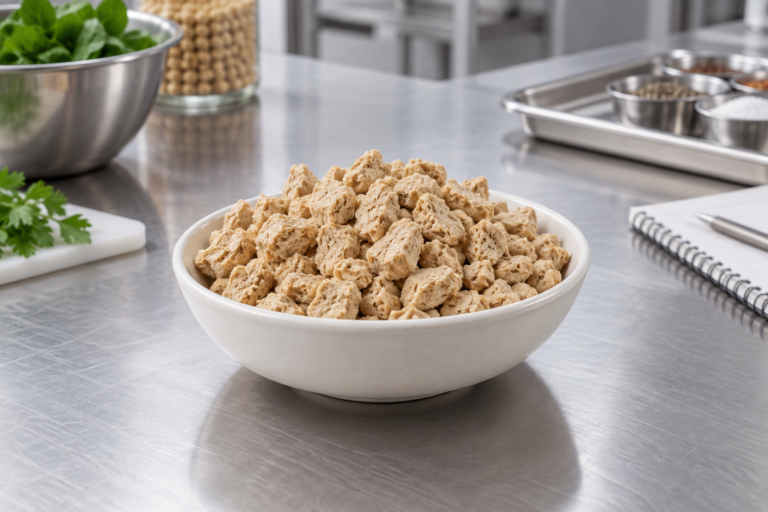
A bag of dry protein pieces may be labelled TVP, textured soy protein or soya chunks. These names overlap, but they do not describe every ingredient in the same way. The raw material tells you what is in the product; the shape tells you how it may behave in a recipe. Neither replaces the ingredient list.
Textured vegetable protein is plant protein processed into a structure that gives food a defined bite. Soy is a common source, but textured ingredients can also use pea, wheat or blends. Granules suit mince-style dishes, while larger pieces suit stews and strips. Choose the source for your dietary and allergen requirements, then match the format to the food.
What is TVP made from?
Many familiar retail products are made from defatted soy flour. For example, Bob’s Red Mill lists that single ingredient on its TVP product page. That is evidence for its product, not a specification for every TVP on the market. Other grades use soy concentrate, isolate, different plant proteins or additional ingredients.
The term TVP identifies an ingredient category. It does not promise that a product is soy-free, gluten-free or unseasoned. Read the named protein source and every added ingredient. A wheat-based texture and a plain soy granule require different allergen checks.
How does extrusion turn protein into textured pieces?
In a common dry-textured process, the producer conditions a protein mixture with water, passes it through a heated extruder, shapes it through a die, then cuts and dries it. The resulting structure can take up liquid during preparation. Equipment settings and formulations differ, so a generic description cannot establish one manufacturer’s temperatures, pressure or absorption ratio.
Codex CXS 175-1989 distinguishes soy flour, concentrate and isolate by dry-basis protein content and permits qualifying descriptions such as textured or structured. Protein concentration and texturing are separate questions: an isolate is not automatically a ready-to-use chunk.
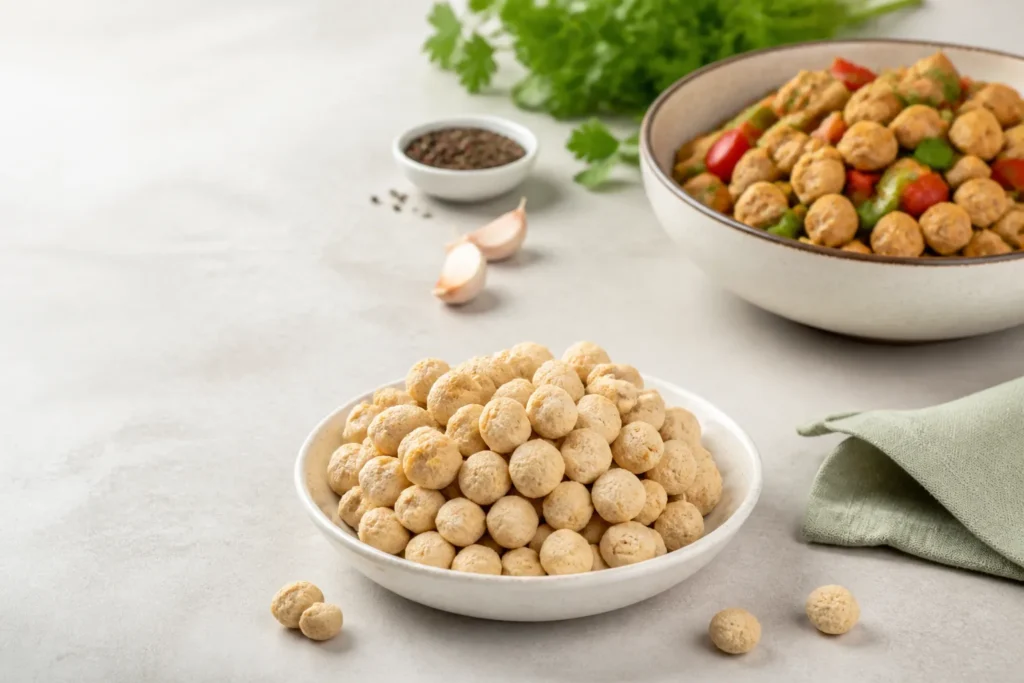
Which TVP format fits the dish?
| Format | Useful starting application | Check in the finished food |
|---|---|---|
| Granules | Chilli, mince sauces and small fillings | Particle definition and sauce balance |
| Flakes | Layered fillings and meat alternatives | Piece integrity after mixing |
| Chunks | Curry, stew and bowl meals | Center hydration and bite after simmering |
| Strips or fibrous pieces | Stir-fries and pulled-style products | Tear direction and reheated texture |
The names are starting points rather than performance grades. See the TVP format comparison for more detail, then compare the actual size, density and preparation instructions of the samples.
Is TVP the same as tofu, soya chunks or vital wheat gluten?
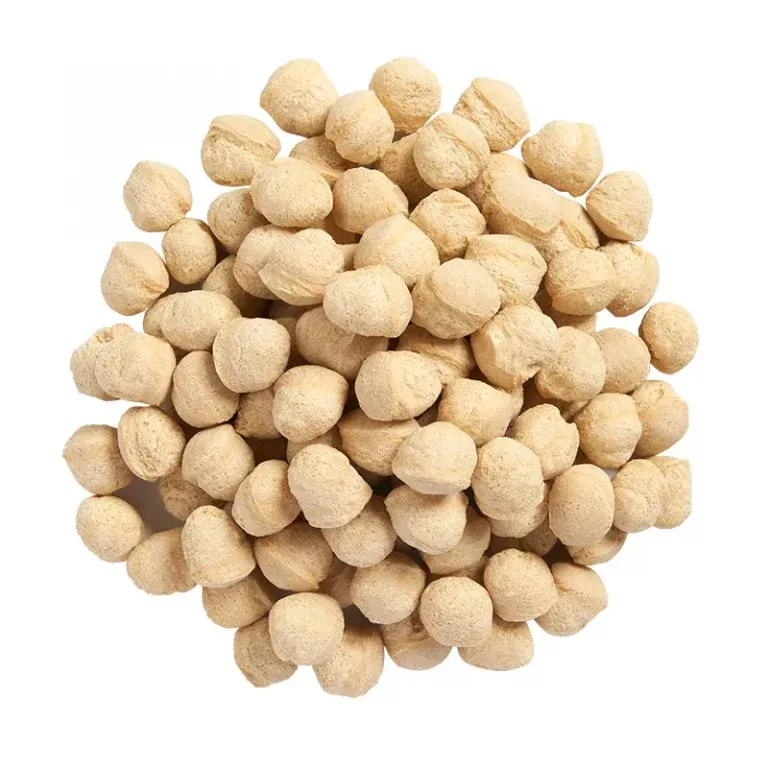
Tofu is normally a water-rich soy curd. TVP is generally sold as a textured ingredient, often dry, that is prepared before use. Soya chunks are one soy-based TVP format; they are not the whole category. Vital wheat gluten is a wheat protein ingredient used to develop a different structure. It contains gluten and is not another name for soy TVP.
These distinctions matter when substituting ingredients. Replacing tofu with dry chunks gram for gram changes the water in a recipe. Replacing soy granules with vital wheat gluten changes both the structure and the allergen profile.
How should TVP be prepared and checked for a vegan recipe?
Follow the pack directions, inspect the hydrated center and finish the pieces in the intended sauce or cooking method. The cooking and rehydration guide explains why one water ratio does not fit every shape. For nutrition, compare dry and cooked weights separately in the TVP nutrition guide.
Plain soya chunks can fit a vegan recipe, but the complete dish still needs checking. Broth, sauces, flavourings, wrappers and binders may contain animal ingredients. For manufacturing trials, Baichuan’s product catalogue provides real formats to evaluate; the exact grade and its documents should govern approval.
Frequently Asked Questions
What exactly is textured vegetable protein?
It is plant protein given a structured form for use in food. The source may be soy or another plant, so confirm the actual ingredient rather than relying on the abbreviation TVP.
What are soya chunks made of?
Many are made from defatted soy flour; other products use soy concentrate, isolate or blends. The ingredient list is the reliable answer for the bag you have.
Is TVP just soya chunks?
No. Soya chunks are one TVP shape, while TVP also includes granules, flakes, strips and other structures.
What can I do with TVP?
Use granules in chilli, sauces or fillings, and larger pieces in curry, stew or stir-fries. Choose preparation instructions for the particular format.
What does TVP taste like?
Plain TVP often has a mild cereal or soy note and takes seasoning from the dish. Strong rancid, musty or otherwise unusual odors should not be hidden with spices.
Is TVP a highly processed food?
It is processed through steps such as ingredient preparation, extrusion and drying. The nutritional value of the finished food also depends on its ingredients, serving size and preparation.
How many calories are in cooked TVP?
There is no single cooked value because water and recipe additions change the weight. As one dry-product example, Bob’s Red Mill lists 80 calories per 23 g; use the label and actual cooked yield for a calculation.
Is TVP the same as Vital Wheat Gluten?
No. Vital wheat gluten is a wheat-derived protein ingredient, while TVP describes a textured plant-protein category. Wheat-based TVP may contain gluten, so check the source.
References
- Bob's Red Mill: TVP ingredients and product label, checked October 2026
- Codex CXS 175-1989: General Standard for Soy Protein Products
- FDA: Food Allergies—What You Need to Know
What should you check before choosing a TVP product?
Start with the ingredient list, because the word textured does not identify the plant source or its allergens. Next choose the piece shape for the food, follow the grade’s preparation directions and judge the result after the final cook. Nutrition comparisons should use the same weight basis, and vegan or gluten-free claims need separate checks. This order is useful for a home recipe and for a commercial trial: establish what the ingredient is before deciding what it can do. A product photograph or a broad category name cannot replace that information.