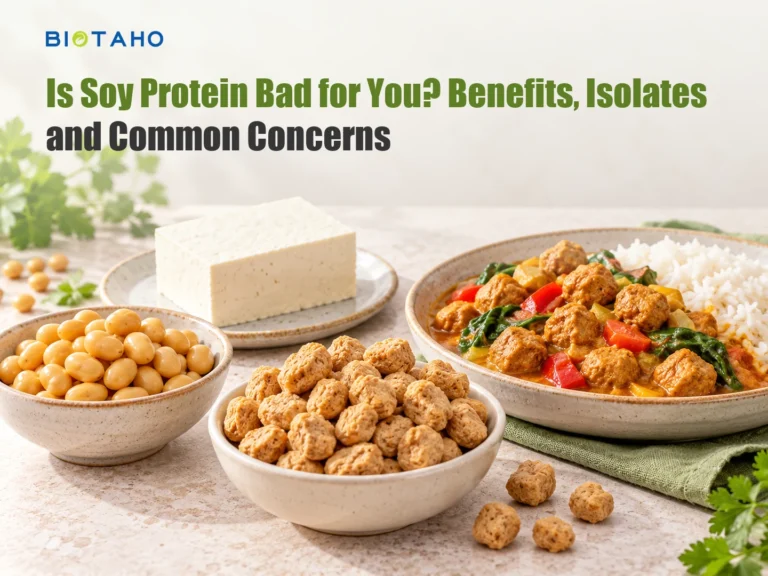
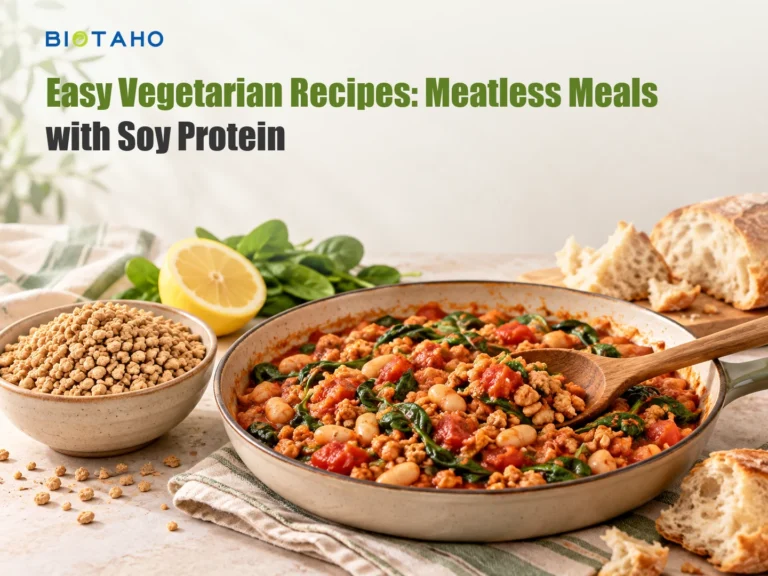
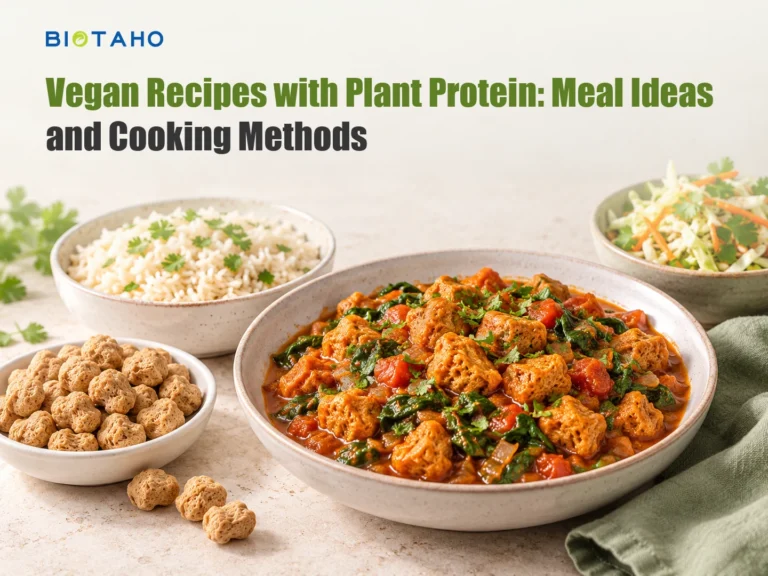
Vegan food contains no animal-derived ingredients; vegetarian food excludes meat and fish but may include dairy and eggs. For a soy-based filling, curry or rice bowl, that distinction applies to the whole dish—not just the ingredient replacing meat. Stock, cooking fat, sauce, bread and toppings all count.
Start by deciding who the meal must suit, then choose the textured protein form. Small granules make sense when you want a filling distributed through sauce; chunks suit a meal built around separate bites. Their ingredient blend and preparation requirements matter as much as their shape.
Check what makes the finished soy dish vegan or vegetarian
A tomato-soy filling made with vegetable stock and oil can form a vegan base. Adding dairy cheese makes the served portion vegetarian, not vegan. Using chicken stock makes it unsuitable for either group. The same reasoning applies to a chunk-based curry: the soy ingredient does not cancel out fish sauce, dairy cream or an animal-derived stock.
The Vegan Society’s dietary definition excludes meat, fish, shellfish, dairy, eggs and honey. Vegetarian patterns vary, particularly around eggs and dairy, so ask diners what they include. For a shared meal, a vegan base with optional dairy or egg additions served separately can avoid preparing two different main dishes.
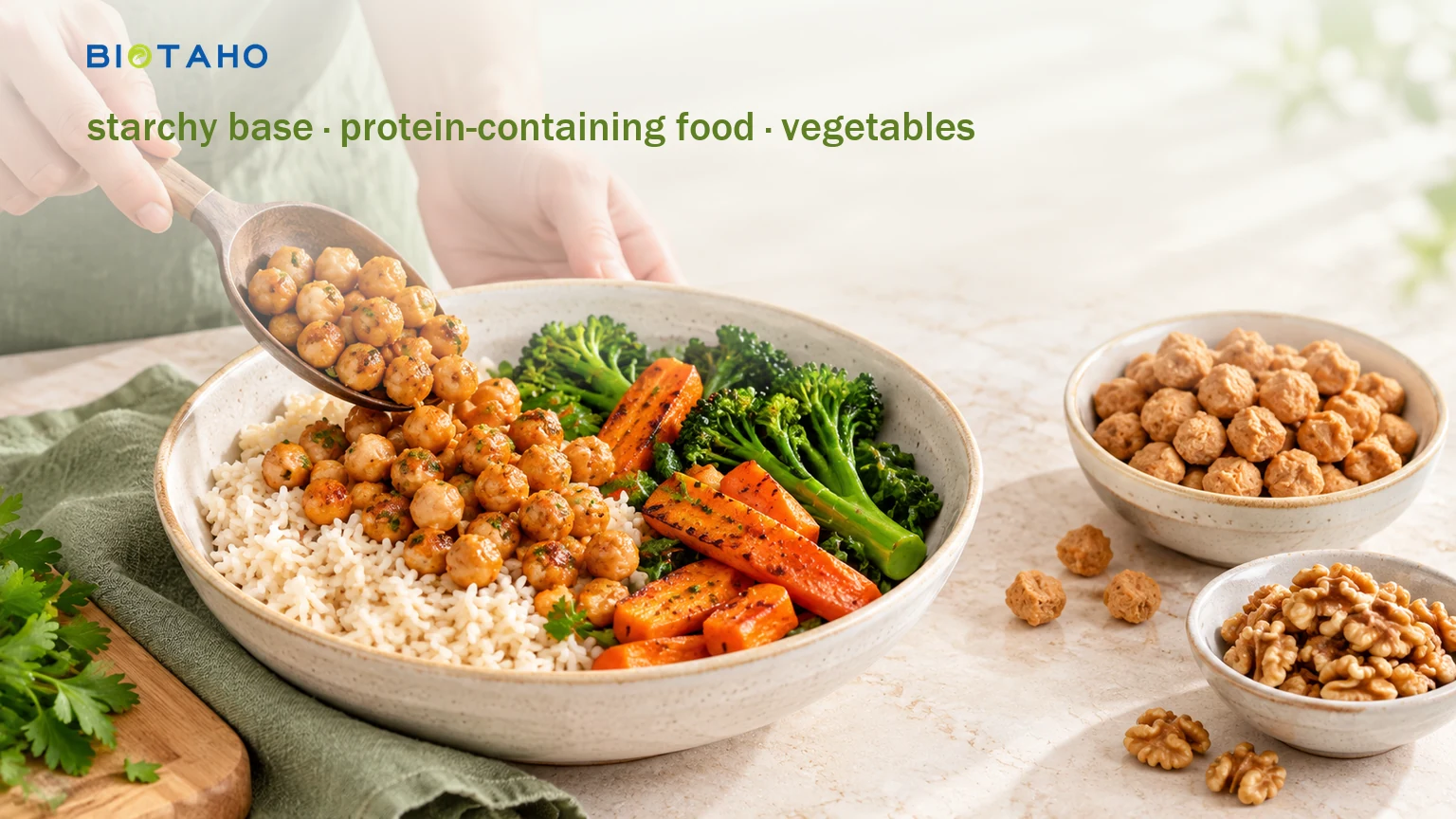
Plan the complete plate around a starchy base, a protein-containing food and vegetables. Rice, prepared soy protein and vegetables can make an everyday vegan meal when their cooking fats, stock and sauce also contain no animal-derived ingredients.
Keep that finished-dish requirement in view when selecting textured soy protein. Baichuan supplies dry granules and fibrous chunks as ingredients for further preparation, not ready-made dinners. A listed sauce, filling or catering application helps identify a possible use; your seasoning, sauce and accompaniments still determine the finished meal’s suitability.
Write down the intended result before shopping: a moist tortilla filling, for example, needs small pieces and controlled liquid, while a curry needs distinct pieces surrounded by sauce. This gives you a practical basis for reading the ingredient list.
Read the textured protein ingredient list first
The two relevant products are soy-and-wheat blends, not pure soy isolates. Baichuan’s textured vegetable protein granules for sauces and fillings list soybean meal, wheat gluten, soy protein isolate and wheat flour, followed by “etc.” The wheat is explicit, and the shortened list means you should obtain the complete current ingredient declaration before finalising dietary information.
The fibrous soy protein chunks for catering dishes list soybean meal, wheat gluten, soy protein isolate, soy protein concentrate and wheat starch. Both products therefore contain soy and wheat and are not suitable for someone avoiding either ingredient. A vegan formulation can contain gluten; vegan and gluten-free are separate requirements.
These blends also explain why “soy protein” is not a complete description of what goes into the pan. Wheat gluten contributes to the protein structure, while the other ingredients are part of the formulation that produces the textured pieces. Do not substitute a nutrition figure from pure soy isolate or assume that another brand’s hydration directions apply.
At this stage, check the current ingredients, allergen declaration and nutrition panel together. Confirm any unclear ingredient origins if vegan suitability is essential. Once the blend fits the diners’ needs, choose its physical form according to the dish—not according to a meat-style name or photograph.
Choose granules for fillings or chunks for separate bites
Choose soy granules when small pieces should spread through tomato sauce, stuffing or a tortilla filling. The supplier describes these granules as irregular and compact and lists sauces and fillings among their applications. Choose soy protein chunks when the plate needs visible, separate pieces, such as a curry served with rice. The chunk product is described as cubed and fibrous.
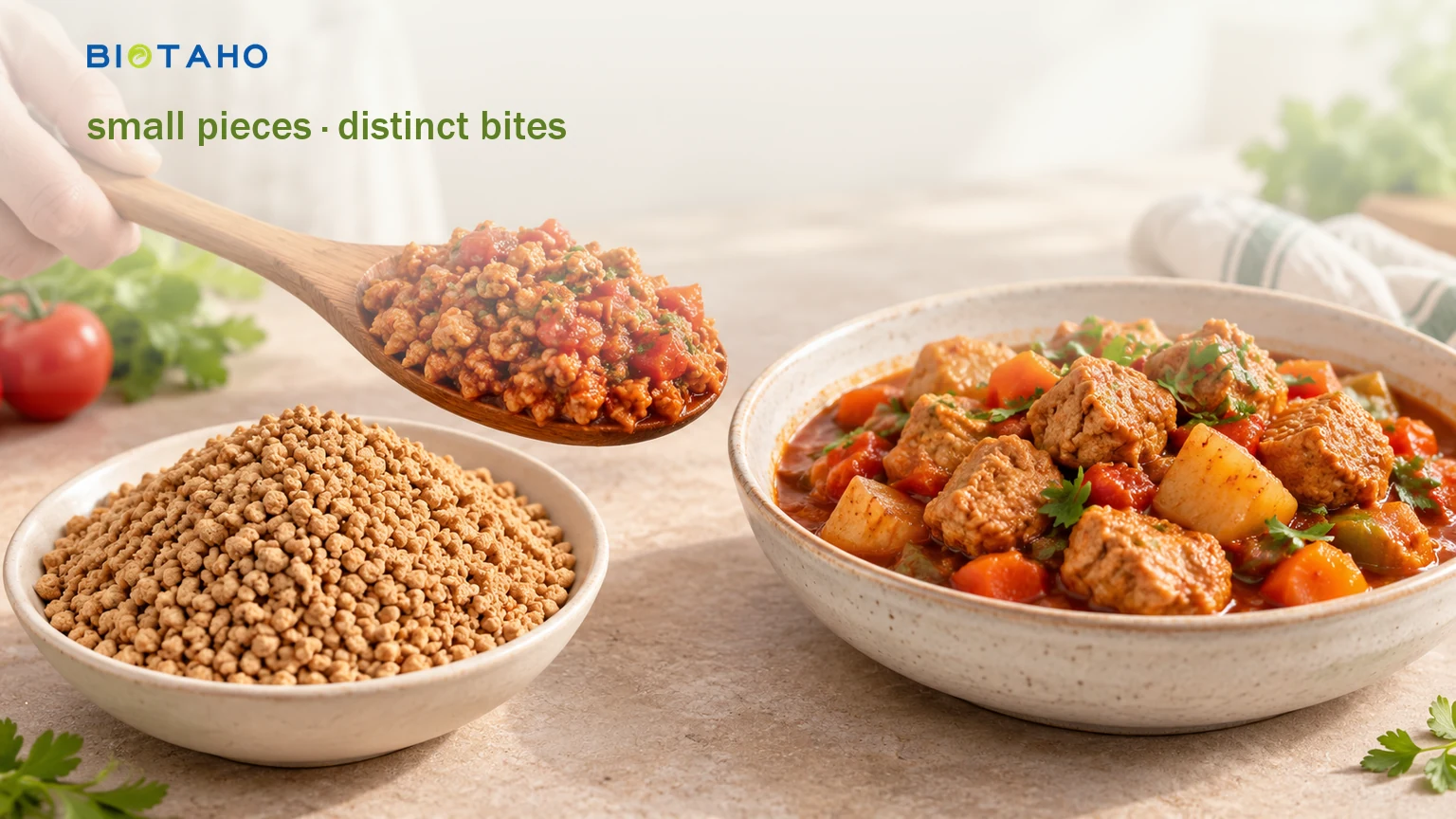
| Ingredient form | Role in the dish | Moisture decision |
|---|---|---|
| Irregular, compact granules | Small pieces distributed through sauce or filling | Control free liquid so the filling stays moist without soaking its wrapper or bread |
| Cubed, fibrous chunks | Distinct bites in a saucy main dish | Allow enough sauce to coat and surround the prepared pieces without making the meal watery |
Allow for preparation before cooking the dish. The granule page lists a hydration window of 40–55 minutes, and the chunk page lists 60–65 minutes. These are supplier-listed preparation windows, not complete cooking instructions: use the current directions for water quantity, temperature and any draining or pressing step. Add this lead time separately to your planned sauce-making and meal-cooking time. Treat the meal ideas here as starting points for recipe-specific trials.
After hydration and any directed draining, assess how much free liquid remains before combining the protein with sauce. For a filling, simmer the combined mixture until it holds together on a spoon without leaving a watery puddle. This is a texture cue, not a safety endpoint. For chunks, check the sauce again after the pieces have been incorporated; their retained water can affect its consistency.
Season and assess the prepared ingredient within the dish. A dry piece’s size does not tell you how strongly the finished filling will taste, or how much sauce a serving will need. Keep notes on the amount of prepared protein and sauce used so you can adjust the next batch consistently.
Build the meal around the prepared soy protein
With the protein hydrated and its moisture controlled, give the rest of the meal a clear role. Pair the prepared soy component with a starchy base and vegetables, then use a suitable sauce or fat to bring them together. Choose vegetables and a sauce that suit the same serving style.
For the granule route, cook onion and seasonings, add tomatoes and the prepared granules, and simmer to the consistency needed for the filling. Serve in suitable tortillas with cabbage and avocado, or use the saucy mixture with egg-free pasta and vegetables. Check the tortillas or pasta as carefully as the filling.
For the chunk route, prepare a vegetable-stock-based curry sauce, incorporate the hydrated chunks and cook according to the ingredient and recipe directions. Serve with rice and vegetables. Coconut milk can provide a dairy-free creamy element, but the curry paste and stock must also be suitable for a vegan meal. These are assembly ideas, not tested formulas for either product.
For nutrition planning, use the actual product panel and the amount included in the meal. Water increases prepared weight without adding protein, so a dry-weight value cannot be applied unchanged to the same weight of hydrated pieces. Compare products on the same basis, and include sauce, oil and toppings when assessing the finished serving. No product-specific protein amount or amino-acid score is given on the linked product pages.
The NHS recommends varied vegan meals and attention to fortified foods and nutrients including vitamin B12, vitamin D, iodine, selenium and calcium. A soy-based main course does not automatically supply all of these. Harvard’s guidance likewise considers the whole protein-containing food and overall dietary pattern; it does not establish health benefits for every textured soy blend.
Check sauces, toppings and allergen information before serving
Now check the assembled meal against the requirement you set at the start. A suitable soy base can still become non-vegan through butter used in the pan, milk in bread, egg in a wrapper or honey in a dressing. Taste and texture checks should happen alongside this final ingredient check, not replace it.
| Meal component | What could change suitability | Final check |
|---|---|---|
| Stock and savoury sauce | Meat stock, fish sauce or anchovy-containing seasoning | Read the stock, paste and sauce ingredients separately |
| Creamy sauce or topping | Milk, cream, cheese, whey or casein | Choose a suitable plant-based option for vegan servings |
| Bread, pasta or wrapper | Egg, milk or butter | Check the exact product used, including finishing glazes |
| Sweet dressing or garnish | Honey or dairy-containing coatings | Check sweeteners and compound ingredients |
| Prepared soy component | Soy and wheat in these blends | Carry the ingredient’s allergens into the finished dish information |
Read allergen information separately from vegan claims. The FDA explains that major allergens on US labels may be identified in ingredient names or an adjacent “Contains” statement; honey is not a major allergen, so that statement is not a complete vegan checklist. For diners with food allergies, read labels every time, avoid their allergens and prevent cross-contact through utensils, preparation surfaces and shared toppings.
For shared service, keep optional dairy or egg toppings separate with their own utensils. Describe the finished dish accurately: a vegan soy filling containing wheat is still not gluten-free, and a vegetarian cheese addition changes the suitability of that portion.
Frequently asked questions
What foods do vegans eat?
Vegans eat plant foods and suitable products made from them. In this meal, that can mean prepared soy granules or chunks, rice or another starchy base, vegetables and an animal-free sauce. Check every prepared component.
Can vegans eat pizza?
Yes, when the dough, sauce and toppings contain no animal-derived ingredients. A tomato-soy granule topping is an option, but the base and any dairy-free cheese also need checking.
What is the difference between a vegetarian and a vegan?
Vegetarians exclude meat and fish but may include eggs and dairy. Vegans also exclude eggs, dairy, honey and other animal-derived ingredients. Ask about individual vegetarian preferences before serving.
Can vegans eat fish?
No. Fish and shellfish are excluded from vegan diets. Fish sauce, anchovy-containing seasonings and seafood stock also make an otherwise soy-based dish unsuitable.
Can vegans eat honey?
No. The Vegan Society’s dietary definition excludes honey. Check dressings and glazes, and use a suitable plant-derived sweetener if the dish needs one.
What is surprisingly not vegan?
Vegetable stock can contain animal ingredients, meat-free fillings can contain egg, and creamy sauces can contain whey or casein from milk. A plant-focused name does not establish the whole dish’s ingredients.
References
- The Vegan Society: definition of veganism — dietary exclusions, including dairy, eggs, fish and honey.
- NHS: the vegan diet — balanced meal planning, fortification and nutrients requiring attention.
- FDA: food allergies — major allergens and their identification on US food labels.
- Harvard Nutrition Source: protein — protein sources within the broader nutritional composition of foods.
For a recipe-specific ingredient trial, contact Baichuan about a granule or chunk sample and describe the dish, desired texture and dietary requirements.