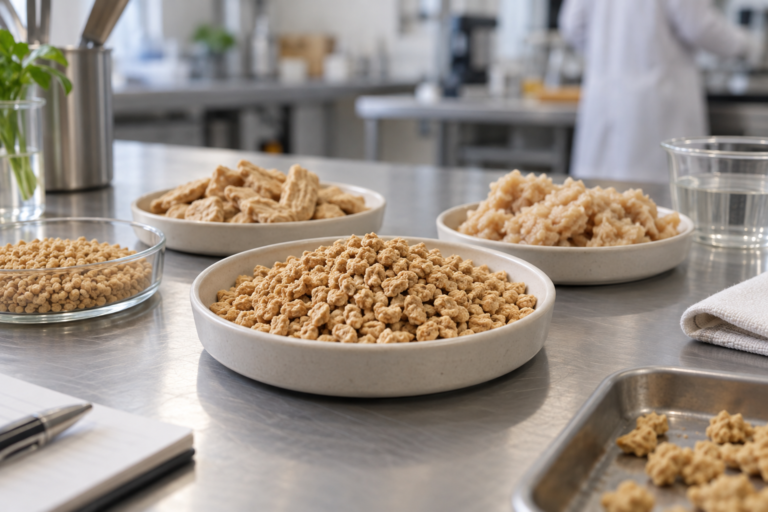
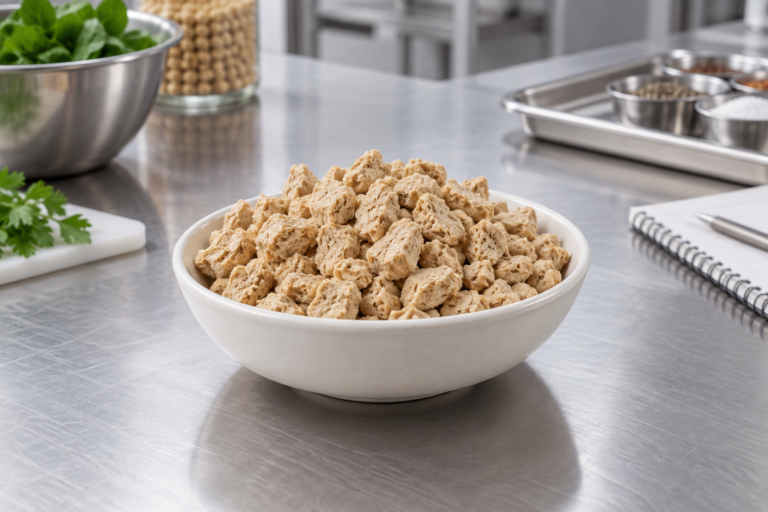
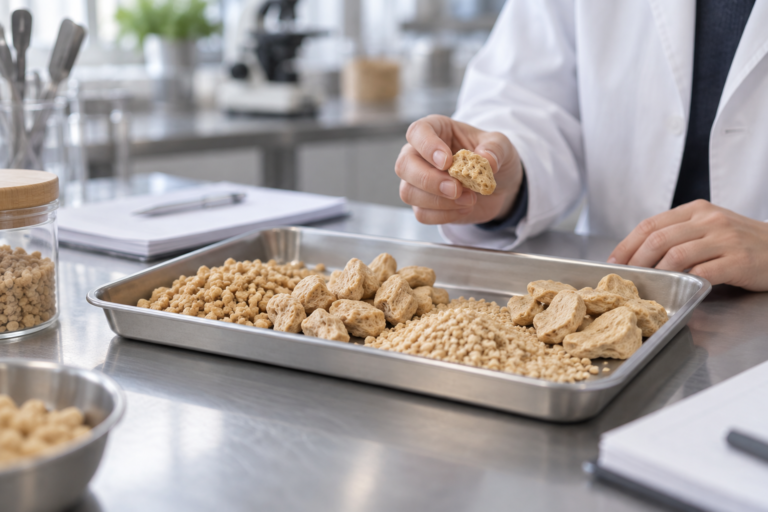
A dry TVP label and a bowl of cooked TVP can show very different protein values per 100 grams without either being wrong. Water increases the weight. Sauce, oil and other ingredients change the dish again. Before comparing numbers, ask what has actually been weighed.
TVP nutrition is product-specific. The protein source, added ingredients and serving basis matter more than the abbreviation on the front of the pack. This guide uses one clearly identified retail label to show how to compare values; its figures are not Baichuan product specifications.
What does a real dry TVP label tell you?
Bob’s Red Mill lists a serving of its TVP as 1/4 cup, or 23 grams, with 80 calories and 12 grams of protein. Its ingredient is defatted soy flour. These values describe that product as labelled, not every soy granule, chunk or fibrous grade.
For textured vegetable protein nutrition, collect the same information from each product: serving weight, calories, protein and the other nutrients relevant to your diet or label. Read the ingredient list too. A seasoned product can contain ingredients that are absent from a plain dry one.
How does added water change protein and calories per 100 grams?
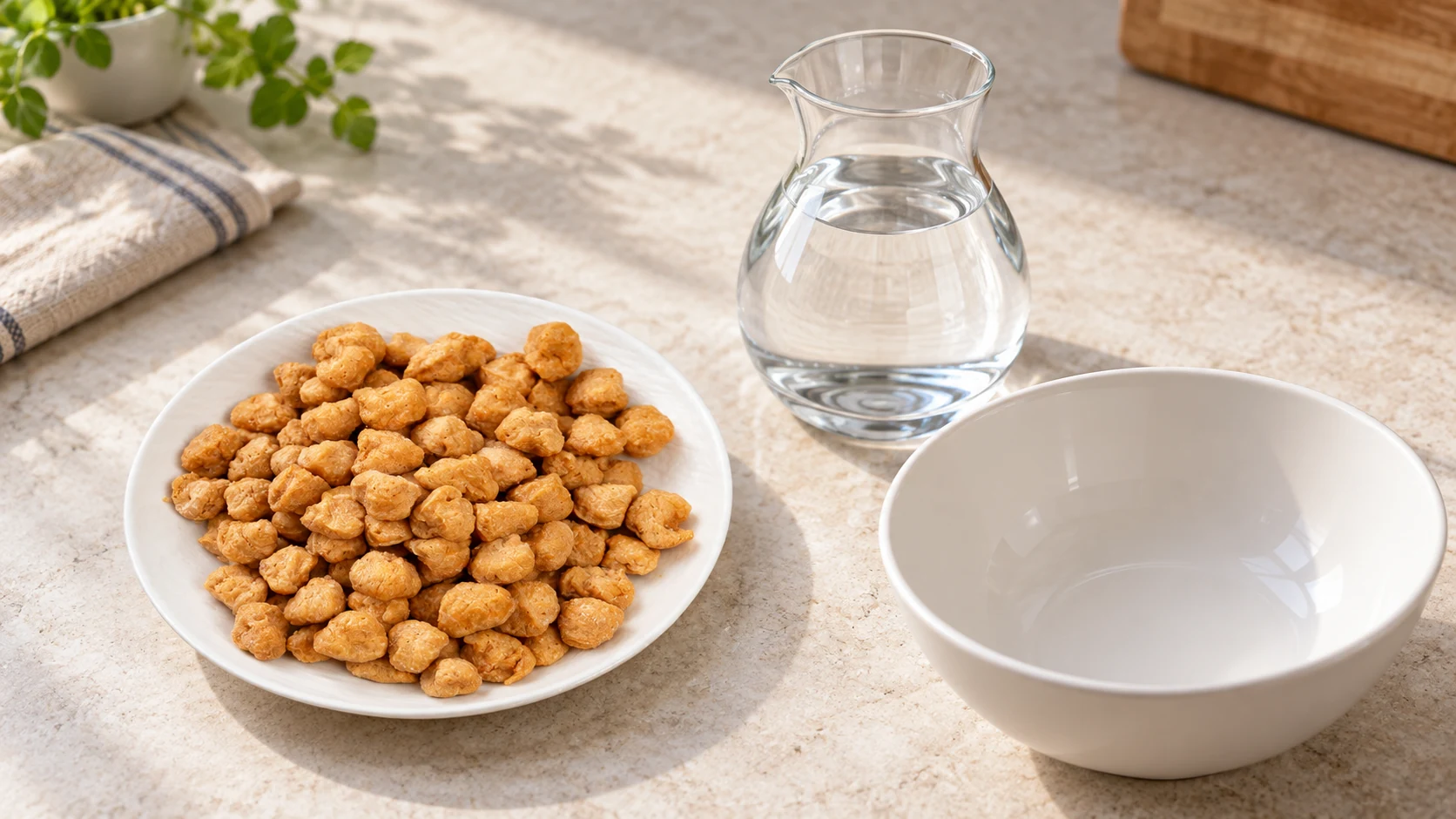
Consider a calculation using that 23-gram dry serving. If it retained exactly 46 grams of water, the portion would weigh 69 grams. With no ingredient lost and nothing else added, it would still contain the original 12 grams of protein and 80 calories. Water changes concentration, not the original amount of protein.
| Basis | Protein | Calories |
|---|---|---|
| Labelled dry serving: 23 g | 12 g | 80 kcal |
| Illustrative hydrated portion: 69 g | 12 g | 80 kcal |
| Illustrative hydrated food, per 100 g | About 17.4 g | About 116 kcal |
The retained-water quantity is hypothetical, not a preparation recommendation or measured absorption result. Actual draining, cooking losses and added ingredients change the calculation. Formula: nutrient per 100 grams equals total nutrient in the portion divided by final portion weight, multiplied by 100.
Why does comparing dry TVP with tofu or cooked meat mislead?
Tofu and cooked meat normally contain substantial water. Comparing 100 grams of either with 100 grams of a dry ingredient confuses concentration with a realistic serving. Compare prepared foods in the portions you intend to eat, or clearly state that you are comparing dry ingredients.
There is also no single nutritional conversion between a pound of meat and a quantity of TVP. A recipe substitution needs both a texture and a nutrition decision. Match the prepared quantity for the dish, then calculate the complete recipe rather than assuming equal weights provide equal nutrients.
What changes when TVP becomes a burger, curry or soup?
Oil, sauce, binders, vegetables and seasonings all contribute to the final dish. A plain ingredient’s relatively modest fat or sodium value does not establish the values of a burger made from it. Add the nutrients from the whole recipe and divide by the final yield and serving count.
Textured soy protein nutrition may also differ between ingredient grades. Ask the supplier whether a value is reported as sold, on a dry basis or for a prepared sample. For manufacturing, keep the source of each number and use destination-market rules for the finished label. The separate nutrition-labelling article remains the place for production documentation details.
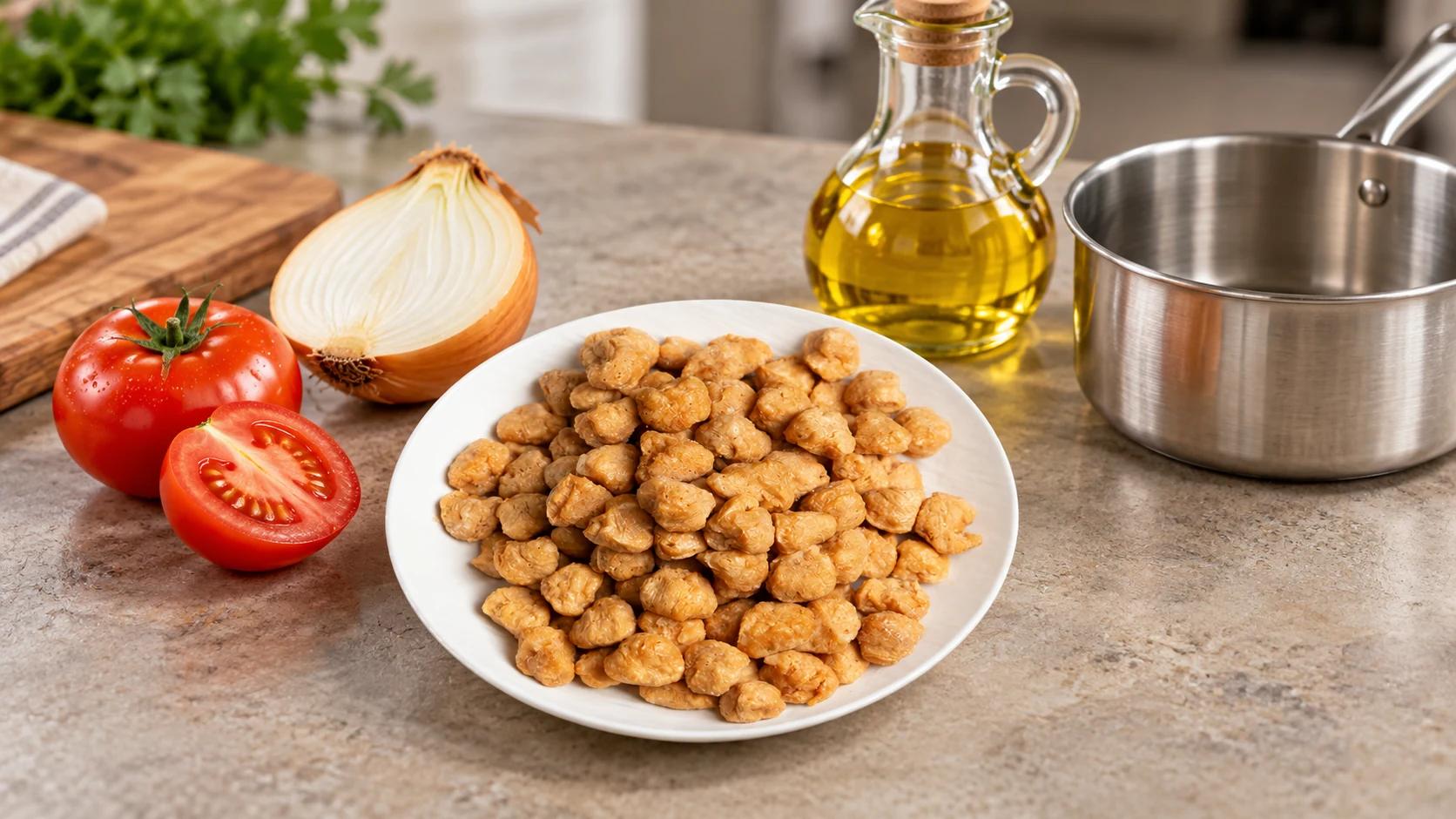
Does soy protein supply all the essential amino acids?
Soy protein contains all nine essential amino acids. That does not mean every food carrying soy in its name supplies the same amount of protein, or that one food must provide every part of a balanced diet. Harvard’s soy overview is a useful source for the broader nutrition context.
Soya chunks also require a soy-allergy check. Anyone with a diagnosed soy allergy needs appropriate avoidance advice, regardless of the protein figure. For gluten-related needs, use the separate TVP ingredient and label guide.
How can you make a fair nutrition comparison?
- Identify the exact product and ingredient list.
- Use the same dry or prepared basis.
- State the serving weight rather than cups alone.
- Include added ingredients and cooking yield.
- Keep source labels or supplier documents with the calculation.
For the ingredient category, start with what TVP is. For preparing a consistent portion, use the cooking guide.
Frequently Asked Questions
Is TVP healthier than tofu?
Neither is automatically healthier. Compare prepared portions, protein, other nutrients, ingredients and dietary needs. Tofu’s water content makes a direct dry-weight comparison with TVP misleading.
Is TVP a highly processed food?
TVP is processed because its ingredients have been prepared and textured. More specific classifications depend on the framework and recipe. Processing terminology does not replace reading the nutrient and ingredient information.
How much TVP equals 1 lb of meat?
There is no universal amount. Start from the recipe’s required prepared volume or texture, then calculate nutrition separately. One pound of cooked meat and one pound of dry TVP are not nutritionally equivalent substitutions.
What are the downsides of TVP?
Soy-based TVP is unsuitable for people with a soy allergy. Product flavor, preparation needs, digestive tolerance and added salt or other ingredients can also matter. These are product and personal considerations rather than one universal drawback.
Is it okay to eat TVP every day?
It can fit into a varied diet for people who tolerate its ingredients. Frequency alone does not determine whether a diet is balanced. Consider the full meals, serving sizes and any individual medical or dietary advice.
Is TVP a complete protein?
Soy protein contains all nine essential amino acids. TVP made from another source or a blend needs its own assessment. Total protein intake and the rest of the diet still matter.
How much protein does 1 cup of TVP have?
For the Bob’s Red Mill label cited here, a quarter cup supplies 12 grams, so four labelled servings calculate to 48 grams in a dry cup. That is product-specific label arithmetic. A cooked cup has a different weight and cannot use the same figure.
How many calories are in cooked TVP?
Use the exact product’s calories and the measured prepared yield. In this article’s hypothetical water-only example, 80 calories in a 69-gram portion works out to about 116 calories per 100 grams. Added sauce or oil changes that value.
References
Which number should you use for your product?
Use the label for the exact retail food, or verified grade-specific data for a commercial ingredient. Baichuan’s product catalogue identifies formats; request the proposed grade’s nutrition information before putting a number into a formulation or label.