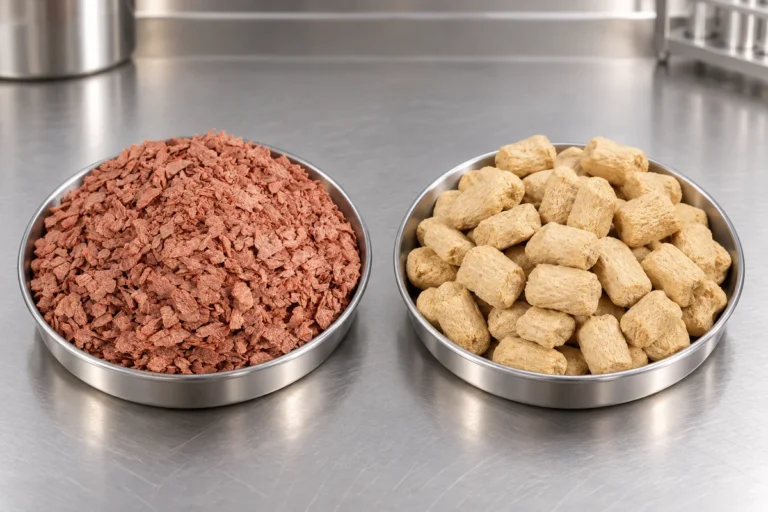
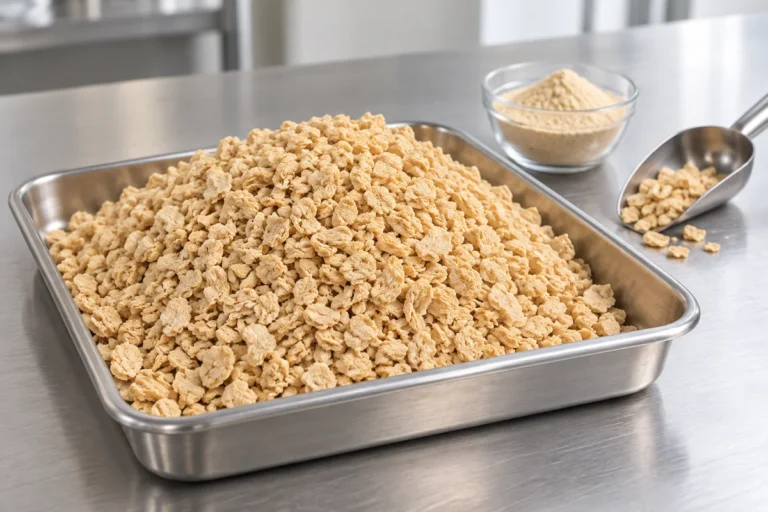
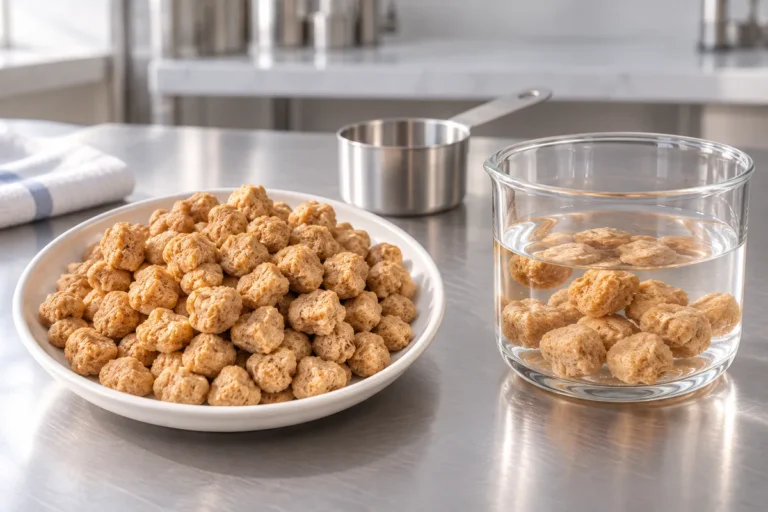
When a formulation manager in Rotterdam encountered dry, crumbly patties after a pilot run, she first changed the seasoning and binder. The failure remained visible as soon as the samples were hydrated: the pieces had not retained enough water or formed a convincing bite. A review of the specification reversed the diagnosis. The issue was not simply a bad protein; it was a mismatch between particle size, extrusion structure, hydration target and the finished application.
Summary: TVP is usually made from plant protein ingredients—most often defatted soy flour, soy protein concentrate or soy protein isolate—that are mixed, extruded, dried and later rehydrated. Protein should be specified on the product’s moisture basis and verified with an agreed method, such as a combustion or Kjeldahl-based protein method; texture and water uptake should be validated in the actual recipe. For a buyer, the practical first step is to define the end use, target piece size, hydration procedure, allergen declaration and market-specific labeling needs before comparing suppliers.
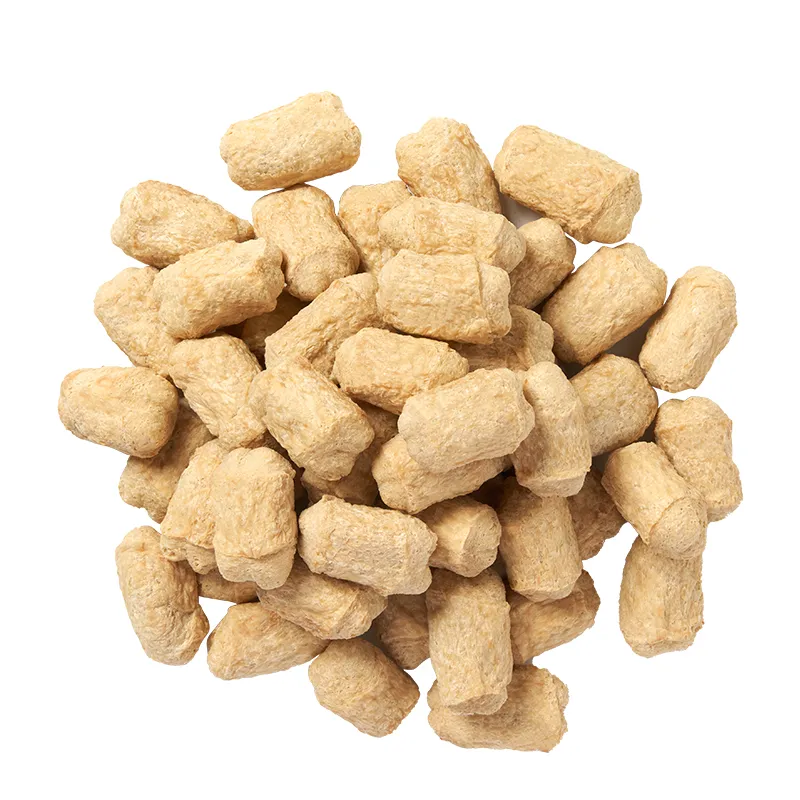
Textured vegetable protein (TVP) is a manufacturing category, not a single fixed ingredient. It usually refers to plant protein extruded into granules, strips or chunks for meat alternatives, prepared foods, snacks and blended products. Raw-material grade, extrusion conditions and post-extrusion drying all influence the finished piece.
What raw materials go into TVP?
The starting material is normally a protein-rich ingredient from a plant crop. For soy-based TVP, this may be defatted soy flour, soy protein concentrate or soy protein isolate. Defatted soy flour is commonly made after oil has been removed from soy flakes; concentrate and isolate are further processed soy ingredients. The precise ingredient list can also include water and, depending on the formulation, starch, wheat gluten, flavoring or minerals—so request the finished specification rather than assume every TVP is alike.
Soy is a major food allergen in several jurisdictions. In the United States, FDA allergen labeling rules cover soy among the major food allergens; the EU likewise requires listed allergens to be emphasized in prepacked-food ingredient lists. That makes the protein source, cross-contact controls and intended destination market part of the purchasing brief, not a later packaging detail.
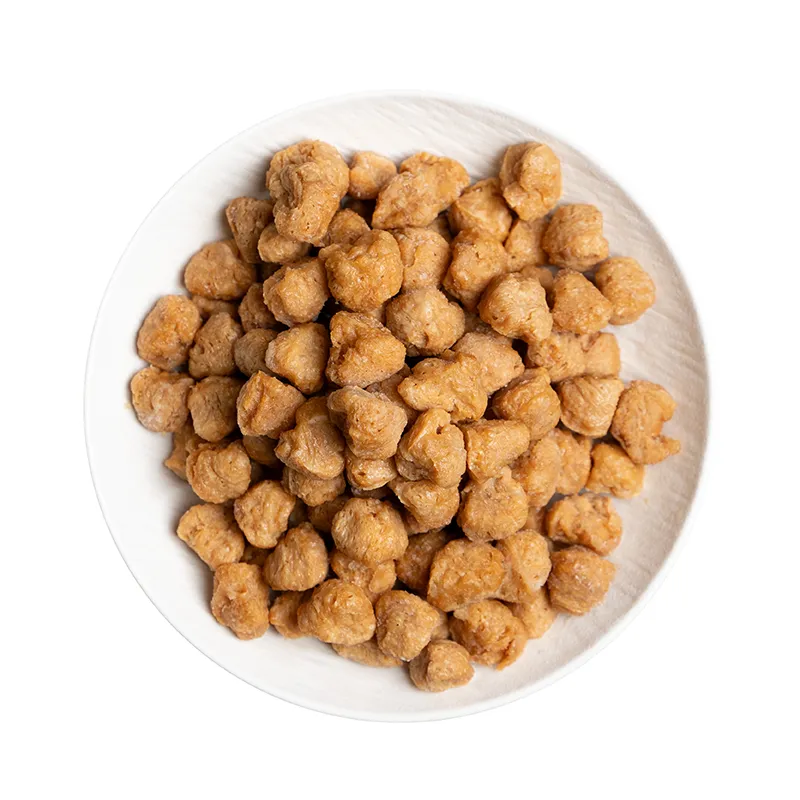
For buyers seeking a non-GMO fibrous soy protein manufacturer, the useful question is not whether the phrase appears on a sales sheet. Ask which raw material is used, what segregation or identity-preservation documentation is available, and what the claim means in the target market. “Non-GMO” is a sourcing or labeling claim; it does not, by itself, describe protein level, texture performance or food-safety certification.
How defatting and extrusion create the texture
In a typical dry-TVP process, cleaned soybeans are prepared and oil is removed to produce defatted flakes or flour. The protein-rich material is milled or blended, conditioned with water, and fed into an extruder. Mechanical shear, heat and pressure change the material’s structure; exiting the die helps create an expanded, aligned or porous piece. The extrudate is cut and dried for later use.
“High-moisture” extrusion uses a different process window. The extrudate leaves with considerably more water and is typically cooled in a die or forming section to set a denser, meat-like fiber. It is often supplied chilled or frozen rather than as a dry, shelf-stable chunk. Therefore, a request for high moisture TVP for plant-based meat should state the desired supply format, storage chain and downstream forming process; dry TVP and high-moisture extrudates are not interchangeable specifications.
Analytical numbers need their basis stated. Moisture can be measured by an oven-drying method such as AOAC 925.10, while protein may be measured using Kjeldahl or combustion methods, each relying on nitrogen measurement and a stated conversion factor. Water absorption is often more application-specific: a supplier and buyer should agree on sample mass, water temperature, soak time, draining method and final measurement. Without that shared procedure, two “high absorption” claims may not be comparable.
Which protein, hydration and texture details belong in a TVP specification?
Protein content is useful, but it is not a proxy for performance. A high-protein ingredient can still be wrong for a juicy filling if it hydrates slowly, fragments or releases water during cooking. The meaningful comparison is a trial under the buyer’s recipe, thermal process and holding time.
Hydration needs its own written target. Set the water-to-dry-product ratio and soak time for the intended recipe, then specify water temperature, draining method and the point at which the hydrated weight is recorded. Porosity and piece density influence how quickly water, seasoning, oil and sauce move into a piece, so verify flavor carry and fat handling after cooking rather than judging a dry sample alone.
Specify particle form as well as chemistry. Fine granules can disperse quickly in sauces, fillings and some formed products; medium pieces may suit ground-meat-style applications; larger chunks can give a visible bite in ready meals, stir-fries and seasoned inclusions. Instead of relying on terms such as “small” or “coarse,” request a sieve range or particle-size distribution, a broken-piece limit, bulk-density data with its test procedure, and a retained-sieve method. For fibrous products, ask for a simply cooked sample alongside the dry specification.
| Selection factor | What to ask for | Why it affects total cost |
|---|---|---|
| Protein basis | Protein result, moisture result and test method | Supports like-for-like nutrition and formulation comparisons. |
| Hydration | Water ratio, soak time, temperature, drain and weighing procedure | Changes yield, seasoning balance and ingredient usage. |
| Structure | Granule, strip or chunk; size distribution, bulk density and fragile-piece limit | Influences visual appeal, handling loss and line consistency. |
| Thermal stability | Trial result after cooking, freezing, retort or hot holding as relevant | Helps avoid late-stage reformulation and waste. |
An illustrative yield calculation makes the point: if a dry piece is intended to be hydrated, the usable batch yield depends on the verified drained weight—not the water first added to the tank. Compare cost per kilogram of finished, drained inclusion after preparation, plus expected breakage.
How should TVP grade match the finished application?
Application choices begin with the eating experience and process constraints. A fine texture may suit a sauce, while a more distinct piece is often wanted in a bowl or filling. Test rehydration, seasoning, cooking and freeze–thaw exposure together; bench hydration alone cannot show how the ingredient will perform through distribution.
| Application | Useful starting texture | Validation focus |
|---|---|---|
| Sauces and fillings | Fine granules or small pieces | Dispersion, sauce binding and consistency after holding. |
| Ground-style patties or nuggets | Medium granules or short fibrous pieces | Binding, bite, cook loss and piece integrity. |
| Ready-meal bowls and stir-fries | Larger chunks or strips | Hydration uniformity, visual retention and reheating stability. |
| Hybrid meat products | Grade selected around the existing meat matrix | Labeling, allergen control and sensory alignment. |
A sustainable protein alternative should also be described carefully. Plant proteins can contribute to a lower-impact product strategy, but an “eco-friendly protein” statement needs boundaries: crop origin, processing, transport, pack format and the comparison baseline all matter. Use a documented life-cycle assessment or qualified, product-specific substantiation before making environmental claims; broad claims without evidence can create regulatory and customer risk.
Which standards, labels and sourcing checks apply?
Compliance depends on where and how the finished food will be sold. In the United States, FDA food-labeling requirements in 21 CFR Part 101 govern items such as ingredient and nutrition labeling, while the National Bioengineered Food Disclosure Standard in 7 CFR Part 66 governs when regulated bioengineered-food disclosure applies. These are regulatory frameworks, not supplier certifications. A manufacturer should determine the applicable rules for the finished food and label, including whether it is sold nationally or exported.
For internationally traded packaged foods, Codex CXS 1-1985 is a reference for general labeling principles; destination-country law still controls. In the EU, Regulation (EU) No 1169/2011 addresses food information to consumers, including allergen presentation. An audit scope or laboratory method is not, by itself, a marketing claim.
During a supplier documentation review, request a current specification, allergen statement, country-of-origin information where needed, lot traceability approach, microbiological limits and certificates that actually apply to the facility and product. Confirm how changes to the soy source, processing aid or packaging will be communicated. Unsupported non-GMO, high-protein, clean-label or environmental claims can trigger relabeling work, rejected shipments or customer complaints.
What should a TVP procurement brief include?
- Write the product brief around the final eating format: visible chunk, mince-like bite, fibrous pull or background protein.
- Agree in advance on protein, moisture, particle-size, bulk-density and water-absorption methods, including how samples are conditioned and reported.
- Run a controlled pilot through the actual hydration ratio and timing, seasoning and fat addition, thermal treatment and packaging process.
- Review the ingredient statement, soy allergen controls, claim substantiation and destination-market label before launch.
- Compare landed and prepared cost alongside quality variation, documentation lead time and supply continuity.
BCTVP can be a useful starting point when a buyer needs to discuss product format and sourcing documentation alongside the application. Final suitability should still be confirmed through the buyer’s own specification review and production trial.
Frequently asked questions
What is fibrous soy protein?
Fibrous soy protein is soy-based protein processed to create an elongated or layered structure intended to give a more meat-like pull or chew. The degree of fiber, hydration behavior and finished bite vary by ingredient and process.
What is textured vegetable protein?
Textured vegetable protein is a general term for plant protein processed, commonly by extrusion, into a structured form such as granules, strips or chunks. Soy is common, but the name does not guarantee one particular crop, protein level or texture.
Is TVP good or bad for you?
TVP is an ingredient, so its nutritional role depends on its raw material, serving size and the overall food in which it is used. Soy-based TVP can contribute protein, while a finished product may also contain sodium, fats or other ingredients that matter to the diet.
Is TVP just tofu?
No. Tofu is typically made by coagulating soy milk and pressing the curds, whereas TVP is commonly made by extruding protein-rich soy ingredients into a dry or high-moisture structure. Both can be soy-based, but their manufacturing routes, formats and uses are different.
Is TVP a highly processed food?
TVP is processed through steps such as oil removal, milling, blending and extrusion. Whether a finished food is described as “highly processed” depends on the definition used and the whole formulation, not TVP alone.
Is textured soy protein the same as TVP?
Textured soy protein is a type of TVP when TVP is used as the broad term for textured plant proteins. The terms are often used interchangeably for soy-based extruded pieces, but specifications can still differ widely.
References
- https://www.fda.gov/food/food-labeling-nutrition/food-allergies
- https://www.ecfr.gov/current/title-21/chapter-I/subchapter-B/part-101
- https://www.ams.usda.gov/rules-regulations/be
- https://workspace.fao.org/sites/codex/Standards/CXS%201-1985/CXS_001e.pdf
- https://eur-lex.europa.eu/eli/reg/2011/1169/oj
The strongest TVP decision is made at the specification stage: choose the structure that will still perform after hydration, processing and distribution.
When you are ready to compare formats for a commercial formulation, explore BCTVP’s textured protein product range and contact the team about your application requirements.