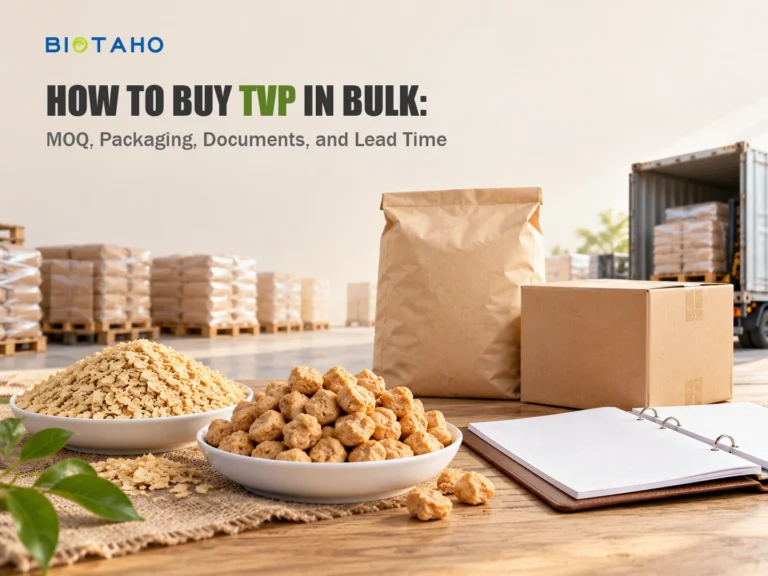
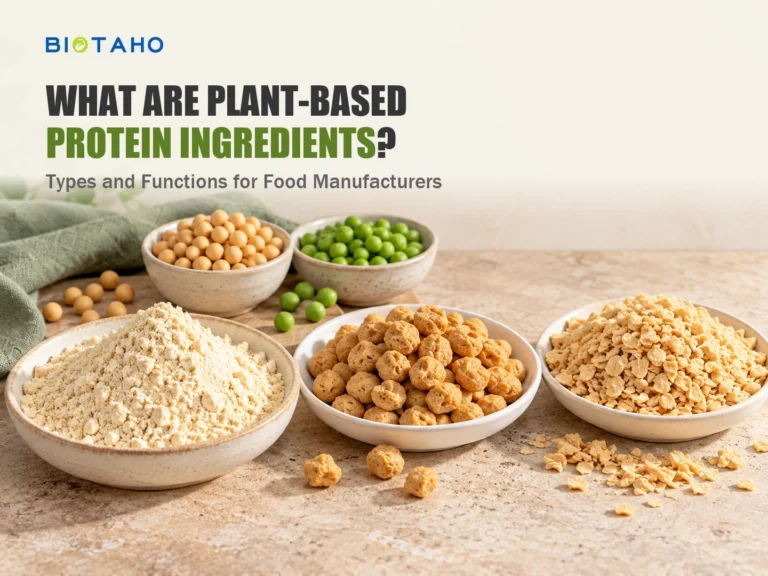
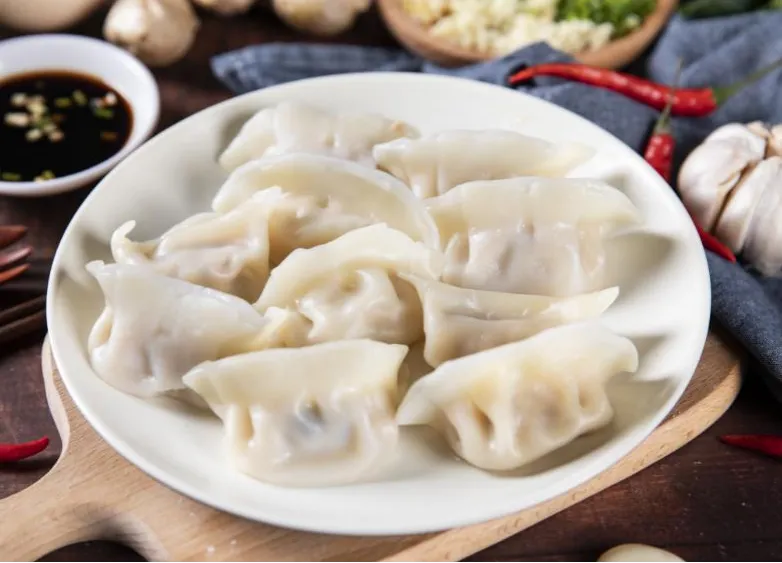
When Maya Chen, a product-development manager in Toronto, trialed a new meat-free dumpling filling, she used the hydration ratio from a small soy granule in a strand-like grade. Within minutes, liquid pooled in the tray. After cooking, the filling was soft and split during forming. A review of the fiber size, hydration time, mixing shear, and heat profile reversed the diagnosis: the ingredient was not simply bad; the specification and process were mismatched to the job.
Summary: fibrous soy protein can provide strands, chew, and water-holding support, but performance belongs to the whole formula. Screen three items together—structure, hydration, and finished-product stability—then confirm the grade with a controlled pilot. A specification is not a certification, and 21 CFR 101.4 covers U.S. ingredient designation rather than recipe performance. Request grade-specific documents, test the actual process, and complete the destination-market label review before approval.
What Fibrous Soy Protein Adds to Plant-Based Meat
Fibrous soy protein is a structured soy ingredient used to contribute visible strands, chew, and a more directional bite. It is not a complete meat-free formula. A finished product may also contain oil, starch, binders, flavor systems, salt, and other proteins; each changes how the soy structure hydrates and holds together.
Fiber geometry, particle or strand size, porosity, moisture, and thermal history all matter. A large, open structure may create a noticeable bite but need more time or energy to hydrate. A smaller structure may disperse more evenly in a patty or filling while contributing less visible fiber. The right choice depends on the eating experience and the line, not on protein percentage alone.
Define three observable outcomes before requesting samples: the appearance of the hydrated ingredient, the bite at serving temperature, and integrity after the relevant frozen or chilled route. Then specify how each outcome will be judged. For a buyer, plant-based meat protein options matter only when they are tied to those finished-food requirements.
For the technical file, ask how protein, moisture, urease activity, microorganisms, and heavy metals are measured. Kjeldahl and Dumas are established approaches to protein analysis, but the calculation basis and reporting convention still need to be stated. A certificate of analysis should identify the method, sample conditions, and acceptance criteria for the proposed grade.
Water Binding, Fat Interaction, and Texture
A soy protein meat replacer can take up water during prehydration and still release free liquid during mixing, forming, cooking, or holding. Salt, oil, starch, binders, mixing energy, cooking rate, and hold time all affect the balance. The commercial target is controlled moisture release: enough retained water for a juicy bite, without purge in the pack or a weak filling.
Use three pilot checkpoints: hydrated mix, cooked product, and frozen/thawed product when that route is commercially relevant. Record added water, hydration time, mix temperature, batch yield, cooking loss, purge, and sensory observations. A water absorption capacity (WAC) test can help compare grades, but the water ratio, contact time, temperature, separation step, and calculation must stay constant because WAC procedures vary between laboratories.
Texture profile analysis (TPA) can track hardness, cohesiveness, springiness, and chewiness. It is useful for comparing batches, but it does not replace a sensory panel or an assessment at the actual serving temperature. For emulsified or high-fat systems, also observe whether the hydrated soy remains evenly distributed after oil addition and whether the cooked matrix stays cohesive after cooling.
Illustrative cost logic makes the risk visible. If a hypothetical 1,000 kg wet batch loses 4% more mass during cooking, 40 kg of sellable product is exposed before rework and packaging. That is not a product result; the plant must calculate its own yield, labor, energy, waste, and disposal costs. A lower ingredient price can be a poor economic choice if it increases purge, breakage, or line interruptions.
Extrusion Creates Structure, but the Recipe Finishes It
Extrusion uses heat, moisture, pressure, and shear to create a structured protein matrix. The extruder sets the starting geometry; hydration, cutting, seasoning, forming, cooking, and holding determine whether that geometry works in the finished food. Low-moisture and high-moisture extrusion have different downstream handling needs, so a laboratory sample is not automatically line-ready.
During scale-up, keep four checkpoints visible: feed moisture, residence time and thermal profile, die and cutting conditions, and cooling or post-extrusion handling. Record density, strand or particle dimensions, hydration behavior, and structural breakdown under the intended mixing conditions. A documented gravimetric moisture method, water-activity measurement where relevant, and TPA provide useful comparisons; none is a certification of product quality by itself.
Ask whether the grade suits the buyer’s mixer, forming equipment, freezer, and cooking profile. Confirm the workable hydration window rather than accepting one recommended ratio as universal. A meat analog protein that performs well in a dry patty mix may need a different size, prehydration step, or binder system in a sauce-rich filling.
Format Comparison: Choose the Structure for the Product Job
Compare functional formats by the work they must do. The table below is a screening tool for sample selection, not a substitute for a finished-food trial.
| Format | Typical structural contribution | Process and water questions | Useful fit | Buyer caution |
|---|---|---|---|---|
| Fibrous soy protein | Visible strands, chew, and a directional bite | Fiber size, hydration time, shear tolerance, and cook stability | Shredded formats, fillings, patties, and blended systems | Requires a product-specific pilot; protein content alone does not define performance |
| Textured soy granules or flakes | Granular or particulate bite | Hydration ratio, particle size, and distribution through the mix | Formed products, fillings, and bulk structure | Wrong sizing or hydration can make the matrix loose or uneven |
| Soy protein concentrate or isolate | Protein contribution, binding, emulsification, or gel support | Dispersibility, thermal response, flavor, and interaction with salt and fat | Emulsified products and blends needing a smoother matrix | May not supply visible long fibers by itself |
| Wheat gluten or another non-soy protein | Different elastic, binding, or nutritional contribution | Allergen profile, label rules, hydration, and process compatibility | Blended recipes where a different texture or label strategy is acceptable | Non-soy does not mean allergen-free; destination-market review is still required |
Application Fit and the Cost Drivers Buyers Miss
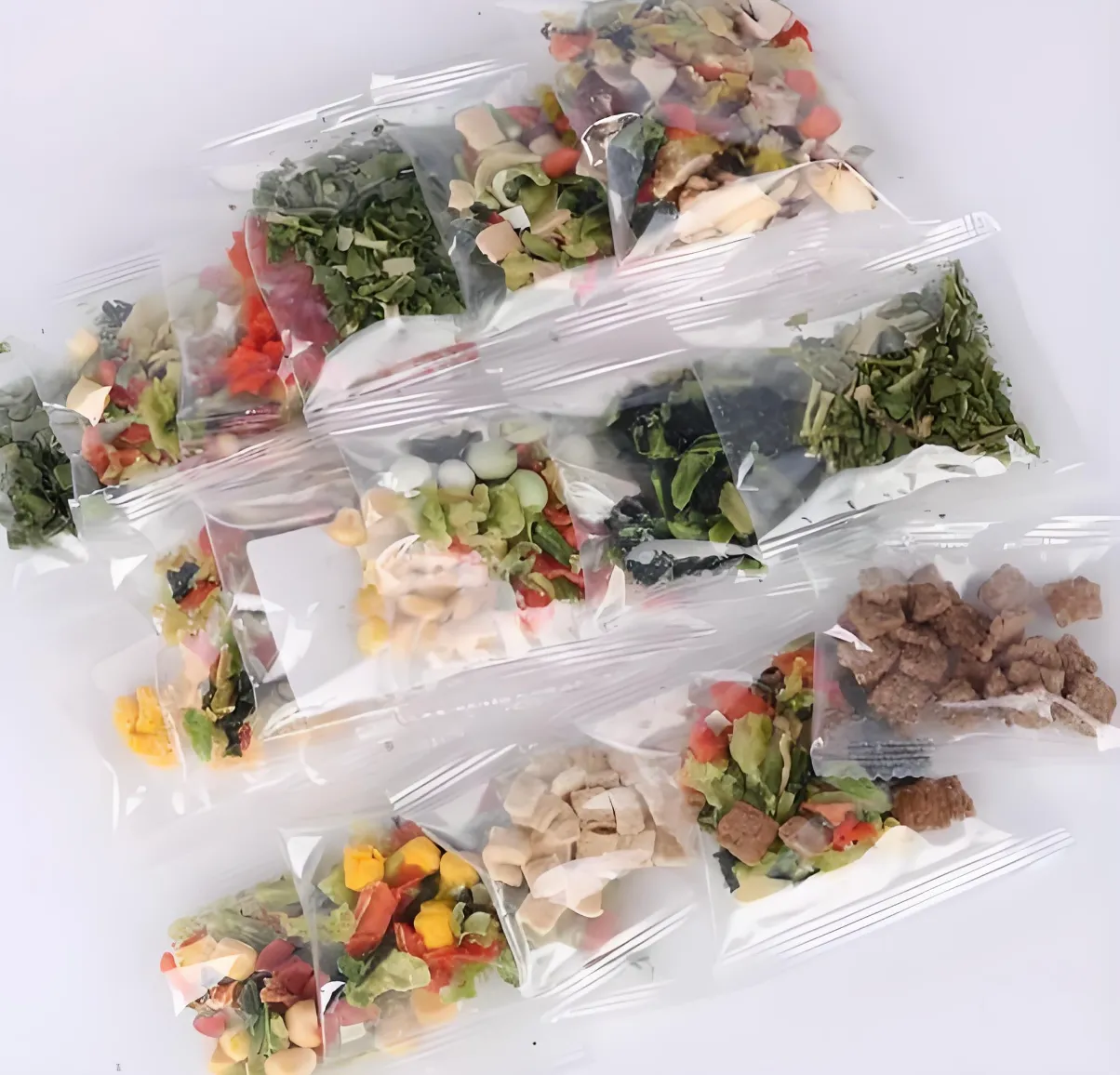
A dumpling filling may need clean hydration and low purge. A patty may prioritize bite and shape retention. Strips or shredded formats need visible, directional structure, while a dry seasoning or instant-noodle inclusion raises dispersion, dust, and flavor-carrier questions. A useful way to organize textured soy protein applications is to write one finished-food brief at a time.
| Application | Primary functional target | Questions for the specification | Main cost driver to validate |
|---|---|---|---|
| Burger or patty | Bite, cohesion, and shape retention | Fiber visibility, hydration window, cooking loss, and bite after holding | Yield and line speed, not ingredient cost alone |
| Nugget or formed product | Uniform distribution and repeatable forming | Particle size, shear tolerance, coating compatibility, and freeze-thaw behavior | Rework, breakage, coating, and cooking losses |
| Shredded or whole-muscle style | Visible fiber and directional chew | Strand geometry, cut length, hydration, and resistance to mixing | Process yield and supporting binder or sauce |
| Dumpling or filled food | Moisture control and filling integrity | Purge, cooking stability, wrapper interaction, and holding time | Filling yield and forming-line interruptions |
| Dry seasoning or instant noodle inclusion | Dispersion, flavor compatibility, and dry handling | Particle size, dust, moisture pickup, and seasoning distribution | Blending uniformity, packaging, and shelf-life controls |
The comparison has two layers. The ingredient invoice captures only unit cost. The better commercial measure also includes water and binder demand, cooking yield, rework, cleaning time, line speed, and the cost of a failed hold or freeze-thaw test. Keep any calculation illustrative until it is based on the plant’s own mass balance and labor data.
Standards, Allergen, and Destination-Market Review
Soy is an allergen that requires attention in formulation, segregation, sanitation, labeling, and customer communication. Requirements differ by market and product category. For a U.S. launch, 21 CFR 101.4 is relevant to ingredient designation; the finished label also needs a review of allergen declaration, compound ingredients, carry-over ingredients, and any precautionary statement policy. Codex texts can provide an international reference, but they do not replace the law in the sales market.
Keep three records separate: the product specification, the test report or certificate of analysis, and any management-system certificate. Kjeldahl, Dumas, moisture, urease, microbiological, and heavy-metal procedures are analytical checks. ISO 22000 describes a food-safety management system; it is not a guarantee that a particular grade will deliver a target bite. Likewise, a certificate’s issuing body, site, product scope, and validity need to be checked rather than inferred from a logo or a general company statement.
Examples buyers may encounter include HACCP-based controls, ISO 9001, ISO 14001, ISO 45001, IFS certification, and Halal documentation. Their relevance depends on the customer’s specification, destination market, and claim language. An unclear certificate scope, unsupported allergen statement, or incomplete traceability record can delay approval or force a label change. Review the supplier’s quality and safety information alongside the documents for the proposed grade.
A Practical Selection Process for Food Manufacturers
- Define the finished-food job. State the desired bite, visible structure, serving temperature, cooking route, frozen or chilled path, and purge tolerance. Include the equipment and batch size used for the trial.
- Request grade-specific evidence. Ask for the specification, test methods, allergen statement, traceability information, storage guidance, sample COA format, and process notes. Confirm that the documents apply to the proposed grade and manufacturing site.
- Run a controlled pilot. Compare two or three hydration and process conditions while keeping the rest of the formula stable. Measure yield, purge, texture, sensory acceptance, and freeze-thaw behavior when relevant.
- Close the compliance and supply loop. Confirm destination-market labeling, certificate scope, packaging, storage, change control, MOQ, lead time, price, and shipment documents directly. These order-level terms should not be inferred from a general product page.
Baichuan (Baichuan Biotechnology) is one supplier a buyer may assess against that same evidence standard. Its public company information states that it was founded in 2008 and is headquartered in Wenzhou, Zhejiang, with bases in Wenzhou and Xinxiang, Henan. Its public portfolio describes six major product series and more than 2,000 specifications. Those statements do not establish suitability for a particular recipe, so the decision should rest on samples, grade-specific documents, pilot data, and confirmed commercial terms.
Frequently Asked Questions
What is TVP in meat?
TVP usually means textured vegetable protein, a dry structured ingredient used to add protein and a meat-like bite after hydration. Soy is a common base, but TVP can also refer to other vegetable-protein formats. In a finished product, its result depends on particle or fiber size, hydration, seasoning, binders, and cooking.
Is TVP good or bad for you?
TVP is neither automatically good nor bad; the answer depends on the base protein, serving, formulation, and the rest of the diet. Check the nutrition panel, sodium, added fat, allergens, and ingredient list rather than judging the format alone. People avoiding soy or gluten should confirm the exact grade and cross-contact information.
How to use TVP as a meat extender?
Hydrate the TVP with a controlled amount of liquid, allow the specified contact time, then mix it with the meat or plant-based matrix while keeping temperature and shear consistent. Start with the supplier’s guidance, but validate water release, seasoning distribution, forming, cooking loss, and the final bite in the intended recipe. Adjust the ratio only after the hydrated ingredient and cooked product have both been assessed.
What can TVP be used for?
TVP can be used in patties, nuggets, dumpling fillings, sauces, meatballs, strips, and other formed or blended foods. Granules and flakes generally suit particulate structures, while strand-like grades suit products that need visible fiber. Choose by the finished-food target, then check hydration, shear tolerance, cooking stability, and labeling requirements.
Is TVP more processed than tofu?
TVP and tofu are made through different processes, so “more processed” is not a useful quality verdict by itself. TVP is commonly dried after texturization and must be rehydrated, while tofu is a wet, gelled food made from soy milk. Compare the actual ingredient list, nutrition, sodium, and intended use when selecting between them.
Is TVP a highly processed food?
TVP is a processed food because the protein is separated, texturized, and typically dried, but the label “highly processed” does not reveal its nutritional quality on its own. Assess the ingredient list, sodium, added oils or flavors, protein source, and the role it plays in the finished meal. For manufacturing, also confirm the grade’s specification, allergen controls, and performance in the target process.
References
- FAO/WHO Codex Alimentarius: Codex texts
- Electronic Code of Federal Regulations: 21 CFR 101.4
- U.S. Food and Drug Administration: Food Allergies
- International Organization for Standardization: ISO 22000 standard page
Specify the bite first; then buy the structure, hydration behavior, process evidence, and compliance file that can deliver it. When the decision reaches sampling, review Baichuan’s product range against the application brief and contact Baichuan’s team for grade-specific documentation and commercial confirmation.