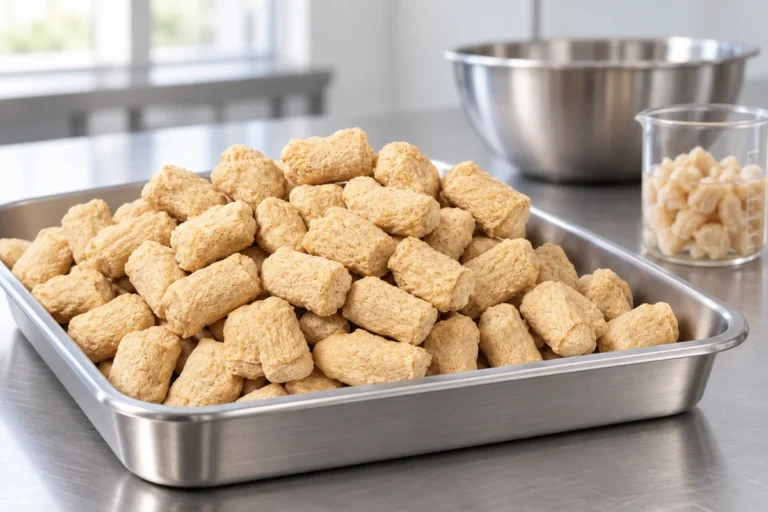
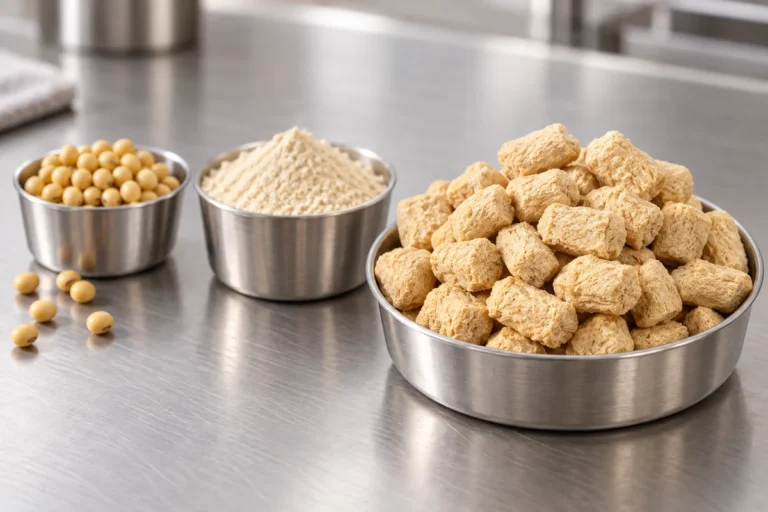
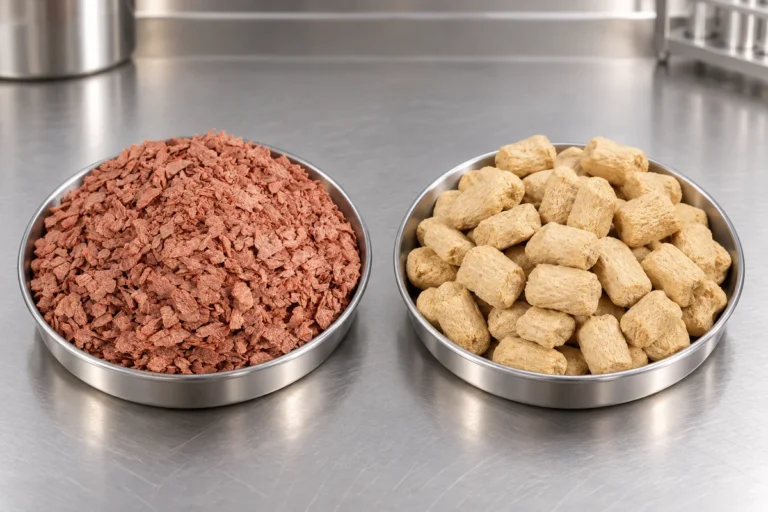
Summary: Beany smell in fibrous soy protein usually comes from residual volatile compounds, lipid oxidation, excessive soaking, weak deodorization, or poor storage control. The most reliable solution is not simply adding stronger spices, but building a repeatable process: controlled hydration, optional rinsing, pressing, blanching or steaming, then seasoning. Typical starting parameters include a 1:2.5 to 1:3.5 hydration ratio, 50–70°C water, 20–40 minutes soaking, and 80–90°C blanching for 5–10 minutes. Food manufacturers should manage this process under ISO 22000, HACCP, Codex hygiene principles, and FDA FSMA preventive-control thinking.
Beany smell is a common sensory challenge in soy-based protein ingredients. It may appear as grassy, green, bean-like, cardboard-like, or oxidized notes, especially after hydration, cooling, reheating, or long storage. In B2B plant-based meat production, this is not a small flavor issue. It can delay buyer approval, increase reformulation cost, and weaken confidence in the supplier’s batch consistency.
Soy ingredients remain important in the global plant-based protein market because they offer high protein density, functional texture, reliable supply, and cost efficiency. FAO recognizes soybeans as a major global protein source, while The Good Food Institute has repeatedly emphasized that taste and texture are among the most important factors influencing plant-based meat adoption. For manufacturers, removing beany odor is therefore both a technical task and a commercial requirement.
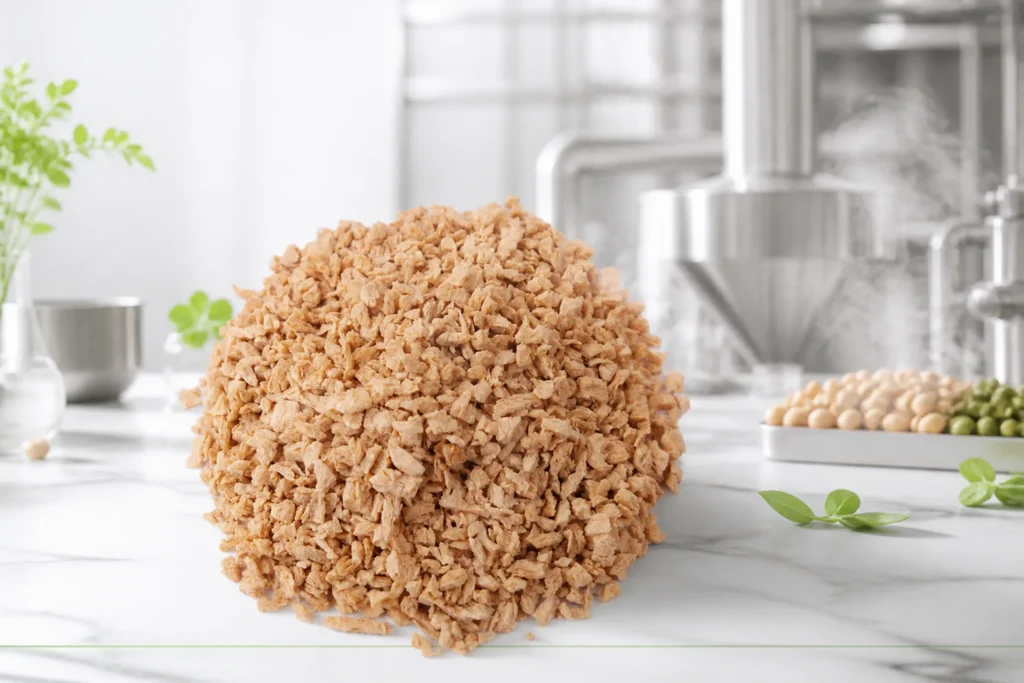
Why Fibrous Soy Protein Develops a Beany Smell
Beany odor usually comes from several sources working together. Soy naturally contains compounds that may create grassy or bean-like notes when released during hydration. Residual lipids can also oxidize and form aldehydes or ketones, which may contribute to cardboard-like or stale aromas. If the ingredient has been stored in a warm, humid, or poorly sealed environment, the risk becomes higher.
A dry soy protein product may seem mild when first opened, but once water enters the fibrous structure, volatile compounds can be released more strongly. This is why many factories notice the odor not in the bag, but during soaking, cooling, or reheating. The first sensory check should therefore happen not only immediately after hydration, but also one to two hours after cooling.
From a quality-control perspective, buyers should request moisture content, protein content, batch specification, storage recommendations, and sensory notes from the supplier. Many dry soy protein materials are controlled below about 10% moisture, depending on specification, and storage below 25°C in a dry, sealed, odor-free warehouse is commonly recommended. These controls also match the preventive mindset behind Codex Alimentarius food hygiene principles and ISO 22000 food safety management systems.
How Hydration Influences Beany Odor
Hydration is often the first processing step where beany smell becomes noticeable. If the water temperature is too low, the protein may hydrate unevenly. If the soaking time is too long, the texture may soften and unwanted odor compounds may become more obvious. If the water ratio is not controlled, the product may either remain tough inside or become spongy and weak.
A practical starting point is to hydrate fibrous soy protein with a water-to-protein ratio of 1:2.5 to 1:3.5. Water temperature can usually start around 50–70°C, depending on product density and target texture. Soaking time is often 20–40 minutes. After hydration, one light rinse can help remove dissolved odor compounds, especially for applications requiring a cleaner base flavor. Light pressing can then remove excess water before seasoning.
Longer soaking does not automatically reduce odor. In many cases, it does the opposite. A material soaked too long in warm water may release more bean-like notes and lose the bite needed for plant-based beef strips, vegetarian chicken chunks, or vegan jerky. The same principle applies when factories test textured soy protein for mince, chunk, or strip-style products. Under HACCP thinking, hydration should therefore be treated as a controlled processing step, with time, temperature, water quality, and batch observations recorded where relevant.
Thermal Treatment and Deodorization
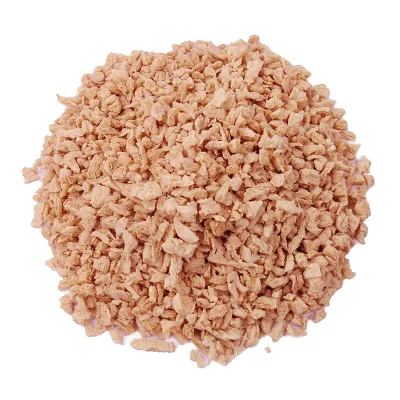
Thermal treatment is one of the most useful ways to reduce beany smell, but it must be balanced against texture. Excessive heating can weaken the fibrous structure, while insufficient heating may leave the base flavor too raw. The goal is not to overcook the protein, but to reduce the odor load before seasoning.
Blanching is a common option. After hydration and optional rinsing, the protein can be blanched in 80–90°C water for 5–10 minutes. This helps reduce odor and prepares the structure for seasoning. Steaming at about 70–85°C can also work well when the manufacturer wants to limit extra water absorption and preserve a firmer bite. Mild boiling may reduce odor more aggressively, but it can make the protein too soft if time is not controlled.
Some formulations also use controlled pH adjustment, usually around a neutral working range of pH 6.5–7.5 depending on the product. Yeast extract, natural savory flavors, salt, spices, and marinade systems can then be added after the base odor has been reduced. This sequence matters. If seasoning is added too early, off-flavor may become trapped inside the protein matrix instead of being removed during rinsing or heat treatment.
The FDA FSMA preventive-controls approach is useful here. Beany odor may not always be a food safety hazard, but inconsistent processing can still cause buyer rejection, audit questions, and batch instability. A defined deodorization process is more reliable than one-time trial-and-error adjustments.
Ingredient Compatibility in Plant-Based Meat Formulation
A strong seasoning system cannot fully compensate for a poorly prepared protein base. Oil, salt, flavors, gums, starches, colors, and plant proteins interact with each other. If oxidized oil is used, cardboard-like notes may become stronger. If too much gum is added, the structure may trap undesirable aromas. If salt or marinade is added before hydration is complete, flavor penetration may become uneven.
For many applications, the more stable approach is to hydrate first, rinse or blanch when needed, press to the target moisture level, and then season. Oil should usually be added after the protein structure is prepared, not at the beginning of hydration. This helps reduce oxidation risk and improves seasoning distribution.
The final application also matters. Plant-based beef strips need a stronger fibrous bite, while food service fillings may tolerate softer texture. Vegan jerky needs deeper flavor penetration and drying stability. Canned vegetarian protein must withstand heat processing without releasing unpleasant odor after sterilization. This is why fibrous soy protein should be selected according to product format, not only by price or protein percentage.
Storage, Packaging, and Batch Control
Even well-processed soy protein can develop off-flavor if storage is poor. Heat, oxygen, light, and humidity all increase the risk of odor change. Strong-smelling chemicals, spices, or packaging materials stored nearby can also affect dry ingredients.
For industrial use, the ingredient should be stored in sealed packaging, in a dry warehouse, ideally below 25°C, and away from direct sunlight. Once opened, the bag should be resealed or transferred into a clean, food-grade container. First-in, first-out inventory control should be used to avoid long storage time. Batch numbers, COA documents, and incoming inspection records should be maintained.
This becomes especially important for buyers sourcing textured soy protein bulk, because larger-volume purchasing increases the importance of warehouse control, batch rotation, and incoming inspection. Codex food hygiene principles, ISO 22000, and FDA FSMA all support the same idea: quality problems should be prevented through controlled systems rather than corrected only after the buyer rejects the sample. In B2B supply, a stable batch record can be as important as the first successful sample.
Comparing Common Beany Smell Reduction Methods
Different deodorization methods solve different problems. The best method depends on product format, target texture, production equipment, seasoning system, budget, and export market. Manufacturers should avoid treating flavor masking as the only solution, because masking may hide mild residual notes but cannot correct weak process control.
| Method | Best Use Case | Typical Parameters | Effect on Texture | Cost Impact | Quality Notes |
|---|---|---|---|---|---|
| Warm water hydration | General preparation | 50–70°C, 20–40 minutes | Maintains structure if controlled | Low | Should be defined in production SOP |
| Rinsing and pressing | Cleaner base flavor | One rinse, light pressing | Can improve bite if not over-pressed | Low | Use potable water and clean equipment |
| Blanching | Stronger odor reduction | 80–90°C, 5–10 minutes | May soften if excessive | Medium | Time and temperature should be recorded |
| Steaming | Firmer strip or chunk products | 70–85°C | Preserves bite better than boiling | Medium | Useful when extra water pickup is undesirable |
| Marinade infusion | Savory plant-based meat | 20–60 minutes depending on size | Improves flavor penetration | Medium | Control salt, allergens, and label claims |
| Flavor masking | Mild residual notes | Depends on formula | Limited texture effect | Medium to high | Not a substitute for odor control |
| Supplier-level deodorized processing | Sensitive applications | Supplier-specific | More consistent base | Higher | Request COA and sensory specification |
No single method works for every factory. The practical goal is not to chase a “zero odor” promise, but to build a repeatable process that produces a clean, stable, buyer-acceptable base. For B2B manufacturers, that usually means standardizing hydration, rinse decisions, thermal treatment, pressing level, seasoning order, and cooling-stage sensory evaluation.
Application Scenarios and Processing Choices
Odor sensitivity changes by application. High-spice or high-oil formulas do not always solve the problem; in some cases, they may amplify oxidized notes during freezing, reheating, or long storage. Engineers should test the full product journey, not only the first cooked sample.
| Application | Sensory Risk | Recommended Treatment | Processing Complexity | Buyer Concern |
|---|---|---|---|---|
| Plant-based beef strips | High | Hydration, blanching, savory marinade | Medium | Bite, aroma, repeat purchase |
| Vegetarian chicken chunks | Medium to high | Hydration, rinsing, light steaming | Medium | Clean flavor and pale color |
| Vegan jerky | High | Blanching, strong marinade, drying control | High | Aftertaste during chewing |
| Ready-to-eat meal toppings | Medium | Hydration and seasoning infusion | Medium | Aroma after reheating |
| Frozen meat alternatives | Medium | Controlled hydration and oil quality control | Medium | Odor after thawing |
| Canned vegetarian protein | High | Blanching and heat-stable seasoning | High | Odor after sterilization |
| Food service fillings | Medium | Rinsing, seasoning, batch holding control | Low to medium | Cost and consistency |
These differences explain why a formula that works in one market may fail in another. A spicy food service filling may hide mild beany notes during hot tasting, but a frozen product may release odor after thawing. A canned product may smell acceptable before retort processing, but stronger after sterilization. The more demanding the application, the more important it becomes to choose a consistent ingredient and define the process in detail.
Standards and Compliance Considerations
Removing beany smell should be handled within a broader quality and food safety framework. ISO 22000 supports food safety management systems and traceability. HACCP helps manufacturers identify points where water quality, heating, cooling, and storage must be controlled. Codex Alimentarius provides recognized food hygiene principles. FDA FSMA emphasizes preventive controls for human food in the U.S. market. EU Regulation EC No. 178/2002 establishes general food law principles, including traceability and responsibility.
Soy allergen labeling is also important. In many markets, soy must be clearly declared as an allergen. If a plant-based meat product uses fibrous soy protein, the manufacturer must manage labeling, cross-contact, and buyer documentation properly.
The commercial risks of weak control include sensory rejection, failed buyer audits, labeling disputes, allergen mismanagement, inconsistent batch approval, import documentation delays, and recall exposure in serious cases. This is not legal advice; it is a practical view of procurement and manufacturing risk. In export-oriented supply chains, documentation often decides whether a technically acceptable ingredient can move smoothly through buyer review.
How Buyers Should Select the Right Fibrous Soy Protein Supplier?
Buyers should avoid choosing fibrous soy protein only by unit price. A lower-cost material may become expensive if it requires more flavor masking, longer processing time, repeated pilot testing, or extra buyer reassurance. The better question is whether the ingredient can support stable production under the buyer’s real process conditions.
A stronger selection process should include COA review, specification comparison, sample testing, hydration trials, cooling-stage sensory evaluation, and documentation checks. Buyers should test at several water ratios, such as 1:2.5, 1:3.0, and 1:3.5, then evaluate odor after one to two hours of cooling. They should also confirm whether the fiber length, density, color, and water absorption match the final product.
It is also useful to ask how the supplier supports application development. A supplier that understands strips, chunks, fillings, jerky, and ready-meal systems can help reduce trial time. For importers or manufacturers purchasing soy textured vegetable protein across multiple batches, supplier communication and documentation support are especially important. The supplier does not need to promise “no beany smell”; a more credible supplier explains how odor is managed through raw material control, processing conditions, batch consistency, and recommended preparation methods.
Baichuan provides fibrous soy protein solutions for B2B food manufacturers, with documentation support for quality management, batch consistency, and international buyer review. Where applicable, Baichuan can support buyers with relevant quality and food safety documentation, including ISO, HACCP, Halal, or Kosher-related materials.
FAQ
What is soy protein fiber?
Soy protein fiber usually refers to the fibrous, textured form of soy protein used to create meat-like bite and structure in plant-based foods. In B2B food manufacturing, it is often produced through extrusion, where soy protein is processed under heat, moisture, and mechanical shear to form aligned fibers. This makes it different from soy protein powder, which is mainly used for protein enrichment, emulsification, or nutrition adjustment. Fibrous soy protein is commonly used in plant-based beef strips, vegetarian chicken chunks, vegan jerky, ready-meal toppings, and food service fillings.
Is TVP actually healthy?
TVP, or textured vegetable protein, can be part of a healthy diet when it is used in a balanced formulation. It is usually high in plant protein, relatively low in fat, and suitable for many meat-reduction or plant-based food applications. However, the final health profile depends on the complete recipe, including sodium level, oil quality, seasoning system, processing method, and serving size. For food manufacturers, the more responsible question is not whether TVP is automatically “healthy,” but whether the finished product supports clear nutrition positioning, allergen labeling, and consumer expectations.
Is soya protein high in fiber?
Soya protein is high in protein, but it is not always high in dietary fiber. The fiber content depends on the ingredient type and how it is processed. Soy protein isolate, for example, is typically concentrated for protein and may contain limited fiber. Textured or fibrous soy protein may retain more structural material, but buyers should not assume a fixed fiber level without checking the specification sheet. In commercial procurement, the correct approach is to request nutrition data, protein percentage, moisture range, and dietary fiber value from the supplier.
What is soybean fibre?
Soybean fibre is the dietary fiber fraction derived from soybeans, often separated during soy protein, soy milk, or tofu-related processing. It may contain insoluble and soluble fiber components and can be used to improve water holding, texture, mouthfeel, or nutrition positioning in certain food applications. It is not the same as fibrous soy protein. Soybean fibre is usually discussed as a fiber ingredient, while fibrous soy protein is mainly used as a structural protein ingredient for meat alternatives. Manufacturers should confirm whether they need texture-building protein, dietary fiber enrichment, or both.
What should buyers ask a fibrous soy protein supplier before ordering?
Buyers should ask for a COA, product specification, protein content, moisture range, storage guidance, allergen information, batch traceability, sample policy, and application support. They should also ask whether the supplier can support buyer audits or export documentation. Consistency matters as much as price in B2B production. During pilot testing, buyers should evaluate odor after hydration, after cooling, and after final heating, because beany notes may appear at different stages. A reliable supplier should help buyers connect ingredient selection with target texture, odor control, compliance documents, and production stability.
References
FDA — Food Safety Modernization Act, Preventive Controls for Human Food
Codex Alimentarius — General Principles of Food Hygiene
ISO — ISO 22000 Food Safety Management Systems
European Commission — General Food Law, Regulation EC No. 178/2002
The Good Food Institute — Plant-Based Meat Industry Resources
Baichuan builds fibrous soy protein solutions — Explore Baichuan’s fibrous soy protein products here: Fibrous Soy Protein Products, or contact the team to discuss samples, specifications, and formulation needs.