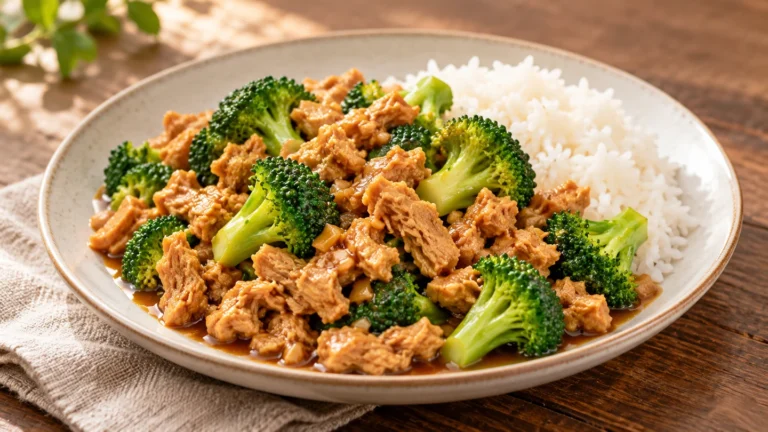
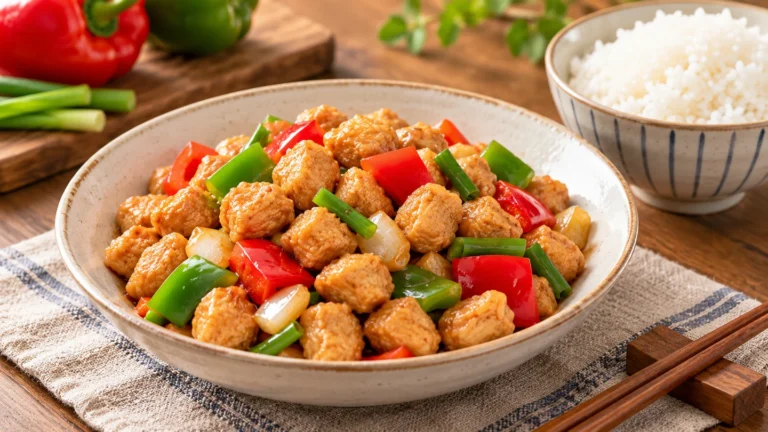
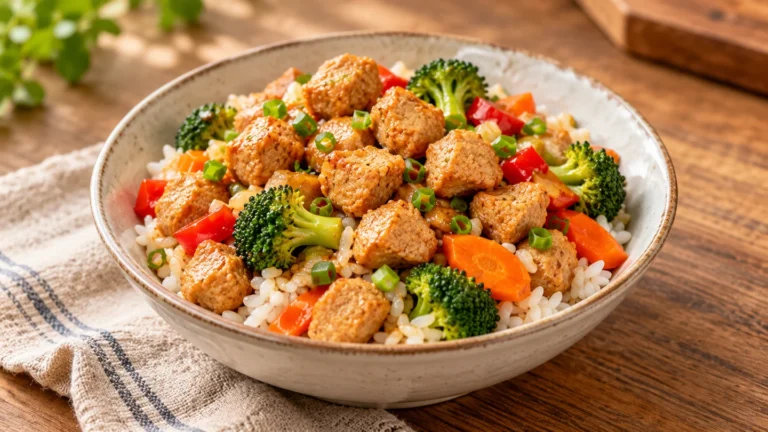
Are soya chunks, soy nuggets and TVP the same thing? The names overlap, but the bag you buy can contain quite different sizes and formulas. Those differences affect how you prepare the protein and which dishes it suits. Here is how to tell chunks from mince, how they differ from tofu, and what to check when buying an ingredient for a recipe or food-production trial.
Soya chunks are textured soy protein pieces, usually sold dry and prepared before cooking. Soy and soya mean the same crop. Chunks give you distinct bites in curry, stew and stir-fries; soy protein granules are smaller and used for mince or fillings. Soya nuggets can also mean the unbreaded dried ingredient, so check the recipe before buying a bag of finished breaded nuggets instead.
Are all soya chunks made from the same ingredients?
Many chunks are made with defatted soy flour, though formulas vary. Baichuan’s small soy fiber protein chunks, for example, list soybean meal, wheat gluten, soy protein isolate, soy protein concentrate and wheat starch. They are sold as Soya Fiber Protein, a textured protein ingredient. Despite the name, that does not make them a pure dietary-fiber powder or a soy-only product.
Proteína vegetal texturizada (TVP) is a broad category that can include protein sources other than soy. Textured soy protein is soy-based, though a particular formula may contain other ingredients too. The guide to proteína texturizada explains the difference. When ordering a SoyaFiber protein product, use its exact name and ingredient list so you know which formula you are getting.
How do soya chunks differ from nuggets and granules?
In many recipes, soy nuggets means the same unbreaded dried soy pieces as chunks. In a snack recipe or freezer aisle, nuggets may instead mean a finished breaded food. Check what the recipe starts with before buying either one.
| Name on a recipe or pack | What to establish | Typical use |
|---|---|---|
| Soy or soya chunks | Piece size, ingredients and whether sold dry | Curries, stews and larger stir-fry bites |
| TVP granules or soy mince | Particle size and hydration directions | Loose mince, sauces and fillings |
| Soy strands or strips | Length, structure and preparation | Strip-style dishes, depending on the grade |
| Breaded vegan nuggets | Finished recipe and cooking instructions | Prepared snack or meal component |
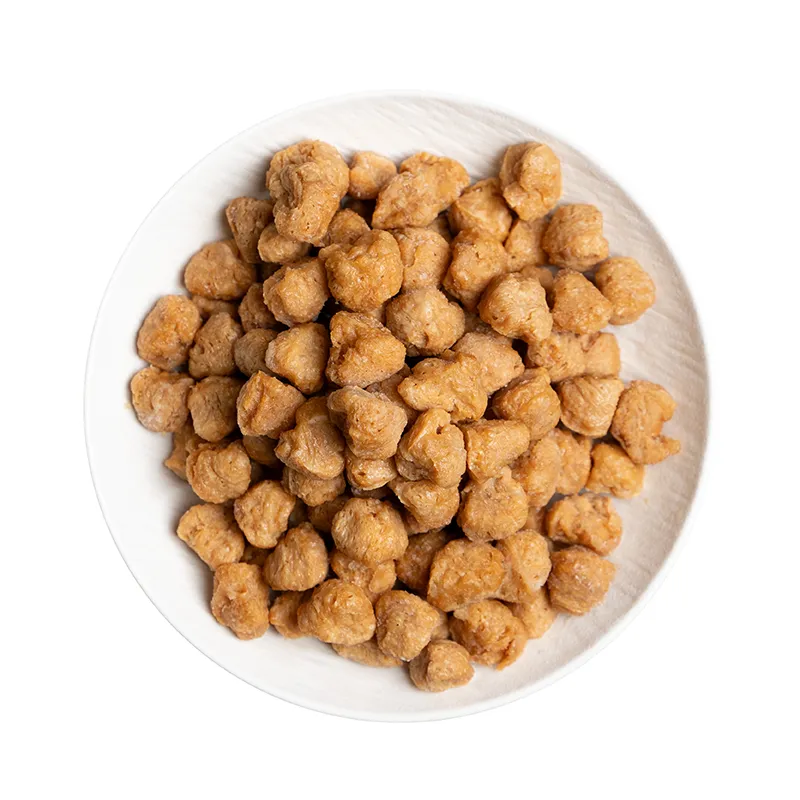
De Baichuan textured soy protein chunks category contains chunk-shaped raw ingredients for preparing and cooking. Choose larger pieces when you want separate bites in sauce, or smaller particles for an evenly mixed filling. Check the size and texture after hydration as well as the dry appearance.
How do you prepare soya chunks without a hard center?
Use the packet or supplier’s directions for water temperature, soaking and any boiling step. Baichuan’s small soy fiber chunks have a published 60–65-minute hydration range, while some recipe ingredients use much shorter soaks. Check a larger piece through the center before cooking. It can feel soft outside while still being hard inside.
Drain or squeeze the pieces as your recipe directs. Extra liquid is easier to accommodate in a stew than under a breadcrumb coating, where it can stop the breading from sticking. Drainage also affects the liquid carried into the next cooking stage.
Published recipes show how preparation can differ. Holy Cow Vegan’s soy-chunk stew uses a 15–20-minute hot-water soak, while Karissa’s small-TVP crumble recipe rests small TVP particles in seasoned liquid for 5 minutes. Each timing applies to that recipe and ingredient. Neither is a soaking rule for every soy product.
How are soy chunks different from tofu?
Tofu is soybean curd, commonly sold with plenty of water already in it. Dried soya chunks need soaking, boiling or another preparation specified on the pack. Their porous pieces give a different texture from a block of tofu, even after both are cooked.
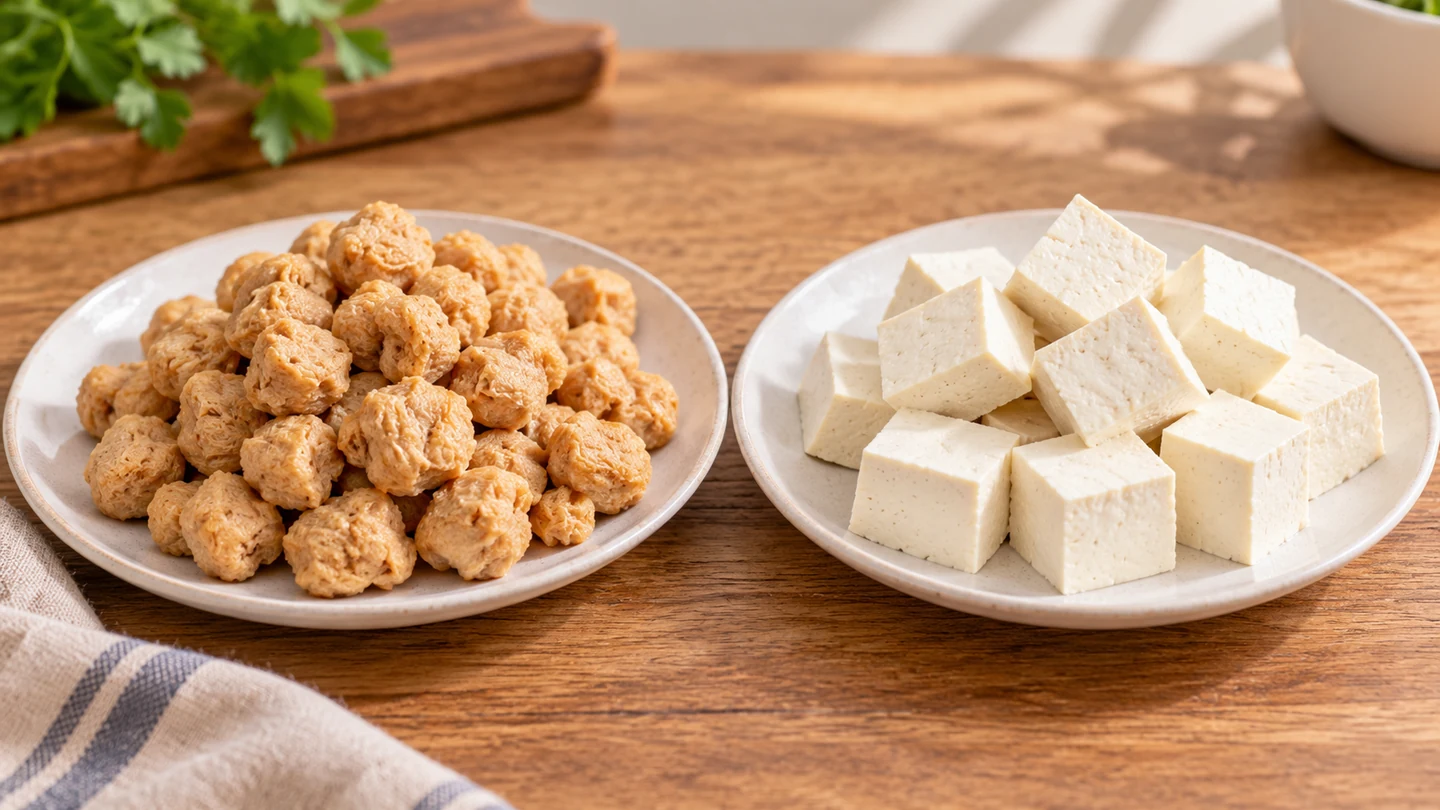
| Question | Soya chunks | Tofu |
|---|---|---|
| How is it usually sold? | Commonly dry; check the pack | Commonly as a moist curd; packaging varies |
| What happens before cooking? | Prepare according to hydration or boiling directions | Drain or press where the recipe calls for it |
| What is the starting shape? | Individual textured pieces | A curd block or another specified tofu form |
| How should nutrition be compared? | Use the label for the amount actually prepared and eaten | Use an equivalent serving and the actual tofu type |
| Can it replace the other unchanged? | Not reliably; water content, texture and preparation differ | |
When comparing soy chunks vs tofu, start with portions as you will eat them. Comparing dry chunks with moist tofu per 100 grams can be misleading. Soaking spreads the chunks’ nutrients over a greater weight of food; the added water does not add protein.
Which dishes suit chunks rather than mince?
Chunks work well when you want separate bites in curry, stew or a sauced stir-fry. Granules spread through pasta sauce and dumpling filling more evenly. Flakes and strands offer other shapes for different dishes. You can chop prepared chunks, but starting with smaller particles saves a step and usually gives more even pieces.
Taste the chunks with the sauce before adding more seasoning. A salty stir-fry sauce may already provide enough, while a simple vegetable dish may need a different balance. For more ideas, see the guide to adding textured protein to recipes.
What should you check on the label?
Read the ingredients and preparation directions, then check whether the nutrition figures describe dry or prepared food. Some soy-fiber blends contain wheat gluten. Sauces and coatings may add other allergens too. FDA’s food-allergy guidance covers the major U.S. allergens. For bulk orders, request the current ingredient and allergen statement for the exact product you are buying.
Preguntas frecuentes
What are soya chunks made of?
They are soy-based ingredients textured into pieces. Defatted soy flour is common, but some commercial products combine soybean meal, soy protein isolate or concentrate with ingredients such as wheat gluten. Read the actual formula rather than assuming all soya chunks are made alike.
Which form of soya chunks is best?
The most useful form depends on the dish. Choose chunks for distinct bites, smaller particles for mince and suitable strips for strip-style meals. Size and preparation matter more than the name alone.
What is the best way to eat soya chunks?
Prepare them according to the product instructions, then cook them in a suitable recipe. Curries, stews and stir-fries are common options. Do not assume a dry product is ready to eat.
Are soy chunks high in protein?
Many dry products contain substantial protein. Check the actual label, then work out the amount in the prepared portion you will eat. For a commercial nutrition claim, use product-specific data and the relevant market rules.
Which is better, tofu or soya chunks?
Choose according to texture, convenience, the recipe and dietary needs. Compare equivalent portions in the state they will be eaten. A dry-versus-moist comparison per 100 grams is misleading.
Do I need to boil soya chunks before cooking?
Some products require boiling; others use a soak or another specified method. Follow the directions for the actual ingredient and check the centre.
How many minutes should I soak soya chunks?
There is no single soaking time for all chunks. Size, structure, ingredients and water conditions affect how they soften. Use the directions on your bag, even if a recipe using a different product calls for a 15–20-minute soak.
What can be done with soya chunks?
Prepared chunks can go into curries, stews, stir-fries and coated snacks. For sauces or dumpling fillings, a recipe using smaller pieces or granules may be easier to work with.
Choosing soya chunks for your recipe
For stew, choose pieces that fit on a spoon and stay pleasant to eat after simmering. For fillings, look for smaller particles that mix well without wetting the wrapper. Check the formula and preparation directions, and compare nutrition in prepared portions. If you are choosing between Baichuan products, ask the Baichuan team for the exact sample names, ingredients and hydration methods. Try each sample in your own dish, including reheating if needed, before deciding which to use.