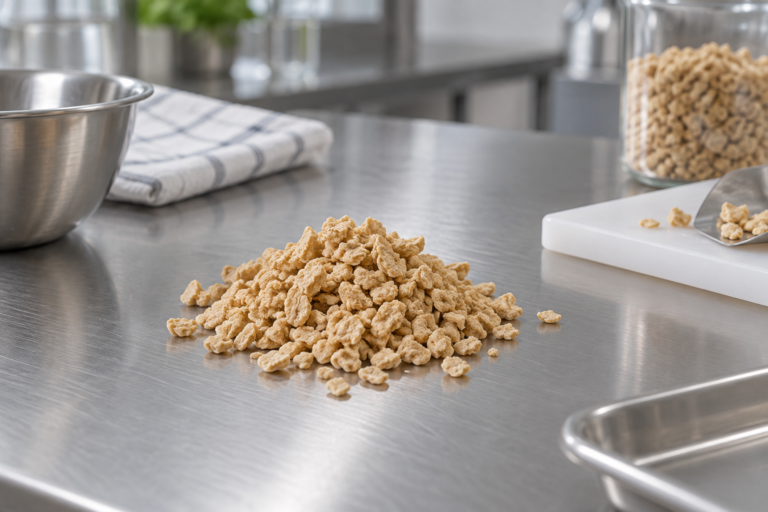
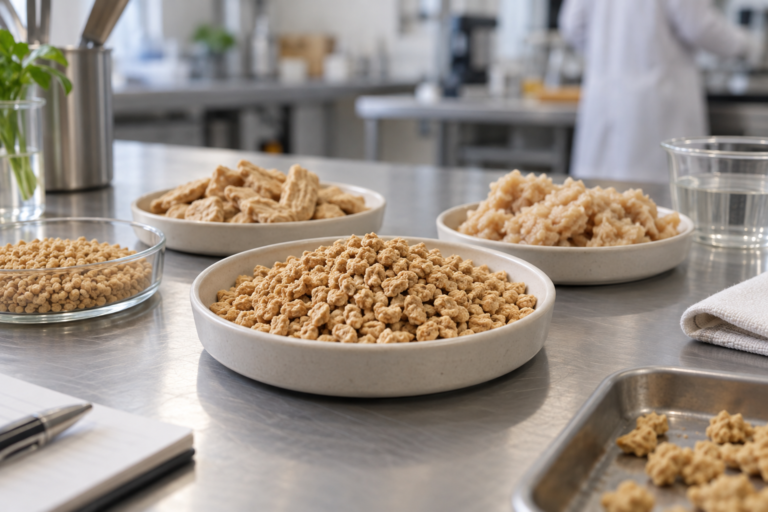
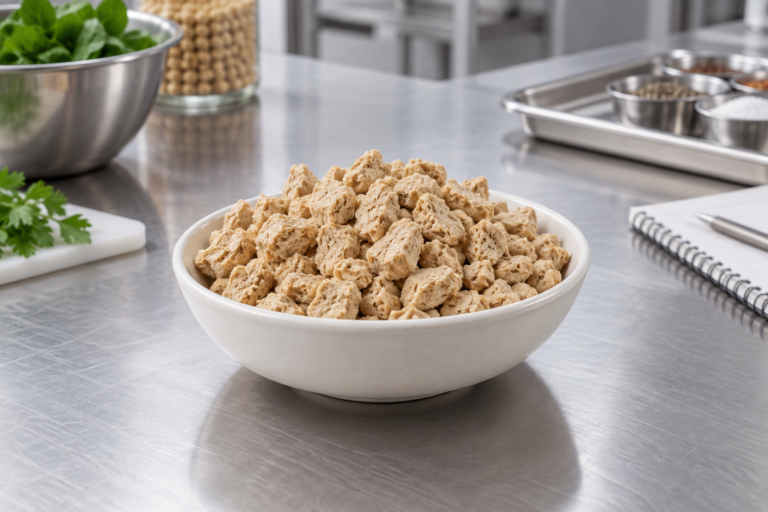
Fine TVP granules can disappear comfortably into a tomato sauce, but large dry chunks need a different plan. Many disappointing recipes start with a shape substitution and keep the same water, timing and mixing. Choose the dish first, then choose the format.
These TVP recipes and cooking ideas cover sauces, curry, formed foods, fillings and soup. Prepare your specific ingredient as directed before using it. The soup example below is adapted from a published third-party recipe; it is not a Baichuan kitchen test.
Which TVP format should you use for each dish?
| Dish | Useful starting format | Main preparation check |
|---|---|---|
| Tomato sauce or chilli | Gránulos finos | Liquid remaining after preparation |
| Curry or stew | Trozos | Hydration through the center |
| Stir-fry or wrap filling | Tiras | Piece size and surface moisture |
| Burger or sausage | Granules or controlled chopped pieces | Binding and cooking integrity |
| Dumplings | Fine granules or small pieces | Vegetable water and seam sealing |
The format selection guide explains the differences. A named shape is a starting point; the actual pack instructions still determine preparation.
How do you use granules in tomato sauce or chilli?
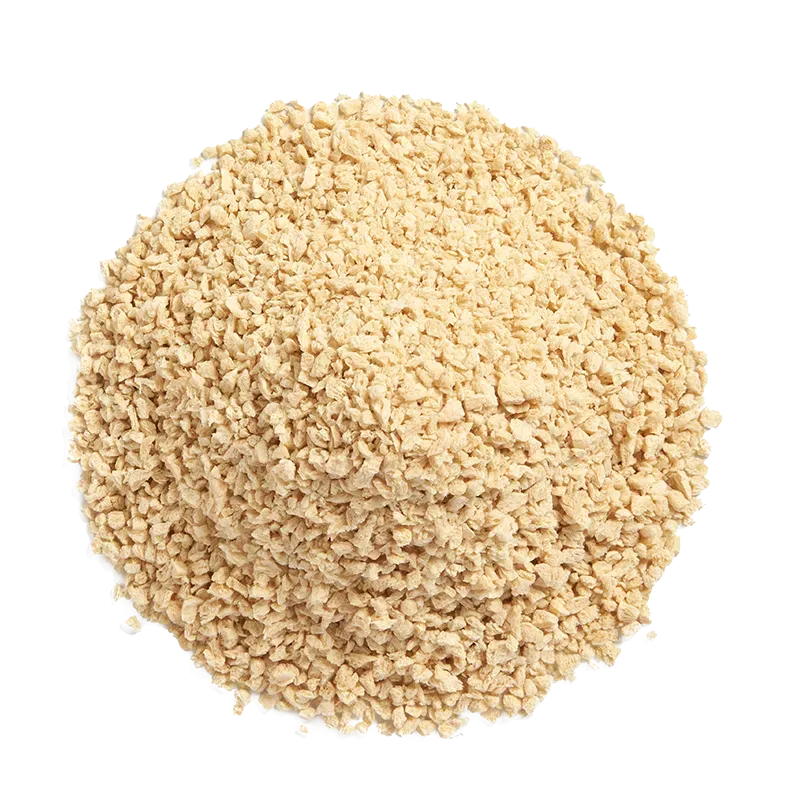
Prepare the granules first unless the product and recipe explicitly allow direct addition. Cook the onion, garlic and spices, add the tomato or chilli base, then incorporate the prepared protein. Simmer as the recipe requires and adjust loose liquid before adding more seasoning.
Textured vegetable protein recipes work better when the liquid balance is deliberate. If the granules bring in more water than expected, the sauce may need reduction. If they remain underhydrated, they can draw liquid from the sauce and still feel hard. Use the rehydration guide to establish a consistent starting point.
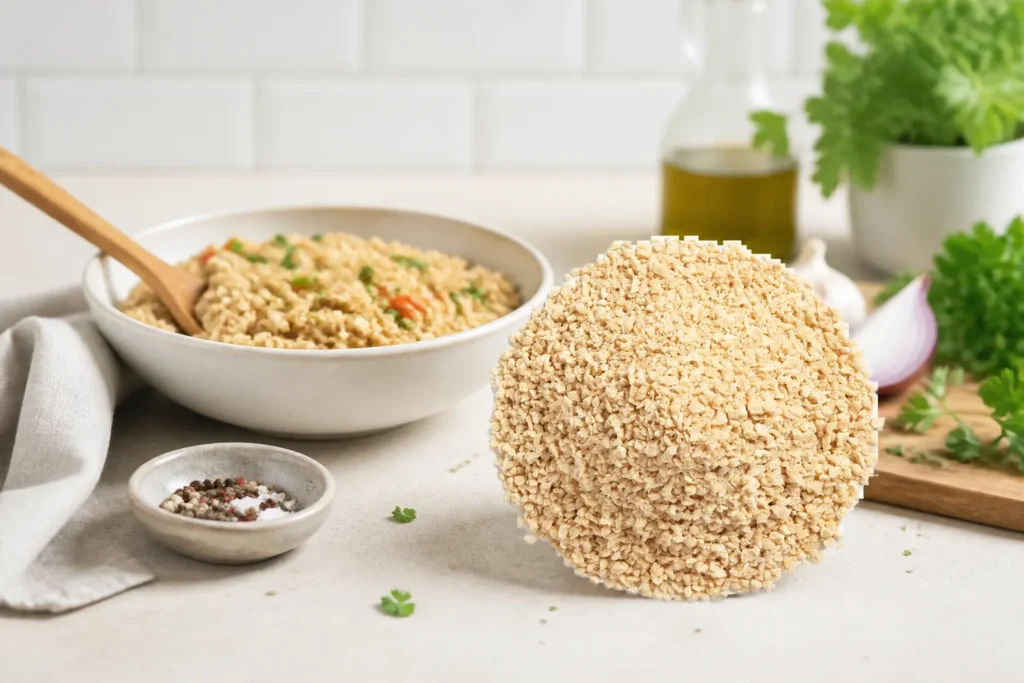
What changes for curry, stir-fry and meatball-style dishes?
For curry, prepare chunks through the center before finishing them in the sauce. For a stir-fry, drain surface water so that the pan does not immediately fill with liquid. Keep pieces a size that can be eaten comfortably with the rest of the dish.
A meatball-style mixture also needs a binder; hydrated pieces alone do not automatically hold a shape. Use a recipe designed for the chosen binder and test one portion before shaping the whole batch. The TVP burger recipe gives a sourced example of a formed mixture and explains why substitutions can alter it.
How can you make a TVP sausage-and-kale soup?
The Hidden Veggies’ published vegan zuppa toscana serves ten and uses four vegan sausage links, with homemade sausage crumbles offered as an alternative. For a TVP version, use that source’s prepared TVP sausage crumbles and follow its separate seasoning recipe. This is not a direct dry-TVP substitution for the sausage weight.
The soup uses 1 tablespoon oil, four cups diced potatoes, one bunch kale (about 8 ounces), three garlic cloves, 1 tablespoon Italian herbs, eight cups vegetable broth and two cups plain soy milk. Brown the prepared sausage component for about three minutes, add kale and garlic for three to five minutes, then add potatoes, broth and herbs. Simmer about 10–15 minutes until the potatoes are tender; stir in the soy milk.
The source thickens it with a separately prepared roux of 1/3 cup vegan butter or oil and 1/2 cup flour, gradually loosened with soup before returning it to the pot. It also gives a starch option. Use the complete soup recipe for its full sequence and variations. Check broth, milk, thickener and sausage ingredients for dietary and allergen needs.
How do you keep burgers and dumplings from becoming wet?
Control water before adding more binder. Drain the protein consistently and consider moisture from vegetables, sauces and other ingredients. Test the finished food: a mixture that feels firm in the bowl can crack when flipped or release water inside a wrapper.
Textured soy protein recipes for commercial production need a different approval process from a home meal. Mixer handling, forming, storage and reheating all matter. The soy-protein dumpling guide keeps the household example separate from the industrial filling checks.
How should you store ingredients and leftovers?
Keep dry material according to its label. Hydrated soya chunks, cooked fillings and soup are perishable. FDA guidance recommends refrigerating perishable food within two hours, or one hour above 90°F/32°C, and keeping the refrigerator at 40°F/4°C or below. Do not leave a large warm pot out for hours while waiting for it to cool.
Read the ingredient list of every component. TVP recipes can be vegan without being soy-free or gluten-free, and a recipe change needs its own check.
Preguntas frecuentes
Can you give me some recipes that use textured soy protein (TVP)?
Start with mince-style tomato sauce, chilli, chunk curry, sausage crumbles, burgers or dumpling fillings. This page includes a sourced soup method and links the existing burger and dumpling guides for more specific instructions.
What can I do with TVP?
Use fine granules where a mince texture is wanted and larger pieces where the food needs visible chunks or strips. Hydrate as directed, then match seasoning, water balance and binding to the dish.
Can you eat TVP without cooking it?
Follow the packet. Do not assume a dry ingredient is ready to eat simply because it has been processed. Some products require preparation or cooking, and dry pieces do not have the texture of the finished food.
How much protein does 1 cup of TVP have?
The amount depends on the exact product and whether the cup is dry or cooked. Bob’s cited label gives 12 grams per dry quarter cup, so four labelled servings calculate to 48 grams. Do not apply that figure to a cooked cup or another brand.
What is the ratio of TVP to water?
Use the product instructions. Bob’s basic fine-TVP example uses 1 cup TVP with 3/4 cup plus 2 tablespoons boiling liquid. Larger chunks and other grades may require different methods, including excess-water cooking and draining.
How to cook TVP granules?
Prepare them as directed, check the texture and then add them to the recipe. For an absorption method, measure the liquid carefully. For sauces, account for the liquid already retained in the granules.
How many minutes should I soak soya chunks?
There is no single time for all chunks. Use the pack directions and cut a large piece open to check the center. A fine-granule instruction should not be treated as a large-chunk timetable.
What to add to TVP to make it taste like meat?
Use a savory recipe with suitable aromatics, broth, mushrooms, herbs, spices and fat where appropriate. Season after controlling hydration and loose water. Stronger seasoning cannot correct spoiled ingredients or an unhydrated center.
Referencias
- The Hidden Veggies: vegan zuppa toscana
- The Hidden Veggies: TVP sausage crumbles
- Bob's Red Mill: basic TVP preparation
- Bob's Red Mill: nutrition label
- FDA: safe food storage
What should you cook first with a new packet?
Start with a small dish in which you can check hydration and liquid balance easily. Keep the product’s instructions with the recipe, and change one preparation step at a time when the result needs adjustment.