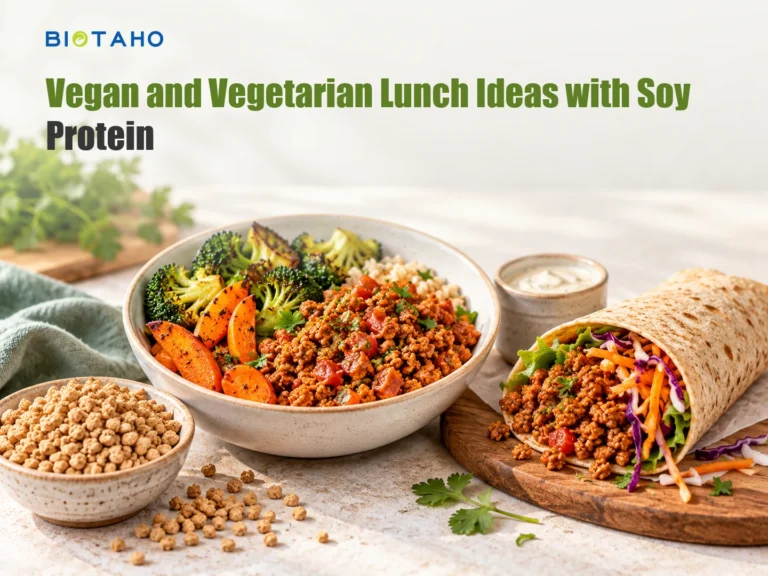
Vegan meal prep works well with one lightly seasoned TVP base, divided before you add different sauces. The practical challenge is managing water: hydrate the dry ingredient fully, remove excess liquid before portioning, and restore only the moisture needed when reheating. That keeps the same batch useful for pasta, a bean-topped potato and a wrap filling.
Start by choosing a format that suits those meals. Then plan which portions you will eat soon and which you will freeze, instead of assuming the entire batch can stay chilled for a week.
Choose a soy format that suits your planned meals
For a shared base that will be spooned into sauces and fillings, choose textured soy protein granules. Their small pieces are easy to divide and distribute through tomatoes or beans. Baichuan lists its compact soy granules for sauces and fillings as irregular granules with a compact structure. That makes them a relevant starting ingredient for the base below, although the finished meals still need recipe-specific trials.
If your planned meals depend on distinct bites, consider fibrous soy protein chunks for catering dishes. These are small cubes intended for catering and plant-based food applications. Choose them before starting a batch intended for a chunky stew or bowl; substituting them into a fine wrap filling changes both the bite and how you distribute the sauce.
Check composition as well as shape. Both products contain soy ingredients and wheat gluten; the granules also list wheat flour, while the chunks list wheat starch. They are blends, not pure soy isolates, and neither is gluten-free. Soy and wheat allergies therefore affect the ingredient choice, as do allergens in stock, soy sauce and wraps. Read the current labels before preparing a shared batch.
Prepare one lightly seasoned protein base
With granules selected, weigh the dry ingredient before hydration. The following amounts are a starting point for about four meal components, not four nutritionally specified complete meals. Current product directions govern water quantity, temperature, hydration and any required cooking.
Allow preparation time before you start frying the onion. The granule product page lists a hydration window of 40–55 minutes; the chunk page lists 60–65 minutes. These are supplier preparation windows, separate from the pan-cooking steps below, and do not by themselves specify a complete soaking method.
| Ingredient | Suggested starting amount | Purpose |
|---|---|---|
| Dry TVP granules | 120 g | Shared protein base |
| Water or vegan stock | As directed on the TVP pack | Hydration |
| Olive or rapeseed oil | 1 tablespoon | Cooking the onion |
| Onion, finely chopped | 1 medium | Savoury foundation |
| Garlic, finely chopped | 2 cloves | Background flavour |
| Soy sauce | 1–2 teaspoons, to taste | Seasoning; adjust for salty stock |
| Black pepper | A small pinch | Light seasoning |
- Hydrate the TVP granules according to the pack directions and complete any specified cooking. Check that the pieces are tender throughout, without dry or gritty centres.
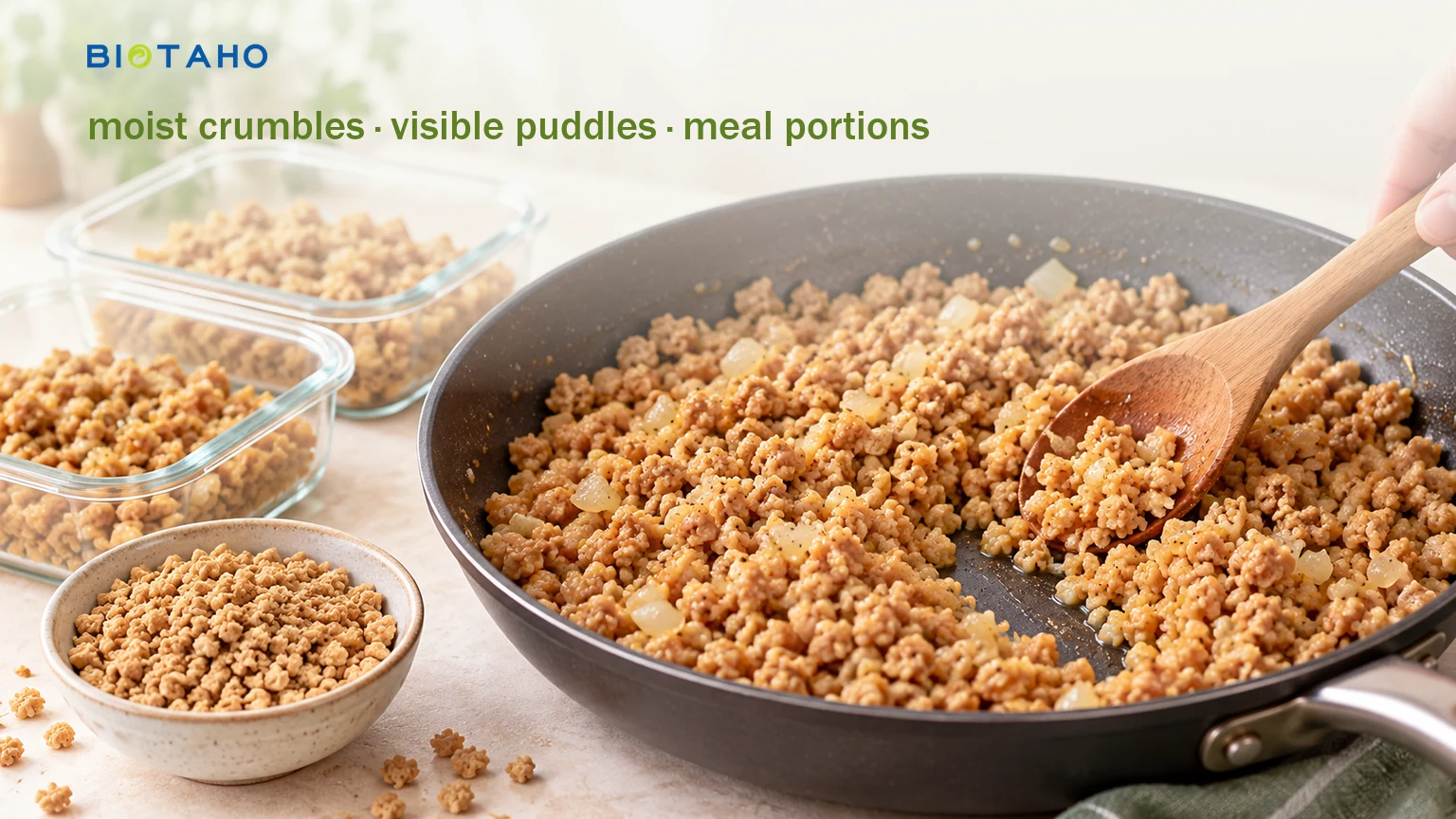
- Drain excess liquid if the directions call for it. Press gently if needed, leaving moist crumbles that are not dripping. For repeat batches, record the dry weight, water used and drained weight so changes in retained water are easier to identify.
- Heat the oil in a wide frying pan over medium heat. Add the onion and cook, stirring, until softened and translucent. Add the garlic and stir briefly until fragrant, without letting it scorch.
- Add the prepared TVP and stir until evenly combined. Cook until visible puddles have evaporated but the crumbles remain moist. Add the smaller amount of soy sauce and the pepper, then taste before adding more seasoning, especially if the stock was salty.
- Divide into meal portions and finish as described below. If storing the base, cool and chill promptly; do not leave the pan on the hob.
The endpoint is moist crumbles without visible puddles. Excess water would dilute the tomato sauce and soak a tortilla, but drying the base aggressively leaves less room for reheating. Keep the seasoning light so each meal can take a different direction after division.
Divide the base before adding different sauces
Divide the finished base before adding tomatoes, beans or lemon. If portion consistency matters, weigh the whole cooked base and divide it evenly; a scoop of hydrated TVP is not equivalent to the same weight of dry TVP. Reserve any remaining portion as plain base for a later serving.
Use the following combinations as starting points. Keeping the starches and fresh vegetables separate where practical lets you adjust the filling without overcooking the rest of the meal.
- Tomato pasta bowl: Simmer a quarter of the base with about 150 g chopped canned tomatoes and a pinch of dried oregano until the sauce is thick enough to spoon. Serve with cooked pasta and broccoli.
- Smoky bean potato: Combine a quarter of the base with about 100 g drained canned beans, 2 tablespoons passata and a pinch of smoked paprika. Heat through and serve over a cooked potato, adding shredded cabbage at serving time.
- Lemon-herb wrap: Warm a quarter of the base with a small splash of water if needed. Finish with lemon juice and chopped parsley, then assemble in a tortilla with cucumber and shredded lettuce just before eating.
These portions need different amounts of liquid because tomatoes provide a sauce, beans thicken the mixture, and a wrap needs a filling without free-flowing juices. Adjust the starch, vegetables and protein component to your appetite; the combinations do not necessarily contain equal protein. The same portioning method also works for vegetarian meal prep, though these versions contain no dairy or eggs.
Cool and store the cooked soy portions safely
Once divided, transfer the base or finished fillings to shallow food-storage containers. Keep cucumber, lettuce, cabbage and fresh finishing herbs separate from components that will be reheated. Label containers with their contents and preparation date, and decide now which portions belong in the freezer.
FDA guidance calls for refrigerating or freezing perishables within two hours of cooking, or within one hour when the outside temperature is above 90°F; do not wait for the batch to become completely cold. Use shallow containers and keep the refrigerator at 40°F or below and the freezer at 0°F or below. Thaw in the refrigerator, cold water or microwave, never on the counter; food thawed in cold water or the microwave should be cooked immediately. Reheat leftovers to 165°F, measured with a food thermometer, and bring sauces, soups and gravy to a boil. Tenderness and visible steam do not replace the temperature check.
Both ingredient pages list a 12-month shelf life for the dry product. That is not a storage allowance for hydrated granules, cooked fillings or assembled meals. Follow the package conditions for dry storage and local food-safety guidance for cooked-food storage times. Freeze portions you will not eat soon rather than planning a full week in the refrigerator.
Separate portions also let you remove only what you need. For the wrap, store the filling apart from the tortilla and salad so you can reheat and adjust it before assembly.
Reheat the protein and adjust the sauce together
Start with the stored filling, not the fully assembled meal. Heat the soy and sauce together so you can judge their combined moisture. A tomato portion may have thickened during chilling, while a plain portion may have dry edges. Add a little water only when needed, stir it through and reassess before adding more.
In a microwave, use a microwave-suitable cover, stir and rotate for even heating, and allow standing time before checking the temperature. In a pan, stir from the edges into the centre. Follow the leftover temperature guidance above even when the texture already looks ready.
| Stored portion | Reheating adjustment | Serving endpoint |
|---|---|---|
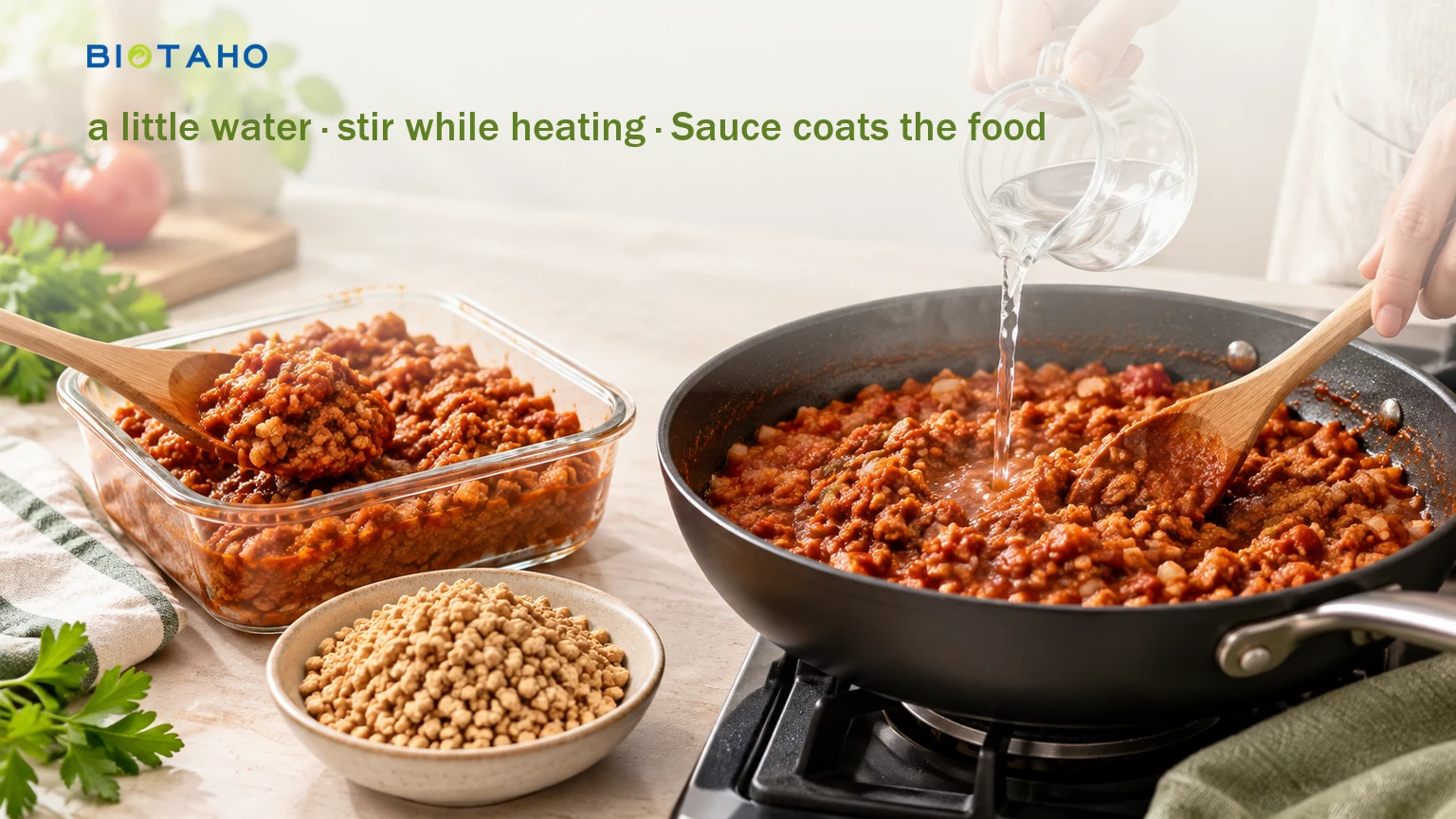
| Tomato sauce has thickened | Add a little water and stir while heating | Sauce coats the food without becoming soupy |
| Plain crumbles have dry edges | Heat covered with a small splash of liquid if needed | Evenly moist crumbles ready for finishing |
| Bean filling is too dense | Stir in a little water as it heats | A spoonable topping that stays on the potato |
| Wrap filling releases liquid | Heat separately and reduce excess liquid before assembly | No puddle soaking the tortilla |
A little water should loosen a thickened sauce enough to coat the food. Stir while heating so it is distributed throughout; stop adding water before the filling becomes soupy. Finish the lemon-herb portion and add crisp vegetables only when ready to assemble.
For repeat batches, compare the freshly cooked base with a stored and reheated portion. Keep notes on dry weight, hydration, draining and sauce quantity. If you switch to soy protein chunks, trial that format separately: its larger fibrous pieces need their own moisture and reheating assessment.
Frequently asked questions
What is a good vegan starter meal plan for beginners?
Start with two meals sharing this base, such as tomato TVP pasta and a smoky bean potato. Keep the wider diet varied; NHS guidance includes suitable fortified foods or supplements as part of balanced vegan eating.
What is the easiest vegan meal to make?
Once the base is prepared, a bowl with cooked potato, vegetables and a vegan sauce needs little assembly. Reheat the filling separately if the vegetables are intended to stay crisp.
What is a good 4-ingredient vegan meal?
TVP granules, canned beans, canned tomatoes and a baked potato make a simple combination. Prepare the TVP as directed, simmer with the beans and tomatoes, and spoon over the potato, adding water as needed.
What are some easy vegan meal ideas?
Use the divided base for the tomato pasta bowl, smoky bean potato and lemon-herb wrap above. Keep salad ingredients separate and choose the sauce before deciding how much reheating liquid to add.
How to get 30g protein per meal vegan?
Calculate from each ingredient’s nutrition label and the amount served. Keep dry and hydrated TVP weights distinct because absorbed water changes protein per unit of weight. These meals have not been verified to provide 30 g of protein.
Does TVP need to be refrigerated?
Store dry TVP according to its package instructions. Once hydrated or cooked, treat it as perishable and refrigerate or freeze promptly; its dry shelf life no longer applies.
References
- NHS: The vegan diet — guidance on dietary variety, fortified foods and nutrients requiring attention.
- FDA: Safe Food Handling — cooling, storage temperatures, thawing and reheating leftovers.
- FDA: Food Allergies: What You Need to Know — major allergens, including soy and wheat, and label-reading guidance.
Developing a repeatable meal-prep filling? Contact Baichuan about an ingredient sample to trial with your planned sauces and reheating method.