For a concrete example of soya chunks protein per 100g, Nutrela advertises its soya chunks as 52% protein, equivalent to 52 g per 100 g of the packaged product. That figure does not apply to 100 g of soaked chunks or to every brand. Once chunks absorb water, the same starting portion weighs more, so its protein per 100 g is lower.
The useful starting point is the nutrition label on your own pack. Check whether it describes dry or prepared chunks, then weigh your portion on that basis. Below, a published brand example shows the calculation; the product comparison explains why Baichuan’s soy-and-wheat blends need their own nutrition figures.
How much protein is in 100g of dry soya chunks?
Nutrela’s soya chunks page states 52% protein. On that stated basis, 100 g supplies 52 g of protein. This is a named product example, not a fixed value for all soya chunks. Check the current pack before using the figure in a meal plan or product calculation.
A second example illustrates why serving sizes need attention. Bob’s Red Mill TVP lists 12 g protein in a 23 g dry serving. Dividing 12 by 23 and multiplying by 100 gives approximately 52.2 g per 100 g. That is a conversion from rounded label values for a different textured soy product, not a laboratory result for a chunk product.
Dry textured soy foods may have similar-looking protein figures while differing in ingredients, particle size and preparation. Neither of these examples establishes the protein content of a Baichuan grade. For a bulk ingredient, use the supplier’s nutrition specification for the exact product code.
How much protein is in a 25g or 50g portion of soya chunks?
Multiply the protein per 100 g by the dry weight you use, then divide by 100. This gives the protein contribution before sauces or other ingredients are added. A smaller dry portion may expand into a much larger serving after soaking, so keep a note of the starting weight.
The table uses Nutrela’s advertised 52% protein figure solely to demonstrate portion arithmetic. Replace 52 with the value on your own product’s label.
| Dry portion | Calculation | Calculated protein |
|---|---|---|
| 25 g | 52 × 25 ÷ 100 | 13 g |
| 50 g | 52 × 50 ÷ 100 | 26 g |
| 100 g | 52 × 100 ÷ 100 | 52 g |
These are calculations, not recommended serving sizes. Choose a portion that fits the complete meal. Protein from rice, beans, dairy or other ingredients belongs in the meal total too; oil and sauce also change its calories.
Why do cooked soya chunks have less protein per 100g?
Plain water adds weight without adding protein. If 50 g of dry chunks becomes a heavier batch after soaking, the starting protein is spread across that larger weight. The lower figure per 100 g mostly reflects dilution with water; it does not mean that soaking removed the same proportion of protein.
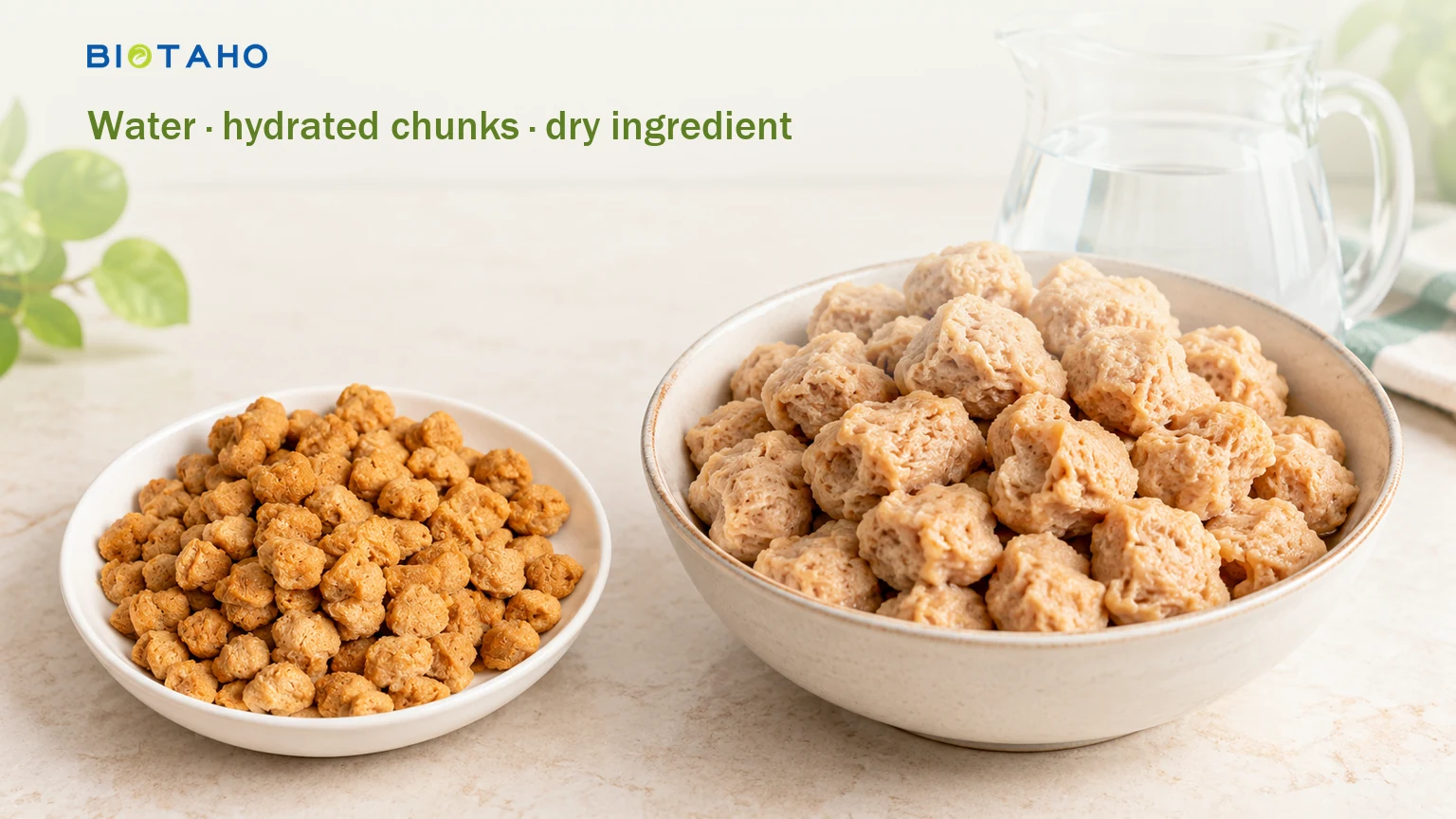
For an illustrative calculation, suppose a 50 g dry portion with 26 g protein weighs 150 g after hydration and draining. Assuming no protein loss, the whole batch still contributes 26 g, while 100 g of that hydrated batch contains about 17.3 g: 26 ÷ 150 × 100. The 150 g yield is hypothetical, not a measured result or preparation instruction for Nutrela or Baichuan.
To estimate your own cooked soya chunks protein, use the actual dry label and measure the drained yield. Discarded liquid and preparation losses limit the precision of this calculation. If the package supplies prepared-product nutrition and matching directions, those figures may be more useful for that preparation.
Should you weigh soya chunks before or after soaking?
Weigh them dry when using a dry-product label. After preparation, weigh the drained batch if you want to divide it into cooked portions. Recording both weights lets you connect a serving on the plate to the dry ingredient you started with.
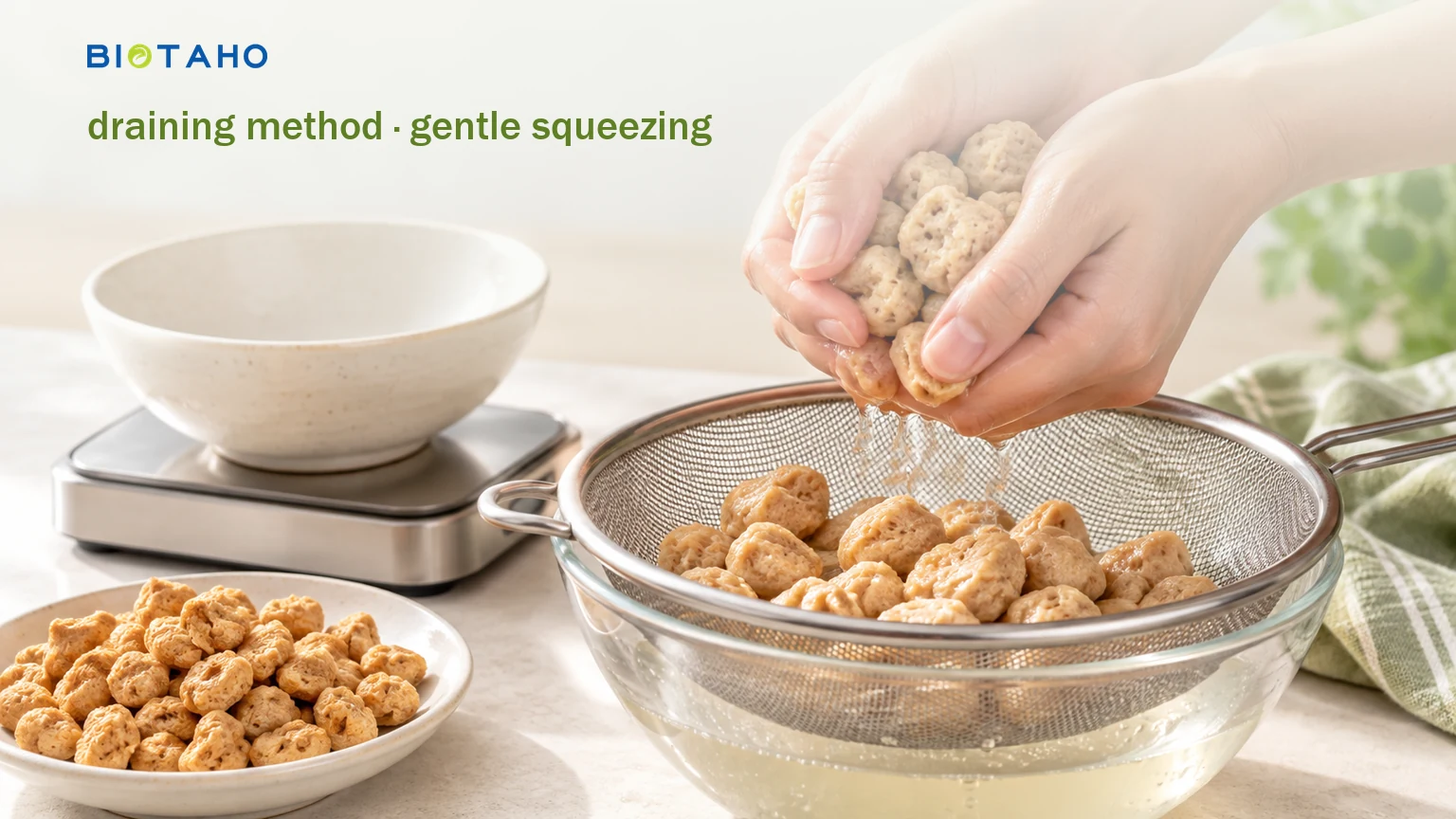
Use a consistent draining method. Chunks straight from a sieve can hold more water than gently squeezed chunks. That changes the calculated protein per 100 g even when both batches began with the same dry amount.
For curry or another finished dish, record the dry chunks, sauce ingredients and oil separately. Add their nutrient contributions, then divide by equal servings or the measured finished weight. Distribute chunks and sauce evenly: a ladle of mostly sauce is not nutritionally equivalent to a ladle full of chunks.
Why does protein content differ between soya chunk products?
The name describes a type of ingredient, not one recipe. Products can use defatted soy flour, soy concentrate, isolate or blends that also contain wheat ingredients. Their proportions affect the nutrition, while the finished structure affects how the chunks hydrate and feel in food. The guide to how soya chunks are made explains how ingredients become textured pieces.
Baichuan’s soy fiber protein chunks are small cubed pieces listed for catering and plant-based meat applications. Its textured vegetable protein chunks have a cylindrical form and are listed for foods such as meatballs and sausages. Their different ingredient lists are a practical reason to request separate nutrition specifications.
| Selection point | Catering chunks | Forming chunks |
|---|---|---|
| Listed shape | Small cubed fibrous chunks | Cylindrical chunks with a tight fibrous structure |
| First listed ingredient | Low-temperature edible soybean meal | Isolate soy protein |
| Other listed ingredients | Wheat gluten, isolate soy protein, soy protein concentrate, wheat starch | Wheat gluten, soy protein concentrate, low-temperature edible soybean meal, wheat starch |
| Listed hydration window | 60–65 minutes | 50–55 minutes |
| Protein per 100 g | Request this grade’s nutrition specification | Request this grade’s nutrition specification |
Both formulations contain soy and wheat; neither is pure soy isolate or gluten-free. Ingredient order alone cannot tell you which has more protein. The product pages do not give grade-specific protein or calorie values, and “Soya Fiber Protein” is a product-family name, not a dietary-fibre measurement.
Allow for the listed hydration time when planning preparation, but confirm water temperature, quantity and draining instructions for the chosen grade. A product that retains more water may give a larger cooked yield without supplying more protein from the same dry weight.
What nutrition information should a bulk buyer request?
Ask for protein, calories, fat, carbohydrate, fibre and sodium on a clearly stated basis, together with the product code and full ingredient and allergen statements. Check whether the figures describe the ingredient as supplied, a dry-matter calculation or a prepared serving. Those bases are not interchangeable.
Use the selected grade in the intended recipe before approving a larger order. Compare both the nutrient contribution and the bite after cooking or reheating. A texture that works in a meatball may not give the distinct pieces wanted in a curry. For nutrition claims on a finished food, calculate or test the complete formulation and follow the destination market’s labelling rules.
Frequently asked questions
How much protein is in soya chunks?
It depends on the product and portion. Nutrela advertises 52% protein for its chunks, giving a calculated 26 g in a 50 g portion of the packaged product. Other brands and soy-and-wheat blends need their own label values.
How much protein is in 100 gm of soya chunks?
For the Nutrela example, 100 gm of the packaged chunks corresponds to 52 g protein. “100 gm” and “100 g” mean the same weight here. That value should not be applied to 100 g of soaked chunks or to a different product.
Does boiling soya chunks reduce their protein?
A lower protein figure per 100 g after boiling mainly reflects the added water. Actual nutrient retention also depends on preparation and what is discarded. Do not interpret a dry-versus-cooked weight comparison as a direct measurement of protein loss.
Do soya chunks contain all nine essential amino acids?
Harvard’s Nutrition Source describes soy protein as containing all nine essential amino acids. That does not establish the amino-acid profile, digestibility or protein-quality score of every textured blend. Request product-specific information when those details matter.
Can I compare soya chunks and chicken by protein per 100g?
Use equivalent preparation states and realistic serving sizes. Comparing dry chunks with cooked chicken mixes very different water contents. For a meal comparison, use prepared portions and include sauce, oil and other ingredients.
Are soya chunks gluten-free?
Some products are, but the name alone is not enough. The two Baichuan grades discussed here contain wheat gluten. Check the full ingredient and allergen statements, and avoid soy-containing chunks if you have a soy allergy.
References
- Nutrela: Soya Chunks product page, linked above; advertised protein percentage checked on 30 October 2026.
- Bob’s Red Mill: TVP product label, linked above; serving size and protein checked on 30 October 2026.
- Harvard Nutrition Source: Straight Talk About Soy — soy protein and essential amino acids.
- FDA: Food Allergies — ingredient declarations and food allergens.
Start with the label, weigh the dry amount, and record the prepared yield. Those three details make a portion calculation useful. For a Baichuan ingredient, request the current nutrition specification and a sample for the grade you plan to use.