Good vegan comfort food starts with the texture of the protein. Intact soy chunks can give smoky bites a chewy centre beneath a crisp coating, or remain distinct in a thick stew. Smaller granules and flakes suit meatballs, where a separate binder holds the particles together.
The connected task is to hydrate the protein properly, then decide where the remaining moisture belongs. Crispy bites need a dry surface; meatballs need a moist but shapeable mixture; stew needs enough gravy to surround tender chunks without becoming watery.
Choose the soy structure for the comfort food you want
For bites and stew, begin with small, intact chunks. Baichuan’s cubed fibrous soy protein chunks for catering are listed as small chunks for catering and plant-based foods. Their existing structure supplies the individual pieces, so the preparation should preserve them instead of crushing them into a mixture.
For meatballs, choose smaller particles. The supplier lists its compact textured soy protein granules for sauces and fillings requiring distinct granules. Its soy protein flakes for meatball formulations offer another particle shape and are listed for meatballs and stuffing. Neither form should be expected to hold a finished ball together simply because it has been soaked.
| Ingredient form | Role in this meal | Preparation priority |
|---|---|---|
| Small fibrous chunks | Distinct crispy bites or pieces in stew | Hydrate the centre while preserving the intact piece; dry the surface only when coating |
| Compact granules | Textured particles throughout meatballs | Drain free liquid before combining with beans and breadcrumbs |
| Flakes | An alternative particle structure for shaped mixtures | Check moisture and binding again when changing from granules |
These are soy-and-wheat blends, not pure soy isolates. The chunk formula includes wheat gluten and wheat starch; the granule and flake listings also include wheat ingredients. That matters when selecting breadcrumbs, sauces and ingredients for guests: replacing ordinary soy sauce alone will not make these formulations gluten-free. Read current labels for soy, wheat and any other relevant allergens.
Prepare chunks with a tender center and a dry surface
Once you have selected intact soy protein chunks, hydrate them before deciding whether to coat them or add them to gravy. Baichuan lists a hydration window of 60–65 minutes for the catering chunks, compared with 40–55 minutes for the granules and 15–20 minutes for the flakes. Allow that preparation lead time separately from the recipe’s baking or simmering time. Water quantity and temperature still come from the current product directions.
The recipes below are starting points, not tested results for these specific products; current ingredient instructions govern preparation and any additional cooking requirements. After hydration, cut a chunk open. A hard, dry centre means it needs further preparation. A hydrated centre gives you the structure needed for both bites and stew, but each dish now needs a different approach to draining.
For crispy bites, drain the chunks, let them cool until comfortable to handle, then press gently without crushing them. Remove free liquid so the coating can stay thin. For stew, drain excess soaking liquid but do not try to dry the pieces as thoroughly: they will be served in sauce. Keep broth seasoning modest at this stage because soy sauce or reduced gravy will add more salt later.
Cook smoky soy bites with a light crisp coating
Use the drained chunks for this smoky-bite recipe, intended for about four snack portions or two meal portions. Small pieces suit the starting method; their size and retained moisture will affect baking time.
| Ingredient | Starting quantity |
|---|---|
| Dry soy chunks | 100 g |
| Water or vegetable broth | As directed for hydration |
| Soy sauce | 1 tablespoon |
| Neutral oil | 2 tablespoons, divided |
| Cornflour (cornstarch) | 3 tablespoons |
| Smoked paprika | 1 teaspoon |
| Garlic powder | ½ teaspoon |
| Black pepper | ¼ teaspoon |
| To serve | Lemon wedges and vegan dip |
- Hydrate and prepare the chunks according to their directions. Drain, cool until comfortable to handle, then press gently to remove excess liquid without crushing them.
- Heat the oven to 220°C, or 200°C fan. Line a large baking tray with baking parchment suitable for that temperature.
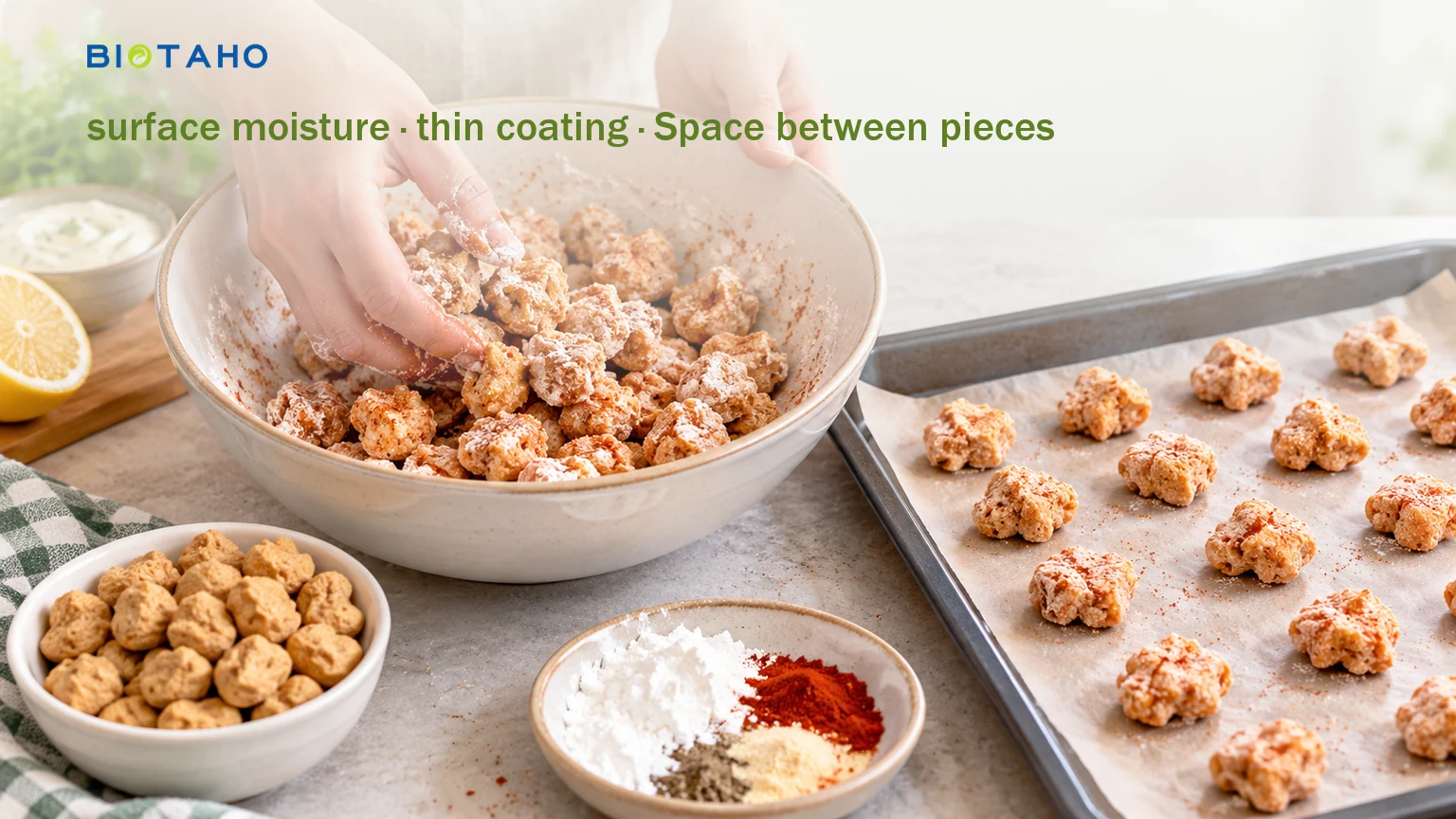
- Toss the chunks with the soy sauce and 1 tablespoon oil. Separately mix the cornflour, smoked paprika, garlic powder and pepper, then toss with the chunks for a thin coating without thick white clumps.
- Spread the pieces apart on the tray and drizzle with the remaining oil. Bake for about 20–30 minutes, turning halfway through. Treat the timing as a guide because piece size and retained moisture vary.
- Look for a dry, lightly browned coating and crisp edges around a hydrated, chewy centre. Complete any additional cooking required by the ingredient directions.
- Serve promptly with lemon wedges and a vegan dip, keeping wet sauces alongside the bites.
Surface moisture determines how the cornflour behaves. Very wet chunks create a paste that gathers in clumps; well-drained chunks take a thinner coating. Space between pieces allows moisture to escape instead of collecting as steam around a crowded batch.
If the coating remains damp, check draining and tray spacing before adding more starch next time. Extra cornflour cannot correct a waterlogged centre or a crowded tray. Serve the bites with potato wedges and slaw if you want a full meal, while keeping the crisp pieces clear of wet dressings.
Use a binder when turning soy particles into meatballs
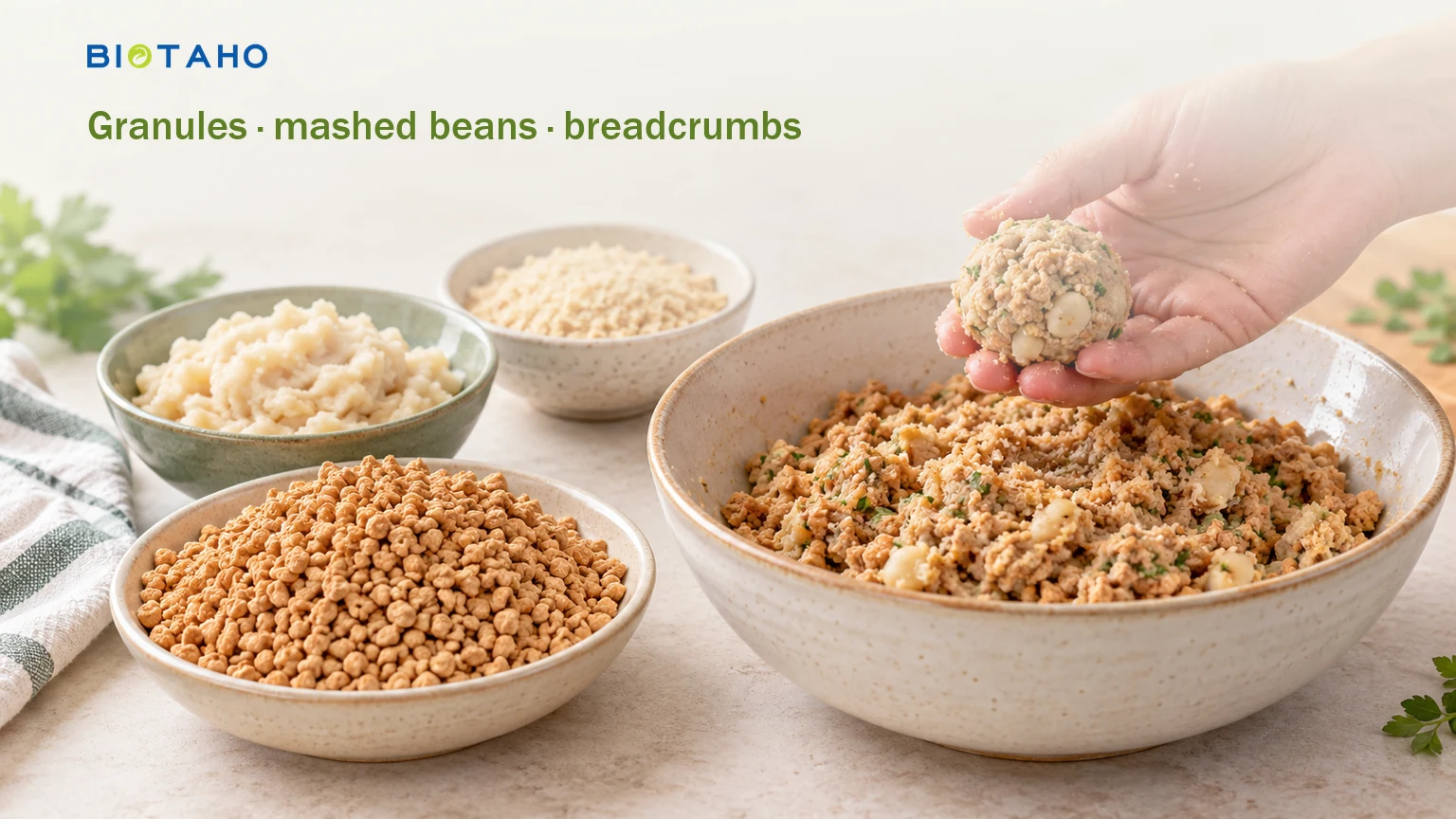
The same control of free liquid matters when making soy meatballs, but here the goal is cohesion instead of a dry coating. Granules supply textured particles; mashed beans and breadcrumbs connect them. Although the flake product already contains wheat gluten, that does not establish that hydrated flakes will bind a complete recipe without help.
For a small trial batch, hydrate 75 g dry granules according to their directions and drain thoroughly. Mix with 150 g well-drained, mashed cooked white beans, 40 g vegan breadcrumbs, 1 tablespoon tomato purée, 1 teaspoon dried oregano and ½ teaspoon garlic powder.
Let the mixture stand for 10 minutes so the breadcrumbs can take up moisture. Squeeze a spoonful gently. If it slumps, add breadcrumbs a tablespoon at a time; if it cracks and will not hold, add water a teaspoon at a time. Shape small balls and brush with about 1 tablespoon oil.
Bake at 200°C, or 180°C fan, for roughly 20–25 minutes, turning carefully once they have firmed. Aim for a set, lightly browned outside and tender centre, while also following the ingredient’s cooking directions. Spoon hot tomato sauce around the balls just before serving instead of stirring them through vigorously bubbling sauce.
The granules, mashed beans and breadcrumbs have separate jobs. Check excess water before increasing the binder, since continually adding breadcrumbs can move the mixture towards a dense dough.
If developing a flake version, reassess the hydrated mixture before shaping the whole batch. The supplier describes the flakes as retaining oil and water, so the moisture balance may differ from the granule recipe. Keep the separate binder and use a small trial portion to establish the adjustment needed.
Keep the intended texture when adding gravy or reheating
Once bites are crisp or meatballs are set, sauce handling should preserve that work. Keep dips beside crispy bites and add tomato sauce around meatballs at serving. Store leftover bites separately from wet accompaniments; oven reheating can help dry their surface again, although the original crispness may not return.
For stew, use the prepared chunks without the cornflour coating. For a starting batch of four portions, use 100 g dry chunks, prepared as directed, with 1 onion, 250 g mushrooms, 2 carrots, 400 g potatoes, 2 tablespoons tomato purée and about 750 ml vegetable broth. Brown the mushrooms and onion first, stir in the tomato purée, then add the broth, carrots and potatoes. Simmer until the vegetables are tender, adding the prepared chunks in time to meet their cooking directions and absorb some sauce.
Reduce uncovered if the gravy is thin, or mash a few cooked potato pieces into it. Add broth if it thickens before the vegetables soften. Finish with black pepper and a small splash of vinegar. For a curry variation, replace the tomato-purée base with cooked curry paste or spices, use vegetable broth with coconut milk, and add peas or spinach near the end.
For leftovers, follow FDA guidance: refrigerate perishables within two hours, or one hour above 90°F, using shallow containers and a refrigerator at 40°F or below. Reheat leftovers to 165°F, checking with a food thermometer; bring soups, sauces and gravy to a boil when reheating. Browning and firmness are texture cues, not measures of safe reheating.
Frequently asked questions
What are some examples of soft vegan foods?
Mashed potatoes and tender vegetable stew fit this meal. Fully hydrated chunks in gravy can provide a softer texture than coated bites, though they remain chewy. These suggestions are for ordinary meals, not medically prescribed swallowing diets.
What are some lazy vegan snacks I can eat?
Leftover cooked soy bites with a separate dip are convenient when stored and reheated properly. For a no-cook option, try hummus with bread. Dry TVP is not automatically ready to eat; follow its preparation instructions.
How to make soy meatballs?
Prepare and drain granules, then mix them with mashed beans, vegan breadcrumbs and seasoning. Let the mixture stand before adjusting its moisture. Shape, brush with oil and bake, adding hot sauce gently at serving.
How to make a vegan beef stew?
Use prepared soy chunks for the distinct pieces, with browned mushrooms and onions, tomato purée, broth, carrots and potatoes. Cook the vegetables until tender and meet the chunks’ cooking directions before reducing the gravy.
How do I make crispy soy curls?
Prepare curls according to their own packet, drain well and apply seasoning, oil and a light starch coating. Space them apart for baking. Thin curls may brown faster than the chunks in this recipe, so check them frequently.
What can I put in a curry instead of meat?
Prepared soy chunks provide distinct, chewy pieces and can use the stew approach above. Add them in time to satisfy their cooking directions, then adjust the sauce after they have absorbed some liquid.
References
- FDA: Safe Food Handling — refrigeration, shallow-container cooling and reheating guidance.
- FDA: Food Allergies — major allergens and ingredient-label reading.
- NHS: The vegan diet — guidance on a varied vegan eating pattern; these dishes are individual meals within that wider pattern.
For ingredient trials in crispy bites, stew or meatballs, contact Baichuan about suitable samples.