Summary: For a development screen, weigh 2.5, 3.0, and 3.5 parts liquid for each part of dry TVP, then test 10–20 minutes for medium pieces. A controlled warm-water trial at 60–80 °C may shorten the hold, but broth changes salt, flavor, and available water. Record dry mass, liquid mass, temperature, time, drained mass, and post-cook texture; review destination-market labeling and soy-allergen requirements before approval.
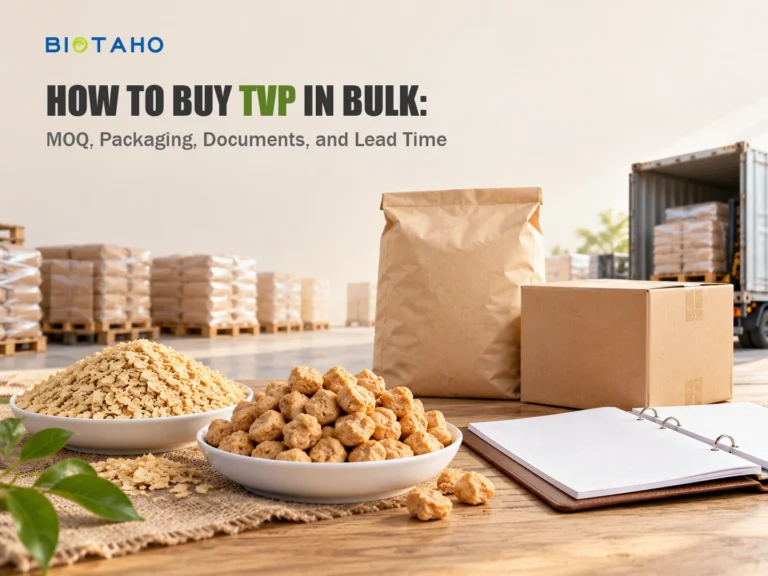
Dry textured vegetable protein (TVP) is a porous plant-protein ingredient that must absorb liquid before it can deliver its intended bite, volume, and handling properties. Fibrous formats, granules, and chunks do not hydrate at the same rate because their surface area, density, and internal structure differ. The practical aim of fibrous soy protein rehydration is therefore not to find one universal soak instruction; it is to define a repeatable window for the selected format and finished food.
Set the liquid charge by weight
Start with a mass ratio rather than a volume measure. A useful bench screen for medium, porous pieces is 2.5:1, 3.0:1, and 3.5:1 liquid to dry ingredient by weight. Fine particles may need less liquid and less time, while large or dense pieces may need more. Treat these figures as development starting points, not a supplier guarantee or a finished-product specification.
Count all liquid that will contact the dry material during the hydration step. If sauce is added later, exclude it from the initial charge unless the process is designed to hydrate and sauce the protein at the same time. For example, 10 kg of dry material at 3.0:1 receives 30 kg of liquid; the hydrated mass still depends on uptake, drainage, and later processing, so it must be measured rather than assumed.
| Strategy | Illustrative charge | Likely performance | Process efficiency | Compatibility / hidden cost | TCO check |
|---|---|---|---|---|---|
| Low-liquid screen | 2.0–2.5:1 by weight | Firmer; dry-center or uneven-swelling risk | Less liquid to heat and drain | A longer hold or rework may offset the apparent saving | Yield, rework, and batch consistency |
| Balanced baseline | 2.5–3.5:1 by weight | Practical starting window for medium pieces | Moderate heating and drainage demand | Broad fit when particle size is consistent | Retained mass and acceptable bite |
| High-liquid screen | 3.5–4.0:1 by weight | Softer; potentially wetter after mixing | More water to heat, move, and remove | May require more drain time, space, and labor | Energy, labor, and binder demand |
| Broth substitution | Keep the selected mass ratio; replace water with qualified broth | Flavor and salt uptake can shift the bite | May remove a separate seasoning step | Broth cost, labeling, solids, and microbial controls apply | Whole-recipe cost and release risk |
Use the same scale, vessel, mixing pattern, and endpoint for every ratio. Record ingredient moisture with a validated loss-on-drying or moisture-analyzer method suitable for the material, because a change in incoming moisture can alter the effective liquid demand. The moisture result supports process control; it is a test result, not a product certification.
Match time and temperature to particle size
Particle size is a useful proxy for the distance liquid must travel to reach the center. The matrix below is an illustrative screen for water at two temperature bands; supplier data and a cut-sample check should determine the final instruction.
| Particle screen | 20–25 °C water | 60–80 °C water | Endpoint check |
|---|---|---|---|
| Fine, below about 3 mm | 5–10 minutes | About 5–8 minutes | No dry core; avoid paste-like overholding |
| Medium, about 3–8 mm | 10–20 minutes | About 8–15 minutes | Center is pliable and drained mass is repeatable |
| Large, above about 8 mm | 15–30 minutes | About 12–25 minutes | Center is hydrated without a softened exterior |
These ranges are not interchangeable. A hot-water trial can shorten the hold, but boiling water may soften the outside before the center hydrates and can increase damage during mixing. Use a stopwatch, keep the liquid temperature within a defined band, and cut several pieces at the endpoint; surface softness alone does not prove complete hydration.
Broth is also a process variable. Salt, sugar, fat, acids, and suspended solids can change swelling, flavor uptake, and free-water release, so compare broth with water at the same mass ratio and record its temperature and composition. A neutral-water baseline makes it easier to separate the ingredient’s hydration behavior from seasoning effects.
Drain and squeeze to control retained water
Hydration is not complete as a manufacturing instruction until free liquid is controlled. For a pilot, define the sieve or screen, batch load, drain angle, and a starting drain period such as 60–120 seconds. If squeezing is required, use a repeatable load and time; one batch pressed by hand and another left to drip will not have the same retained moisture or structure.
Track at least three masses: dry ingredient, liquid charged, and drained hydrated material. In an illustrative batch with 10 kg dry material, 30 kg liquid, and 5 kg free liquid removed, the pre-formulation mass is 35 kg. Calculate wet yield as drained mass divided by dry mass, multiplied by 100, and use the same definition in every trial.
Drain pressure is a texture lever as well as a yield lever. A light, consistent drain can preserve larger pieces for a visible-fiber filling; a firmer, defined squeeze may be useful when the next step adds sauce or binder. Measure water release after mixing, not just immediately after draining, because salt, starch, fat, and acids can redistribute moisture.
Judge texture after cooking and holding
Hydrated pieces are an intermediate, not the finished product. Kettle shear, simmering, steaming, frying, freezing, thawing, chilling, and retorting can all change the final bite. If a sauce is held hot for 15 minutes in the intended process, include that hold in the trial; a sample that feels firm immediately after draining may soften or release water later.
Define the cook and hold conditions before comparing suppliers: product temperature, time, agitation, vessel load, and the time between cooking and measurement. For structured products, check cohesion and shape retention; for sauces and fillings, check particle distribution, chew, and water release. Texture Profile Analysis (TPA) can provide comparable hardness, cohesiveness, springiness, and chewiness readings when sample temperature, compression settings, and holding time are held constant.
Use sensory review alongside the instrument or internal method. A technical record should connect each texture observation to the ratio, particle-size range, temperature, hold time, drain method, and final cooking step. That record is more useful for yield and consistency than a single statement that a product is “high protein” or “easy to use.”
Use an application matrix for yield and consistency
The end use determines how much retained water is helpful. A sauce may need dispersion and controlled release, a steamed-bun filling may need cohesion without wetting the dough, and a formed product may need enough moisture for binding without losing shape. The following matrix gives starting points for a pilot plan; it does not replace order-level specifications.
| Application | Particle screen | Starting point | Drain / cook check | Procurement focus |
|---|---|---|---|---|
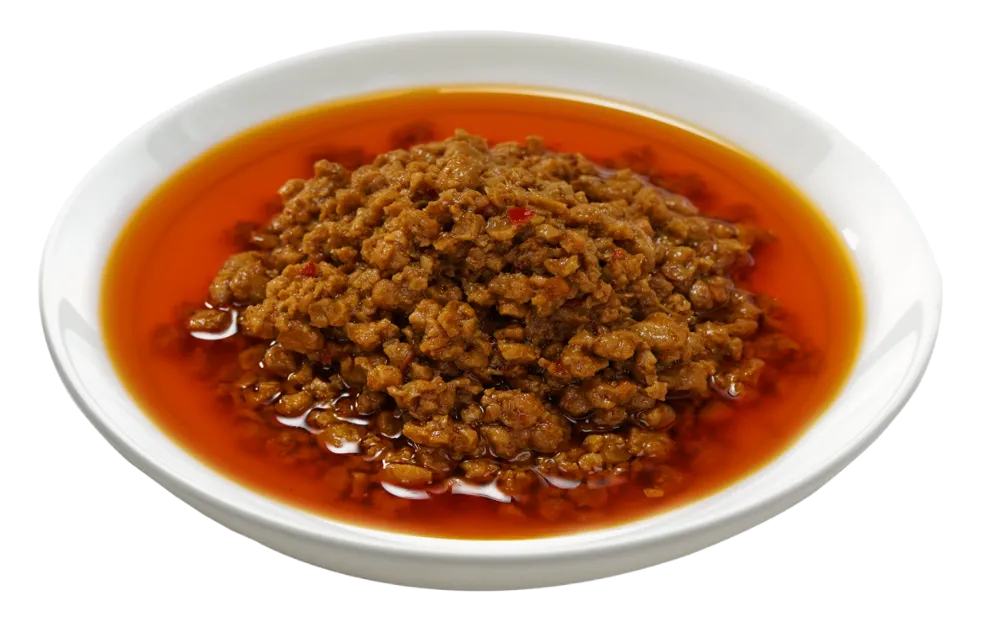
| Sauces and meat-style fillings | Fine to medium | 2.5–3.0:1; 5–15 minutes | Consistent drain; check dispersion and water release during the planned hold | Uniformity, flavor fit, and supply of the selected cut |
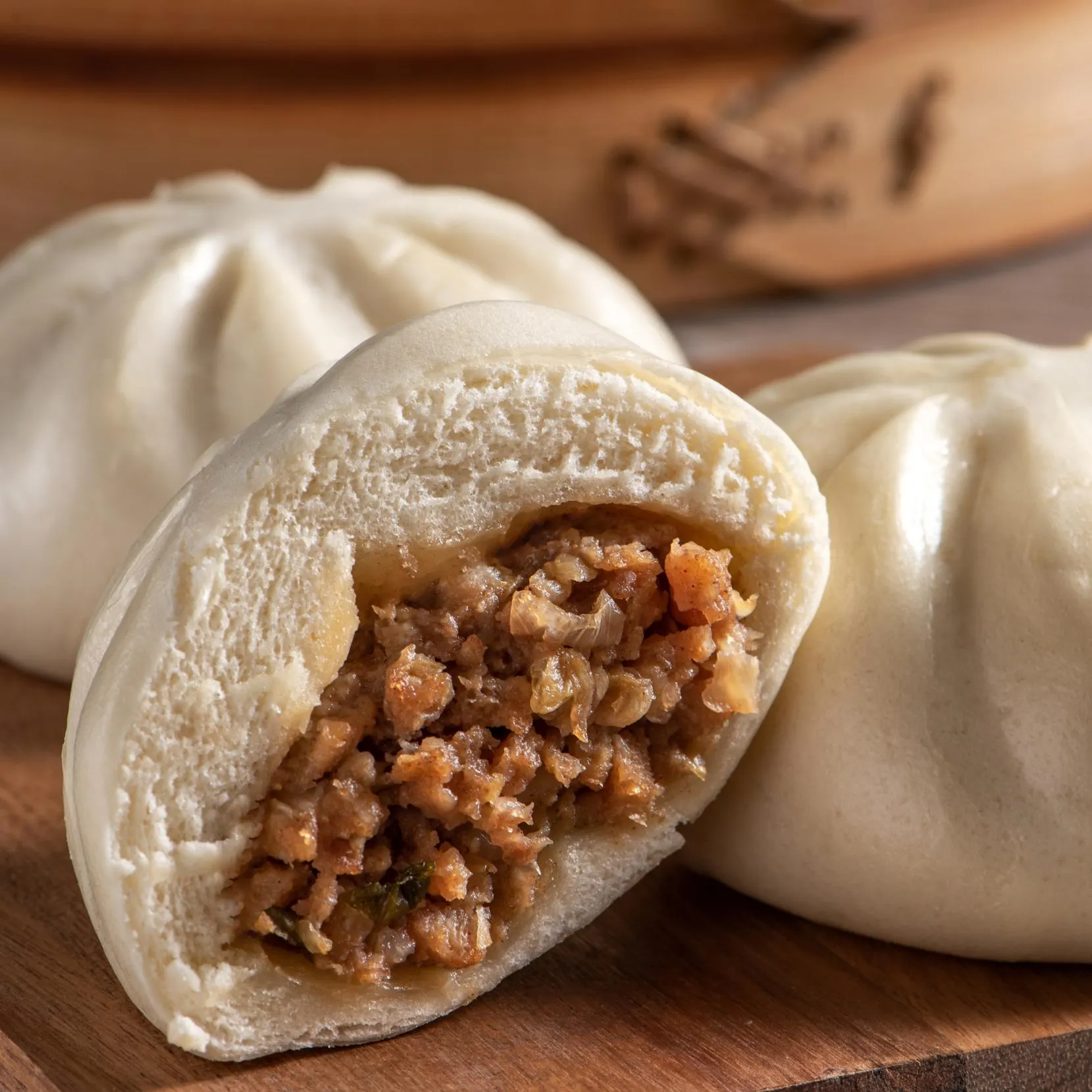
| Steamed-bun filling | Medium | 2.5–3.0:1; 10–20 minutes | Gentle 60–120 second drain; check cohesion after steaming | Filling density, mixing tolerance, and steaming performance |
| Formed patties or structured products | Medium to large | 3.0–3.5:1; 15–25 minutes | Set retained mass; use TPA and shape checks after cooking | Bite, shear tolerance, and binder/fat compatibility |
| Quick-frozen prepared foods | Medium chunks or the required format | 2.5–3.5:1; 15–30 minutes | Test drain, cooking, freezing, and thawing together | Freeze–thaw stability, pack format, and market claims |
For consistency, repeat the selected condition across at least three pilot batches and report the average and range for drained mass, final batch mass, and the chosen texture measure. This makes a yield loss visible: extra water may raise wet mass but also increase drain labor, kettle energy, sauce adjustment, and the risk of a watery finished product. Compare total process cost, not only the dry ingredient line item.
Standards, allergen control, and destination-market compliance
A successful hydration trial does not establish regulatory compliance. Codex texts provide an international reference framework, but the applicable rule depends on the destination, food category, formula, and marketing claim. In the United States, 21 CFR 101.4 addresses designation of ingredients by their common or usual names; the final ingredient declaration and allergen statement must be reviewed for the actual formula and market.
The U.S. Food and Drug Administration identifies soy as a major food allergen, and other markets have their own allergen and labeling rules. Review the applicable FDA food-allergy guidance when the destination is the United States, and ask the supplier for an allergen statement and cross-contact controls that cover the specific site and product. A change from water to broth can also change the ingredient declaration, nutrition panel, and claim review.
ISO 22000 describes a food-safety management-system framework, while ISO 9001 concerns quality management. Neither is, by itself, proof that every product, lot, or shipment meets a buyer’s specification. Check certificate holder, site, validity, scope, exclusions, and the relationship between any certificate, test report, HACCP plan, Halal document, or destination-market requirement.
Commercial approval should also distinguish a test method from a certification. A moisture result, microbial result, protein assay, or urease-activity result describes a test performed under a stated method; it does not automatically certify the product for every use. Unsupported claims can lead to relabeling, reformulation, delayed release, or a rejected shipment, so the technical file and label review should be complete before routine production.
A practical selection and validation checklist
- Define the finished bite first. State whether the target is fibrous, springy, cohesive, tender, or particle-visible, and identify the cooking, chilling, freezing, or retort step that follows hydration.
- Request a controlled sample set. Compare at least two particle sizes or grades at 2.5:1, 3.0:1, and 3.5:1 liquid charges, using the same temperature, hold time, and drain method.
- Write the mass balance into the trial record. Capture dry mass, liquid mass, temperature, time, drained mass, final batch mass, and any sauce or broth added later. This exposes water-handling, labor, and yield costs that a dry-price comparison misses.
- Check the document package before approval. Review the specification, lot testing, allergen statement, country-of-origin information, applicable certificates, and destination-market labeling needs. Confirm which tests and documents apply to the intended order, site, and product format.
- Lock the format and process together. Before fixing a formula, document the TVP water ratio for the selected product format and confirm the supplier’s order-level specification. When the bench work moves into end-use trials, review Baichuan’s solutions for textured soy protein hydration applications and request the technical documents that apply to the intended use.
Frequently asked questions
How to rehydrate textured soy protein?
Weigh the dry material and liquid, then start with 2.5–3.5 parts liquid by weight for each part of medium-size TVP. Hold it for about 10–20 minutes, using a defined temperature band, and check the center before draining. Adjust the ratio or time only after recording drained mass and the texture after cooking.
Can you eat TVP without rehydrating it?
Do not assume standard dry TVP is ready to eat; without liquid it remains hard and may not match the product’s intended safety or use instructions. It can be added dry to a formula only when the supplier and process specify enough available liquid and a validated cook step. For a finished food, follow the ingredient specification and the plant’s food-safety controls.
How long to soak textured vegetable protein?
Fine particles may need about 5–10 minutes, medium pieces about 10–20 minutes, and large pieces about 15–30 minutes in 20–25 °C water. Warm water can shorten those holds, but the center still needs to be checked. Use a stopwatch and a fixed drain method so the time is reproducible from batch to batch.
How do you prepare textured soy protein?
Weigh the dry TVP, add a measured amount of water or qualified broth, and hold it until the center is pliable with no dry core. Drain or squeeze it under a defined condition, then mix and cook it in the intended formula. Record the final mass and evaluate the texture after any hot hold, chilling, freezing, or other finishing step.
How long does TVP take to hydrate?
Hydration commonly takes roughly 5–30 minutes in a bench screen, depending mainly on particle size, liquid temperature, ratio, and density. Medium pieces are often checked around 10–20 minutes, while warm liquid may reduce the hold. Use the cut-sample endpoint and drained mass rather than time alone to release a production instruction.
Does TVP need to be cooked?
Rehydration and cooking are separate steps, so warm water alone does not automatically satisfy the finished product’s process requirements. If the ingredient is not documented and validated for direct consumption, include the required cook or kill step in the finished formula and verify it for the destination market. Cooked texture should be assessed after the actual hold, chill, freeze, or retort condition.
References
- FAO/WHO Codex Alimentarius: Codex texts and standards.
- Electronic Code of Federal Regulations, 21 CFR 101.4: Food; designation of ingredients.
- U.S. Food and Drug Administration: Food Allergies.
- ISO: ISO 22000 food safety management systems information.
- ISO: ISO 9001 quality management systems information.
Reliable texture is rarely hidden in one magic ratio; it is built by matching particle size, liquid, time, temperature, drainage, and the finished food’s hold conditions.
When that process window is clear, review the Baichuan product range and contact Baichuan for the specification, documentation, and commercial terms that apply to your order.