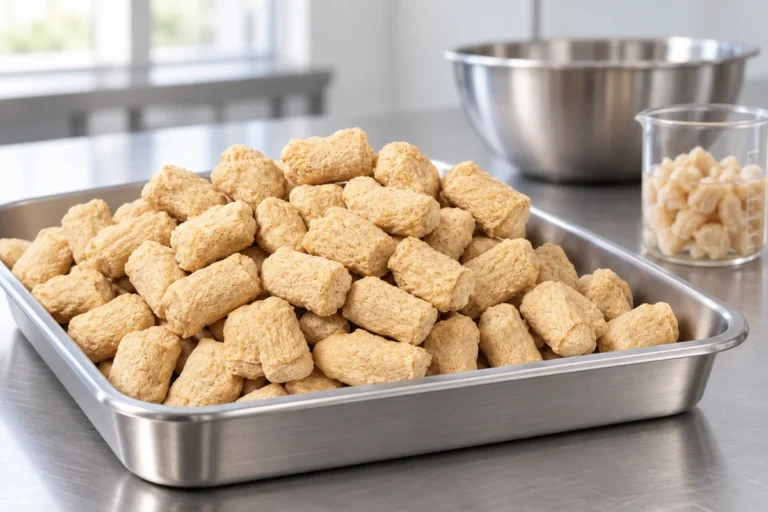
What Is Textured Soy Protein and How Is It Used in Food Manufacturing?
Learn how textured soy protein is made, specified, and used in sausage, tuna alternatives, and other meat products for practical food manufacturing.



Learn how textured soy protein is made, specified, and used in sausage, tuna alternatives, and other meat products for practical food manufacturing.
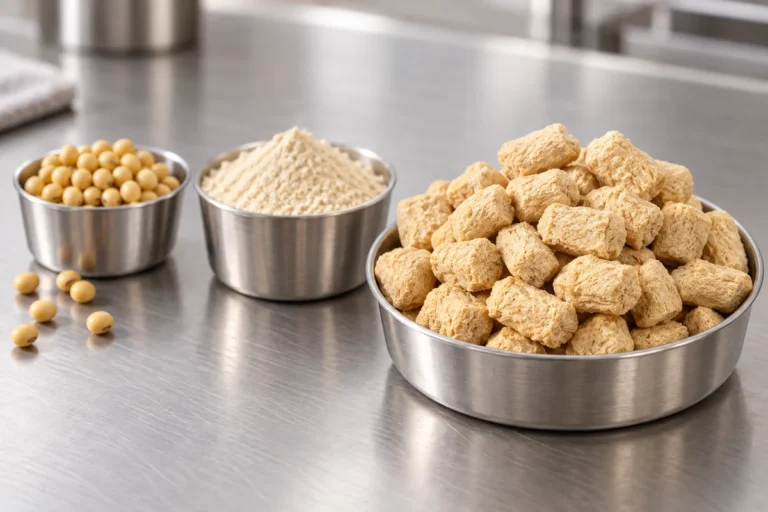
Learn what TVP is made from, how soy protein is extruded, and how food manufacturers select texture, hydration, sourcing and fully compliant labels.
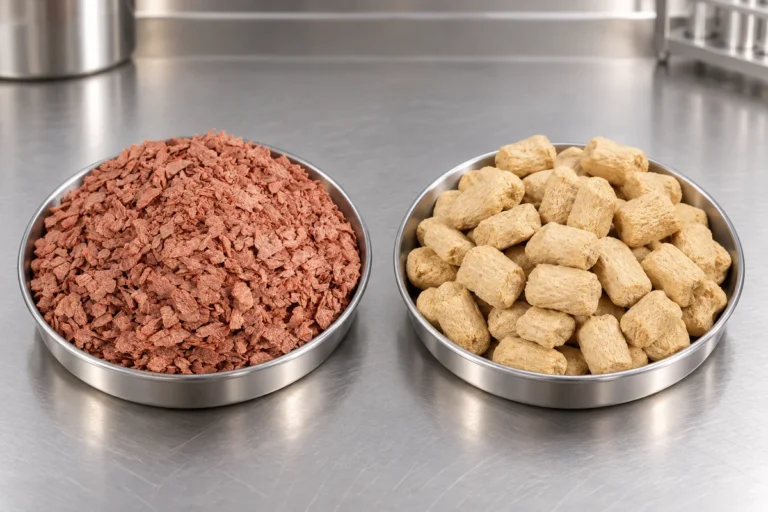
Learn how fibrous soy protein and TVP overlap, where they differ, and how food buyers should specify raw material, texture, density, and hydration.
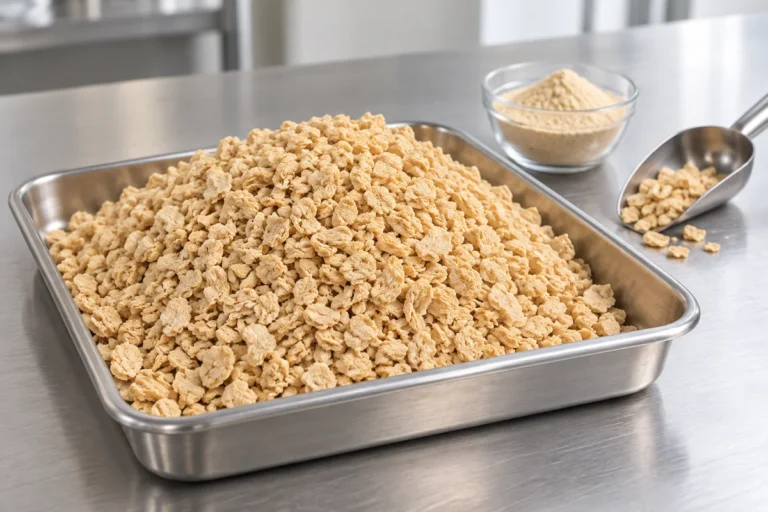
Food brands: assess textured soy protein processing, extrusion, functionality, labels, sourcing records, and compliance documents before formulation decisions.
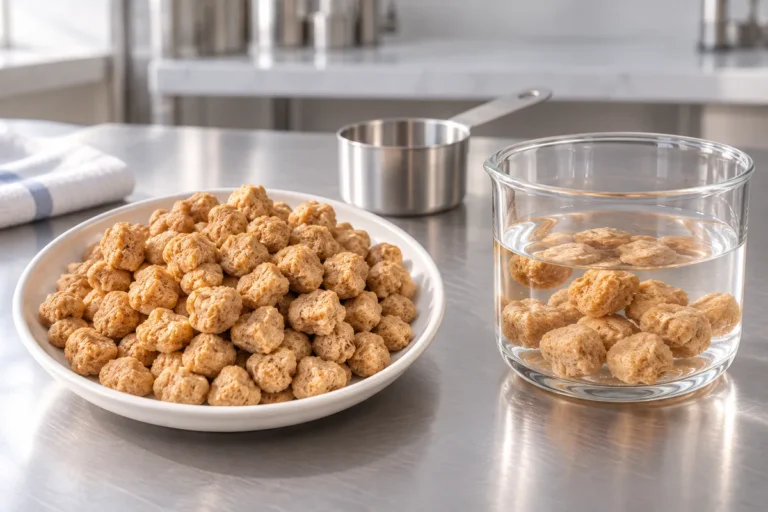
Learn how to rehydrate fibrous soy protein with sample-based water ratios, soaking times, draining steps and texture controls for B2B food production.
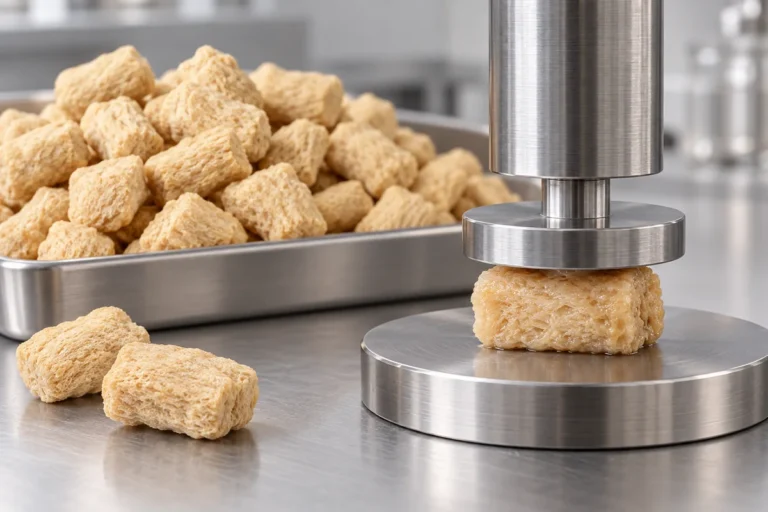
Identify why TVP becomes rubbery and apply practical hydration, density, moisture and cooking controls for a softer, more consistent finished texture.
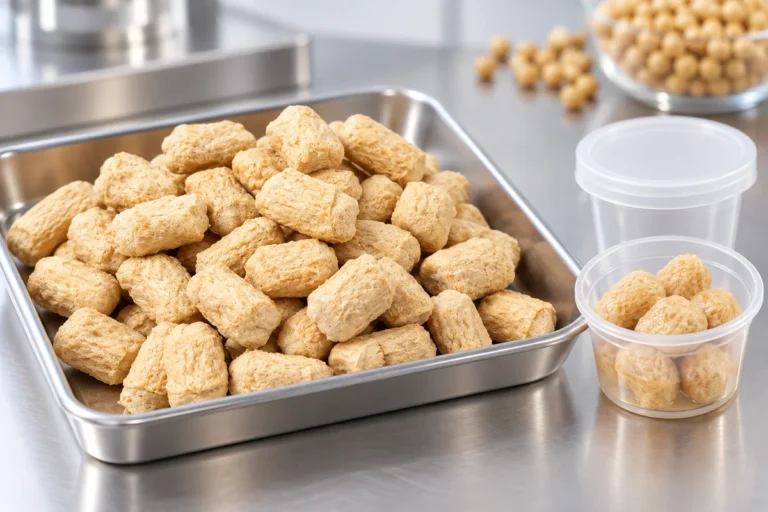
Learn why textured soy protein can taste beany and how ingredient selection, hydration, fat systems and seasoning trials improve meat-style applications.

Learn how fibrous soy protein is made, tested, specified, and sourced for meat alternatives, fillings, foodservice, and other commercial applications.

Learn why textured soy protein becomes mushy, how overhydration and seasoning affect bite, and how food manufacturers can improve draining, browning, and specification control.