A good vegan stir fry has vegetables with some bite, well-seasoned soy pieces and sauce that coats rather than floods the plate. If yours turns watery, check the drained protein and the amount of food in the pan before adding more sauce. Cooking in smaller batches often makes the dish easier to manage.
TVP stands for textured vegetable protein; the soy-based forms discussed here come as chunks, strips or granules. Prepare the product according to its packet and remove excess water. Cut the vegetables and mix the sauce before heating the pan. Cook in stages, bring the vegetables and protein together, then add enough sauce for a light glaze.
Should you use TVP chunks, strips or granules?
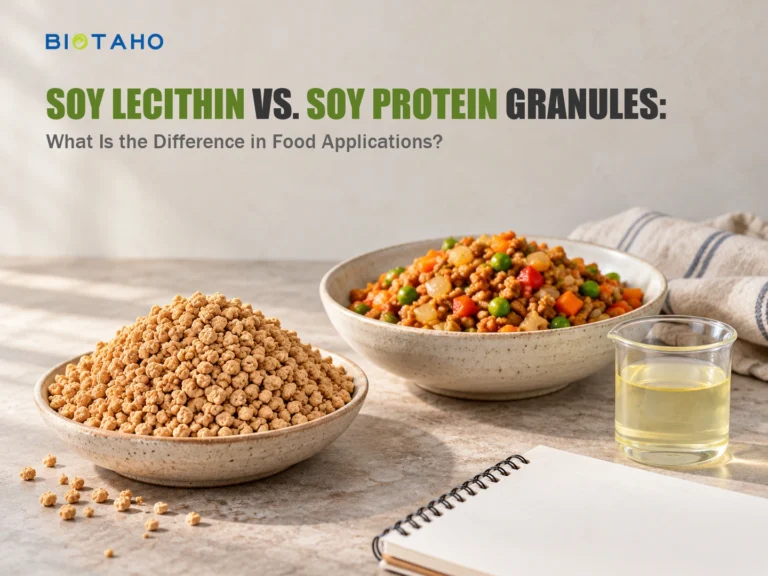
For a meatless vegetable stir-fry, choose chunks for separate bites or soy strips to go with shredded cabbage and narrow carrot pieces. Granules give a loose, minced texture and suit a different kind of dish. Pick the protein shape first, then cut the vegetables to work with it.
Baichuan’s soy protein chunks and soy protein strands show two shapes to consider for a TVP stir fry. Prepare a small amount with your vegetables and sauce before settling on one. Size and shape affect handling, but the dry appearance does not give you a finished cooking time.
| Format | A useful application | Main handling question |
|---|---|---|
| Chunks | Mixed vegetables with distinct protein bites | Are the centers hydrated before frying? |
| Strips | Shredded vegetables or a wrap filling | Do the pieces stay intact during tossing? |
| Granules | Loose, minced-style vegetable mixtures | Is there excess water in the prepared batch? |
How do you prepare TVP for stir-frying?
Follow the packet’s soaking or simmering method. For chunks, split one to check that the center has softened. Drain and press gently once cool enough to handle. The pieces need to be prepared through the center without dripping water into the pan; frying will not reliably fix a dry middle.
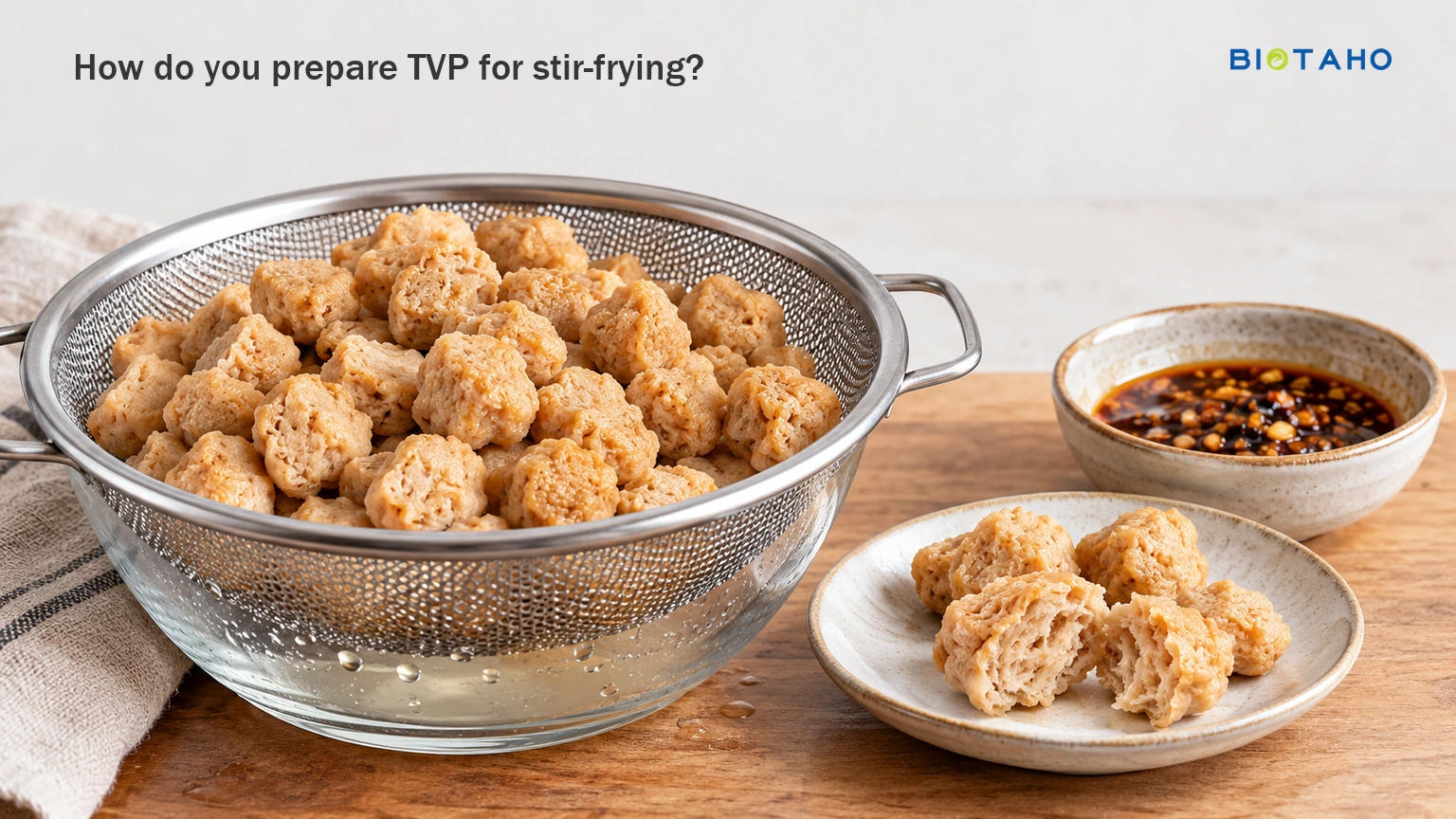
Season after draining so you do not pour the flavor away. Use a small amount of concentrated seasoning rather than soaking the pieces in thin marinade. If you want to repeat the dish, note the dry amount and how you drained it.
Which vegetables should go into the pan first?
Cut firm vegetables into small, even pieces and keep them separate from tender leaves. Carrot and broccoli stems need longer than spinach or leafy cabbage. Mushrooms can release plenty of liquid, so let that reduce before piling other ingredients on top.
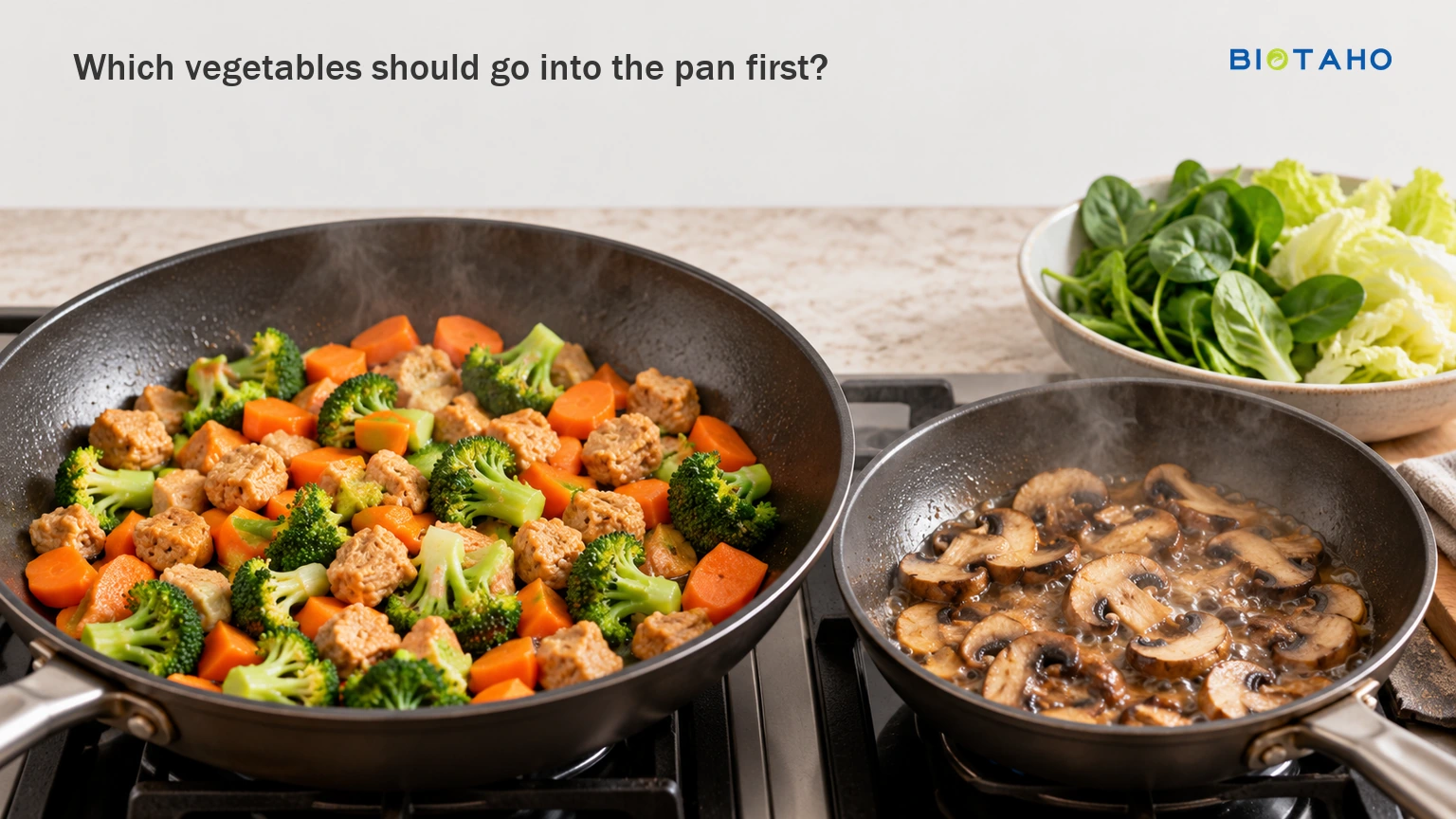
If the pan is small, cook one batch, remove it and cook the next. Combine them for the sauce at the end. Many vegetable stir fry recipes use this approach to keep the vegetables from steaming in a crowded pan. It is especially useful on a home stove with limited heat.
What goes into a simple vegan stir-fry sauce?
Start with soy sauce for salt and savory flavor, ginger or garlic for aroma, a little vinegar and enough water to spread the seasoning. Add sweetness if the dish needs it. For a light glaze, mix starch with water separately and stir again before pouring, since starch settles.
Check bottled sauces for fish, oyster or meat ingredients. Mushroom sauce may be suitable, but read the label. Soy sauce contains soy and often wheat, as covered in the FDA’s food allergy guidance. A plant-based stir-fry is not automatically gluten-free.
When should you add sauce and starch?
Add sauce once the ingredients have cooked as needed. If there is already a pool of liquid, let it reduce first. Thickening all that liquid can leave a heavy sauce. Add a little starch slurry, stir and let it cook before deciding whether you need more.
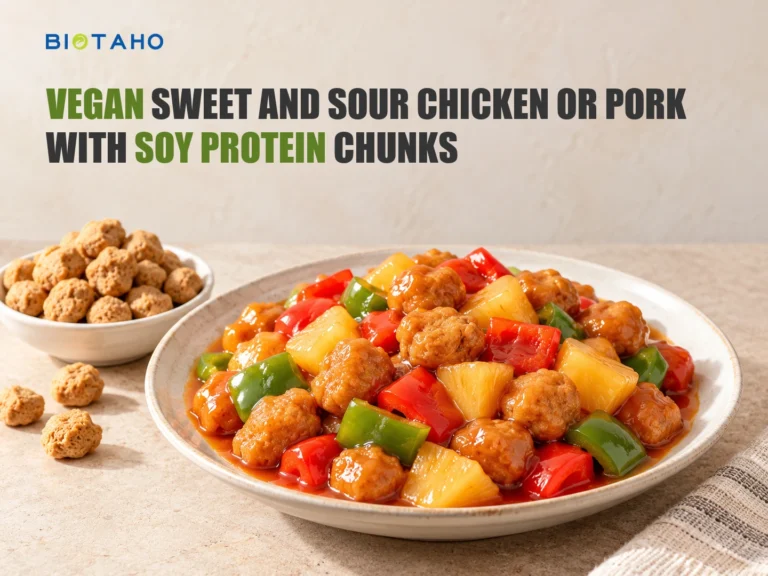
The Foodie Takes Flight’s soy-chunk dish keeps the fried protein separate from the vegetables and sauce until the final toss. Although its sweet-and-sour sauce is a different flavor, the method shows how cooking separately can keep the last step short.
| Pan problem | What to examine | Adjustment |
|---|---|---|
| Watery vegetables | Crowding and liquid released by mushrooms or leaves | Cook smaller batches and reduce liquid before combining |
| Chewy soy centers | Hydration before frying | Check the center during preparation |
| Heavy, sticky sauce | Too much starch or reduction | Use less slurry and add gradually |
| Bland protein beside salty sauce | Whether the pieces were seasoned after draining | Season the prepared TVP before the final toss |
How do moo shu and yuxiang-style versions differ?
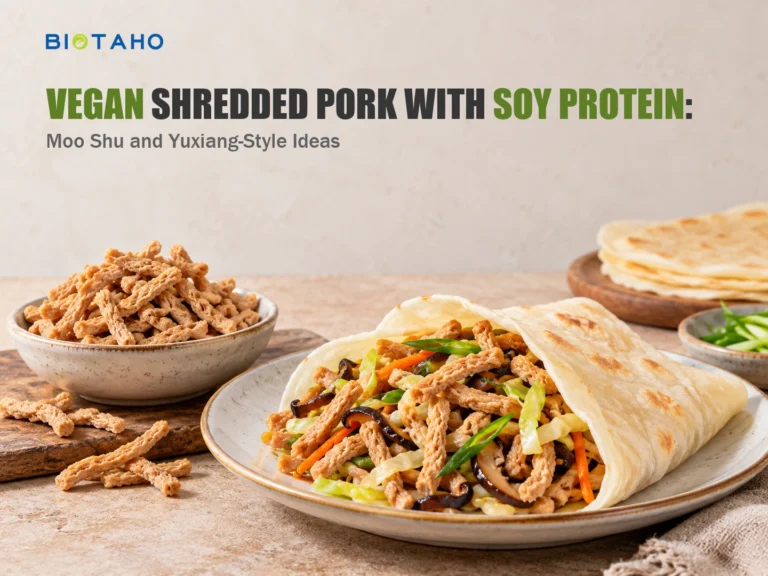
For a meatless moo shu filling, combine soy strips, cabbage and mushrooms, leave out the egg and serve with pancakes and vegan hoisin. Keep the filling fairly dry. For a yuxiang-style stir-fry, use chili, ginger, garlic, sugar and vinegar for a sharper glaze; the background on yuxiang seasoning describes that flavor combination.
Choose one of these variations before cooking, since they call for different sauces and finishes. For other ways to use the remaining protein, the textured protein recipe guide covers fillings and saucier dishes too.
What do cooks ask about vegan stir-fries?
Can I make a stir fry without meat?
Yes. Vegetables can be combined with tofu or prepared textured soy protein, using sauces that meet the intended diet.
What makes a good veggie stir fry?
Suitable cut sizes, a sensible cooking order, enough pan space and a balanced amount of sauce matter more than one special ingredient.
What are the ingredients for an easy vegan stir fry sauce?
Soy sauce, ginger or garlic, a little vinegar and water are a simple starting direction. A starch slurry is optional, and the ingredient labels still need checking.
What is the secret ingredient in stir fry?
There is no single secret ingredient. Browning the food, using aromatics and controlling excess moisture usually help more than adding another bottled sauce.
What to add to TVP to make it taste like meat?
Mushrooms, soy sauce and browned onion or garlic add savory flavor. They can give the soy more depth without making it identical to meat.
How do you make stir fry taste like a restaurant?
Prepare everything in advance, avoid crowding and finish the sauce quickly. A home stove may need smaller batches than a commercial wok station.
How do I cook soya chunks in a stir fry?
Hydrate and drain them first, then combine with vegetables that have been cooked in stages. Add sauce toward the end.
How long should soya chunks be soaked?
Follow the product directions and check the center. Piece size and product grade make a single soaking time unreliable.
Why is your stir-fry watery or bland?
If the stir-fry is watery, check draining and pan crowding first. If the sauce tastes good but the protein is bland, season the prepared pieces before the final toss. For larger batches, Baichuan’s catering applications show possible uses of the ingredients. Repeat the dish with your actual pan load and serving method before assuming a home-sized batch will scale directly.