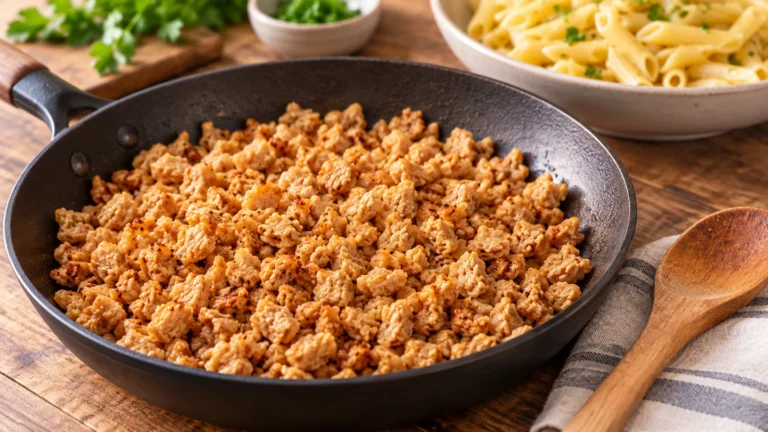
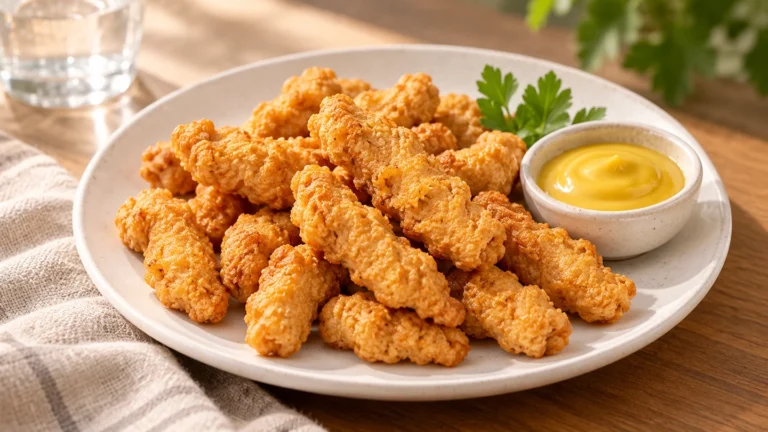
A sandwich patty has to survive a flip in the pan and bite cleanly inside a bun. Fine TVP particles mix easily with a binder, while larger flakes leave more texture and can change how the patty holds together. The TVP-and-chickpea recipe below is one way to make that balance work. Try the cooked patty in a sandwich too: one that seems firm on a plate may be too dense to eat comfortably with bread.
Vegan chicken patties can be made with prepared TVP, chickpeas, seasoning and a flour-and-starch binder. The soy adds texture, while the binder holds the mixture together. You can compare textured soy protein granules y soy protein flakes, but both still need the other recipe ingredients. Drain the protein, leave some visible texture and cook one patty before shaping the full batch.
Should you use TVP granules or flakes in chicken patties?
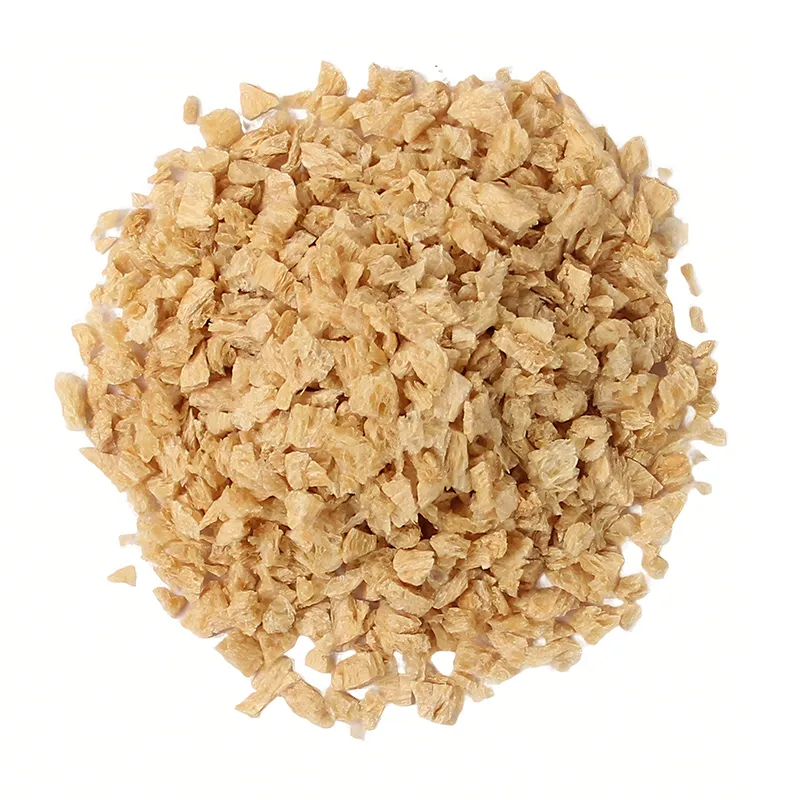
Granules spread through the mixture more evenly than large chunks. Flakes can give a coarser bite, though long or thick pieces may make the patty harder to shape and eat. Baichuan’s soy fiber protein flakes are a flake-shaped Soya Fiber Protein product also listed for chicken nuggets. They are worth discussing as a sample for formed foods, but a sandwich patty may need a different binder and cooking method.
For a fair first comparison of textured soy protein granules y soy protein flakes, keep the patty size, binder and cooking method the same. Record the amount of prepared protein you add, since equal dry weights may retain different amounts of water. A plant-based chicken patty should hold together when lifted and still bite easily in the bun. Change one part of the mixture at a time to see what helps.
What goes into a TVP and chickpea patty?
The recipe below makes 12 small patties and comes from Emese Maczko’s Crispy Vegan Chicken Patties at My Pure Plants. It has not been tested with Baichuan ingredients, so follow the selected product’s preparation directions if you adapt it.
| Part of the recipe | Published ingredients | Job in the patty |
|---|---|---|
| Protein and soaking liquid | 1½ cups TVP; 4 cups vegetable broth for soaking, then draining | Softened particles; the broth is not all retained in the mixture |
| Chickpea mixture | 1 cup cooked or canned chickpeas; 3 tbsp olive oil; 1 tbsp lemon juice | Body and moisture around the TVP |
| Seasoning | 1 tsp each dried sage, thyme, marjoram, onion powder and garlic powder; 1½ tsp salt; ⅛ tsp black pepper | Herb-led chicken-style flavour |
| Binder | ⅓ cup vegan mayonnaise; ½ cup white rice flour; 4 tbsp tapioca starch | Helps the mixture hold its shape |
| Outer coating | 1 cup panko; ½ tsp each sage, thyme and marjoram | Breaded surface |
| Pan cooking | 4 tbsp vegetable oil | Cooking the breaded patties |
Use vegan mayonnaise and meat-free broth. If you need the sandwich to be gluten-free, check the breading as well as the binder: ordinary wheat panko still contains gluten even when the mixture uses rice flour.
How do you shape patties that stay together?
- Follow the source recipe by soaking its TVP in hot broth for 10 minutes, then squeezing out the excess liquid. The particles should be soft and moist rather than sitting in broth.
- Briefly pulse the chickpeas with the oil, herbs, seasonings and lemon juice. Keep some small pieces rather than making a completely smooth purée.
- Add the prepared TVP and pulse briefly to distribute it. Transfer to a bowl and stir in the vegan mayonnaise, rice flour and tapioca starch.
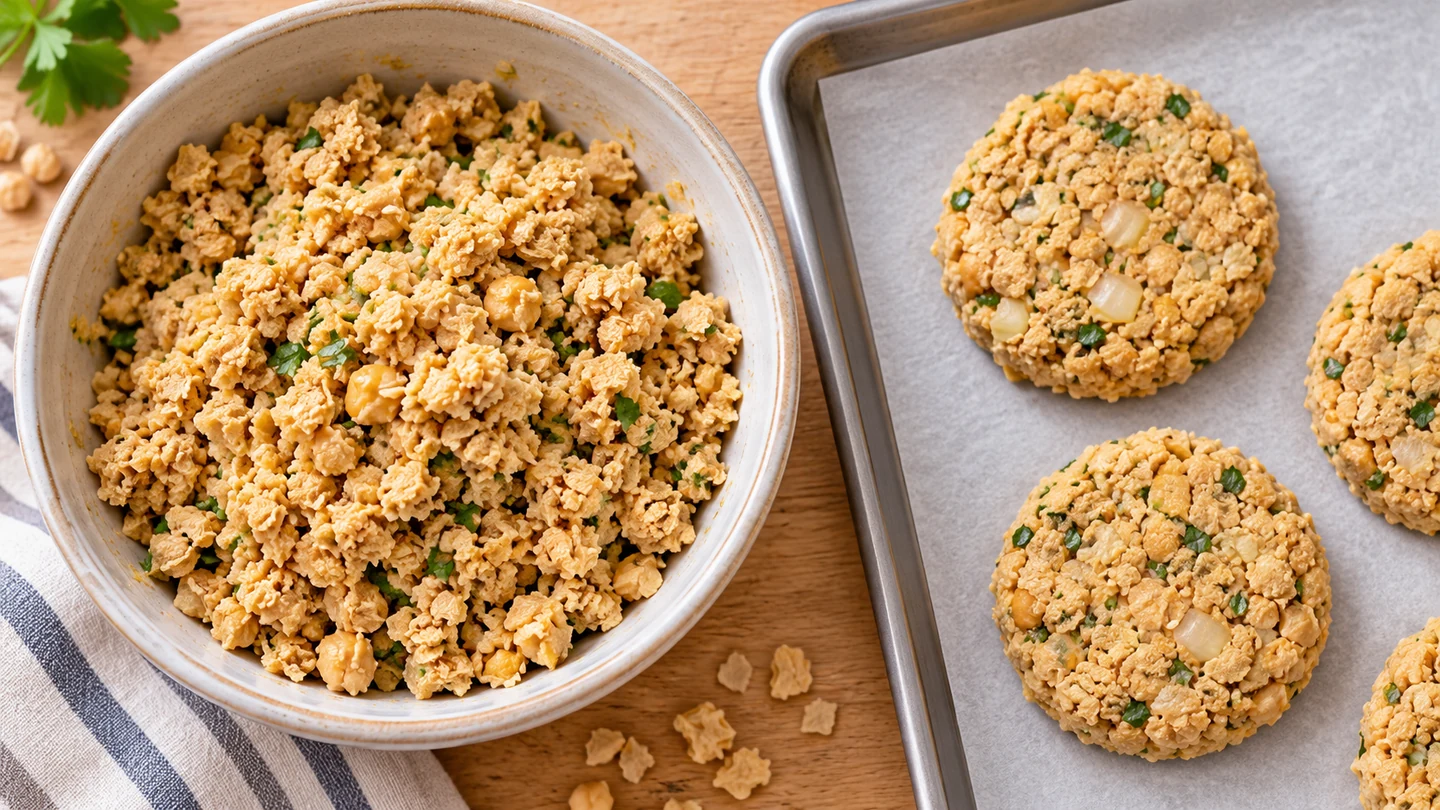
- Chill the mixture for 15 minutes as directed by the author. Shape approximately ¼-cup portions into small, flat patties and press gently into the seasoned panko.
- Pan-fry over medium heat using the source’s guide of 5 minutes on each side. Check the centre and structure of a sample; a change in thickness or ingredient may require a different cooking time.
If a SoyaFiber protein substitution leaves the mixture too wet, check the preparation and drainage before adding flour. Extra flour can make shaping easier but leave a heavy center. If large flakes catch around the edges, try smaller prepared pieces before increasing the binder.
Why do soy patties fall apart or turn gummy?
A patty that breaks apart may be too wet, need more binding or contain pieces too large for its thickness. A gummy center can come from too much water, overprocessing or incomplete cooking. Cut open a cooked patty to check. Visible soy pieces held in a cooked mixture are different from a smooth, floury paste, and the two problems need different adjustments.
| What you notice | What to inspect | Next adjustment |
|---|---|---|
| Mixture spreads on the tray | Free liquid and measured binder | Correct drainage before increasing dry ingredients |
| Patty cracks when turned | Mixture cohesion and first-side cooking | Check a small patty and support it with a broad spatula |
| Centre is dense or gummy | Processing, thickness and cooking | Retain particle texture and use a flatter shape |
| Breading becomes soggy in the bun | Wet toppings and waiting time | Assemble close to serving |
How do you build a sandwich around the patty?
Lettuce, tomato, pickles and a little vegan mayonnaise add contrast to the patty. Drain wet vegetables and go lightly with sauce so the breading stays crisp. Too many toppings can also make it harder to bite through the sandwich without pushing the patty out.
Taste a reheated patty in the bun as well as a fresh one. Check for dry centers, broken edges and breading softened by sauce. If you plan to freeze the patties, test freezing and reheating separately and follow food-safety guidance. The guide to soy protein in mince and fillings covers the small-particle mixtures used in formed foods and fillings.
Preguntas frecuentes
What are vegan chicken patties made of?
Recipes vary. The example here combines TVP, chickpeas, vegan mayonnaise, flour, starch, herbs and breading. Retail patties may use other proteins and binders.
How to make vegan chicken patties?
Soften and drain the TVP, combine it with the chickpea mixture, binder and seasonings, then shape and cook as directed. In the linked recipe, the mixture is chilled before shaping to make it easier to handle.
Are plant-based chicken patties healthy?
Compare the complete patty’s nutrition, portion and cooking method. Breading, frying oil and sodium can change the result substantially. Plant-based is an ingredient description, not a nutritional guarantee.
Is vegan chicken healthier than real chicken?
There is no single answer across all products. Compare like-for-like servings and preparation, including protein, sodium, saturated fat and energy. Personal dietary needs also matter.
What holds vegan burgers together?
Recipes use mashed legumes, flour, starch or wheat gluten to help patties hold together. Soy granules and flakes add texture, but do not automatically replace the binder. How much binder you need depends on the particle size, moisture and cooking method.
What can vegans use as a substitute for chicken?
Options include soy protein, tofu, seitan, legumes and suitable pea-protein products. Choose according to the dish and check allergens and ingredients.
How to make high protein chicken patties?
Start with a protein-rich base and calculate the nutrition of the complete recipe, including water, binder and coating. Adding protein powder in place of flour can change the texture. A high-protein label claim also needs nutritional evidence that meets the rules in the intended market.
What is the best way to marinate soya chunks?
First prepare them according to their instructions and remove excess liquid if the recipe requires it. Then season with a suitable marinade. For this patty, use the specified small TVP particles rather than substituting whole marinated chunks unchanged.
Choosing soy protein for a sandwich patty
Test the patty as it will be served: formed to the right thickness, cooked, reheated if needed and placed in the bun with its toppings. It should hold together without making the sandwich difficult to eat. Check the complete allergen information too; FDA’s allergen guidance includes soy and wheat among the major U.S. allergens. When requesting samples from the Baichuan team, mention the patty thickness, whether you shape it by hand or machine, and how it will be cooked and reheated. This helps narrow the choice between fine particles and coarser soy-fiber pieces.