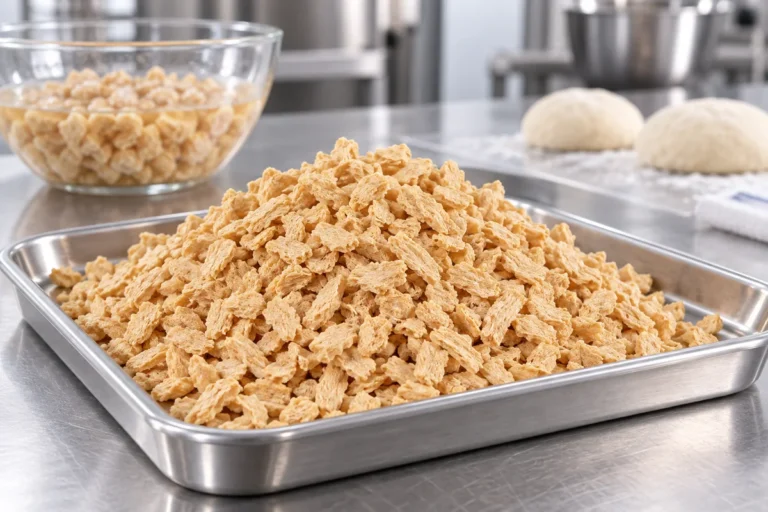
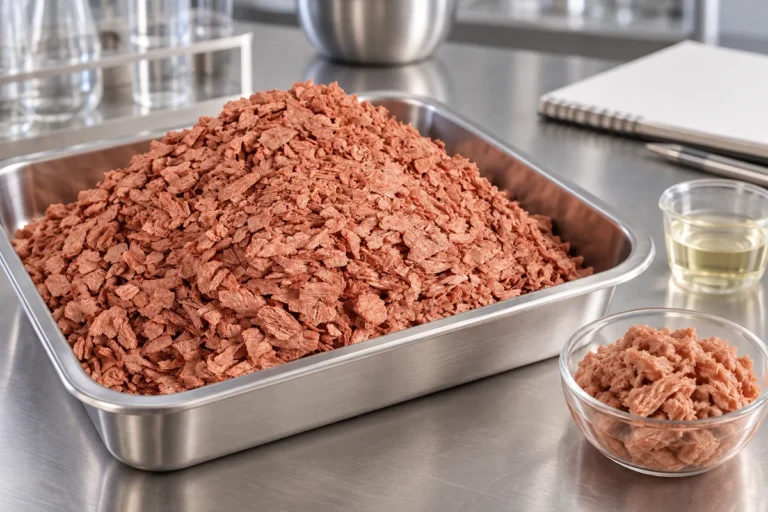
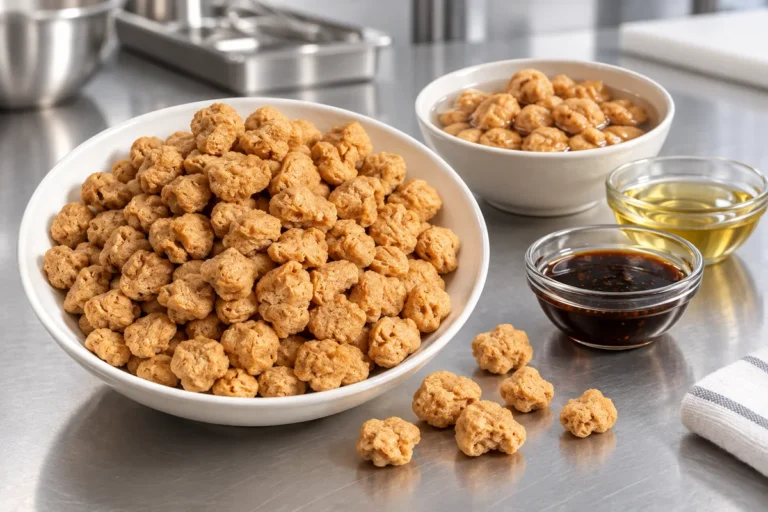
Vegan mince succeeds when its particles remain distinct while the surrounding phase carries moisture, fat and seasoning. Too much mobile water or mechanical work can turn a cohesive mix into paste, package purge or a wet wrapper. The useful question is whether the textured soy protein format and handling fit the finished food and line.
Resumen: Select granules or flakes by the particle definition required after cooking, then control hydration with a documented mass balance rather than a universal water ratio. Confirm sauce distribution, filling-machine behavior, purge, cooked texture and particle survival through the intended chilled, frozen, reheated or hot-held journey. Soy is a major allergen under U.S. law and an Annex II allergen in the European Union, so label and cross-contact review must accompany process approval. Every trial condition must be validated for the exact grade, formula, equipment and process.
Consumer recipes use textured soy protein in tacos, sauces and pies because small particles can carry liquid and seasoning while larger pieces create a clearer bite. Commercial production adds line, package and service constraints. Procurement therefore needs finished-product evidence, not assumptions based on dry appearance or protein value.
Match granules or flakes to the finished bite and filling line
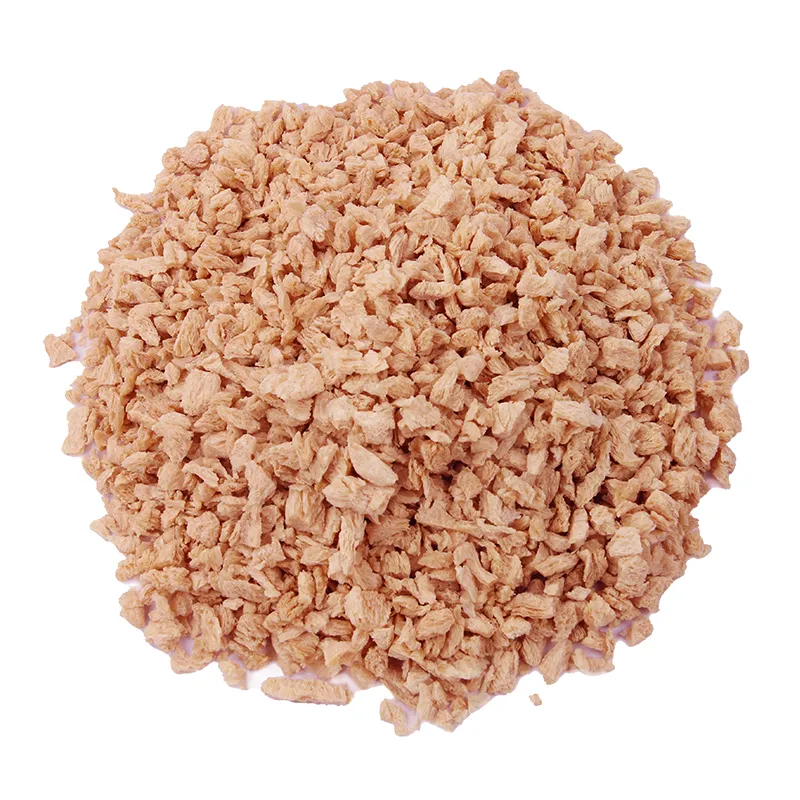
Start with the cooked target. Fine granules distribute readily through sauce but can lose identity when hydration or mixing goes too far. Coarser granules preserve visible pieces yet may create an uneven bite. Flakes offer irregular edges and a torn appearance, but their surface area and orientation can alter sauce coating, mixer distribution and passage through restrictions.
Equipment changes the result. A pumpable taco filling, pie depositor and bun-filling system impose different shear, pressure and openings. Run hydrated particles through the actual hopper, transfer and deposit sequence; watch for bridging, smearing, separation, portion variation and fragments at restrictions. A good hand-mixed sample can still fail on the line.
Assess particle definition before hydration, after mixing and after cooking. Compression or Texture Profile Analysis can compare candidates when preparation and test settings are fixed; the result is method-specific, not a certification. Pair it with sensory work. ISO 4120 describes a triangle test for perceptible difference, not preference or target fit.
Measure hydration and free water before they turn mince into paste
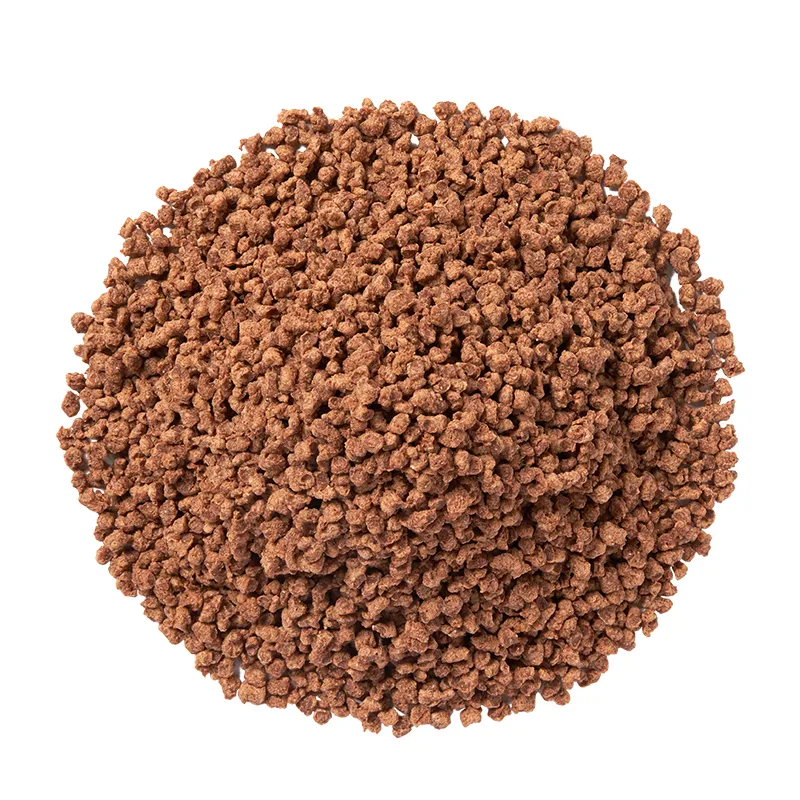
No fixed absorption ratio fits every textured soy protein. Uptake varies with grade, particle geometry, extrusion structure, liquid temperature, contact time, agitation, dissolved ingredients and drainage. Supplier guidance can frame a trial, but every condition—including broth or seasoned-liquid hydration—requires validation for the exact grade, formula, equipment and process.
Record dry soy, liquid added, hydrated material after a defined drain or press, and cooked output. This separates retained liquid from free water between particles. Free water can dilute binder, pool in a package, soften dough and make the mix pasty. Extra uncooked weight is not better yield if that liquid leaves later.
Pre-hydration gives more control over drainage and particle inspection. Direct addition to sauce can simplify handling, but competing ingredients may alter uptake. Compare routes with the rest of the formula and process fixed, and record liquid temperature, contact time, agitation, pre-mix hold and drainage method for scale-up.
Moisture methods can support comparison, but their scope matters. ISO 1442 is an oven-drying reference method for determining moisture in meat and meat products. A laboratory that adapts it to a plant-based filling should document method suitability for that matrix; citing the method does not certify the ingredient or finished food.
| Aplicación | Likely structural need | Process question to answer | Evidence for approval |
|---|---|---|---|
| Loose mince or pasta sauce | Even granules that remain visible in a continuous sauce | Does sauce distribute without leaving dry cores or turning the mince pasty? | Cooked particle identity, sauce separation, portion consistency and reheated texture |
| Taco filling | Defined particles with controlled surface moisture | Does the filling remain scoopable and distinct through batch handling? | Hot texture, free liquid, service handling and flavor distribution |
| Pie or pastry filling | Cohesive mince with limited mobile water | Does the filling deposit cleanly without wetting the crust or leaking fat? | Deposit accuracy, pastry condition, cooked loss and package observations |
| Dumpling or bun filling | Particles small enough for the wrapper and closure | Do pieces interfere with sealing, and does water migrate into the dough? | Seal integrity, wrapper condition, cooked cross-section and hot bite |
| Industrial formed or filled product | A controlled distribution of particles within a binding phase | Can the mix pass through the full filling or forming system without smear or blockage? | Line observations, portion variation, particle survival, purge and end-use texture |
Sequence binder, fat and seasoning to protect particle definition
Binding should hold hydrated particles without erasing them. A weak continuous phase permits crumble and purge; an overdeveloped phase can become dense or rubbery. Compare addition order with ingredients fixed. Whether binder develops before, with or after particle distribution depends on the system and mixer, so each sequence requires exact-formula and equipment validation.
Fat changes lubrication, aroma release and perceived juiciness, but poor distribution can cause separation or weak interfaces. Seasoning presents a related tradeoff: liquid inside a hydrated particle differs from surface coating. Early contact may deepen flavor while changing hydration; late addition may protect structure but concentrate flavor outside. Evaluate samples hot.
Mechanical history connects the systems. High shear may improve distribution while reducing particle definition; gentle mixing may protect pieces but leave weak zones. Record mixer, load, sequence, time and setting, then inspect at the filler and after cooking. The goal is controlled fracture, not maximum cohesion.
Application labels cannot prove interchangeability. Development work for high protein soy protein for Chicken Nuggets should emphasize forming integrity and cooked fracture. Trials for high protein soy protein for leisure snacks should include the intended bake or fry stress and flavor delivery. Work on high protein soy protein for catering food must include batch handling, service conditions and time-dependent texture. Each phrase describes a use context, not a performance guarantee.
Validate the full chilled, frozen, reheated and hot-held journey
A fresh bench sample is a control, not commercial approval. Check chilled products through intended storage and service; frozen products after freezing, storage, applicable thawing and reheating; and catering products after batch preparation, transfer and hot holding. Use the intended package, cooking instruction and service condition because later moisture migration can expose failure.
For chilled trials, track purge, appearance, particle definition and hot texture alongside required microbiological and packaging work. For frozen trials, compare a fresh control with defined stored checkpoints, examining package liquid, breakage, reheated bite and sauce stability. Trial checkpoints do not establish shelf life; the complete evidence must support that decision.
For catering, map the service flow and validate applicable time-temperature controls with calibrated instruments. Requirements depend on the destination and operation, so do not copy another market’s temperature. Also assess texture over time: mince may absorb sauce, soften, dry at the surface or lose distinction during service.
Codex CXC 1-1969 provides general principles of food hygiene and a HACCP framework. It guides hazard control but is not a product certification, and an ingredient specification cannot replace a site- and product-specific food-safety assessment.
| Decision dimension | Granule-led structure | Flake-led structure | Blended structure | Buyer check |
|---|---|---|---|---|
| Particle definition | More regular mince appearance | More irregular, torn-looking pieces | Can combine background mince with visible fragments | Cooked cross-section under consistent preparation and lighting |
| Sauce distribution | May disperse evenly but lose identity if overworked | May create more variable coating around larger pieces | May balance coverage and visible structure | Hot sensory check plus observation of free sauce after holding |
| Filling-machine behavior | Often easier to distribute, subject to grade and hydration | Larger fragments may orient, bridge or break at restrictions | Requires control of the full particle-size distribution | Hopper, transfer and depositor trial with portion observations |
| Chilled or frozen stability | Cannot be inferred from dry form alone | Purge, particle survival and reheated texture through the intended journey | ||
| Documentation | Must identify the exact commercial grade and lot | Specification, ingredient statement, allergen declaration, COA fields and change control | ||
| Coste total | Dry unit cost is incomplete without saleable output, labor, rework, downtime and waste | Cost per saleable cooked unit using the buyer’s verified plant data | ||
Approve the grade only after process, label and total-cost checks pass
- Define the desired cooked particle visibility, fracture, juiciness, sauce coverage and service condition before requesting samples.
- Screen granule, flake and, where useful, blended candidates in the same base formula and complete equipment sequence.
- Document hydration mass balance, mixing history, filling behavior, cooked loss, purge, particle survival and hot sensory results.
- Review the exact grade’s specification, ingredient statement, allergen declaration, lot documentation and change-control process.
- Approve destination-market labels and claims only after the complete formula and manufacturing controls have been reviewed.
For U.S. packs, soy is a major allergen under 21 U.S.C. 343(w), while ingredient naming must follow applicable provisions such as 21 CFR 101.4. In the European Union, Regulation (EU) No 1169/2011 requires soybeans and other Annex II allergens to be emphasized in the ingredients list. Codex CXS 1-1985 provides an international labelling framework, but destination law, product composition and the claims made on pack determine what applies. These regulations and standards define requirements or methods; they do not certify a product.
At supplier shortlisting, BCTVP presents granule and flake formats for application trials. Buyers can review high protein soy protein for Chicken Nuggets, compare it with high protein soy protein for leisure snacks, and discuss process fit through high protein soy protein for catering food. The broader textured soy protein product range can support format shortlisting, but approval should remain tied to exact-grade documents and buyer-run validation.
Preguntas frecuentes
Can textured soy protein be used in vegan chicken?
Yes. Granules or flakes can contribute particles, chew and flavor-carrying structure to vegan chicken mince or fillings. Validate the exact grade through the intended hydration, forming or filling, cooking and reheating sequence because dry appearance does not predict the finished bite.
Is soy protein suitable for vegan chicken?
It can be suitable when the target market accepts soy and the complete product meets its sensory, nutritional, process and labelling requirements. The manufacturer must also manage soy allergen controls and substantiate any vegan or nutrition claim under destination-market rules.
What texture should soy protein have for vegan chicken?
It should retain the particle identity required by the target bite while integrating with the surrounding binder, fat and seasoning system. Define that target with cooked visual references, a consistent instrumental method and hot sensory evaluation instead of relying on a vague term such as “meaty.”
How much water does TVP absorb in vegan chicken formulation?
There is no universal fixed ratio across grades, formulas and processes. Use supplier guidance only to frame trials, then validate the exact grade, formula, equipment and process with a defined hydration, drainage and cooked mass-balance method.
Can textured soy protein improve yield and juiciness?
It may help manage moisture and perceived juiciness when hydration, binder and fat are balanced, but improvement cannot be assumed. Compare the candidate with a defined control and track saleable cooked output, because surface-trapped water can increase uncooked weight and later appear as purge or cooking loss.
What allergens and labels should be considered for vegan chicken?
Soy declaration is central, while flavors, binders and processing aids may introduce other allergens or labelling duties. Review the complete formula, cross-contact controls, ingredient names and voluntary claims under the rules of every destination market before artwork approval.
Use these authoritative sources to verify methods and market obligations
- Codex Alimentarius: CXS 1-1985 general standard for the labelling of prepackaged foods y CXC 1-1969 General Principles of Food Hygiene
- Electronic Code of Federal Regulations, 21 CFR 101.4—Food; designation of ingredients
- U.S. House Office of the Law Revision Counsel, 21 U.S.C. 343—Misbranded food
- EUR-Lex, Regulation (EU) No 1169/2011 on food information to consumers
- ISO 4120:2021—Sensory analysis, triangle test methodology
The practical principle is straightforward: define the finished bite and line behavior first, then prove the ingredient and process together.
To discuss samples and documentation for a specific mince or filling line, share the target application, process flow and destination market with the BCTVP contact team, then validate the selected grade before commercial approval.