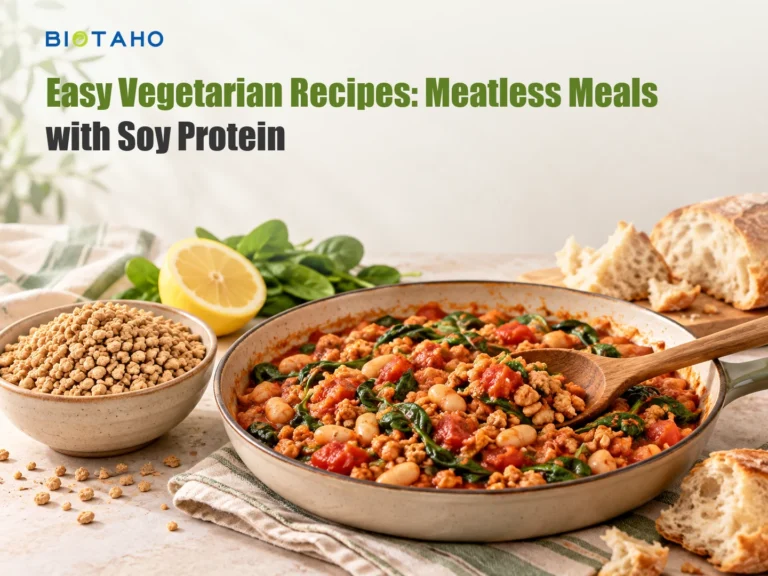
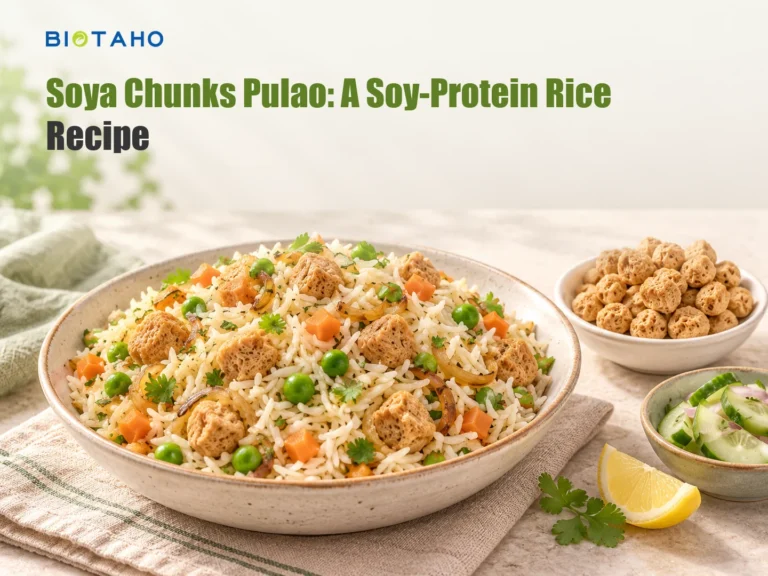
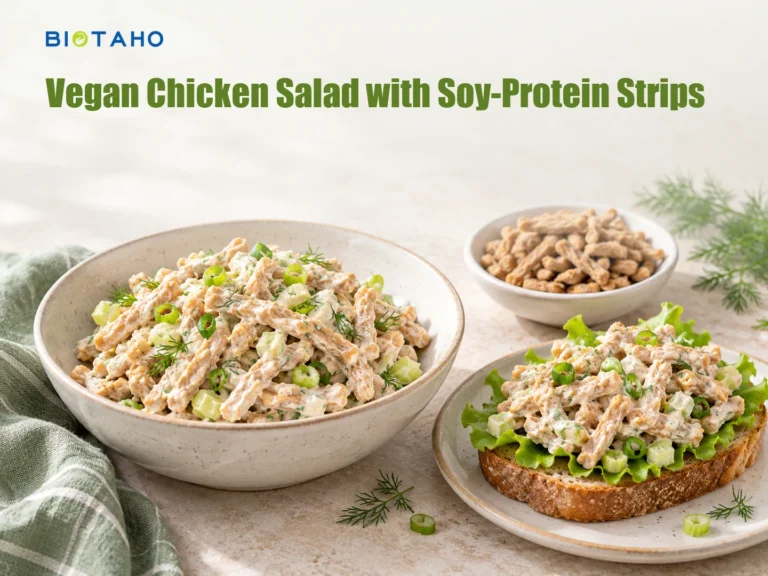
Ottime ricette vegane a base di soia testurizzata iniziano con l’abbinare la forma dell’ingrediente al metodo di cottura. Lasciate i pezzi interi per il curry o per bocconcini impanati; scegliete particelle più piccole per ripieni e polpette. Quindi reidratate l’ingrediente e gestite la sua umidità in base al risultato desiderato: succoso, dorato, croccante o ben compatto.
Il curry di pomodoro e spinaci che segue costituisce un punto di partenza pratico. La sua preparazione illustra inoltre come adattarlo per ottenere preparazioni cotte in padella, come bocconcini o polpette, evitando di considerare tutti gli ingredienti a base di soia come intercambiabili.
Scegli la forma di soia prima di scegliere il metodo di cottura.
Per prima cosa, decidi se il piatto finito dovrà contenere ingredienti separati oppure un composto compatto. Proteine di soia testurizzate È disponibile in diverse forme che rendono questa scelta pratica. I pezzetti offrono porzioni monoporzione da mescolare al sugo o da ricoprire separatamente. I granuli si distribuiscono uniformemente all’interno di un ripieno, mentre i fiocchi rappresentano un’opzione ideale per preparare impasti modellati.
Di Baichuan Bocconcini di proteine di soia fibrose per la ristorazione sono piccoli cubetti indicati per la ristorazione e per applicazioni a base vegetale. La loro forma integra li rende la scelta ideale per il curry in questo caso. Il granuli compatti di proteine di soia testurizzate Sono elencati per salse e ripieni che richiedono particelle distinte. Sceglieteli quando desiderate piccoli pezzi distribuiti uniformemente nel composto, e non grossi bocconi di curry.
| Metodo | Ingredienti utili | Indicazioni per il pasto o lo spuntino |
|---|---|---|
| Sobbollire | Ceci, lenticchie, bocconcini di soia preparati | Curry, stufato di pomodoro o zuppa di verdure |
| Browning | Tofu compatto, tempeh, granuli o striscioline di soia preparati | Stir-fry, taco filling or noodle topping |
| Coating | Tofu compatto o bocconcini di soia preparati | Bocconi croccanti con insalata di cavolo e una salsa per intingere |
| Vincolo | Purè di fagioli, lenticchie o granuli di soia preparati con un legante | Piccole polpette o frittelle di verdure |
For formed mixtures, the supplier’s soy protein flakes for formed applications are listed for sausage, meatballs and stuffing, with oil- and water-retention features. That makes them worth evaluating in a patty mixture, but it does not make them a ready-made binder or a finished patty.
Composition matters alongside shape. These three ingredients contain soy and wheat ingredients, including wheat gluten; they are neither pure soy isolates nor gluten-free choices. Check the current ingredient and allergen information before selecting sauces, coatings and binders for the whole dish.
Hydrate and drain the protein for its next step
Once you have selected the form, allow time to prepare it before cooking the dish. Baichuan lists hydration windows of 60–65 minutes for these chunks, 40–55 minutes for the granules and 15–20 minutes for the flakes. Those windows are preparation lead time, separate from cooking the curry. Follow current product directions for water quantity, temperature, draining and any required cooking; the recipe is a starting point for trials with your chosen grade.
For curry, check that a cut chunk has hydrated through its centre before it enters the thick sauce. Drain as directed so unmeasured soaking water does not dilute the tomatoes and spices. A moist, prepared piece is useful here; it does not need the same dry surface you would want for browning.
If the next step is pan cooking, remove excess surface moisture after draining and leave space between pieces. Cook in batches when necessary. Water collecting in the pan delays browning, so add sauce after the pieces have browned, not at the start. For granules destined for patties, control drainage consistently: retained water becomes part of the mixture’s moisture and changes how much binder it needs.
Keep these preparation routes separate. Hydration softens the dry structure; draining controls the water carried into the dish. Neither seasoning nor a dusting of starch can correct an inadequately hydrated centre.
Simmer prepared chunks in a vegetable curry
Use the hydrated, drained chunks in a sauce that is already developing flavour. Cooking the onion, garlic and curry powder first gives the sauce a base before the protein is added. Keep the chunks distinct with gentle stirring, and adjust the sauce with small splashes of water if it begins to catch.
The preparation sequence is straightforward: check that each piece is hydrated through its centre, drain, then add it to the sauce. A thick curry is not a reliable substitute for the ingredient’s hydration step.
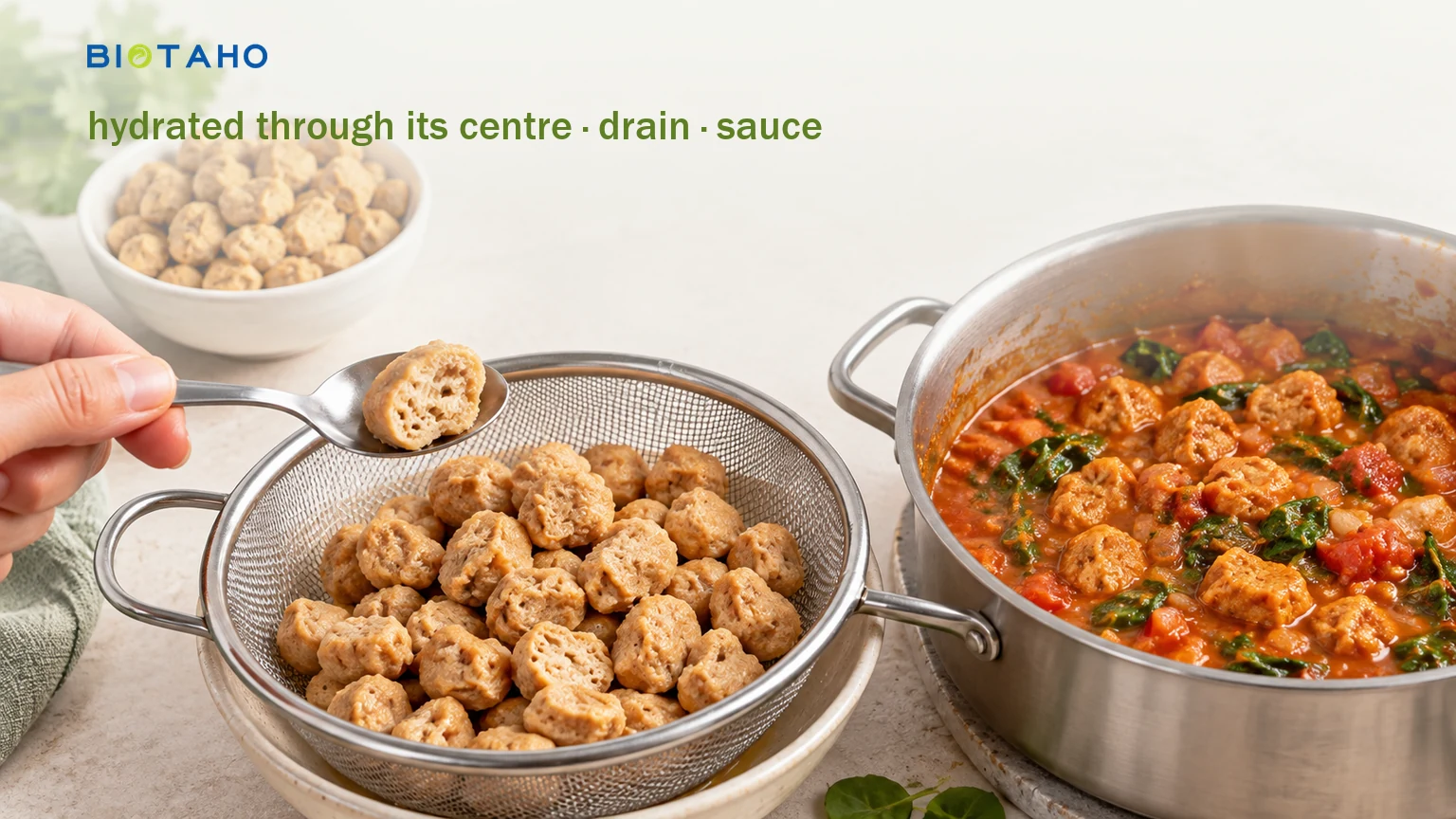
Questo soy-chunk curry starting batch makes two generous servings with rice. The liquid used to hydrate the chunks is separate from the sauce liquid below; the amount needed during simmering can vary with the TVP grade and evaporation.
| Ingrediente | Importo suggerito |
|---|---|
| Bocconcini di soia essiccati | 60 g, prepared according to pack directions |
| Oil and onion | 1 tbsp oil; 1 small onion, chopped |
| Garlic and curry powder | 2 garlic cloves, chopped; 2 tsp vegan curry powder |
| Pomodori a pezzetti | 400 g canned |
| Acqua o brodo vegano | 150 ml initially, plus more as needed |
| Spinach and lemon juice | 100 g spinach; 1–2 tsp lemon juice |
| Per servire | Cooked rice; salt to taste |
- Prepare the chunks according to their directions. Cut a piece to check hydration through the centre, then drain as instructed.
- Heat the oil in a saucepan. Cook the onion over medium heat until softened, stirring regularly. Add the garlic and curry powder and stir briefly until fragrant without scorching them.
- Add the tomatoes and 150 ml water or vegan stock. Simmer until the onion is tender and the sauce begins to thicken.
- Add the prepared chunks and finish cooking them according to the packet directions. Stir gently and add splashes of water if the sauce catches. Keep enough sauce to coat the tender, distinct pieces.
- Fold in the spinach until wilted. Add lemon juice and salt to taste, then serve with rice.
For a chickpea variation, replace the dry chunks with one drained 400 g can of chickpeas. Add them to the sauce and simmer until heated through. Expect a softer, less chewy bite, not the same texture as hydrated chunks.
Taste a chunk with a little sauce before serving. If the sauce tastes balanced but the centre seems firm or bland, note the preparation issue instead of automatically adding more curry powder to the entire pan.
Coat whole pieces or bind soy particles into patties
The curry keeps pieces moist in sauce. To use prepared chunks for crisp bites, change what happens at their surface: remove excess moisture before coating them. To make a patty from particles, change how the mixture holds together. These are different jobs, even when both methods use dry ingredients.
A coating covers an individual piece; a binder connects particles throughout a mixture. Dusting loose granules with starch does not automatically create a stable patty, and adding breadcrumbs to wet chunks does not guarantee a crisp exterior.
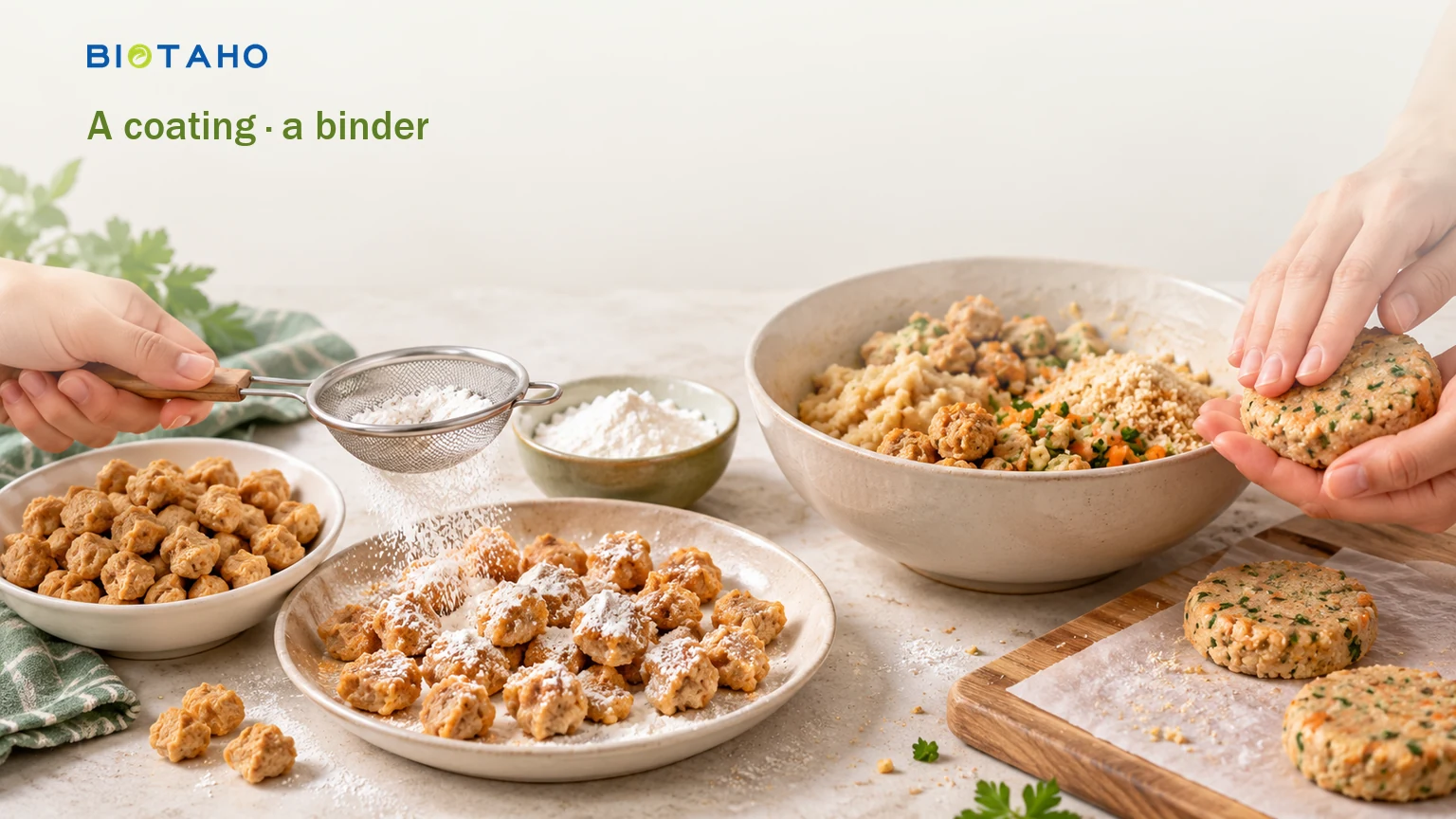
For coated bites, prepare and drain the chunks, remove excess surface moisture, then toss them with seasoning and a light coating of cornflour. Pan-fry in a thin layer of oil, turning to brown the surfaces, and complete any remaining product cooking requirements. Keep the dipping sauce alongside until serving so it does not soften the coating early. Slaw and potatoes can turn the bites into a meal.
For patties, combine drained, prepared granuli di soia with mashed beans, finely chopped cooked vegetables and breadcrumbs or another suitable binder. Cook a small trial patty before shaping the rest. If it breaks when turned, mash the beans more thoroughly or adjust the binder. If it feels pasty, reduce excess moisture before adding more dry ingredients.
Flakes offer another particle form to evaluate. Their listed water- and oil-retention function is relevant because moisture remains inside a formed mixture, not just on its surface. Do not assume a granule mixture and a flake mixture need identical drainage or binder levels. Keep the other ingredients consistent during comparison so you can judge the effect of the soy form.
Adjust the method after tasting the finished protein
Use the finished food to locate the problem. A firm curry centre points back to preparation; a thin sauce suggests excess carried-in water or insufficient reduction. If fully prepared pan-cooked pieces remain pale while liquid gathers around them, drain more thoroughly and give them more space in the next batch.
For coated bites that soften quickly, examine surface moisture and when the sauce was added. For a fragile patty, inspect the binding mixture and cooked-vegetable moisture before changing the soy ingredient. Make one adjustment at a time and record the form used, preparation method and drainage. This makes trials of vegan patties more useful than adding dry ingredients until the mixture merely feels stiff.
Serving also affects the result. Rice makes use of the curry sauce, while slaw contrasts with coated pieces. For healthy vegan meals, consider the overall plate and a varied diet, including appropriate fortified foods or supplements, as the NHS advises; an ingredient’s shape alone says nothing about nutritional completeness.
Handle all versions as perishable food. FDA guidance is to refrigerate within two hours, or one hour above 90°F, using shallow containers for larger amounts; keep the refrigerator at 40°F or below and reheat leftovers to 165°F. Browning and tenderness are texture cues, not proof of safe cooking. Check labels throughout: soybeans, wheat and sesame are among the FDA’s major allergens, and vegan food is not automatically allergen-free.
Domande frequenti
What are 10 easy vegan recipes?
Options include soy-chunk curry, chickpea curry, lentil soup, bean chilli, tomato-lentil pasta, tofu stir-fry, peanut noodles, hummus wraps, bean-topped baked potatoes and TVP tacos. For textured-soy versions, choose chunks for separate bites and granules for fillings, and include preparation time when planning.
Qual è un buon pasto vegano 4-ingredient?
Combine canned chickpeas, canned chopped tomatoes, spinach and vegan curry paste. Simmer the chickpeas and tomatoes with the paste, adding water as needed, then fold in the spinach until wilted. It avoids the separate hydration step needed for dry soy chunks.
What to not eat as a vegan?
Vegans avoid animal-derived foods, including meat, fish, dairy, eggs and honey. For this curry and its variations, check stock, curry paste, sauces, breadcrumbs and dips for animal ingredients such as fish sauce, milk or egg.
Quali sono alcuni pasti vegani veloci e semplici che posso preparare in 30 minuti?
Canned-chickpea curry, tofu noodles and bean-filled wraps are practical choices. Dry textured soy may require longer preparation: the chunk grade discussed here has a listed hydration window exceeding 30 minutes, before the recipe’s cooking steps.
What is the highest protein vegan meal?
There is no single answer without quantities and product nutrition labels. Compare the portions actually served. Dry TVP and the same weight of hydrated TVP are not directly comparable because hydration adds water; no product-specific protein figures are supplied for these ingredients.
Cosa posso fare con TVP?
Simmer prepared chunks in curry, pan-cook drained pieces before adding sauce, coat whole pieces for crisp bites, or use prepared granules in fillings and binding mixtures. Select the form first, then control moisture for that method.
Referenze
- NHS: La dieta vegana — balanced vegan eating and nutrients requiring planning.
- The Vegan Society: Definition of veganism — animal-derived foods excluded from a vegan diet.
- FDA: Manipolazione sicura degli alimenti — linee guida per la refrigerazione, il raffreddamento e il riscaldamento.
- FDA: Allergie alimentari — allergeni principali e lettura delle etichette.
Developing a curry, coated bite or patty? Contatta Baichuan per richiedere un campione di ingrediente. for a recipe-specific trial.