Good vegetarian lunch ideas with soy protein start with a filling that stays pleasant after packing. Use granules for a crumble that spreads through a sandwich or bowl, or strands for a wrap with a more fibrous bite. In either case, control free liquid before the filling reaches bread, and carry dressing separately.
The tomato-and-paprika base below provides a practical starting point. Choose the soy format first, prepare it fully, then decide how much moisture the finished lunch can accommodate.
Match the soy protein to the lunch you will pack
For a sandwich, small pieces make it easier to distribute filling across the bread without pulling out a long strip with each bite. Baichuan lists its textured soy protein granules for sauces and fillings as irregular granules with a compact structure. That makes them a relevant ingredient to trial for the crumble below, where the aim is distinct small pieces held together by a light tomato coating.
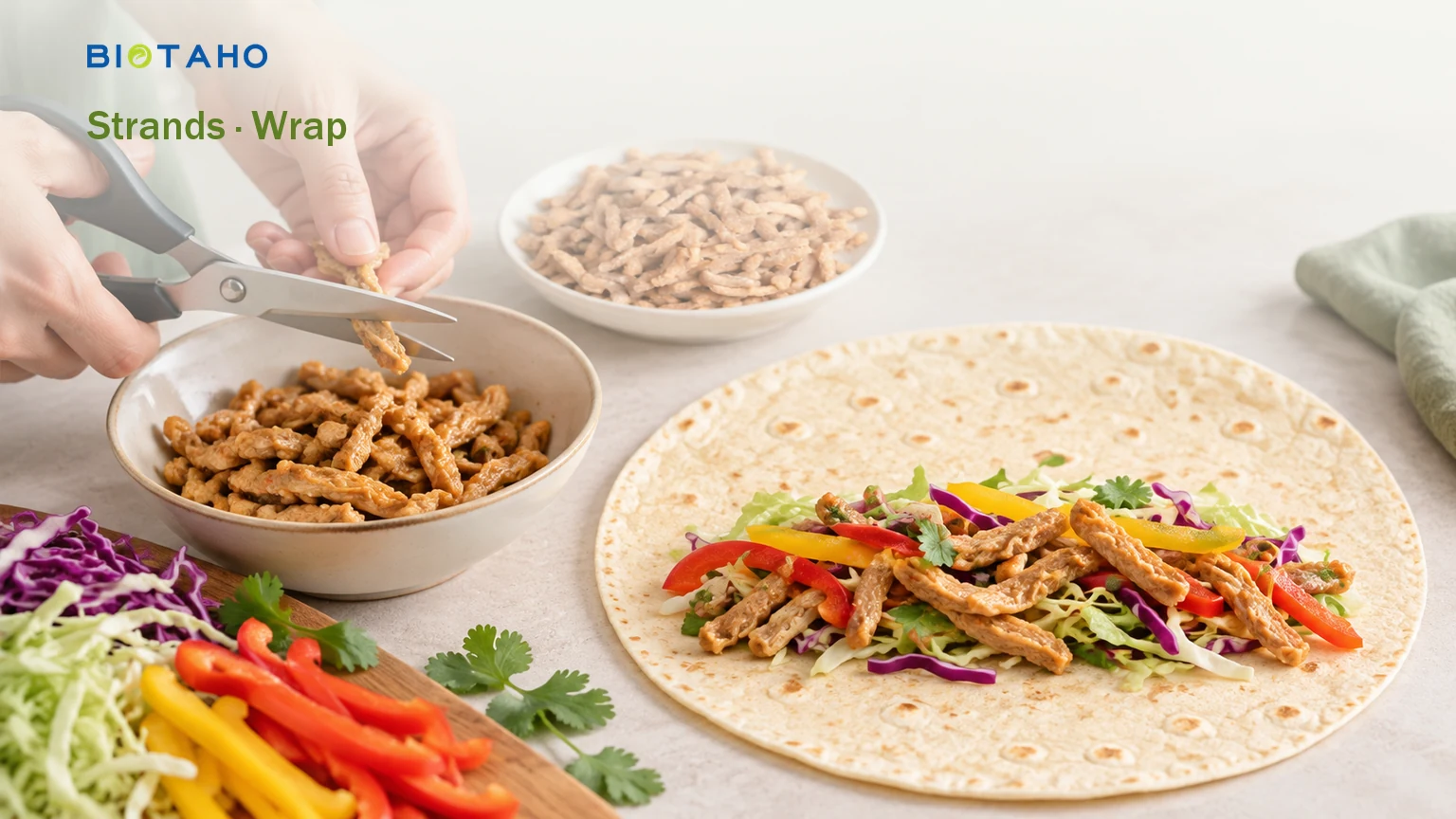
For a wrap, consider fibrous soy protein strands for catering applications. These shredded ingredients need attention to length as well as moisture. After preparation, shorten pieces that bridge the wrap or pull neighbouring filling out when bitten. Place them along the wrap’s centre, leaving room at the sides for folding.
Both products combine soy ingredients with wheat ingredients, including wheat gluten; they are not pure soy isolates or gluten-free choices. Check the current ingredient and allergen information before choosing bread, wraps or accompaniments, especially when cooking for someone with soy or wheat allergies.
| Lunch format | Ingredient choice | What to control |
|---|---|---|
| Sandwich | Granules for an evenly distributed crumble | Use a cohesive coating without free liquid; drain pickles separately. |
| Wrap | Strands for a fibrous bite, or granules for a finer filling | Shorten long strands and keep filling clear of the folding edges. |
| Grain bowl | Granules for distribution or strands for distinct pieces | Let the grains catch a little sauce without leaving liquid beneath the filling. |
| Cold noodle box | Strands to mix through noodles | Check length and chilled chew; keep dressing separate. |
Prepare a filling that stays moist without soaking the bread
Once the format is chosen, allow for preparation before starting the pan work. Baichuan gives hydration windows of 40–55 minutes for these granules and 60–65 minutes for these strands. These are preparation lead times, separate from cooking the vegetables and finishing the filling; use current product directions for water quantity, temperature and any required cooking. This recipe is a starting point, and results with a particular grade need a recipe-specific trial.
The following soy granule filling makes about two lunch fillings, depending on the bread, grains and sides. Keep the coating moist enough to carry the seasoning, but reduce liquid that could migrate into bread.
- 60 g dry soy protein granules
- Water or vegetable stock, as directed for the chosen product
- 1 tablespoon olive or rapeseed oil
- 1 small onion, finely chopped
- 1 small pepper, finely diced
- 1 garlic clove, finely chopped
- 1 tablespoon tomato purée
- 1 teaspoon smoked paprika
- ½ teaspoon ground cumin
- 1–2 teaspoons lemon juice, to taste
- Salt and black pepper, to taste
- Prepare the granules according to the packet directions. Drain thoroughly if instructed, and check for even hydration with no hard, dry centres.
- Heat the oil in a frying pan over medium heat. Add the onion and pepper and cook, stirring, until softened. Add the garlic and stir until fragrant.
- Add the tomato purée, paprika and cumin. Stir to coat the vegetables, then add the prepared granules. Complete any cooking required by the product directions.
- Stir until the filling is evenly coated and no liquid pools when you draw a spoon across the pan. Keep it moist without allowing it to become dusty or scorch.
- Add lemon juice, salt and pepper to taste. Use immediately for a warm lunch, or refrigerate promptly in shallow containers for packing.
Draining and pan reduction serve different purposes. Draining removes excess preparation water where directed; finishing in the pan distributes the tomato coating and reduces loose liquid released by the vegetables. Do not keep frying simply to make every surface look dry, because a filling that starts excessively dry has little margin for chilling and reheating.
Build wraps and bowls around the same soy base
With the filling prepared, choose its destination before adding more sauce. For a grain bowl, divide it between two portions of cooked bulgur, couscous or another grain. Add roasted carrots and broccoli, then finish with a little lemon dressing at eating time. This format can accommodate a looser filling because the grain catches the juices.
For a sandwich, spread hummus thinly over the bread and add the drier crumble, crisp lettuce and drained pickled cucumber. Keep the filling separate if the sandwich would otherwise sit assembled for a long time. Cheese is optional for a vegetarian version that includes dairy.
For a wrap, combine the crumble with shredded cabbage and grated carrot, reserving the dressing until folding. To explore soy protein strands instead, prepare them according to their directions and cook with the same vegetable-and-spice combination, adjusting the coating to their surface area. Check strand length before filling the wrap; a well-coated strip still needs to fit comfortably within the folded bread.
These vegan lunch ideas remain plant-based when the bread, stock, hummus and dressing contain no animal-derived ingredients. Dairy yoghurt or cheese can suit a vegetarian lunch, while hummus or unsweetened plant-based yoghurt can provide a creamy vegan finish. Check sesame in hummus or tahini-based dressings as well as soy and wheat in the main filling.
Keep dressing separate until the lunch is assembled
The finished filling now needs packaging that preserves the moisture balance achieved in the pan. Put wet sauce in a leakproof pot, crunchy vegetables in a separate compartment and bread away from the filling. At lunchtime, add only enough dressing to coat the portion being eaten. A bowl may accept more than a wrap, while a sandwich needs particular restraint.
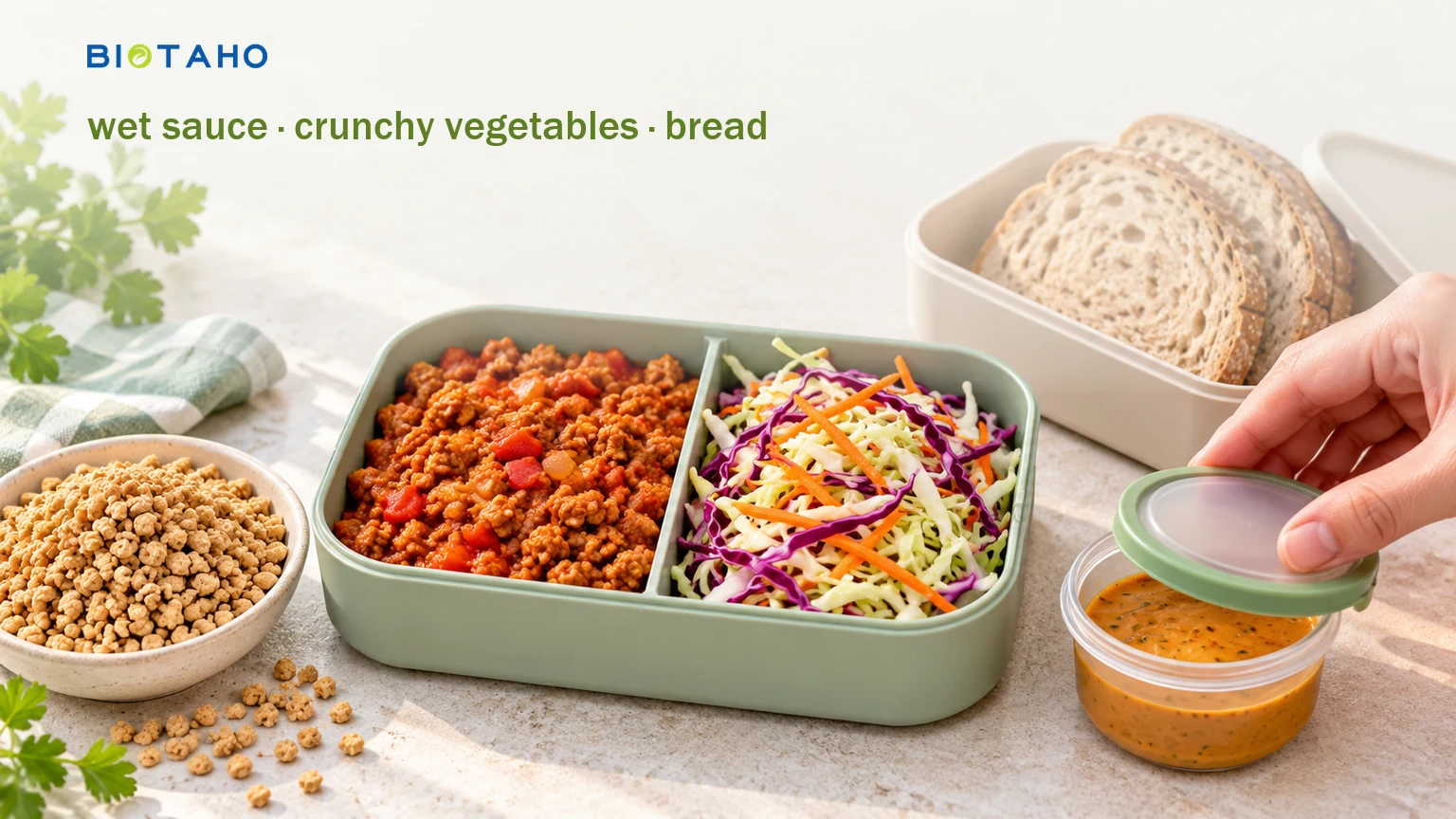
Separate packing also makes adjustment easier. If the chilled crumble already feels moist, use less dressing. If reheating has dried the edges, a little sauce can restore the coating without soaking the whole lunch. Keep raw leaves and crisp toppings out of the reheating container and add them afterwards.
For food safety, refrigerate perishable components promptly at 40°F or below, within two hours of preparation, or within one hour when the outside temperature exceeds 90°F. Use shallow containers for quicker cooling and keep lunch chilled during transport and until eating. Reheat leftovers to 165°F, checked with a food thermometer; in a microwave, cover, stir and rotate for even heating, then allow standing time before checking. Texture and appearance do not establish safety.
Check the filling at the temperature it will be eaten
Once the components have been packed and stored, judge the filling under its actual serving conditions. A warm spoonful from the pan cannot tell you whether chilled strands will be comfortable to bite or whether reheated crumbles will need more moisture. For a cold lunch, taste the properly stored filling chilled; for a hot bowl, assess it after safe reheating before adding the crisp toppings.
| Observation at eating time | Adjustment |
|---|---|
| Liquid collects beneath the filling | Reduce free liquid more carefully during the next preparation and keep dressing separate. |
| Crumbles feel dry after reheating | Add a small splash of water or sauce before covered reheating. |
| Strands are awkward to bite through | Review preparation directions and shorten pieces before packing the next portion. |
| Bread softens during storage | Carry filling separately and assemble closer to eating. |
| Vegetables lose their crunch | Keep raw cabbage, carrots and leaves separate until after reheating. |
For development work, compare freshly cooked, chilled and reheated portions under consistent conditions. Record free liquid, strand length, chew, coating and bread softening, then change one factor at a time. That gives a useful basis for selecting textured soy protein for the actual packed lunch, not just for its appearance in the pan.
Domande frequenti
What are 10 good lunch foods for vegetarians?
Using this base, options include a crumble sandwich, cabbage wrap, carrot wrap, hummus pitta, grain bowl, roasted-vegetable bowl, cold noodle box, strand-and-lettuce wrap, cheese-and-crumble sandwich, or yoghurt-dressed soy bowl. Choose according to storage and serving conditions; omit dairy or use plant-based alternatives for vegan versions.
What to eat for lunch that doesn’t have meat?
Build a wrap, sandwich or bowl around the prepared soy filling, vegetables and bread or grains. Choose granules for small, distributed bites or shortened strands for a fibrous filling.
What are some healthy vegetarian lunch ideas?
Pair the filling with wholegrain bread or grains and varied vegetables, and consider salt in stock and dressing. The NHS places plant proteins within a varied diet; one soy-filled lunch does not cover every nutritional need.
How to get 40g protein at lunch?
Add up protein from the actual ingredient labels and divide by the portions made. Do not apply a dry-product value to hydrated weight, which includes absorbed water. No product-specific protein data are supplied here, and 40 g is not a universal lunch requirement.
What to make for a lazy lunch?
Use a chilled, properly stored portion of prepared crumble with bread, hummus and bagged salad. Dry TVP still needs its required preparation before use.
What is a quick and easy vegetarian lunch?
Pack prepared soy filling, shredded vegetables and a wrap separately, with dressing in a small pot. Keep the components chilled and fold the wrap when ready to eat.
Referenze
- NHS: The vegan diet — varied vegan eating and nutrients requiring attention.
- Harvard Nutrition Source: Protein — individual protein needs and the wider nutritional context of protein foods.
- FDA: Safe Food Handling — chilling, transport considerations and reheating leftovers.
- FDA: Food Allergies — major allergens and ingredient-label checks.
To trial an ingredient for packed lunches, contact Baichuan about granule or strand samples, specifying the lunch format and whether it will be eaten cold or reheated.