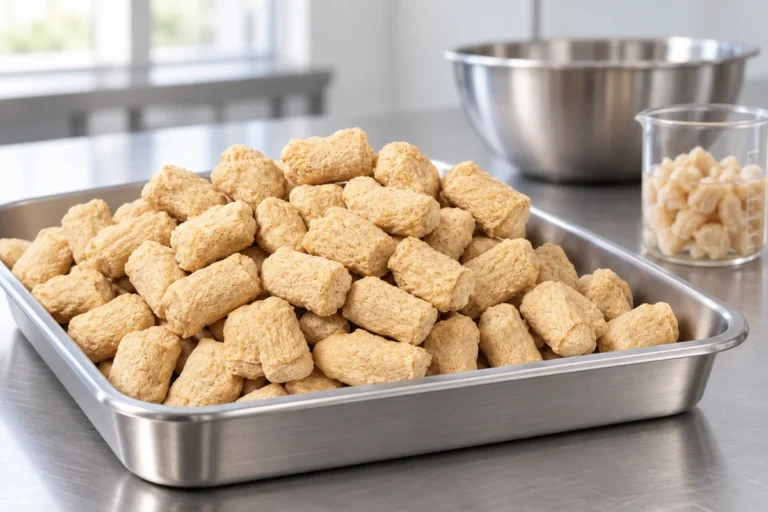
In London, a category buyer at a national grocery chain flagged what looked like a contradiction in her quarterly review. Plant-based SKUs on her shelves had nearly doubled year over year, yet average retail price per unit in the meat-alternative set had fallen 11% — and supplier margin submissions showed improvement, not erosion. Her assumption had been that the category was being bought with promotional money and would collapse when the subsidy stopped. She commissioned a supply-side teardown, and the paradox resolved in three weeks: scaled textured protein extrusion capacity in China had reduced the key ingredient cost enough that brands could cut shelf price and still improve gross margin. The category was not being propped up; it was becoming structurally cheaper to produce. Market dynamics, not marketing, explain the shelf shift. For sourcing strategy, our TVP manufacturer China overview is the practical companion.
Growth Drivers: Three Forces That Compound
The first driver is demand-side. Flexitarian eating — not veganism — is the volume engine. Surveys across Western Europe and North America consistently show 30–40% of consumers actively reducing meat consumption without eliminating it, which favours hybrid and substitution products where textured protein is the cheapest route to a credible result.
The second is cost-side. Animal protein prices have shown structural volatility from feed costs, disease events including avian influenza and African swine fever, and periodic export restrictions. Every upward swing creates a reformulation trigger inside food manufacturers, and reformulations, once validated through a quality system, rarely reverse when meat prices soften — the substitution becomes permanent.
The third is supply-side and the least discussed. Installed extrusion capacity in China expanded significantly through the 2010s and 2020s, driven initially by domestic demand and then by export. Scale drove down cost per kilogram of protein, which fed back into the demand equation by making plant-based products price-competitive at shelf rather than premium-priced.
| Driver | Mechanism | Effect on Market | Direction |
|---|---|---|---|
| Flexitarian demand | Meat reduction without elimination | More SKUs, higher volume per SKU | Sustained growth |
| Meat price volatility | Feed cost, disease, export bans | Reformulation triggers, sticky substitution | Episodic, ratcheting |
| China capacity scale | Extrusion buildout, competition | Lower $/kg protein delivered | Structural deflation |
| Fibrous segment | Eating quality as differentiator | Premium tier, higher margin | Fastest growth |
| Regulatory / ESG | Scope 3 targets, CSRD reporting | Corporate-mandated substitution | Accelerating |
| Institutional feeding | Ambient stability, cost per portion | Large-volume tenders | Steady base load |
Regional Demand: Four Different Markets
Europe leads on premium and on compliance burden. Buyers there prioritise eating quality, clean-label positioning and documentation depth — IFS certification is effectively mandatory for retail private label, and ISO 14001 plus ISO 45001 increasingly appear in supplier questionnaires because of CSRD-driven reporting. Price sensitivity exists but sits below specification compliance in the decision hierarchy.
North America is bifurcated. The branded meat-alternative segment went through a well-publicised correction, while the quieter volume story — meat extension in industrial patties, foodservice mince, and protein fortification in ready meals — has grown steadily and with better economics. Buyers here are the most cost-analytical and most likely to model landed cost per kilogram of protein.
Asia grows on cost-led adoption and on culinary familiarity: soy protein is not an unfamiliar novelty but a traditional ingredient category, which shortens consumer acceptance timelines dramatically. The GCC and broader Muslim-majority markets represent one of the strongest growth vectors, gated almost entirely on certification. HALAL certification, and specifically MUI Halal for Indonesia, is a market-access requirement rather than a marketing asset — see Baichuan docs for the documentation set that unlocks these flows.
The Fibrous Shift: Where Margin Is Moving
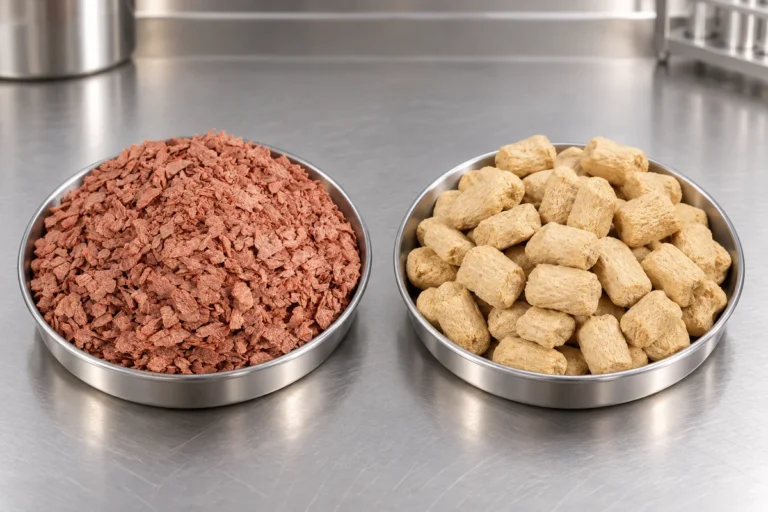
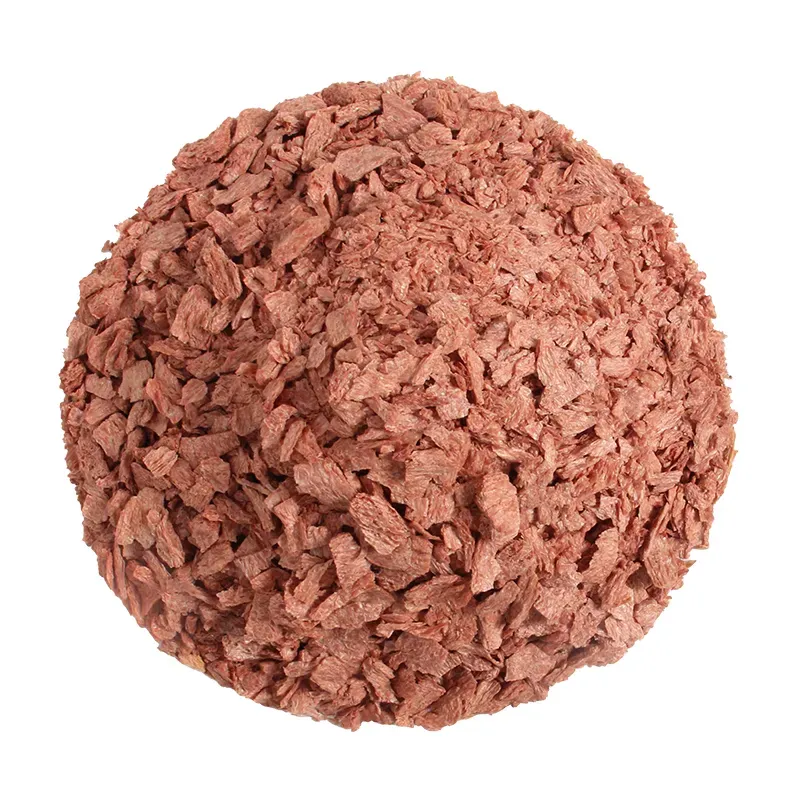
As price parity is approached in commodity applications, eating quality becomes the differentiator, and fibrous soy protein is the fastest-growing tier. Standard TVP serves mince and filling applications extremely well but cannot deliver the anisotropic, pull-apart bite that whole-cut analogues require. Fibrous grades, produced via long cooling dies with tight thermal gradient control, can.
The supply picture for fibrous is materially different from standard TVP. Far fewer lines run it reliably, capital intensity is higher, and process tolerance is narrower, which means the segment behaves less like a commodity and more like a specialty ingredient market — with longer qualification cycles, stickier supplier relationships and defensible pricing. For buyers, this argues for qualifying fibrous suppliers earlier than immediate volume needs would suggest. This is where benefits meet premium texture.
Supply Chain Structure and Risk
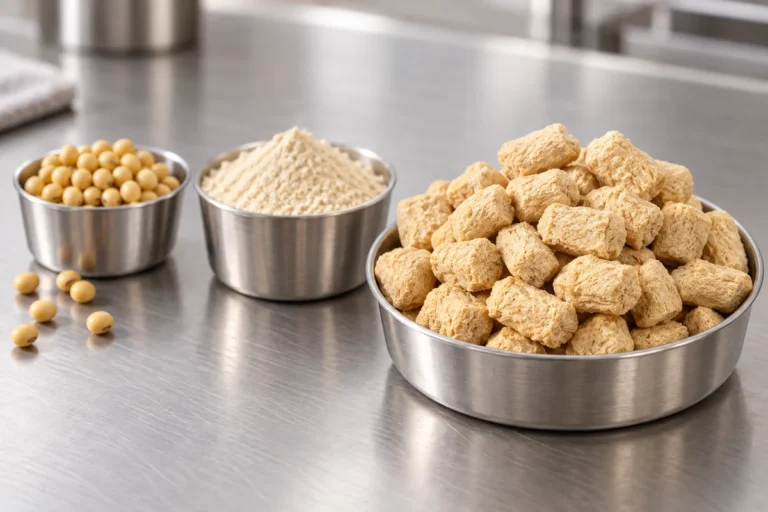
The chain runs soybean → crushing and defatting → soy flour → extrusion → drying and packing → export → hydration at the customer. Risk concentrates at two points. Upstream, soybean price and non-GMO segregation drive raw material cost and availability; non-GMO certified flour commands a premium and has thinner supply. Downstream, freight cost and lead time govern landed economics — ocean freight rate spikes can move delivered cost more than the ingredient price itself does in a given quarter.
Prudent buyers now do three things they largely did not do five years ago: dual-source across at least two qualified plants, hold 8–12 weeks of safety stock given the 12–24 month ambient shelf life makes inventory cheap to carry, and write specifications tightly enough that a second source can be qualified against the same document. The pricing guide works through landed-cost modelling.
What Could Change the Trajectory
Three variables could reshape the outlook. A sustained collapse in animal protein prices would slow new reformulation starts, though it would not reverse those already validated through quality systems. A tightening of non-GMO or deforestation-linked soy regulation — the EU Deforestation Regulation is the clearest example — would raise compliance cost and favour suppliers who already hold traceable, documented supply chains. And continued capacity investment in fibrous lines outside China would erode the current concentration, giving buyers more geographic redundancy but also compressing the premium the segment currently earns.
Positioning as a Buyer in This Market
The market rewards buyers who separate ingredient specification from supplier relationship. Write a specification that states protein by AOAC 992.23, moisture at 8–10%, particle size distribution, rehydration ratio with tolerance, and required certifications — HACCP, ISO 9001, ISO 22000 as baseline, plus HALAL, MUI Halal or IFS by destination market. Then qualify two or three suppliers against it rather than negotiating bespoke terms with one.
Baichuan manufactures both standard textured soy protein and fibrous soy protein in China under these systems, and publishes specifications so they can be compared line by line against alternatives. That comparability, more than any single supplier claim, is what protects a buyer as this market continues to scale.
FAQ
Why is TVP getting cheaper?
Scaled Chinese extrusion capacity and competition among plants lowered cost per kilogram of protein, while soybean supply remained deep and liquid. The deflation is structural rather than promotional, which is why shelf prices held down even as volumes rose. See the market drivers table above.
What is a textured protein?
Textured protein is a plant-based protein ingredient that has been processed into a fibrous or meat-like texture. It is commonly made from soy, pea, or wheat protein and is used in plant-based meat, ready meals, snacks, and vegetarian food products.
Is the plant-based food market growing?
Yes. The plant-based food market is growing as consumers look for healthier, more sustainable, and animal-free protein options. Growth is especially strong in plant-based meat, dairy alternatives, and high-protein convenience foods.
Is TVP processed?
Yes. TVP, or textured vegetable protein, is processed. It is usually made by extracting protein from soy or other plant sources, then using heat, pressure, and extrusion to create a textured, meat-like structure.
Where does textured vegetable protein come from?
Textured vegetable protein usually comes from defatted soy flour, soy protein concentrate, or other plant proteins such as pea, wheat, or fava bean protein. Soy-based TVP is the most common type in global food manufacturing.
How does TVP compare to tofu?
TVP is drier, more shelf-stable, and has a chewier, meat-like texture, while tofu is softer, higher in moisture, and usually refrigerated. TVP is often used in meat alternatives, fillings, and dry mixes; tofu is commonly used in fresh dishes, stir-fries, soups, and vegan meals.
References
- FAO — Protein supply, food outlook and livestock environmental briefs
- ISO 22000:2018 — Food safety management systems
- ISO 9001:2015 — Quality management systems
- AOAC 992.23 — Crude protein determination, combustion method
- Codex Alimentarius CAC/RCP 1-1969 — General Principles of Food Hygiene
Explore Baichuan: TVP & Fibrous Soy Protein Products · About Baichuan’s Manufacturing · Contact Us for Samples & Quotes