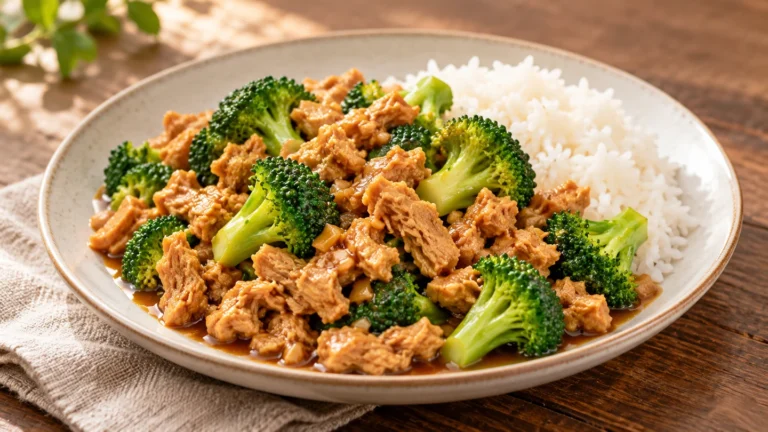
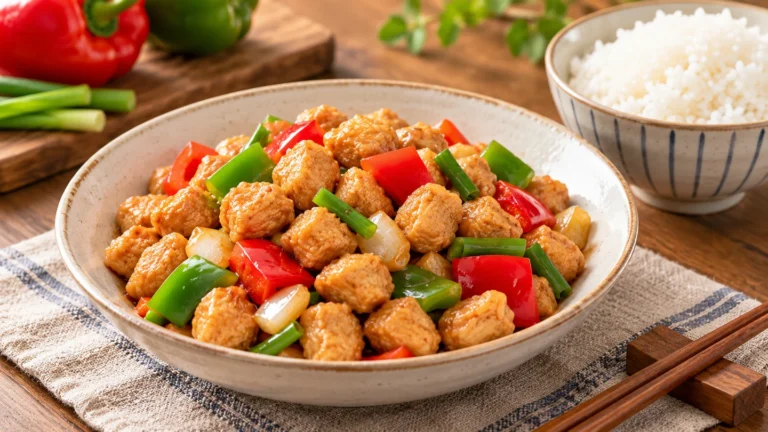
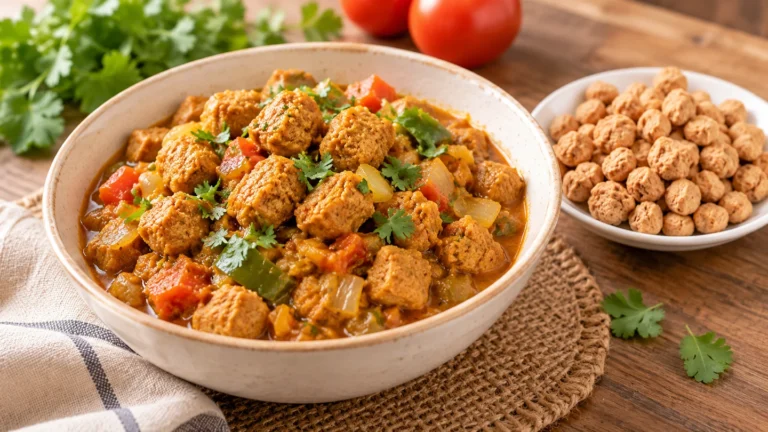
Tomatoes, beans and tender soy crumbles give this TVP chili recipe plenty of texture. Cumin, smoked paprika and chili seasoning add warmth, while a slow simmer thickens the sauce enough to coat each spoonful.
The batch below uses soy granules and canned beans, with amounts you can adjust to taste. Hydrate the granules separately so you can check their texture before adding them to the tomato sauce.
Choose granules for crumbles and beans for contrast
Textured soy protein granules work well here because the small pieces spread through the tomato sauce. Each spoonful can hold soy crumbles, beans and vegetables, without leaving a few large pieces surrounded by broth.
Black beans and kidney beans make a useful combination: they offer distinct shapes against the fine granules. Pinto beans are another option. Use cooked or canned beans for this recipe; the short simmer is intended to bring the chili together, not cook dried beans.
For a chunkier chili, soy protein chunks for larger bites are another option, but they need different preparation. Follow their hydration directions and check their tenderness separately.
Compare the texture of soy granules with the whole beans: the granules should still feel like small crumbles, while most beans stay intact. Neither needs to become crisp in a wet stew.
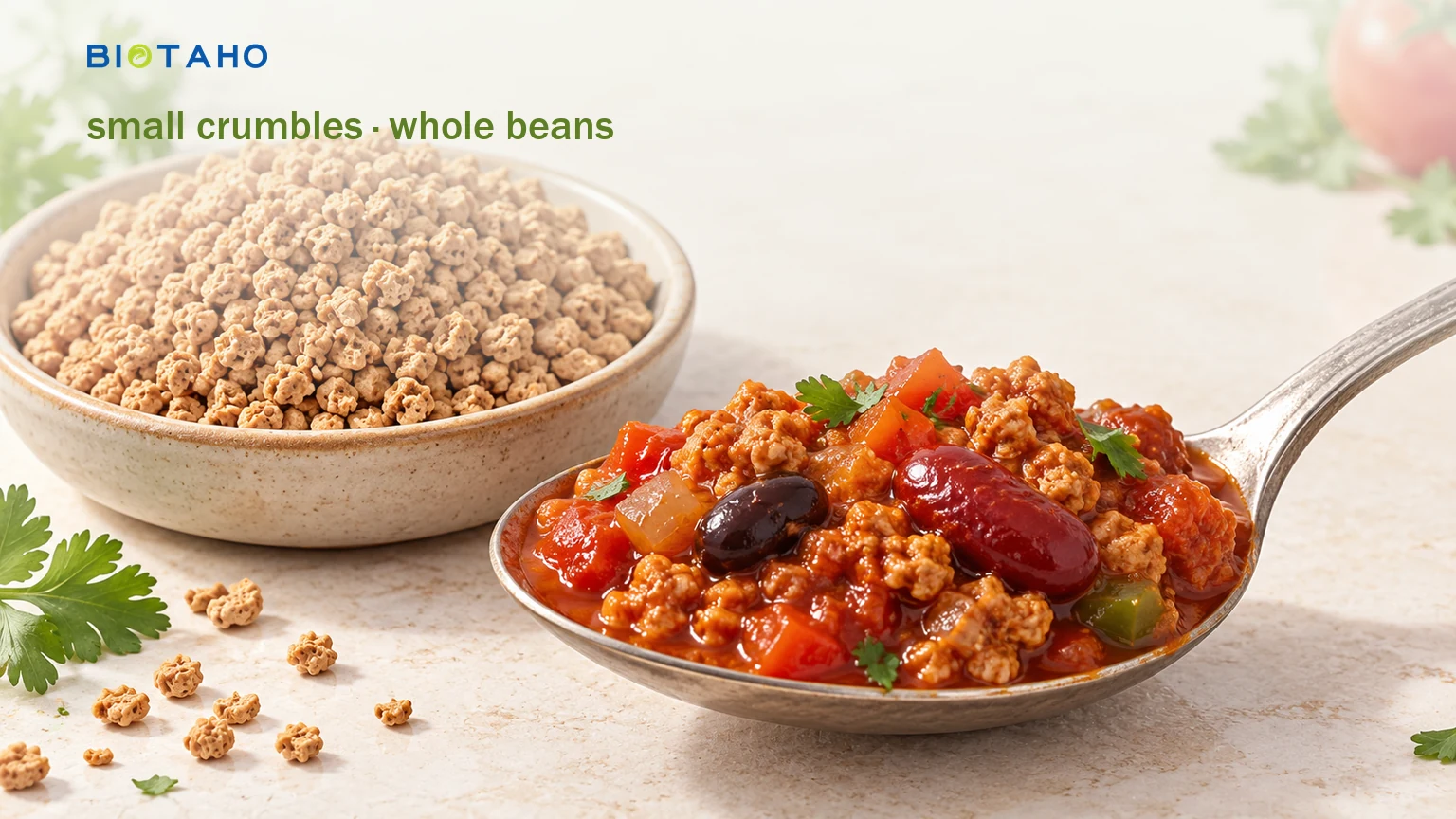
A starting batch of tomato and bean TVP chili
Use these amounts as a starting point for about four main-course portions, depending on sides. Before you begin, check your TVP packet for the hydration liquid, temperature, time and any required cooking. The amount of liquid needed varies by product.
Use a wide, heavy saucepan or casserole with room to stir. The broth listed for the sauce is separate from the liquid used to hydrate the TVP.
| Ingredient | Starting amount | Preparation or purpose |
|---|---|---|
| Dry TVP granules | 75 g | Hydrate according to the package |
| Hydration liquid | As directed on the TVP package | Water or suitable vegetable broth |
| Oil, onion and bell pepper | 1 tbsp oil; 1 medium onion; 1 bell pepper | Dice the vegetables |
| Garlic and tomato paste | 3 cloves; 2 tbsp | Mince the garlic |
| Seasonings | 2 tsp mild chili seasoning blend; 2 tsp ground cumin; 1 tsp smoked paprika | Use a blend, not the same amount of pure hot chile powder |
| Crushed tomatoes | 1 × 400 g can | Include the juice |
| Cooked beans | 2 × 400 g cans | Black and kidney beans, drained and rinsed |
| Vegetable broth for the sauce | 250 ml, plus more as needed | Add gradually |
| Soy sauce and optional cocoa | 2 tsp soy sauce; 1 tsp unsweetened cocoa | For savory depth and a restrained bitter note |
| Finishing ingredients | 1–2 tsp lime juice; salt to taste | Adjust after simmering |
- Hydrate the granules following their package directions. Taste a cooled piece to check the texture: it should not have a hard, dry center. If excess liquid remains, drain it as directed; don’t automatically add it all to the chili. For more preparation advice, see this guide to cooking and hydrating textured protein.
- Heat the oil over medium heat. Add the onion and bell pepper and cook for about 6–8 minutes, stirring, until the vegetables soften and the onion looks translucent. Add the garlic and cook for another minute without letting it scorch.
-
Stir in the tomato paste, chili seasoning, cumin and smoked paprika. Cook for 30–60 seconds, stirring continuously, until fragrant. Add a splash of the measured broth if the paste starts sticking.
-
Add the tomatoes, beans, prepared granules, remaining measured broth, soy sauce and optional cocoa. Stir thoroughly, bring to a gentle boil, then reduce to a steady simmer.
- Simmer partly covered for about 20 minutes, stirring along the bottom occasionally. Check the texture, then simmer uncovered for another 5–10 minutes if the sauce needs to thicken. Follow any additional cooking requirements on the TVP package.
- The chili is ready when the vegetables are tender, the granules have no dry center and the sauce coats the beans without leaving a watery pool around them. Stir in lime juice gradually, then taste for salt and heat. Use these texture cues alongside the product’s preparation instructions, not in place of them.
Adjust the sauce without losing the crumble texture
Check the thickness after adding the granules to the sauce. The amount of liquid left in the pot depends on the product and how you hydrate it. Add extra broth a little at a time, stirring before deciding whether you need more.
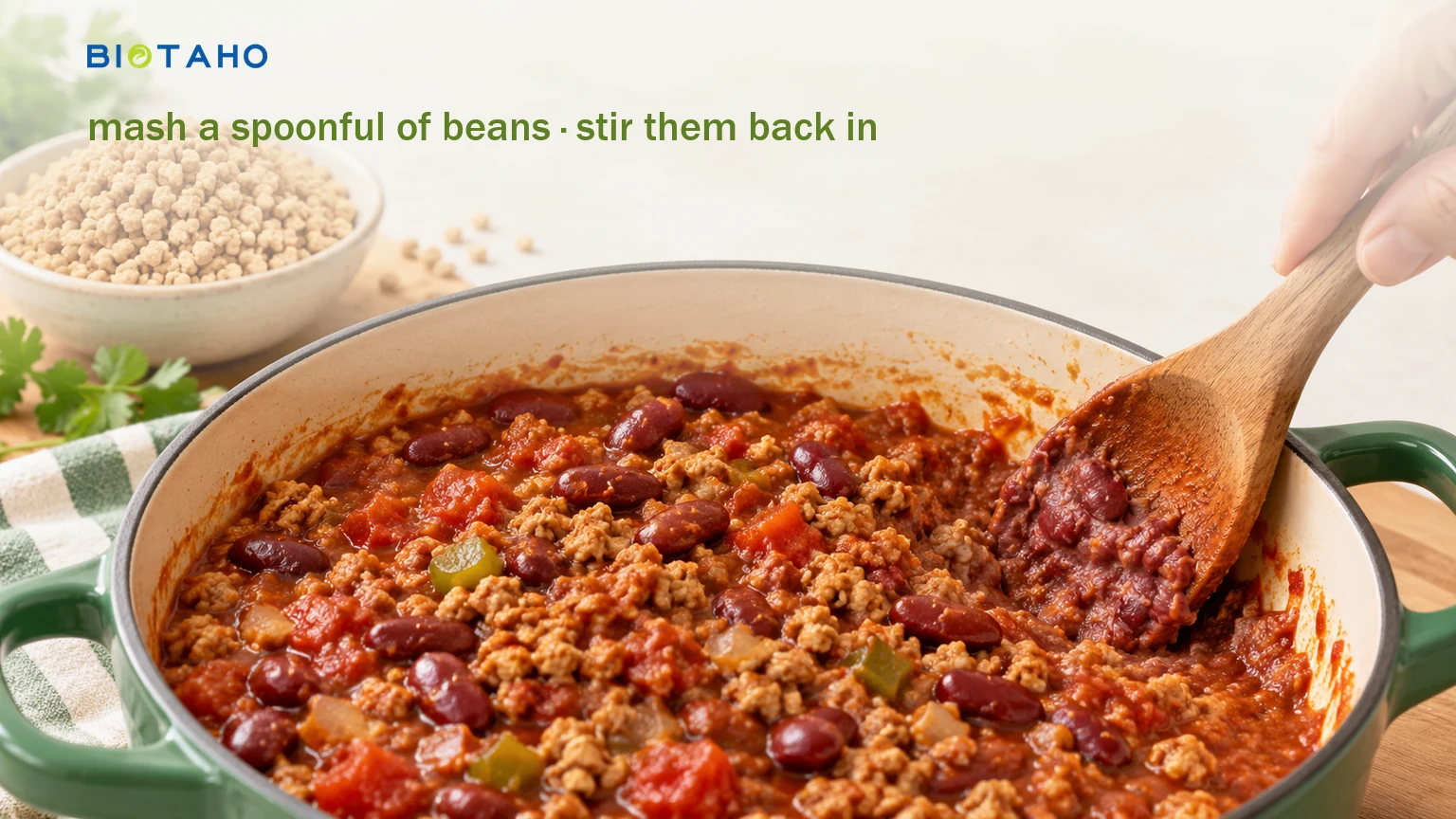
For thicker meatless bean chili, mash a spoonful of beans against the side of the pan and stir them back in. Nora Cooks also suggests mashing beans to thicken its vegan chili. That recipe uses tofu for its crumbles, so it doesn’t show how a particular TVP product will perform.
| What you notice | What to change now | What to note next time |
|---|---|---|
| Thin sauce around the solids | Simmer uncovered or mash some beans | Start with less sauce broth |
| Chili catches on the bottom | Lower the heat and stir in a little broth | Check more often as it thickens |
| Hard-centered granules | Add liquid and continue cooking as the package directs | Complete hydration before adding them |
| Crumbles lose definition | Stop unnecessary simmering and stir gently | Review hydration and total cooking time |
| Flavor seems flat | Taste for salt, then add lime juice gradually | Check broth and seasoning strength |
When making another batch, note the dry granule weight, hydration liquid, how well the granules were drained and any extra broth added. Compare spoonfuls after the same simmering time. This makes adjustments easier to judge than changing the granules, liquid and cooking time all at once.
Serve with rice or bread, and cool leftovers promptly
Spoon a looser chili over rice; keep it thicker for scooping with tortillas or serving beside cornbread. Finish with lime wedges, chopped cilantro, diced onion or a spoonful of unsweetened plant-based yogurt for contrast. Serve toppings separately so everyone can adjust their bowl.
Baichuan supplies textured soy protein in granules and other formats, not finished chili. If you’re choosing granules for a recipe or product, compare them in the same sauce and note how each needs to be prepared before deciding which works best for your use.
Soy is a major food allergen identified by the FDA. Check the TVP, broth, soy sauce and toppings for relevant allergens; a soy-based chili is not automatically gluten-free.
Following FDA guidance, refrigerate leftovers in shallow containers within two hours, or within one hour when the outside temperature exceeds 90°F. Keep the refrigerator at 40°F or below. Reheat leftovers to 165°F; bring the chili sauce to a boil while stirring for even heating.
If you’re developing a food product, contact Baichuan about a soy granule sample for chili applications and ask how the ingredient should be prepared.
Frequently asked questions
Is TVP good in chili?
Yes. Granules give you small crumbles throughout the sauce. Hydrate and cook them according to their directions, then adjust the sauce liquid to keep the chili spoonable.
What secret ingredient will deepen the flavor of your chili?
A little unsweetened cocoa can add a restrained bitter note alongside tomato and smoky seasoning. Start with the suggested teaspoon for this batch; too much can overpower the other flavors.
What to add to TVP to make it taste like meat?
Soy sauce, cooked onion, tomato paste and smoked paprika can give TVP a savory, roasted flavor. They won’t make it identical to meat, and seasoning can’t fix a hard center or an overly soft texture.
Can I make vegan chili with TVP?
Yes. Check that the TVP and vegetable broth have suitable ingredients, and use plant-based toppings in place of dairy cheese or sour cream.
What is the best high-protein chili recipe?
No single recipe is best for every appetite or dietary need. For a TVP-and-bean chili, calculate protein using the actual ingredient labels and the number of finished portions. Don’t use figures from another chili recipe.
What is the ratio of TVP to water?
Follow the ratio on your TVP packet; this recipe doesn’t set one ratio for every granule product. In your notes, record hydration liquid separately from sauce broth so you can track any adjustments.
Références
- Nora Cooks: Ultimate Vegan Chili — bean combinations, seasoning ideas and bean-mashing for thickness; its main recipe uses tofu crumbles.
- FDA: Safe Food Handling — prompt refrigeration, shallow-container cooling and reheating guidance.
- FDA: Food Allergies — major food allergens and the importance of reading ingredient labels.