A vegan hot pot is a shared meal of mushrooms, vegetables, tofu and soy pieces cooked in a bubbling broth. Start with a soup base you enjoy, then choose ingredients with different textures. The important check comes first: the broth and dipping sauces must be plant-based, since some mushroom or chili bases still contain animal fat, stock or seafood seasoning.
For a mild mushroom hot pot or a Sichuan-inspired version, prepare the dried soy protein before bringing it to the table. Arrange the other ingredients by cooking needs and add small portions at a time. Dense vegetables need a head start on tender leaves. Follow each ingredient’s directions instead of giving everything the same cooking time.
What should you check in a hot pot soup base?
Read the full list on a packaged soup base. Meat extracts, animal fats or seafood seasoning can appear even on products described as mushroom or chili broth. At a restaurant, ask what goes into the stock. If the menu says vegetarian hot pot, confirm that it also meets your requirements for a vegan meal.
As the background description of hot pot explains, diners cook ingredients in a shared broth at the table. That means the soup base affects everything added to it. A separate plate of vegetables is not enough if those vegetables will be cooked in animal-based stock.
| Part of the meal | What may be overlooked | Useful question |
|---|---|---|
| Packaged soup base | Tallow, meat stock or seafood seasoning | Is the full formulation plant-based? |
| Dipping sauce | Fish sauce, oyster sauce or shrimp ingredients | What is in the actual sauce served? |
| Dumplings and noodles | Egg, meat filling or animal-based seasoning | Are both wrapper and filling suitable? |
| Allergens | Soy, wheat, sesame and other ingredients | Which ingredients and cross-contact risks apply? |
How can you make a mild mushroom broth?
Mushroom-based vegetable stock with ginger and scallion is a mild starting point. Follow a measured broth recipe and taste before adding salty sauces. Keep extra plain hot broth nearby to top up the pot as it reduces. Prepare dried mushrooms according to their directions before serving.
A plant-based hot pot needs a broth that tastes good before any ingredients go in. Soy chunks add texture, but they will not supply all the seasoning. If using stock concentrate, follow its dilution instructions first and allow for salt from sauces. There is no single concentrate-to-water ratio that suits every product.
How should you prepare soy protein for hot pot?
Prepare dried chunks according to the packet unless it specifically allows direct cooking in broth. Check that the center has softened, then drain and cut oversized pieces if needed. Doing this before the meal makes table cooking simpler and limits how much broth the dry protein absorbs.
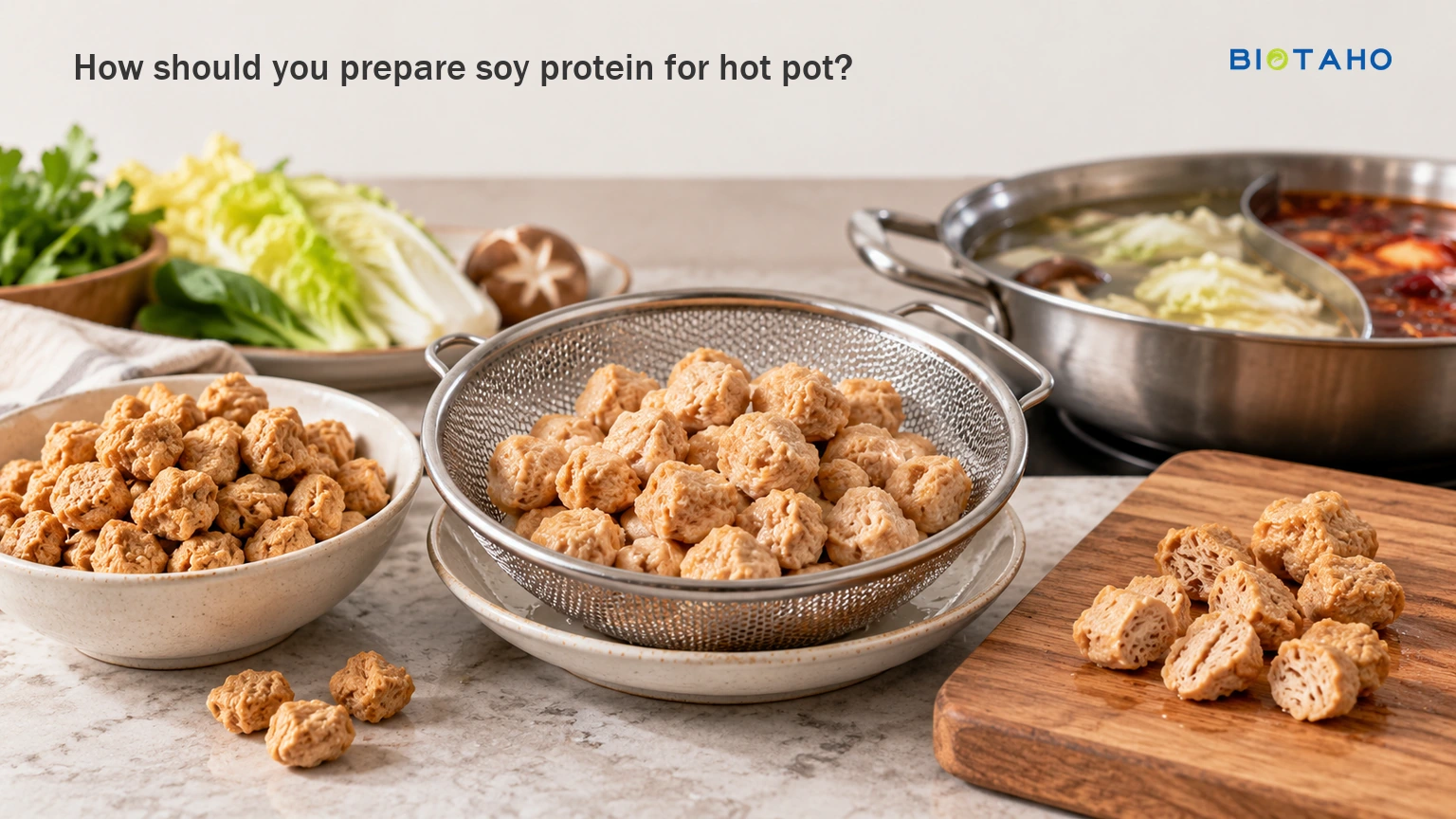
Uso soy protein chunks for distinct bites, or consider soy protein strands if you prefer a narrower shape. Try a few in your chosen broth to see how they hold up during the meal. A dry product photograph cannot tell you how the pieces will feel after a long simmer.
Which vegan hot pot ingredients work well together?
Choose a manageable selection of mushrooms, greens, root vegetables, tofu, prepared soy chunks and noodles. Cut pieces so they are easy to lift and eat. Keep quick-cooking leaves separate from ingredients that need longer, rather than putting everything on one mixed plate.
When choosing vegan hot pot ingredients, look for contrasting textures. Tofu, soy chunks and mushrooms already give several different bites. Noodles can make the broth starchier, so add them toward the end or cook them separately if their packet requires it.
What order should ingredients go into the pot?
| Ingredient group | Practical cooking approach | What to watch |
|---|---|---|
| Dense root vegetables | Start before quick-cooking leaves | Cut size and full tenderness |
| Mushrooms | Cook according to type and preparation directions | Do not assume every variety needs the same treatment |
| Prepared soy protein and tofu | Heat through without rough stirring | Piece integrity and broth absorption |
| Leafy greens | Add smaller portions later | Overcooking and crowding |
| Noodles | Follow the packet; cook separately if helpful | Broth thickening and clumping |
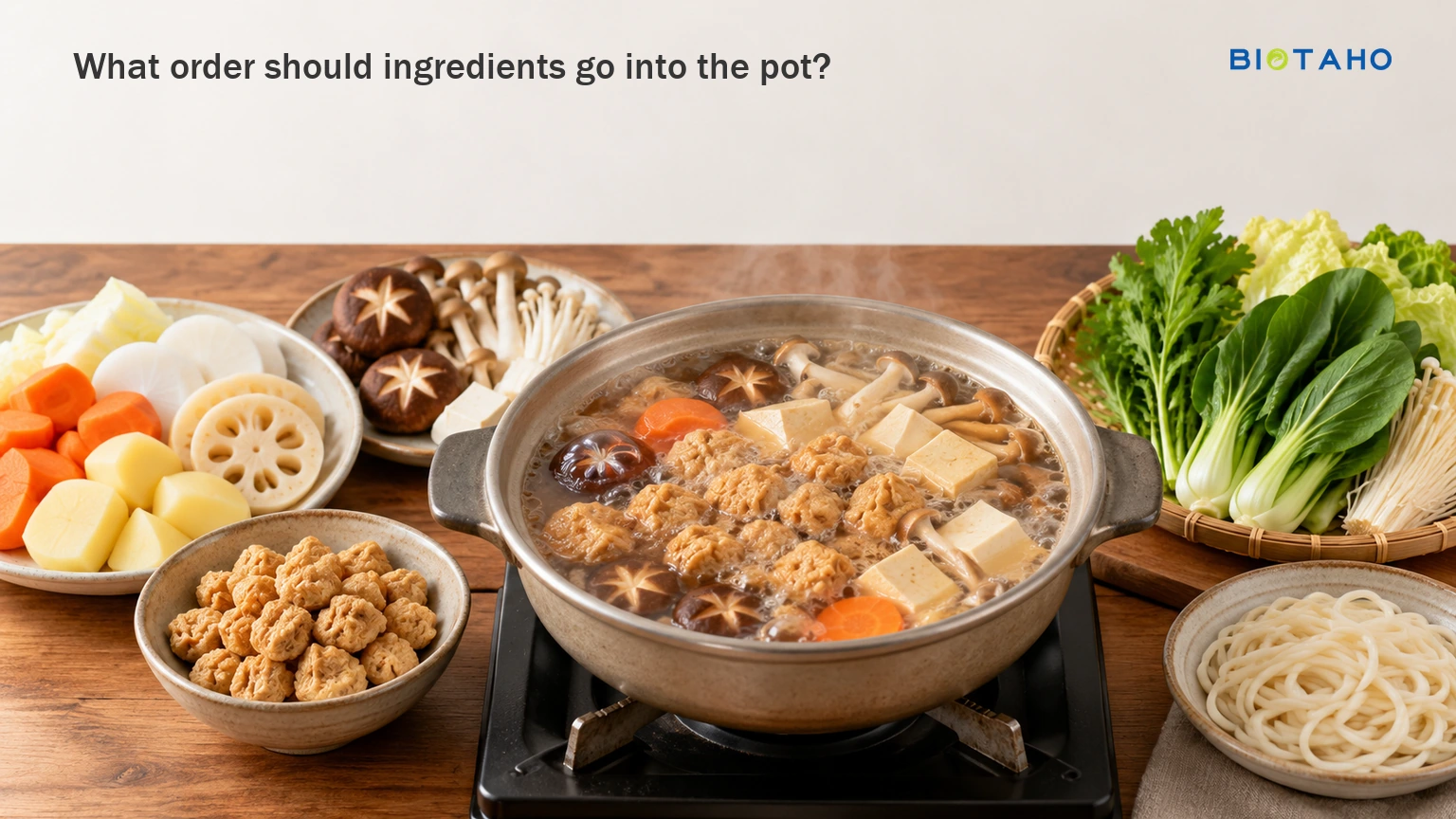
Add small portions and let the broth return to a simmer between additions. The table suggests an order, not fixed cooking times: ingredient type and cut size still matter. Follow the tabletop cooker’s instructions and keep cooking and serving utensils organized.
What changes for a vegan Sichuan hot pot?
For a vegan Sichuan hot pot, choose a plant-based base with chili and Sichuan pepper. Check commercial bases carefully, since some contain animal fat. You can make a spicy, meat-free hot pot, but heat alone tells you nothing about the ingredients in the stock.
Mao xue wang is a separate spicy dish, not another name for hot pot. A plant-based version may offer ideas for a spicy broth, but keep its name and method distinct when planning the meal.
What should you check in dipping sauces and leftovers?
Serve dipping sauces in separate bowls so diners can choose their salt, acidity and heat. Read the labels on soy sauce, sesame paste and prepared condiments. As the FDA’s allergen guidance explains, ingredients such as soy, sesame and wheat still matter in a vegan meal.
Once cooking stops, handle the broth and remaining food as leftovers rather than leaving the pot out all evening. Cool and store them promptly under appropriate food-safety guidance. Restaurants also need a clear procedure for service and leftovers.
What do diners ask about vegan hot pot?
Can hot pot be vegan?
Yes, if the broth, dipping sauces and all added ingredients are plant-based. Check stock and soup concentrates as well as visible food.
How to make a vegan hot pot?
Prepare a plant-based broth, arrange suitable ingredients separately and cook them in manageable portions according to their needs.
What is the base for a vegan hot pot soup?
Mushroom or vegetable broth is one option. A spicy version can use a confirmed plant-based chili base.
What to avoid at Hotpot?
For a vegan meal, avoid animal-based broth, meat fat, seafood sauces and unsuitable fillings. Also check individual allergens and shared-pot arrangements.
What are the best ingredients to put in a hotpot?
Pick a mix that suits the broth and the people eating: mushrooms, greens, tofu, prepared soy pieces and noodles offer different textures. You do not need every possible ingredient for a good hot pot.
How do I make my own hot pot broth?
Start with a measured vegetable or mushroom stock recipe, add aromatics and season gradually. Keep extra plain broth available for topping up.
What kind of broth does hot pot use?
Styles vary widely, including mild mushroom broths and spicy chili broths. The name alone does not confirm vegan suitability.
Do I need to boil soya chunks before cooking?
Follow the product directions. Prepare dried pieces before table service unless their instructions specifically allow direct use.
What should you prepare before everyone sits down?
Before sitting down, check the broth, prepare the soy pieces and sort the ingredients by cooking time. Keep extra broth within reach and add food in small batches. For restaurant use, Baichuan’s catering applications outline possible ingredient choices. Try the selected soy product in your broth and check the texture through the planned service period.