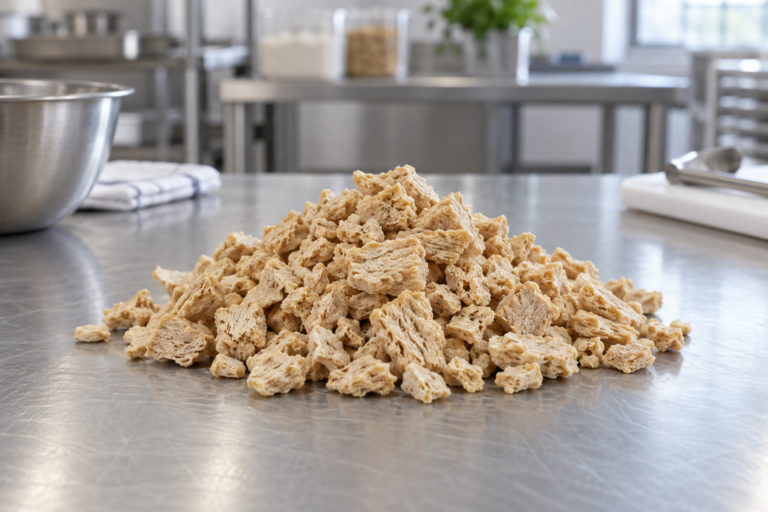
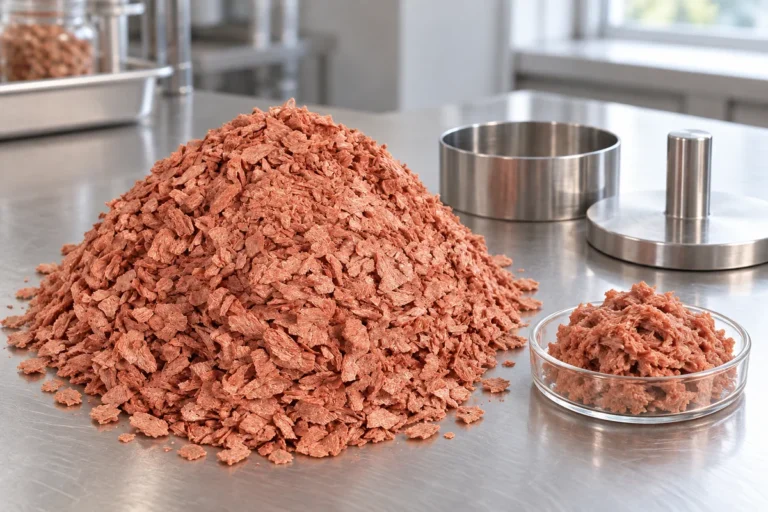
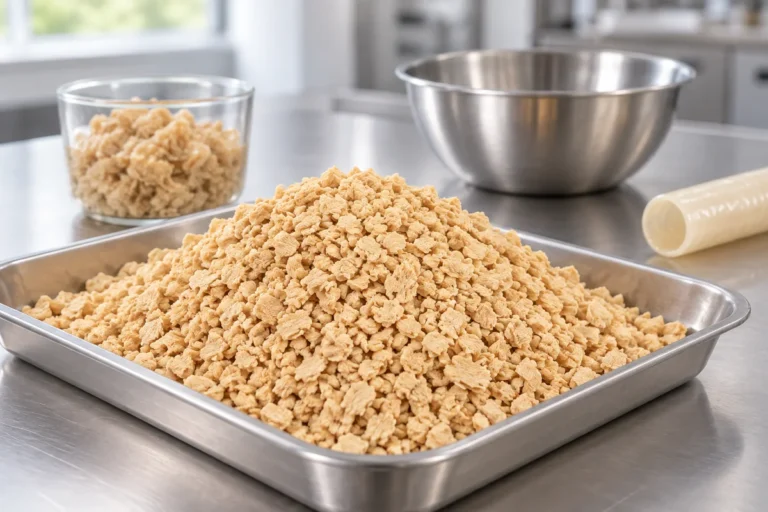
When a team screens textured soy protein crisps, the useful conversation starts with the finished product. What should the ingredient do? Which process will it pass through? What evidence does QA need before release? Answering those questions early makes the sample comparison more useful and prevents a category description from standing in for a real specification.
Resumen: The practical answer is to choose textured soy protein crisps for a defined job, then verify it in the intended process. The main checks are crisp geometry, moisture, coating, syrup or fat phase, water activity, packaging barrier and storage humidity. Textured soy protein crisps used as dry inclusions whose value depends on crunch, coating, moisture migration and packaging. A current specification and COA support the decision, but neither replaces a finished-food trial or a destination-market label review.
What Should Buyers Know About Textured Soy Protein Crisps?
In commercial food production, textured soy protein crisps is not one universal ingredient. The source, grade and physical format can change how it mixes, hydrates, cooks or contributes to the finished product. Start by writing down the job it must do: keeping the crisp texture appropriate for snacks, cereals, bars or coatings through mixing and storage.
The document review answers a separate question: what exactly is being purchased? Look for the ingredient statement, specification, storage guidance, allergen declaration and a representative COA. If the product carries an organic, non-GMO, gluten-free or nutrition claim, the supporting evidence must match the product, site, scope and market.
Which Factors Affect Crispness and Moisture Control?
Several variables can change the result: crisp geometry, moisture, coating, syrup or fat phase, water activity, packaging barrier and storage humidity. They do not act independently. Particle geometry, moisture, heat, salt, oil, starch, mixing energy and hold time can all move the finished texture or flavor in a different direction.
For a useful trial, record the lot, dry weight, liquid addition, temperature, contact time, mixing conditions and cooking route. Add yield, purge, texture and sensory notes where they matter. If a number will appear in a specification or label, record the test method and reporting basis as well.
Most avoidable costs appear after the sample has already been approved. Rework, extra water, slower mixing, packaging changes, cooking loss and a delayed label review can outweigh a small difference in the ingredient quote. Use the plant’s own yield and labor data when turning those risks into a cost comparison.
How Do Soy Crisp Options Compare?
The table below is meant to guide the next sample question. It is not a universal ranking. Each option may be useful, but for a different product job or process condition.
| Option or factor | What it contributes | What to verify | Typical decision use |
|---|---|---|---|
| Plain crisps | Direct crunch and protein inclusion | Moisture pickup | Confirm in the application trial |
| Coated crisps | Flavor and protection | Coating coverage and migration | Confirm in the application trial |
| Bar inclusion | Crunch in a dense matrix | Syrup or fat moisture balance | Confirm in the application trial |
| Cereal inclusion | Light bite and distribution | Packaging and shelf-life | Confirm in the application trial |
Compare the samples under the same recipe and process. The useful result is the one that still fits the finished-food brief after hydration, cooking and storage.
Which Applications Need Different Crisp Checks?
The same ingredient can need a different review depending on where it will be used. A formed product may need cohesion and cooking stability; a sauce may need controlled softening; a snack or bar may need moisture control; a bulk purchase needs dependable documents and delivery terms.
| Application or stage | Primary question | Evidence or trial action |
|---|---|---|
| Snack | Immediate crunch | Coating and storage |
| Protein bar | Crunch after binding | Moisture migration |
| Cereal | Crunch in milk or dry | Serving and pack barrier |
| Topping | Surface texture | Application and hold |
Keep the recipe steady while changing one ingredient variable at a time. Check the dry material, the hydrated material and the finished food so the cause of any difference is clear.
Once the application is clear, the relevant BCTVP product, quality and application pages can help narrow the next sample request.
What Packaging and Storage Rules Apply?
Compliance starts with the market where the finished food will be sold. For U.S. sales, 21 CFR Part 101 is a starting point for ingredient declaration and food labeling. FDA allergen guidance matters when soy, wheat or another major allergen is involved. Codex can be a useful international reference, but it does not replace the law in the destination market. ISO 22000 describes a food-safety management system; it does not guarantee a particular texture, flavor or nutrition result.
Keep the paperwork in separate files: the product specification, the lot COA, the allergen and traceability record, and any certificate used for a system or claim. Check the product identity, site, scope, validity and test method. A logo without that information is not enough for a purchase or label decision.
How Should a Buyer Approve Soy Protein Crisps?
- Set the desired crunch window and storage condition.
- Test crispness after coating, mixing, packaging and intended shelf-life exposure.
- Confirm moisture and water-activity methods used in the supplier file.
- Choose packaging and process controls together with the crisp format.
Baichuan can be reviewed at the supplier-comparison stage. The public site gives buyers a starting point for product formats, applications and quality information; the proposed grade still needs its own specification, sample and commercial confirmation. That keeps the supplier discussion tied to the same evidence used for every other option.
Preguntas frecuentes
What are textured soy protein crisps used for?
In a commercial formula, textured soy protein crisps means textured soy protein crisps used as dry inclusions whose value depends on crunch, coating, moisture migration and packaging. Its value comes from how it supports keeping the crisp texture appropriate for snacks, cereals, bars or coatings through mixing and storage. The category name is only the starting point, so buyers should still confirm the source, grade and intended use.
How are textured soy protein crisps produced?
The process starts with a defined plant-protein source and uses controlled preparation, heat, moisture, pressure or shear, depending on the ingredient. Drying and cutting then give the material its final handling profile. The exact process and grade documents should come from the supplier, while the food manufacturer checks the result in the target recipe.
How can crisps stay crunchy after coating?
Request the specification, representative COA, allergen statement, traceability information and any certificate needed for the intended market or claim. Check the product name, manufacturing site, scope, validity and test methods. A general company certificate should not be assumed to cover every grade.
What particle size is best for snack applications?
For a commercial formulation, the answer depends on crisp geometry, moisture, coating, syrup or fat phase, water activity, packaging barrier and storage humidity. Confirm the grade and documents, then test textured soy protein crisps in the process where it will actually be used.
Can soy crisps be used in bars and cereals?
That depends on the source and on cross-contact controls at the manufacturing site. Textured soy protein crisps used as dry inclusions whose value depends on crunch, coating, moisture migration and packaging. Ask for the current allergen statement and traceability information, then review the finished label for the destination market before approval.
How should moisture and packaging be controlled?
Start with the finished-food requirement: keeping the crisp texture appropriate for snacks, cereals, bars or coatings through mixing and storage. Compare samples under fixed conditions, record the relevant process result, and ask for grade-specific documents. That sequence gives R&D, QA and purchasing the same evidence to review.
Referencias
- FAO/WHO Codex Alimentarius, Codex texts and general food standards
- U.S. eCFR, Title 21 Part 101: Food labeling
- U.S. Food and Drug Administration, Food allergies and labeling
- ISO 22000, food safety management systems
A sound approval sequence is straightforward: define the finished-food job, compare the relevant options under one process, verify the product-specific evidence and then confirm the commercial terms. The pilot and the market-specific label check are easy to skip when a sample looks right, but they are the checks that protect the launch. Buyers evaluating Baichuan can review the gama de productos y contact the BCTVP team for grade-specific documentation.