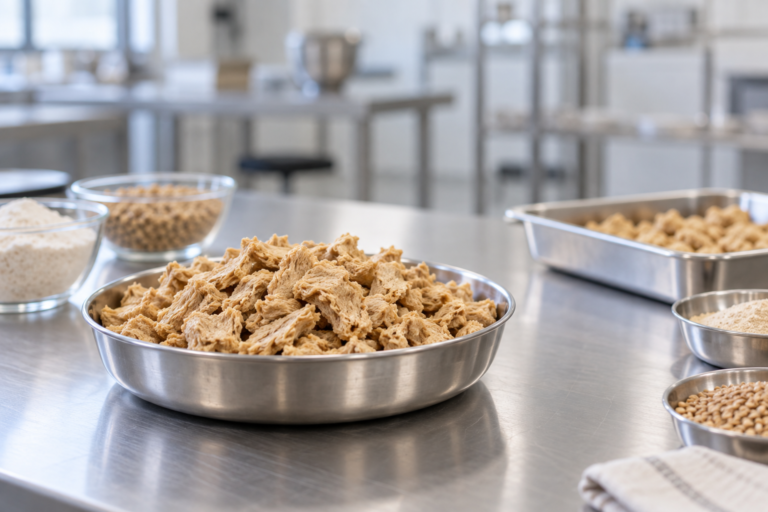
What Is Textured Wheat Protein? Uses and Gluten Facts
A practical B2B guide to what is textured wheat protein: applications, selection factors, testing, labeling, supplier documents and commercial checks.



A practical B2B guide to what is textured wheat protein: applications, selection factors, testing, labeling, supplier documents and commercial checks.
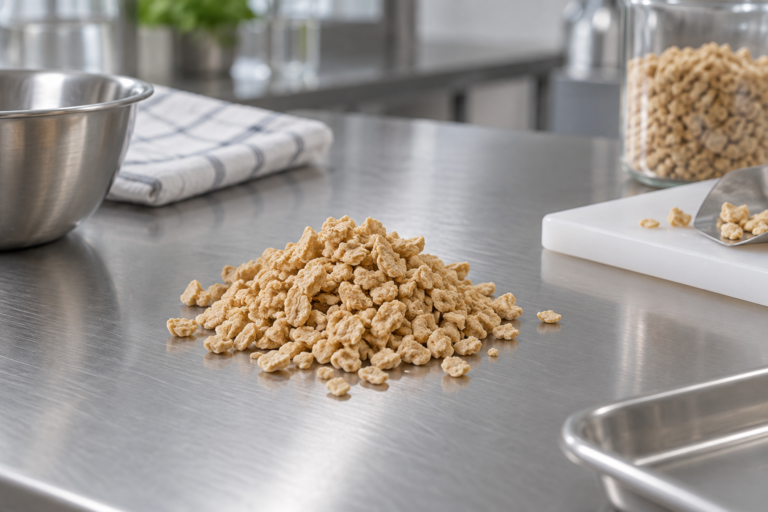
TVP nutrition changes per 100 grams when water and other ingredients are added. A labelled serving example explains protein, calories and prepared-weight comparisons.
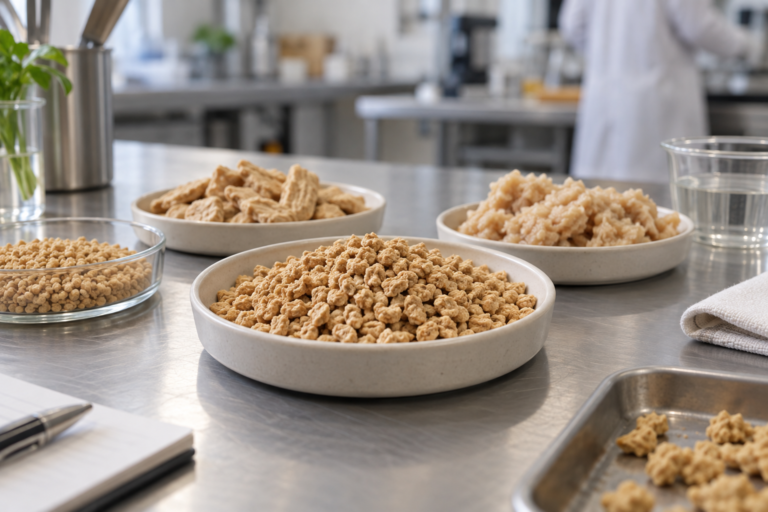
A practical B2B guide to tvp granules: applications, selection factors, testing, labeling, supplier documents and commercial checks.
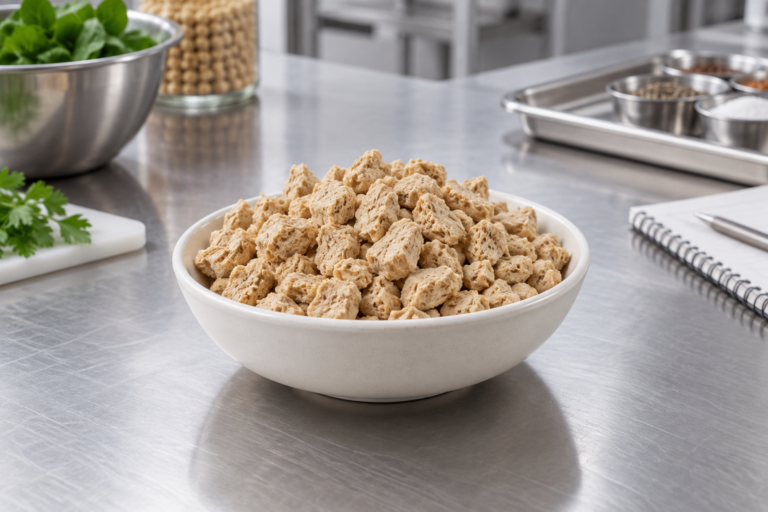
Textured vegetable protein nutrition changes with source, moisture and hydration. Learn how to compare protein and macros on the same basis before labeling a food.
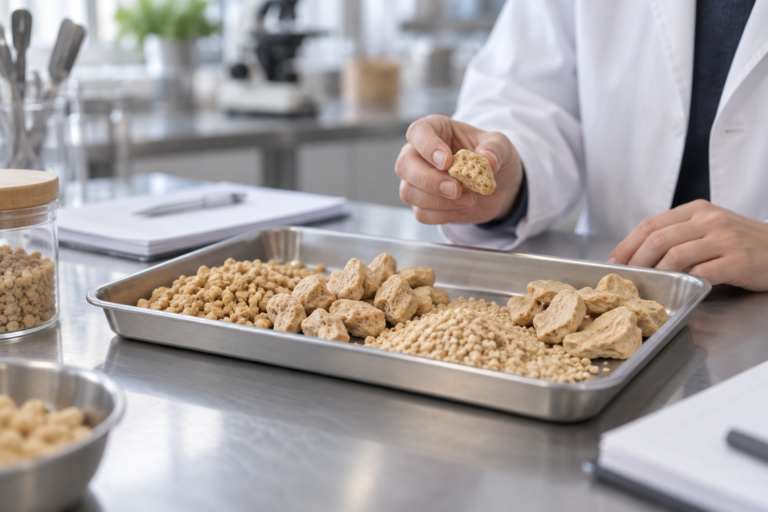
A textured soy protein supplier should offer the right grade, matching documents and clear supply terms. Sample trials connect those requirements to the finished food.
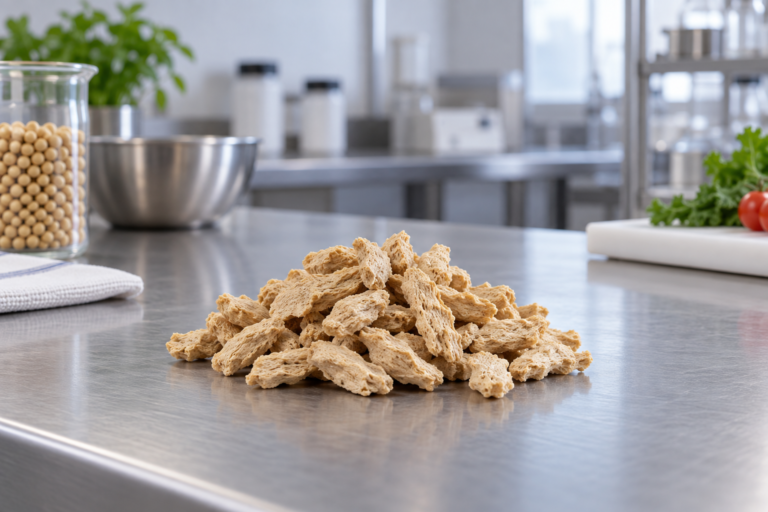
Soy protein food products range from fine granules for sauces and fillings to chunks for curry and stew. Each format needs preparation suited to the finished dish.
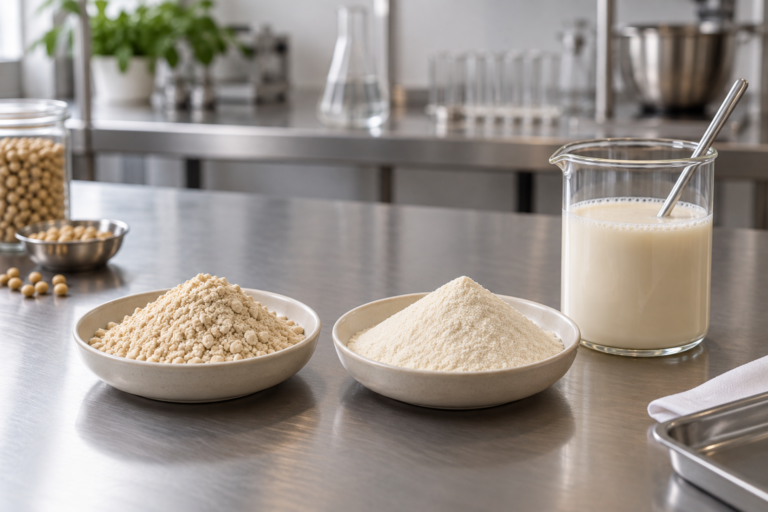
Soy protein isolate is defined by its protein concentration, while TVP describes structure. The distinction affects food use, recipe substitutions and label checks.
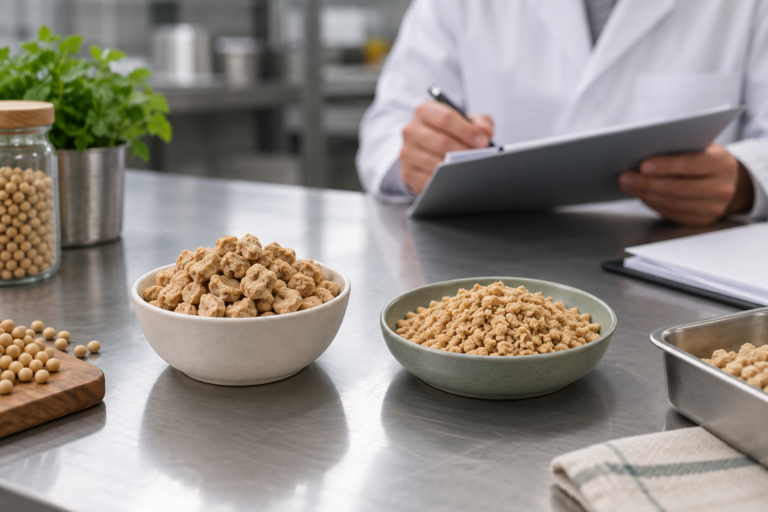
Organic soya chunks and non-GMO TVP require different evidence. Product identity, certification scope and traceable records determine whether a claim is supported.
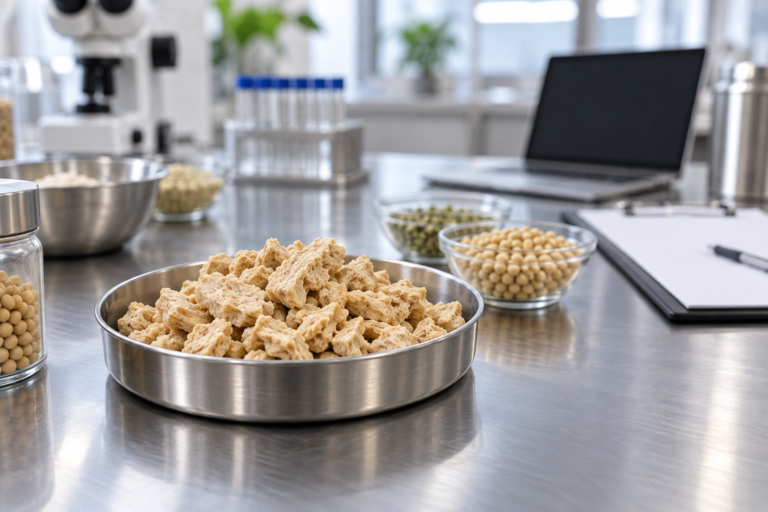
Textured vegetable protein can be soy-based or contain wheat. Gluten-free suitability depends on the exact ingredients, sauces, handling and supporting records.