Food developers rarely lose a meat analogue trial because the ingredient lacks a persuasive name. More often, the product has the wrong structure for the process: a hydrated piece collapses in cooking, a mince-style system feels pasty, or a strand format breaks when it is mixed and formed. These failures can lead to repeat trials, rework, inconsistent sensory results, and a late change to the ingredient specification. The practical question is therefore not whether an ingredient is “plant-based,” but how its protein matrix, geometry, hydration behavior, and interactions with water and fat create the bite required by the finished food. This guide explains those mechanisms and gives manufacturers a controlled way to compare formats without assuming that one ingredient suits every analogue application.
Summary: The short answer is that meat analogues create texture through a combination of structured plant protein, moisture, processing energy, and the final formula. Texturization can align or organize proteins into a porous matrix; hydration then softens and expands that structure, while mixing, forming, cooking, fat, starches, and binders determine how it is experienced at the point of eating. A manufacturer should define the target bite first, compare the appropriate format, and validate the result with a repeatable application trial, such as a controlled hydration record plus sensory or texture-profile assessment. The exact grade, formula, process, label, allergen position, and destination-market requirements still need product-specific verification.
What makes a meat analog feel firm, fibrous, or juicy?
A meat-like bite is not one measurable property. It is the combined perception of resistance, cohesiveness, moisture release, fracture, chew, and particle or fibre identity during eating. Different products may need different balances. A burger-style product may require a cohesive structure that can be formed and cut; a filled product may need a softer particulate bite; and a visible piece may need a defined exterior and interior rather than a uniform paste. The phrase plant based meat texture therefore describes a product-development target, not a single ingredient specification.
The starting ingredient contributes a physical structure, but it does not determine the finished texture on its own. Protein source and composition affect how the material responds to heat and water. Processing can create a more open or aligned matrix. Particle size and geometry affect how the ingredient distributes through the formula and how much of it remains perceptible after cooking. The final perception is then shaped by the surrounding system, including water, oil, starches, fibres, seasonings, and any binders that are legally and technically suitable for the target market.
That is why the same general protein category can produce a different bite in two applications. A format that performs well in a sauce may not hold its identity in a formed product, while a larger piece may provide visible structure but require more careful hydration and mixing. The correct comparison is between a defined ingredient, a defined process, and a defined finished-food requirement.
How does protein structuring create the base for meat analogue texture?
During protein texturization, heat, moisture, pressure, and shear can change how plant proteins are organized. In an extrusion-based process, the material is worked under controlled conditions and then shaped as it exits the equipment. The result can be a porous or oriented structure that absorbs water and gives the rehydrated ingredient something to resist against when it is compressed or chewed. The precise outcome depends on the raw material, process design, and grade, so a general description should not be treated as a fixed specification for every supplier.
In practical product development, this structure is the ingredient’s starting “architecture.” An open structure may take up liquid readily but can also lose integrity if it is overworked or exposed to a demanding cooking route. A denser or larger format may feel more substantial, but it can require additional time for liquid to reach the centre. An aligned or strand-like structure may support a fibrous impression, while granules may be more suitable when the finished product needs even distribution. These are screening hypotheses, not guaranteed results; the product developer still needs to test the selected grade in the intended formula.
Review literature describes meat analogues as multi-ingredient systems in which plant proteins, water, fats, hydrocolloids, starches, flavours, and other components can have complementary functions. The ingredient should therefore be evaluated as part of a process route rather than as a stand-alone promise. A useful trial records the dry format, hydration conditions, mixing sequence, forming step, cooking route, and the texture observed after the product reaches its intended serving condition.
| Texture input | What it can influence | What to observe in a controlled trial | Common selection mistake |
|---|---|---|---|
| Protein matrix | Resistance, cohesion, porosity, and the way the ingredient takes up liquid | Hydration uniformity, internal structure, breakage, and bite after cooking | Choosing by protein category alone without checking physical structure |
| Particle size and geometry | Distribution, visible piece identity, chew pattern, and process fit | Mixing, forming, filling, portion consistency, and shape retention | Assuming chunks, flakes, granules, steaks, and strands are interchangeable |
| Water and hydration | Softness, expansion, juiciness perception, and internal firmness | Liquid uptake, drained condition, mass change, and centre-to-surface consistency | Transferring a water ratio from another format or process |
| Formula and process | Cohesion, lubrication, cooking stability, and final sensory balance | Mixing stress, cooking loss, cut surface, chew, and post-cook integrity | Approving a dry or bench sample before testing the production sequence |
How do hydration and cooking change the bite after texturization?
Textured plant protein is often supplied in a dry state, so hydration is a transformation step rather than a minor preparation detail. Water must reach the structure consistently, and the rehydrated material must then be drained, seasoned, mixed, formed, or cooked according to the target product. If the outside hydrates faster than the centre, the finished bite can feel uneven. If the ingredient is exposed to excessive mechanical stress after hydration, the structure may break down before the product reaches the consumer.
Cooking can strengthen, soften, tighten, or disrupt the perceived structure depending on the whole formula and process. Heat changes water distribution and can alter the interactions among proteins, starches, fats, and binders. A product that feels acceptable immediately after hydration may not give the same result after frying, steaming, retorting, freezing, thawing, or reheating. For that reason, the trial should reproduce the commercial route as closely as practical rather than relying only on a spoon or hand test.
Developers should record conditions that materially affect comparison: ingredient mass, liquid addition, hydration time, temperature, drainage method, mixing energy, forming pressure, cooking method, and evaluation time. The record does not need to assume a universal target value. Its purpose is to make one sample comparable with another and to show whether a texture problem comes from the selected format, the formula, or the process.
How do fat, binders, and starches affect meat alternative texture?
Protein provides structure, but a convincing bite usually depends on the rest of the matrix. Water affects softness and juiciness perception; fat can contribute lubrication and a richer mouthfeel; starches and fibres can influence cohesion and water management; and binders may help a formed product hold together when their use is appropriate for the formula and market. These components do not simply “make the product meatier.” Their effect depends on concentration, sequence, heat exposure, and interaction with the selected protein format. A useful meat alternative texture brief makes those interactions explicit before trials begin.
A useful way to diagnose a texture problem is to separate structure from lubrication. A product can be cohesive yet dry, moist yet weak, or firm yet rubbery. If the product fractures too easily, the developer may need to review the format, water distribution, mixing, or binding system. If it feels dense or rubbery, the review should include matrix density, hydration, shear, forming, and cooking rather than automatically adding more liquid. A change to one component can shift several sensory properties at once, so the trial should keep the rest of the recipe controlled where possible.
These interactions also explain why supplier literature should be read together with an application brief. The relevant question is not simply “does this ingredient absorb water?” but “does it absorb and retain water at the right stage, survive the required handling, and deliver the intended bite after the final cooking and storage route?” Texture-profile analysis, cut-surface review, drained-mass records, and a defined sensory protocol can make those questions more actionable than an unstructured preference test.
Which meat analogue format should a product developer test first?
Format selection should follow the physical identity of the finished food. The starting point for a mince or filling is usually different from the starting point for a visible piece or a strand-like product. The objective is not to predict the final result from a catalogue label; it is to choose a logical sample that makes the first controlled comparison informative.
| Finished-food requirement | Formats to screen first | Questions for the development trial | Evidence needed before scale-up |
|---|---|---|---|
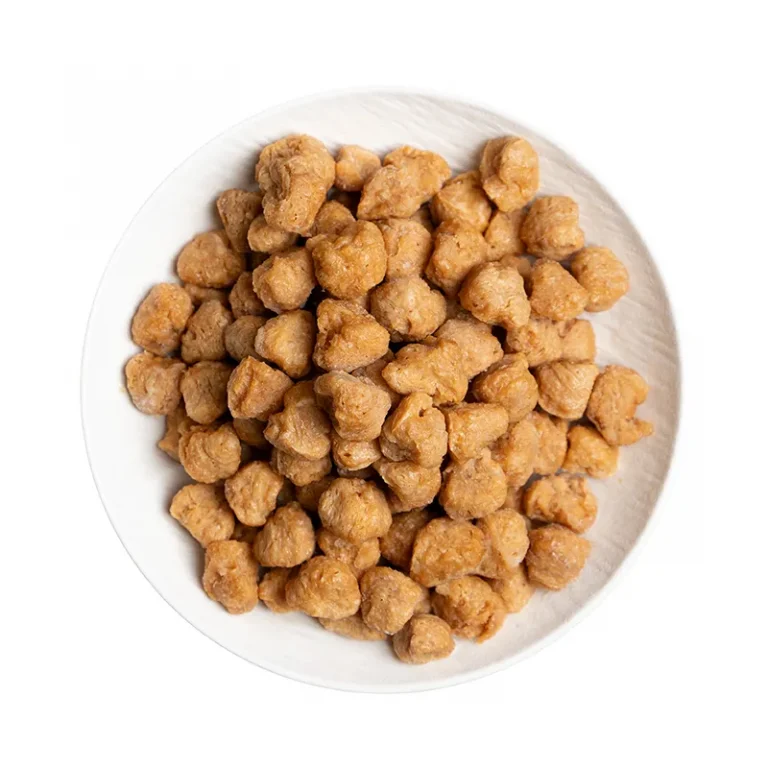
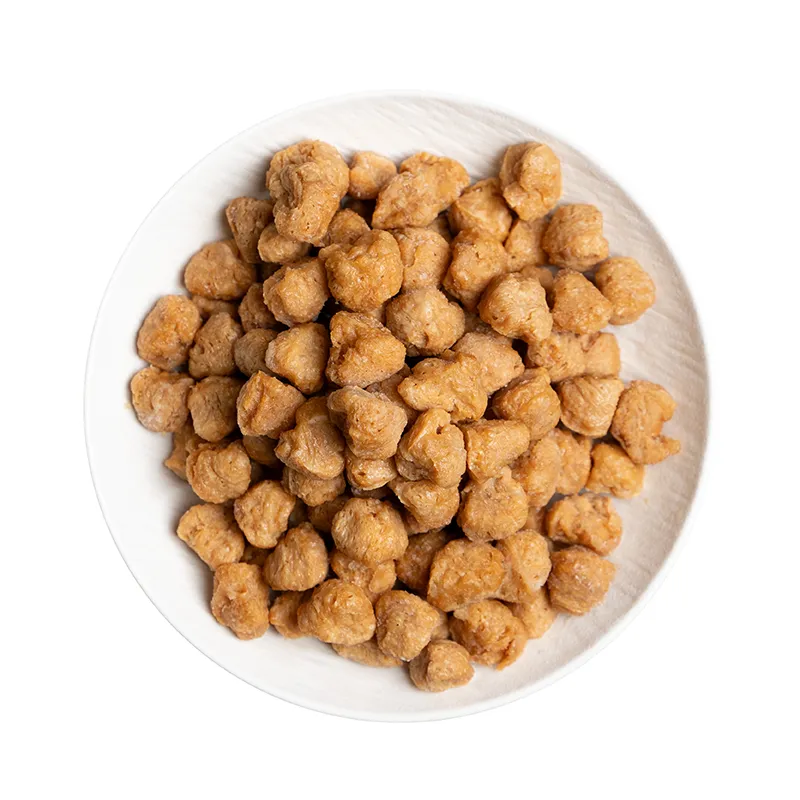
| Even distribution in mince, stuffing, or filling | Granules or flakes, selected against the target particle profile | Does the material hydrate evenly, distribute through the formula, and remain coherent after cooking? | Hydration record, mixing observation, cooked distribution, and bite assessment |
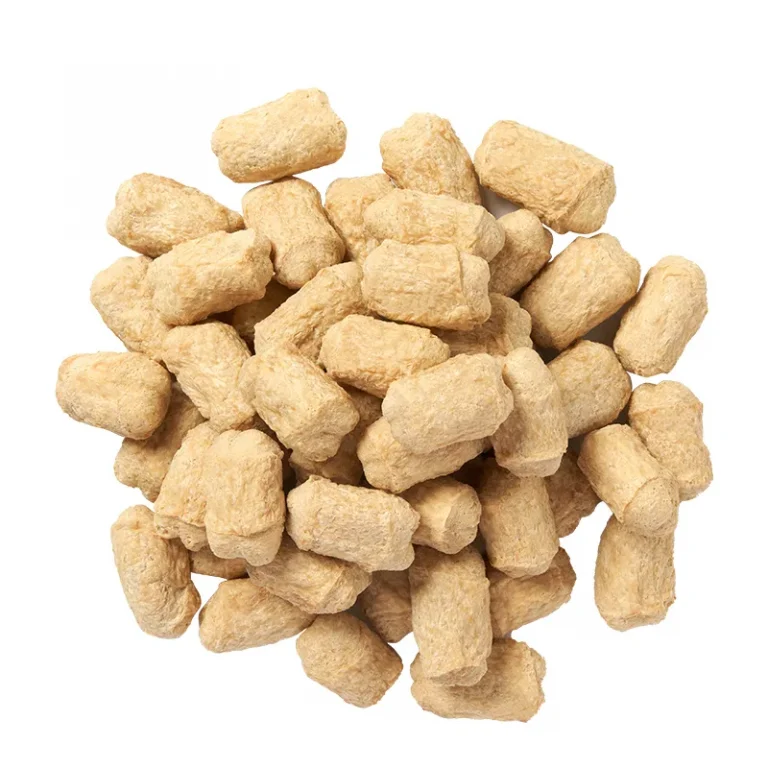
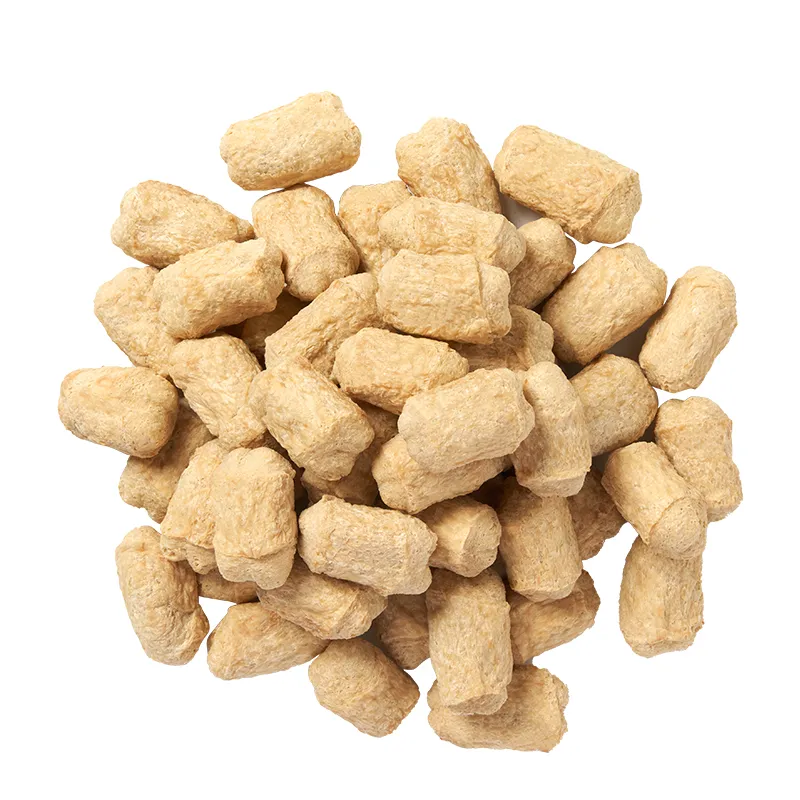
| Visible pieces with a defined chew | Chunks, cylinders, or steaks | Does the piece retain its identity through hydration, seasoning, cooking, and storage? | Shape and size record, centre hydration, cut-surface review, and finished-product test |
| Layered or pulled structure | Strands or another documented fibrous format | Does the geometry support the required portioning, filling, forming, and eating experience? | Application sample, process observations, portion consistency, and post-cook structure |
| Flexible product development across several formats | A small set of documented TVP formats rather than one broad protein category | Which format reduces formulation changes while meeting the texture and process brief? | Side-by-side trial, specification comparison, label review, and commercial feasibility check |
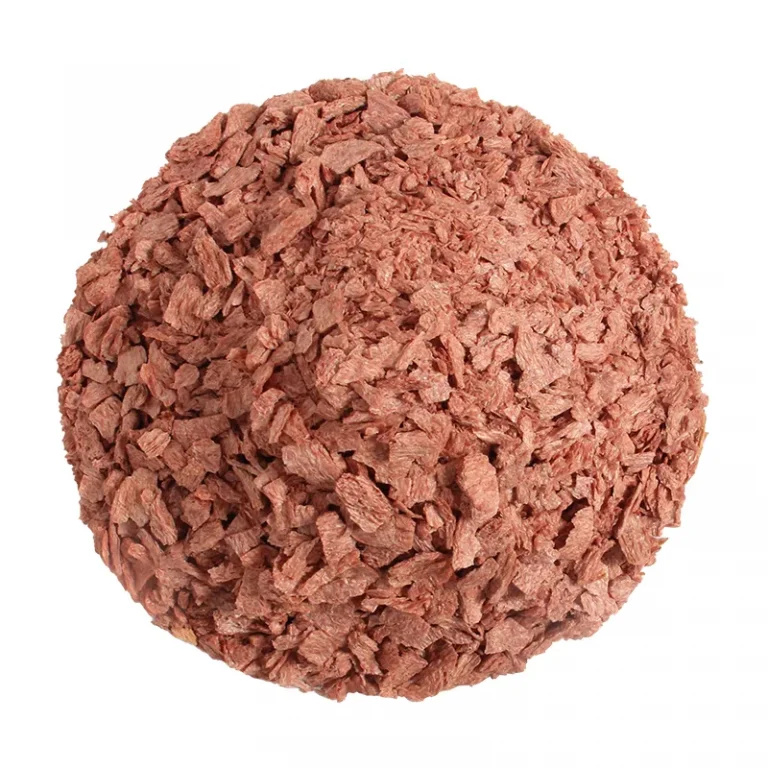
Baichuan’s public range lists textured soy protein in chunks, cylinders, flakes, granules, steaks, and strands. Developers can use the Baichuan TVP product range to identify candidate formats, then move to the relevant page for a narrower sample discussion. For a particulate screen, the textured soy protein granules page and the textured soy protein flakes page may be useful starting points; the selected specification and application result still control the decision.
Which standards and compliance checks matter for meat analogue ingredients?
Texture performance does not replace food compliance. The manufacturer must review the identity and intended use of each ingredient, the finished-food label, allergen declarations, nutrition or other marketing claims, traceability, and the rules of the destination market. The U.S. Food and Drug Administration’s public guidance on food ingredients provides general regulatory context, while Codex Alimentarius provides international food-standard texts. Neither source is a blanket approval for a particular product, grade, claim, or market.
Certification wording also needs a defined scope. A quality or safety statement at company level should not automatically be extended to every product, production line, customer specification, or destination market. Buyers should request the current product specification, ingredient and allergen information, applicable certificate or audit evidence, lot documentation, packaging details, storage conditions, and market-specific compliance documents for the exact grade under review.
When a product uses multiple texturizing ingredients, the compliance review should cover the complete formula rather than only the visible protein component. This is especially important when the finished food makes a claim about ingredients, allergens, nutrition, or processing. A texture sample can support development, but it cannot by itself establish the legal status or claim eligibility of the final product.
How should manufacturers qualify a meat analogue ingredient supplier?
A practical qualification process keeps formulation, quality, regulatory, and purchasing teams aligned:
- Define the bite in product terms. Describe the required resistance, cohesiveness, visible structure, moisture perception, portion size, serving condition, and storage or reheating route.
- Specify the physical format. Request the relevant size, shape, and structure instead of asking for a generic plant protein ingredient.
- Run a controlled comparison. Keep hydration, mixing, forming, cooking, and evaluation conditions consistent, and record where the sample passes or fails.
- Review documents with the sample. Match the tested grade to the specification, allergen statement, lot information, certificates within scope, packaging, and destination-market requirements.
- Confirm commercial fit before scale-up. Verify the grade, minimum order quantity, packaging, lead time, change-control expectations, and documentation for the actual order rather than assuming that a trial sample represents all future supply.
Baichuan can be evaluated as one supplier against this same evidence checklist. Its public plant-based product solutions information and format pages can help frame an application discussion, but product suitability, specifications, certificates, packaging, lead time, and destination-market compliance must be confirmed for the specific grade and order. The right supplier decision is the one supported by a repeatable application result and a complete evidence file, not by a format name alone.
What do buyers ask about meat analogue ingredients?
Does Burger King use synthetic meat?
“Synthetic meat” is not a precise ingredient or regulatory category. Restaurant menus and formulations can vary by market and over time, so the relevant product label and ingredient statement should be checked for the specific item and location. For ingredient developers, the more useful question is which protein structure, formula, and process create the required bite.
What companies are using 3D printed meat?
Companies and pilot projects in 3D-printed or cultivated-food development change quickly, and a company name alone does not explain the technology or commercial status. A buyer should distinguish research, pilot production, foodservice trials, and products legally sold in the target market. This article focuses on structured plant protein formats used in conventional food development, not on claims about any particular 3D-printed product.
What are analogue foods?
Analogue foods are products designed to resemble a familiar food in one or more attributes, such as appearance, texture, function, or eating experience, while using a different ingredient system. In a meat analog, the formulation may use plant proteins and other food ingredients to create a comparable product experience. The resemblance should be assessed against the specific product brief rather than assumed from the word “analogue.”
What are some examples of plant-based meat analogues?
Examples include formed products, mince-style fillings, sausage-style products, visible chunks, steaks, and strand-based applications made with structured plant protein systems. The ingredient format should match the physical requirement: a granule or flake may suit an evenly distributed filling, while a chunk, steak, or strand may suit a visible or fibrous structure. The final choice still depends on hydration, formulation, processing, and market documentation.
Which sources support this explanation of meat analogue texture?
The following public sources provide background for the ingredient, regulatory, and formulation discussion. They should be read with the selected product’s current specification, controlled application trial, and destination-market review.
- “Meat analog as future food: a review,” PubMed Central — review background on meat analogue ingredients, structure, processing, and formulation considerations.
- “Advancements in plant based meat analogs enhancing sensory attributes,” npj Science of Food — research context for improving sensory and textural properties in plant-based analogues.
- U.S. Food and Drug Administration, “Types of Food Ingredients” — general context for food-ingredient categories and regulatory questions.
- FAO/WHO Codex Alimentarius, “Codex texts” — reference point for reviewing international food-standard texts alongside national requirements.
How should a manufacturer decide which meat analogue ingredient to use?
The key distinction is between a protein ingredient that sounds suitable and a specified format that performs a defined job in a controlled process. Start with the finished food and its target bite; choose a logical geometry; then validate hydration, mixing, forming, cooking, storage, label, allergen, and document requirements together. Do not approve a sample solely because it feels promising in the dry or rehydrated state, and do not skip the market-specific compliance review. Baichuan’s public product information provides a starting point for comparing textured soy protein formats, while a prepared application brief and evidence checklist make a subsequent product discussion with Baichuan more useful. The best texture decision is the one that remains defensible from sample to finished product and from specification to order.