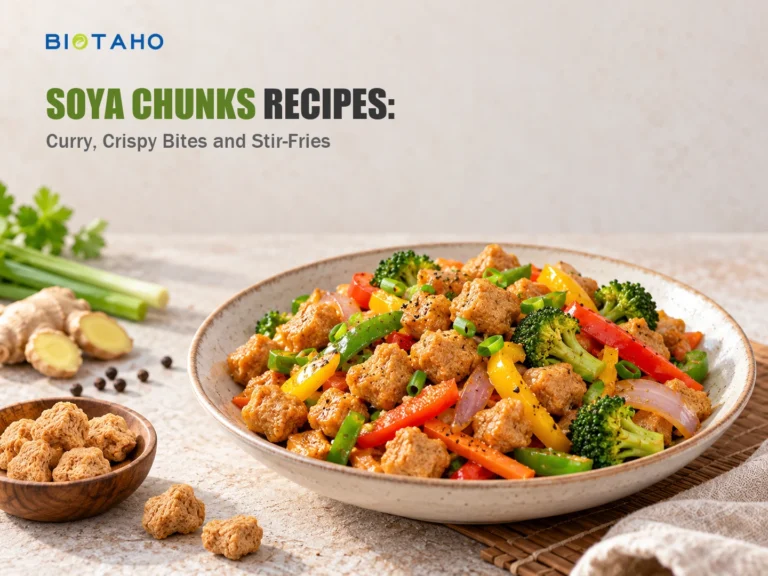
The best part of a crispy soya chunks recipe is the bite: a crisp outside with a tender center. Getting there starts before the pieces reach the pan. Too much surface water, a thick coating or a covered plate can leave soy nuggets soft even after they have browned. Draining well and serving promptly matter as much as the seasoning.
Soy chunks are a form of textured soy protein. Prepare them according to the packet, then drain before choosing your finish: pan-fried pieces without gravy, starch-coated bites or baked nuggets. These methods give different results. The frying example below comes from a published recipe; the baking and seasoning variations are suggestions to try, not fixed cooking instructions for every product.
Does a dry soya chunks recipe need deep-frying?
No. In a soya chunk fry, ‘dry’ usually means there is no gravy; it does not mean the dish is oil-free or deep-fried. Pan-fried soy chunks have seasoning clinging to the surface. Starch-coated bites have a separate crust. Baking uses oven heat, so it needs a method of its own.
| Método | What the method aims for | Main point to watch |
|---|---|---|
| Dry stir-fry | Seasoned, browned pieces without gravy | Excess water can turn frying into steaming |
| Coated frying | A distinct outer shell | Wet chunks can make the coating clumpy |
| Baking | A drier, browned surface | Touching pieces and a crowded tray slow drying |
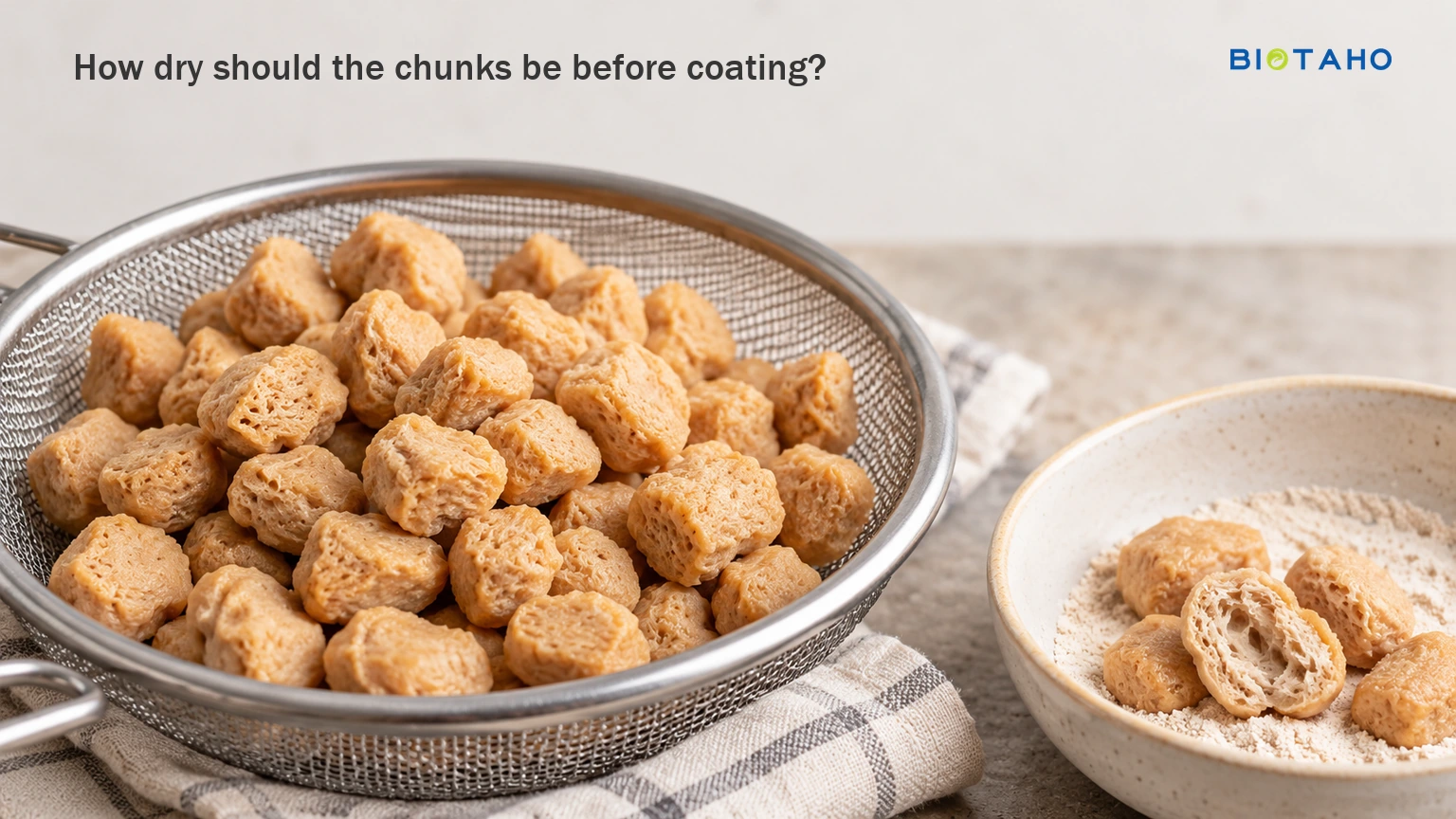
How dry should the chunks be before coating?
The chunks should be soft all the way through but no longer dripping. Follow the packet’s preparation method and split a piece to check the center. When cool enough to handle, drain and press gently. Squeezing harder will not fix an underprepared center and may break the pieces.
Keep the preparation and draining method consistent when trying a new bag of soya chunks. Different products can hold different amounts of water. The soy protein rehydration guide explains how soaking time, water quantity and the finished texture fit together.
How can you make coated bites without an egg batter?
The Foodie Takes Flight’s soy-chunk recipe offers an egg-free coating: season the prepared pieces with soy sauce and garlic, coat with cornstarch, then dust again before frying. The author cooks in batches and drains the bites uncovered. This is a clearer starting point than simply leaving egg out of a different batter recipe.
The recipe reports about six to seven minutes of frying for its batch. That is a reference for those pieces and that coating, not a timer for every soy nugget. It does not give a measured oil temperature. Follow the full method and check how your chosen product cooks.
How do you bake soy nuggets instead of frying them?
For a baked soya chunks recipe, spread the prepared pieces in one layer with gaps between them. Follow an oven recipe for the coating, temperature and turning instructions. Avoid a dripping coating, and check thick nuggets carefully: their surfaces can dry before the centers have a pleasant texture.
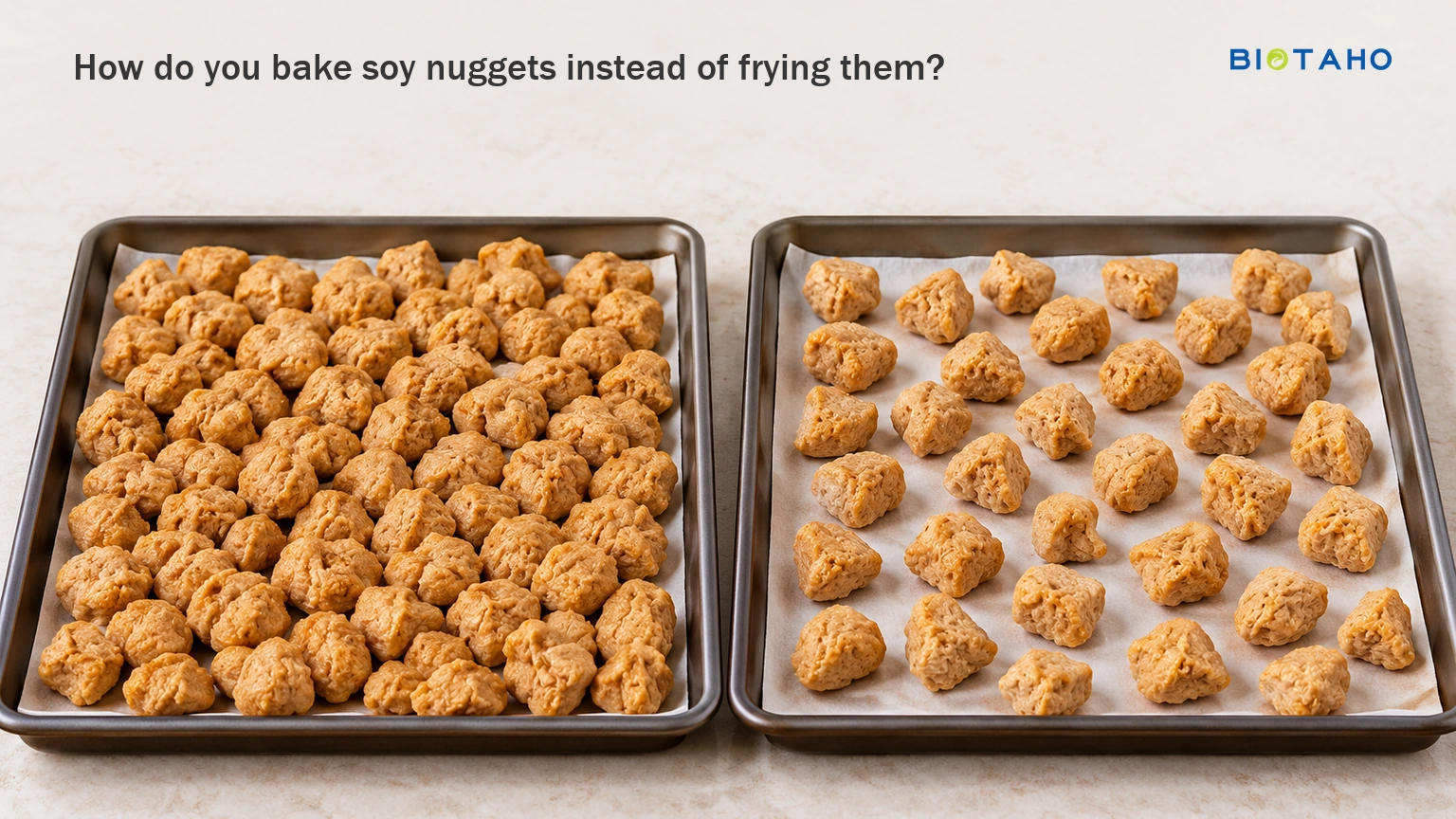
An oil-free oven method may suit your preferences, but it will not necessarily give the same crust as frying. Choose a baked recipe designed for that approach instead of removing oil from a frying method. Check the bites again when served with sauce, since the coating can soften quickly.
How do salt-and-pepper and typhoon-shelter seasonings differ?
For salt-and-pepper bites, briefly cook chopped chili and scallion, then toss with the hot nuggets and a little salt and pepper. Taste first if the pieces were marinated in soy sauce. Add the seasoning just before serving so the surface stays as crisp as possible.
Typhoon-shelter-style dishes feature a fried-garlic topping, often with chili and other seasonings. They are a different variation from salt-and-pepper bites. If trying that finish, use a vegan topping and watch the garlic closely so it does not burn.
Why do the bites soften after cooking?
| Problem | Likely cooking issue | Adjustment to check |
|---|---|---|
| Coating slips off | Surface is too wet or coating is uneven | Drain consistently and coat just before cooking |
| Pieces stick on the tray | Coating and tray preparation do not suit the method | Follow the baked recipe’s tray instructions |
| Good at first, soft later | Steam or moisture from sauce reaches the crust | Hold uncovered briefly and sauce portions to order |
| Outside is dry, center is tough | Hydration or piece size is inconsistent | Check the centers before coating |
What do cooks ask about crispy soya chunks?
How do I make crispy soya chunks?
Hydrate fully, drain carefully, use a suitable coating if wanted, and cook without crowding. Serve before steam or sauce softens the surface.
How to make soya chunks crispy without oil?
An oven method can dry and brown the surface, but it may not reproduce a fried crust. Follow an oil-free baked recipe and try a small batch first.
Can soya chunks be fried?
Yes, after preparation according to the product and recipe directions. Avoid putting wet chunks straight into hot oil.
Do I need to boil soya chunks before cooking?
Use the packet’s instructions. Some products specify simmering, while others can be prepared by soaking before the final cooking step.
How do I cook dried soya chunks?
Rehydrate as directed, check the center, drain and season, then use the frying, baking or simmering method required by the dish.
How long does it take to fry soya chunks?
The cited recipe gives about six to seven minutes for its prepared, coated pieces. Other recipes and nugget sizes can take different times, so follow the method you are using rather than relying on one universal figure.
Do soya chunks lose protein after frying?
Frying does not make all the protein disappear. Water loss and oil uptake change the weight and composition of the finished food. Use the complete recipe and serving weight for a nutrition calculation.
Are fried soya chunks healthy?
That depends on the portion, oil, coating, seasoning and the rest of the diet. Frying alone does not establish a health claim, and salt and oil still count.
Should you pan-fry, coat or bake the chunks?
Choose a dry fry for a seasoned dish without gravy, coated frying for a crisp shell, or baking if you prefer an oven method. Serve a small batch before making more, especially if you plan to add sauce. For food-service use, Baichuan’s catering product applications show where these ingredients may fit; try the chosen coating and serving method with the actual product.