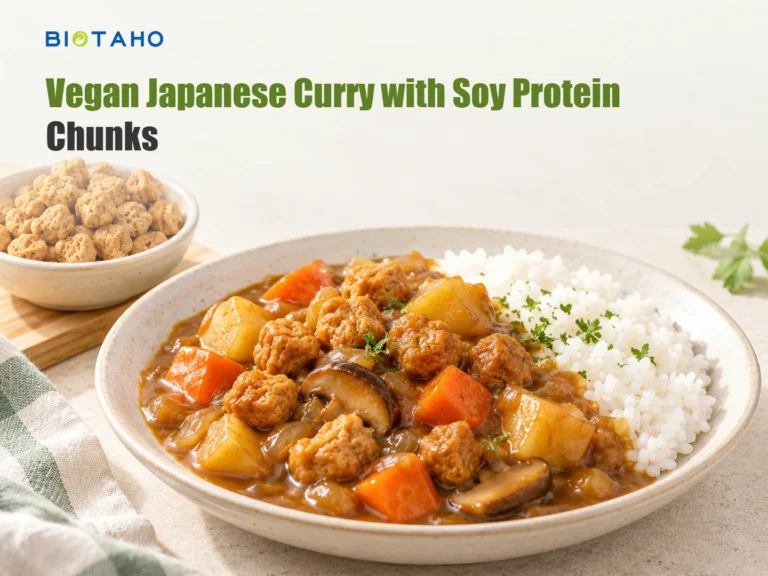
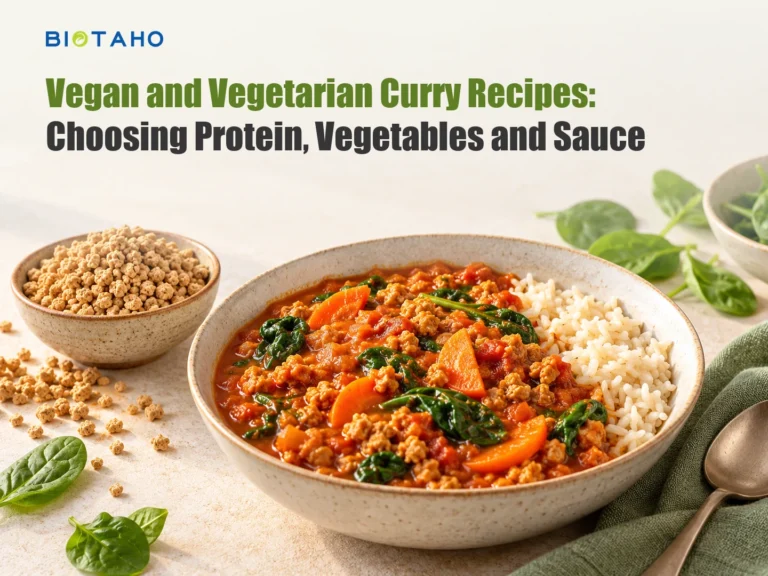
Yes, soya chunks can be a healthy protein ingredient in a varied diet. Their value depends on the actual blend, the portion you eat and the sauce and accompaniments served with it. Understanding soya chunk health benefits starts with the packet, not with assuming that every product has the nutrition of whole soybeans.
For a curry, stew or vegetable stir-fry, first choose chunks that suit the dish. Then use their nutrition label to measure a portion, prepare them consistently and assess the whole plate. This approach also works when developing a food product, where the chunk ingredient is only one part of the finished formulation.
Assess the actual soya chunk product before judging its benefits
Trozos de soya are textured ingredients, not intact beans. Processing creates their shape and fibrous structure, making them useful where a dish needs distinct bites. That processing explains their cooking function; it does not, by itself, establish whether the finished meal is healthy.
De Baichuan cubed soy fiber protein chunks for catering are small, fibrous cubes intended for catering foods and plant-based applications. Its cylindrical textured vegetable protein chunks for formed foods have a tight fibrous structure and are listed for applications including meatballs, sausages and nuggets. These are ingredients for making foods, not ready-made versions of those foods.
Both products combine soy ingredients with wheat gluten and wheat starch. They are therefore neither pure soy isolates nor gluten-free choices. Their different forms help guide application selection, but shape does not establish a nutritional advantage.
| Product form | Published characteristics | How this informs selection |
|---|---|---|
| Small catering cubes | Cubed fibrous structure; listed hydration time of 60–65 minutes | A starting option for dishes needing separate chunk-sized bites; allow preparation lead time |
| Cylindrical forming chunks | Tight fibrous structure; listed hydration time of 50–55 minutes; intended for formed-food applications | Consider when developing a bound mixture, with recipe-specific trials to establish handling and texture |
| Both blends | Soy ingredients, wheat gluten and wheat starch | Compare actual nutrition labels and exclude them where wheat or gluten must be avoided |
Harvard’s Nutrition Source describes soy protein as complete, supplying all nine essential amino acids. That general fact does not provide a protein amount or amino-acid score for either blend. Likewise, “Soya Fiber Protein” is a product-family name, not a declaration of dietary fibre content. Use the chosen product’s nutritional information for those decisions.
Use a consistent portion to read the nutrition label
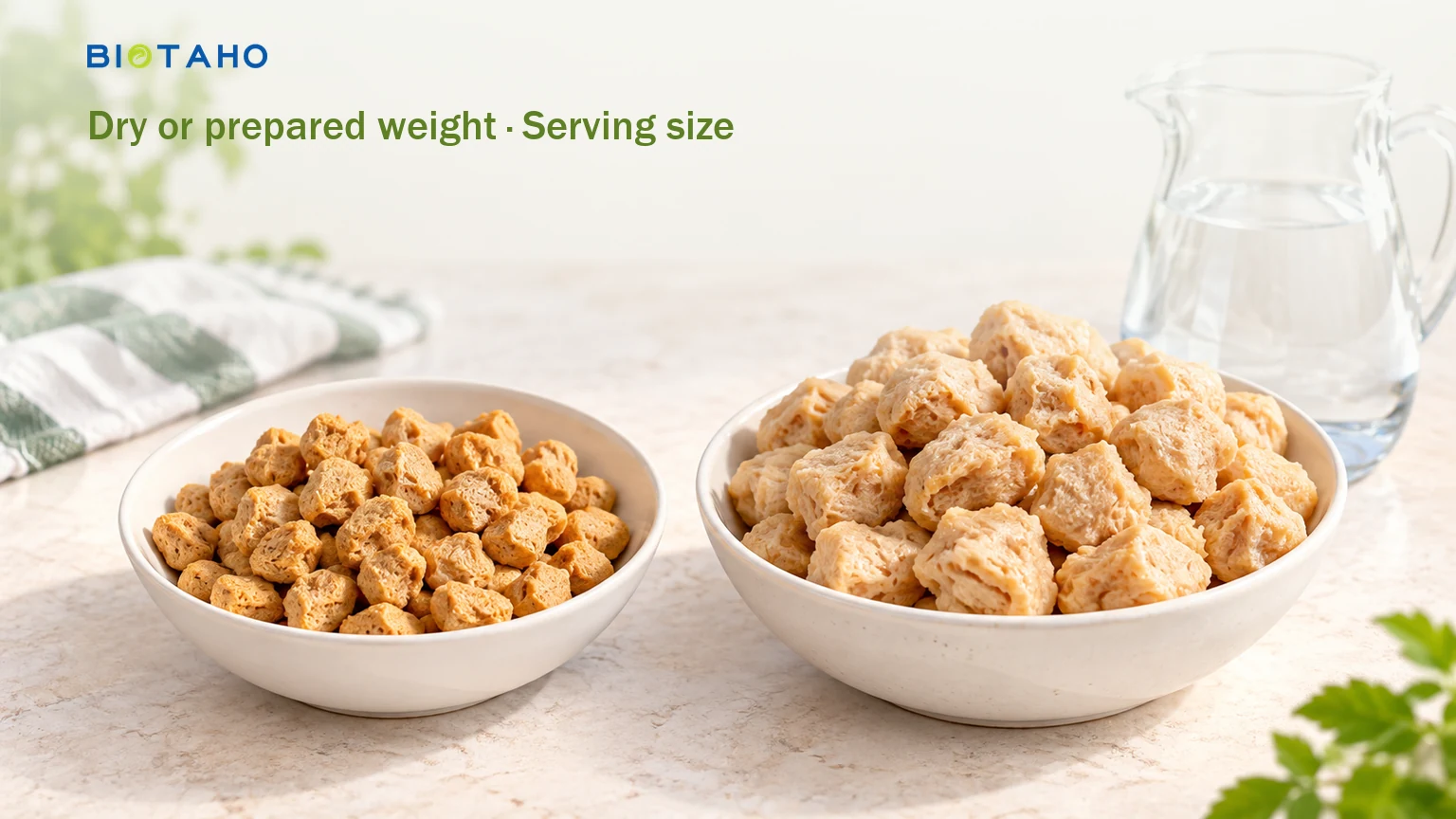
Once you have selected the appropriate form, establish how much of it goes into each serving. Check whether the label reports values for dry chunks, hydrated chunks or a prepared food. A dry ingredient and a water-rich prepared ingredient cannot be compared meaningfully by equal weight alone.
Hydration increases weight and volume because the chunks absorb water. It does not add protein. If you prepare a batch for several servings, record the dry quantity used and divide its contribution according to how much of the batch each person receives. Count sauce and other ingredients separately.
| Label detail | Qué establecer | How to use it |
|---|---|---|
| Dry or prepared weight | The basis of the declared values | Keep comparisons on the same basis |
| Serving size | The quantity entering your share of the meal | Treat the packet serving as a reference, not a daily prescription |
| Protein and fibre | The chosen blend’s declared amounts | Do not substitute whole-soybean nutrition figures |
| Fat and sodium | Values for the ingredient and any preparation included in the label | Add contributions from oil, stock and sauces where necessary |
| Vitamins and minerals | Any declared amounts or fortification | Do not assume the chunks supply nutrients absent from the information |
This is especially useful when comparing chunks with tofu or another ready-to-eat protein. Compare realistic portions in the meals you would actually cook, not just the most protein-dense-looking figure. The explanation of dry and hydrated TVP nutrition comparisons provides more context.
A suitable portion also leaves room for the rest of dinner. More chunks are not automatically better if they displace vegetables and other foods that contribute different nutrients.
Prepare the chunks for the meal you intend to cook
With the dry portion established, plan hydration before starting the main cooking. The supplier’s listed windows—60–65 minutes for the catering cubes and 50–55 minutes for the cylindrical chunks—are preparation lead times, not the cooking time for your curry or stir-fry. Current product directions must determine water quantity, temperature and any subsequent cooking requirements. Treat these application suggestions as starting points for recipe-specific trials.
For distinct bites in a sauced dish, the catering cubes are the more directly aligned starting option. Hydrate them as directed, then check whether the centres are evenly hydrated before incorporating them into the recipe. Their texture helps you assess hydration consistency, but it does not establish food safety or replace required cooking.
Moisture handling should match the destination. Excess surface water can dilute a sauce and make pan browning harder. Drain or press only as the product and recipe directions require, keeping that step consistent between batches. In a stew, account for liquid carried into the pot so the sauce finishes at the intended consistency.
For formed foods, the cylindrical product’s tight fibrous structure makes it a different development choice. Its listed applications do not mean that hydrated pieces can simply replace another ingredient without adjusting the formulation. Water retained in the chunks affects the moisture of the mixture and the amount of dry ingredient represented by each finished portion.
Consistent hydration and draining therefore serve two purposes. They help control texture, and they make prepared portion weights more useful when comparing batches. They do not change the underlying nutrition declaration into a claim about the finished recipe.
Include the sauce and side dishes in the health assessment
Now assess what accompanies that prepared portion. Harvard’s protein guidance emphasises the protein “package”—the fat, fibre, sodium and other components eaten with protein. For proteína de soja texturizada, this includes both the blend itself and what you add in the kitchen.
In a vegetable stir-fry, count the cooking oil and salty seasonings alongside the chunks, vegetables and noodles or rice. Hydrating with seasoned liquid also adds ingredients to the meal. Check stock and sauce labels before adding more salt, and measure oil instead of repeatedly topping up the pan.
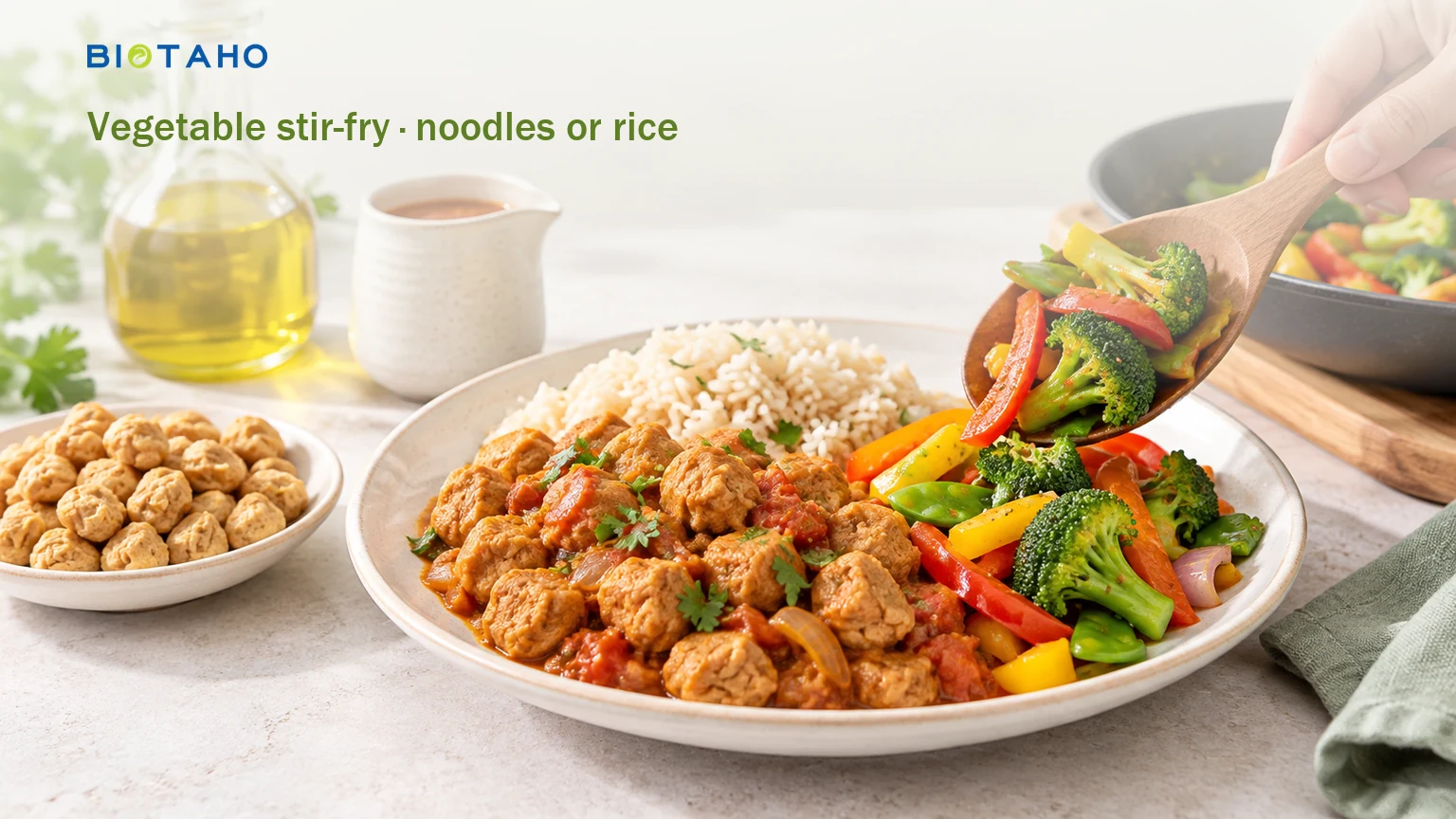
The same reasoning applies if the measured portion goes into a curry or stew. A tomato-based sauce, a rich sauce and a heavily salted ready-made sauce contribute differently; using the same chunks does not make the meals nutritionally equivalent. Keep vegetables substantial and choose the starch portion to suit the complete plate, with wholegrain options where appropriate.
The NHS recommends varied plant foods, starchy carbohydrates, protein sources and small amounts of unsaturated oils within a balanced vegan diet. It also highlights nutrients needing attention, including vitamin B12, calcium, iodine and selenium. Plain chunks should not be assumed to cover those needs.
Soy-food research offers useful context, particularly when soy replaces red or processed meat. It does not prove specific health benefits for every soy-and-wheat blend. The practical question is what your finished meal contributes and what, if anything, it replaces.
Check soy and wheat ingredients before choosing a product
The final check concerns whether the selected ingredient and the complete meal are suitable for the people eating them. Make this check before buying or cooking if allergies or gluten restrictions are already known. Both featured blends contain soy and wheat ingredients, so neither is suitable for someone who must avoid those ingredients.
Soy and wheat allergens can also occur in stock, sauces, coatings and accompaniments. Read current ingredient and allergen declarations each time; a familiar product name or a plant-based description is not enough. Wheat gluten means these blends are not appropriate for a gluten-free meal.
The FDA identifies soybeans and wheat as major food allergens and explains that they may be identified in the ingredient list or a nearby “contains” statement. Soaking or cooking is not a substitute for avoiding a diagnosed allergen. If an allergic reaction occurs, stop eating and seek medical attention; breathing difficulty or throat swelling requires emergency treatment.
If the ingredients are suitable, return to the portion and meal assessment already established. An appropriate blend, measured consistently and cooked with attention to sauce and sides, can be a useful protein choice without needing to become a daily requirement or a treatment.
Preguntas frecuentes
Are soya chunks healthy to eat daily?
They can fit into a varied diet, but daily use is not necessary. Harvard describes soy foods as suitable several times a week and probably more often. That is not a daily recommendation for every blend or portion.
Can I eat 40 g of soya chunks daily?
First establish whether 40 g means dry or hydrated chunks. Those weights represent different quantities of the ingredient. Judge the portion using the actual label and the rest of your diet; it is not a universal daily target.
Which is better, eggs or soya chunks?
Neither is universally better. Compare realistic portions and preparation, including added oil and salt. Chunks offer a plant-based option, while eggs do not suit a vegan diet. The chunk blend’s composition still matters.
Which is better, soyabean or soya chunks?
Whole soybeans suit dishes needing intact beans; chunks suit textured bites. Their composition differs, so choose by cooking purpose and compare actual nutrition information. Whole-soybean figures cannot stand in for a chunk blend’s label.
¿Qué es mejor, el tofu o los trozos de soja?
Tofu generally suits softer cubes or slices, while chunks provide a more distinct bite. Compare prepared portions. Calcium-set tofu can contribute calcium, but neither all tofu nor all chunks have the same calcium content.
Is there any disadvantage of soya chunks?
They require preparation, and some blends contain wheat as well as soy. Their protein contribution can also distract from salty sauces, generous oil additions or limited dietary variety. None of these issues can be judged from the product name alone.
Referencias
- Harvard Nutrition Source: Straight Talk About Soy — soy protein quality and the limits of generalising across different soy foods.
- Fuente de Nutrición de Harvard: Proteínas — assessing protein foods through their wider nutritional package.
- NHS: La dieta vegana — balanced vegan meals and nutrients requiring attention.
- FDA: Food Allergies—What You Need to Know — allergen declarations, avoidance and recognising reactions.
For a catering dish or formed-food project, contact Baichuan for a suitable chunk sample and current preparation and nutrition information.