Crisp soy nuggets, juicy pineapple and peppers with a little bite make vegan sweet and sour chicken worth cooking at home. The main challenge is timing: the pieces need to be seasoned and crisp before they meet the sauce, then served before the coating softens. The same soy-chunk approach can be used for a pork-style version, with the finished dish clearly described as plant-based.
Prepare and drain the chunks, season them, then coat and cook them separately. Cook the vegetables and thicken the sauce before adding the crisp bites back to the pan. A short final toss coats the pieces without leaving them to soak. The method and quantities below are drawn from Jeeca’s published sweet-and-sour soy-pork recipe, rather than a tested Baichuan recipe.
Can soy chunks replace chicken or pork in sweet-and-sour dishes?
Both names describe a plant-based take on a familiar dish. Small nuggets can suit a chicken-style serving, while differently shaped pieces can be served pork-style. Use the name that fits the meal, but make clear that the pieces are soy-based. Texture, seasoning and the final toss matter more than the label.
Vegan sweet and sour pork uses the same basic idea: seasoned soy pieces with a crisp coating and a tangy sauce. Vegetarian versions may still contain egg or dairy, so check the full recipe if you are cooking for vegans. Baichuan’s soy protein chunks page shows the dry textured soy protein used as a starting ingredient.
What do you need for sweet-and-sour soy nuggets?
Jeeca’s sweet-and-sour soy pork at The Foodie Takes Flight uses soy chunks, garlic, soy sauce and cornstarch, with pineapple, onion and bell peppers. The sauce combines vinegar, sugar, pineapple juice, ketchup, soy sauce, water and cornstarch. Cooking the coating and sauce separately helps keep the sweet-and-sour soy nuggets crisp until the final toss.
| Part of the dish | Ingredient role | What to check |
|---|---|---|
| Prepared soy chunks | The main bite | Centers softened; excess water removed |
| Garlic and soy sauce | Season the chunks before coating | Salt level and wheat in the chosen sauce |
| Cornstarch | Coating and sauce thickening | Keep the dry coating separate from the sauce slurry |
| Vinegar, sugar and pineapple juice | Sourness and sweetness | Taste with the chosen ketchup and fruit |
| Pepper, onion and pineapple pieces | Vegetable texture and fruit | Avoid prolonged cooking after sauce thickens |
How do you prepare and coat the chunks?
Follow the chunks’ preparation directions, then drain and press gently. Jeeca’s recipe starts with 120 g of dry chunks. The prepared pieces are seasoned with 1 teaspoon of minced garlic and 1½ tablespoons of soy sauce, then left for a 10-minute marinating stage. Cornstarch provides the coating. These amounts belong to that recipe, not a standard serving size or a yield for every product.
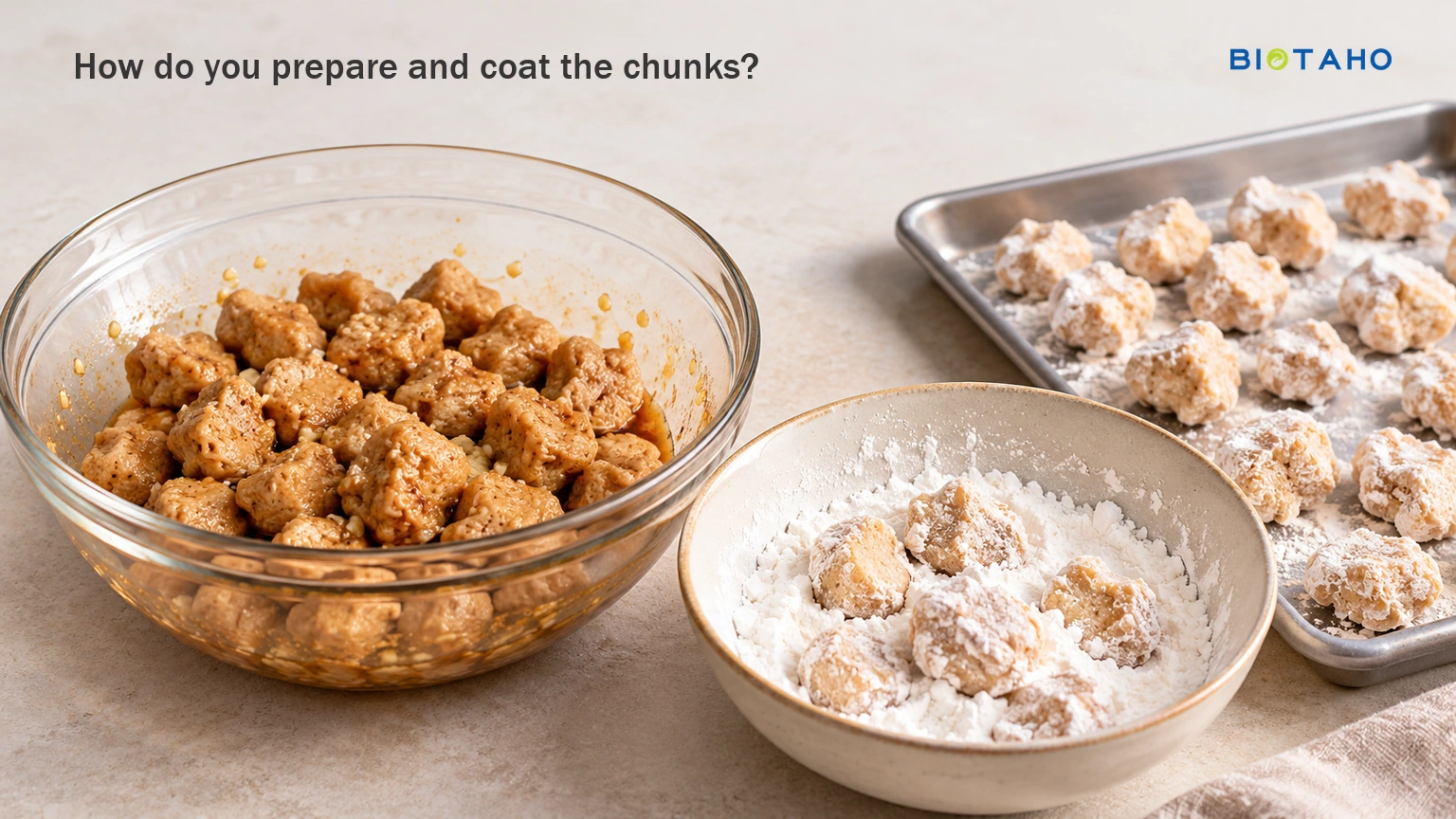
Mix the seasoning through the drained pieces before coating them. Wet patches can leave clumps of starch. The published method uses an initial coating followed by another dusting before frying. Cook in batches so the pieces have room, then drain uncovered to let steam escape.
How do you balance a sweet-and-sour sauce?
Mix the sauce before the pan gets hot. The source’s sauce includes ⅓ cup vinegar, ½ cup pineapple juice, 5 tablespoons ketchup, 1 tablespoon soy sauce, ¼ cup water, 1½ tablespoons cornstarch and 3–4 tablespoons sugar. Follow the full published recipe for its batch size; do not use the sauce quantities unchanged for an arbitrary amount of chunks.
Taste before the sauce thickens. Pineapple juice and ketchup bring sweetness, while vinegar brings acidity. If you want to change the balance, try a small adjustment rather than adding a large amount of sugar at once. Keep the original recipe’s proportions for the first batch so you know what you are changing.
When should the crisp pieces go back into the pan?
Add the crisp bites last. Following the source method, cook the onion, ginger and garlic, then the peppers and pineapple. Stir the sauce mixture again because the starch settles, pour it in and let it thicken. Add the cooked soy pieces only when you are ready for a brief toss and immediate serving.
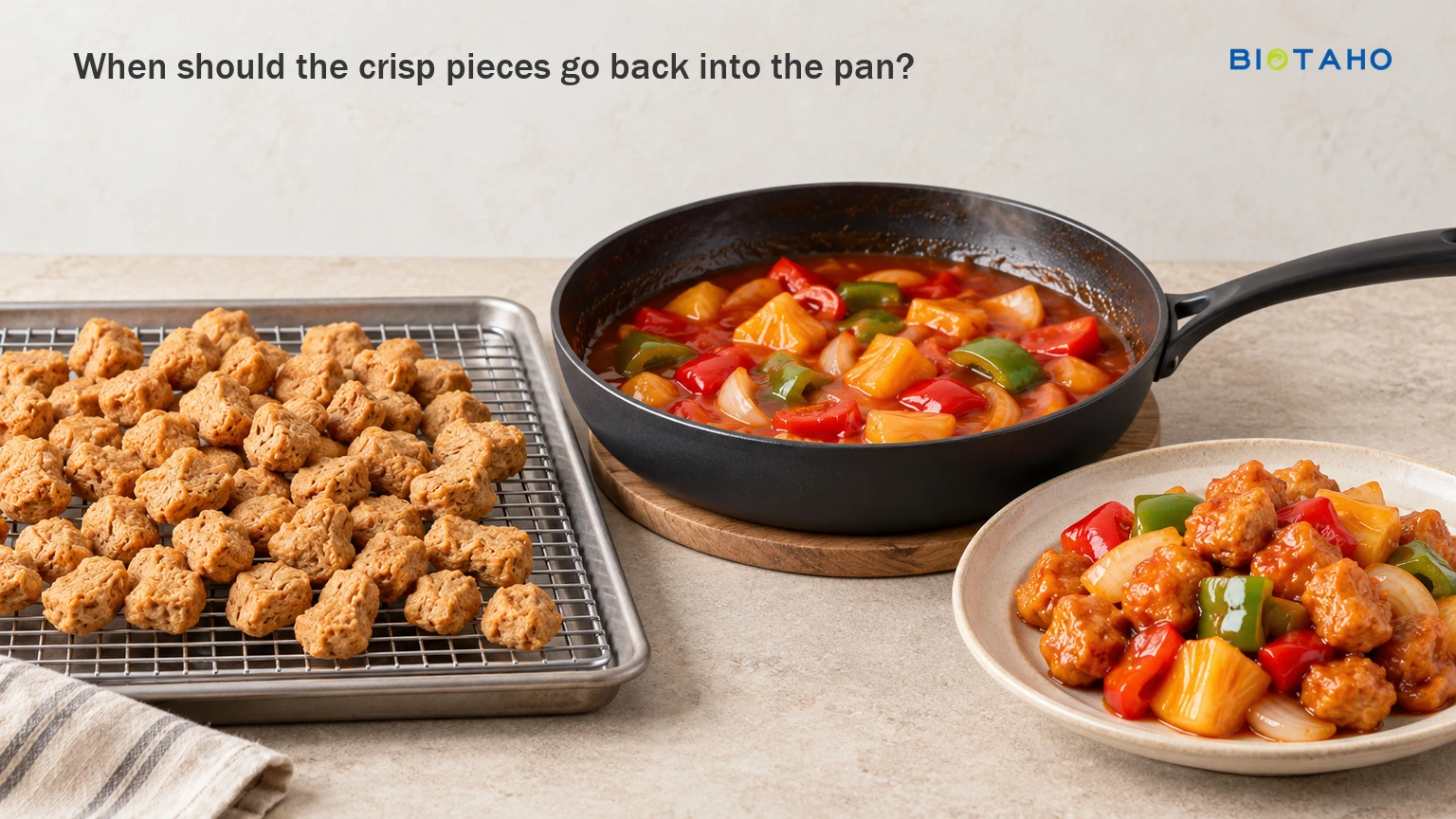
If dinner is delayed, keep the sauce and cooked bites separate until serving. Covering a freshly fried batch traps steam, while leaving the pieces in sauce softens the crust. For catering, check the texture after the planned holding period rather than judging only a freshly cooked portion.
| Problem at serving | Check | Useful adjustment |
|---|---|---|
| Coating is soft | How long pieces sat in sauce or steam | Combine nearer to service |
| Sauce tastes too sweet | Fruit juice, ketchup and added sugar together | Adjust the mixed sauce before thickening |
| Sauce is watery | Starch settling and water from vegetables | Stir the slurry and finish the sauce separately |
| Chunks taste bland inside | Hydration, draining and marinating | Season before coating |
Is the dish vegan and suitable for your diners?
Vegetarian sweet and sour pork is not necessarily vegan: the batter or sauces may contain animal ingredients. Check every addition for an egg-free, plant-based version. Soy is a major allergen, and ordinary soy sauce often contains wheat. The FDA’s food allergy guidance explains these ingredient checks; a vegan dish is not automatically allergen-free.
What do cooks ask about vegan sweet and sour?
How can I make vegan sweet and sour sauce?
Use a plant-based combination such as vinegar, sugar, pineapple juice, ketchup, soy sauce, water and a starch slurry. Check the labels and balance sweetness before thickening.
How to make vegan sweet and sour?
Prepare the protein, coat and cook it separately, cook the vegetables, thicken the sauce and combine briefly just before serving.
Can I make egg-free sweet and sour chicken?
Yes. Soy chunks with a starch coating can provide an egg-free approach. Check the complete recipe, including bought sauces.
What is the batter made of in sweet and sour chicken?
Recipes vary. Some use flour, starch and egg, while Jeeca’s vegan version coats the soy pieces with cornstarch without an egg batter. Follow a recipe designed for the coating you want.
What are the four ingredients in sweet and sour sauce?
There is no single four-ingredient formula. Ketchup, vinegar, sugar and water can form a simple version, but the recipe cited here also uses pineapple juice, soy sauce and cornstarch.
Is Chinese sweet and sour sauce vegan?
It can be, but the name is not proof. Check stocks, prepared sauces and any animal-derived additions.
What is the difference between sweet and sour chicken and Cantonese sweet and sour chicken?
Restaurant names vary. They may describe differences in the coating, pieces or presentation, so check the recipe rather than assuming one fixed distinction.
What is the best way to marinate soya chunks?
Drain the prepared pieces before adding a concentrated seasoning mixture. Season before coating and avoid leaving excess liquid in the bowl.
How do you get the bites and sauce ready together?
Get the chunks, vegetables and sauce ready before frying so the final toss can be quick. Taste the sauce, keep the crisp bites uncovered and combine only what you are about to serve. If you are choosing an ingredient for a larger batch, Baichuan’s plant-based product applications y catering applications outline possible uses. Try the actual soy product with your coating and serving method before setting portions.