Food manufacturers developing seafood-style products often start with the name of the finished item—fish fillet, fish ball, nugget, or shredded seafood—and only later examine what the ingredient system must do. That sequence can create avoidable problems: a protein may not deliver the required bite, a binder may not hold the shape through cooking, or a flavour system may not fit the target label and market. The ingredient list also varies by product format; there is no single recipe for every plant based seafood application. This guide explains the ingredient groups that may be combined, how they contribute to structure and eating quality, and which evidence a product developer should request before approving a grade or supplier.
The short answer is that plant based seafood products may combine a plant protein base with water, starches or other binders, oils, seasonings, colours, flavours, and processing aids or additives permitted for the intended market. Some products use a textured protein to create particulate or fibrous structure; others use a dispersed protein and a formed matrix. The correct choice depends on the finished shape, bite, cooking route, label, allergen declaration, and destination-market requirements. A development team should compare complete formulations and the exact ingredient documents rather than assume that a seafood-style name identifies a standard formula.
What ingredient groups are commonly considered in plant-based seafood?
A commercial formula normally has several jobs to perform at once. The protein contributes the main plant-based solids and may influence structure. Water controls hydration and processing behavior. Starches, fibres, gums, or other binders may help create a cohesive matrix, but the permitted substance and its function must be checked for the intended market. Oils can affect lubrication, mouthfeel, and cooking behavior. Salt, acids, seasonings, flavours, and colours shape the finished sensory profile. Not every product uses every group, and the ingredient declaration must be based on the actual formula.
| Ingredient group | Possible formulation role | What should be verified | Why the role is not universal |
|---|---|---|---|
| Plant protein | Protein contribution, dispersed solids, particulate structure, or fibrous texture | Source, form, composition, allergen status, hydration behavior, and grade specification | Protein source and physical format can change texture, flavour, water demand, and process fit |
| Water | Hydration, dispersion, mixing, and formation of the final matrix | Added quantity, preparation method, drainage, and behavior during cooking and storage | The same nominal ingredient can behave differently at a different preparation or process scale |
| Starches, fibres, or binders | Cohesion, viscosity, shape retention, or control of free liquid | Identity, permitted use, declaration, process response, and interaction with the protein | One binder cannot be assumed to replace another without a controlled formulation trial |
| Oils or fats | Lubrication, mouthfeel, flavour carrying, and recipe-specific cooking behavior | Oil type, oxidation controls, dosage, allergen implications, and market requirements | Oil selection changes both the sensory profile and the stability questions for the finished food |
| Salt, acids, seasonings, flavours, and colours | Seasoning, seafood-style flavour direction, colour development, and product identity | Source, dosage, declaration, stability, and whether the claim or description is supported | These ingredients need to fit the full recipe, cooking route, and destination-market label |
The U.S. Food and Drug Administration describes food ingredients in relation to their intended use and regulatory status. That principle matters here because an ingredient can be technically useful in a bench formula while still requiring a separate review of its permitted use, declaration, or claim in the finished food. The table is therefore a development framework, not a ready-to-use recipe.
Which plant proteins are used in seafood alternatives?
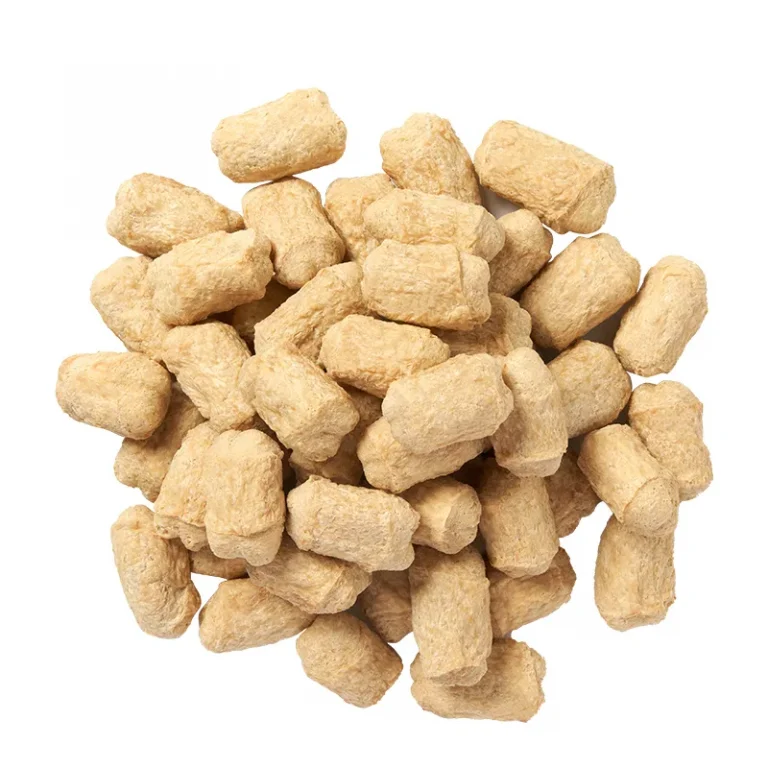
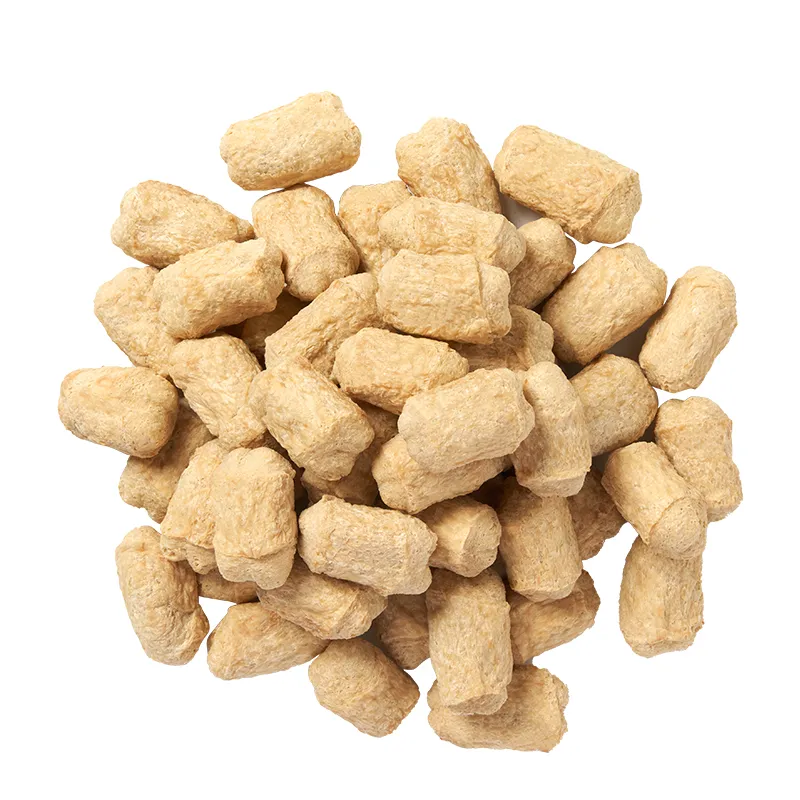
Protein selection should begin with the physical job required by the product. Soy protein may be supplied as a textured piece, flake, granule, strand, or another format; pea, wheat, rice, and other plant proteins may also be considered depending on the specification and the formulation brief. The term seafood alternatives does not identify a single protein source. A buyer should ask whether the candidate is intended to disperse through a matrix, remain as a visible piece, or provide a more fibrous bite after preparation.
Textured formats are often screened when the product brief calls for particulate or fibrous structure. Smaller particles may be assessed for minced products, fillings, or formed mixtures; larger pieces may be assessed where a visible structure is part of the eating experience. This is a central consideration in plant based fish development because the intended product identity may depend on both the visible structure and the cooked bite. The choice still has to be proven in the finished product. A dry sample can look appropriate and then hydrate, mix, cook, or cool differently from the target application.
For example, a buyer comparing seafood alternatives should record the selected protein form, preparation method, drainage condition, recipe ratio, mixing sequence, forming step, cooking route, and final evaluation criteria. That information makes the comparison repeatable and prevents a general protein category from being mistaken for a complete technical specification.
How do textured proteins differ from dispersed proteins in plant based fish?
Textured and dispersed proteins solve different formulation problems. A textured protein arrives with a physical geometry that can contribute visible pieces, strands, or particulate structure after preparation. A dispersed protein is incorporated more uniformly into a matrix, where the recipe and processing conditions create much of the finished shape and bite. Neither approach is automatically better for plant based fish; the better starting point is the one that matches the product brief with the fewest unsupported assumptions.
| Punto de partida | May suit a brief that needs | Development checks | Selection boundary |
|---|---|---|---|
| Textured chunks or larger pieces | Recognizable particulate structure in a formed or filled product | Rehydration, drainage, integrity, bite, distribution, and cooking stability | Large pieces may be unsuitable where a fine, uniform matrix is required |
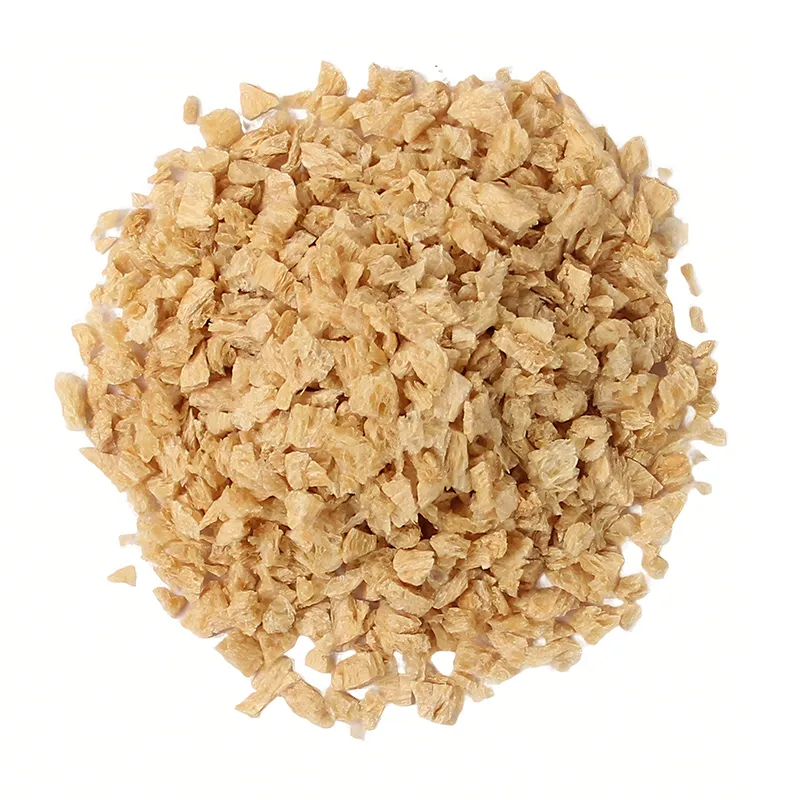
| Textured flakes, granules, or strands | Smaller particulate distribution or a more fibrous appearance | Particle size, dispersion, hydration, cohesion, and finished texture | Format names do not replace the exact product specification or application trial |
| Fine or dispersed protein | Uniform protein distribution in a moulded or cohesive matrix | Dispersion, viscosity, water binding, flavour, forming, and cooking response | A fine ingredient may not provide the visible structure expected from a fillet or piece |
When developing plant based fish, the target should be expressed in measurable product terms: for example, particle visibility, cut-surface integrity, bite, free liquid, shape retention, or cooking loss, where those measures are relevant to the product brief. Acceptance limits should be set by the manufacturer and tested using the actual recipe and process. They should not be inferred from a supplier category name.
What roles do binders, starches, and fibres play in vegan seafood?
Binders, starches, fibres, and hydrocolloid-type ingredients may be evaluated when the protein alone does not provide the required cohesion, viscosity, shape retention, or water management. Their function depends on the full system. A starch can respond to heat and moisture; a fibre can change water distribution and mouthfeel; and a hydrocolloid can affect viscosity or gel behavior. Those statements describe possible formulation roles, not a universal result for every material or dosage.
In a vegan seafood trial, the development team should compare the candidate binder under the same protein, water, oil, seasoning, mixing, forming, cooking, and cooling conditions. The review should include the raw mixture, the cooked product, and the intended storage or reheating step where relevant. If a binder changes the label, allergen profile, claim language, or market eligibility, that consequence belongs in the decision record as well.
How do oils, seasonings, flavours, and colours affect a vegan seafood formula?
A seafood-style product is judged by more than structure. Oils and fats can influence lubrication and mouthfeel; salt, acids, and seasonings shape the base taste; flavours establish the intended seafood-style profile; and colours can affect consumer expectations. The formula should distinguish between an ingredient that changes sensory perception and one that changes physical structure. A flavour cannot compensate for a texture defect, and a colour cannot establish a regulatory identity or prove that the product is equivalent to seafood.
The right question for vegan seafood development is not which flavour or colour is most popular in the abstract. It is whether the selected material is compatible with the protein base, survives the process, fits the finished label, and remains acceptable after the product’s intended cooking and storage route. Suppliers should provide the exact ingredient identity and supporting documentation needed for that review.
How should a manufacturer select ingredients for a plant-based seafood product?
A practical selection process works backward from the finished food. The team should define the product form, desired bite, visible structure, process route, label position, allergen review, and destination market before comparing ingredient samples. The following matrix keeps the choice tied to a formulation job rather than a generic marketing description.
| Product-development question | Ingredient decision to investigate | Evidence to request or record |
|---|---|---|
| Does the product need a visible piece, a fibre, or a uniform matrix? | Compare textured chunks, flakes, granules, strands, or a dispersed protein form | Exact format, size or geometry information, sample identification, and finished-product observations |
| How will the ingredient be prepared before mixing? | Define hydration, mixing, drainage, and holding conditions for the selected grade | Supplier preparation guidance, controlled trial notes, mass change, free liquid, and texture observations |
| What must happen during forming and cooking? | Screen binders, oils, starches, and protein formats as one process system | Raw and cooked integrity, shape retention, bite, cooking response, and storage or reheating observations |
| What must appear on the finished label? | Review ingredient names, allergen declarations, claims, and destination-market requirements | Product specification, allergen statement, certificates where applicable, and market-specific regulatory review |
| Can the selected grade be supplied consistently? | Confirm the commercial and quality documents for the exact product and order | Lot information, packaging, MOQ, lead time, change-control expectations, and agreed specification |
The same evidence checklist can be used when assessing seafood alternatives from different suppliers. For a vegan seafood formulation, the evidence should connect the selected format to the finished product rather than stop at a catalogue description. Baichuan’s public catalogue lists textured soy protein formats including chunks, cylinders, flakes, granules, steaks, and strands. A buyer can review the textured protein product range and, where a particulate format is relevant, examine textured soy protein chunks as a starting point for sampling. Product suitability, specification, MOQ, packaging, lead time, certificates, and destination-market compliance still require confirmation for the exact grade and order.
What standards and compliance checks apply to plant-based seafood ingredients?
Food compliance is product- and market-specific. FDA ingredient guidance can help a U.S.-focused team frame questions about intended use and ingredient status. Codex texts provide an international reference point, but the destination market’s rules govern the commercial product. The team should also review allergen declarations, additive or processing-aid requirements, permitted claims, and the wording used for the finished food.
Company-level quality information should not be generalized automatically to every product or market. For any plant based seafood grade, request the applicable product specification, allergen information, traceability details, certificate or test documents, and market-specific compliance evidence. The document should identify the exact product and, where relevant, the manufacturing site, lot, shipment, and intended use. This is particularly important when a formula includes soy, wheat, or another allergen-bearing protein source.
What mistakes should product developers avoid when choosing vegan seafood ingredients?
- Do not treat a product name such as “fish,” “shrimp,” or “seafood” as evidence of a standard ingredient system.
- Do not copy a water ratio, inclusion rate, cooking condition, or texture expectation from a different protein format or supplier grade.
- Do not approve a dry sample without checking hydration, mixing, forming, cooking, cooling, and the intended storage or reheating route.
- Do not assume a company certificate covers every grade, lot, destination market, or finished-food claim.
- Do not choose a binder or flavour only for sensory reasons before checking declaration, allergen, permitted-use, and supply documentation.
For a supplier review, Baichuan can be evaluated against the same checklist as any other candidate. Its public textured soy protein flakes page can help a development team identify a format for further investigation, while the broader plant-based product solutions page provides a route to review the supplier’s stated application scope. Those pages do not replace grade-specific samples, specifications, or destination-market verification.
Where can I buy plant-based seafood?
Consumers can find finished products through retailers, foodservice operators, and online channels, but a food manufacturer needs a different purchasing path. The buyer should source the underlying protein or formulation ingredients from a supplier that can provide an exact specification, sample, allergen information, and commercial terms for the intended application. The final decision should be based on the finished product trial and destination-market documentation, not on a broad category label.
Can I eat seafood on a plant-based diet?
A fully plant-based diet generally excludes seafood, while a flexitarian or otherwise self-defined diet may use a different boundary. For product development, the relevant question is how the finished product is described and labelled, and whether the formulation meets the target market’s requirements. A seafood-style name or appearance does not by itself establish a nutrition, allergen, vegan, or regulatory claim.
What is the best vegan seafood to eat?
There is no universal best product for every consumer or application. A useful comparison considers the ingredient declaration, allergen information, nutrition panel, sensory preference, preparation method, and the claims supported in the destination market. For manufacturers, the equivalent decision is to compare the complete formula and process performance rather than selecting a protein or binder in isolation.
What can I eat to replace fish?
Food manufacturers may develop fish-style products using different combinations of plant proteins, water, binders, oils, seasonings, flavours, and colours. The suitable combination depends on the desired form and eating experience. Buyers should verify the exact recipe, preparation instructions, allergen status, and label before treating a product as a replacement option.
What is the practical conclusion for food manufacturers?
The important distinction is between an ingredient category and the job the finished formula must perform. Start with the target shape, bite, structure, process route, label, allergen review, and destination market; then compare protein formats and supporting ingredients under the same controlled conditions. Do not infer a fixed recipe, performance result, claim, or compliance status from the words “plant-based seafood” alone. A supplier should be judged by the evidence available for the exact grade and order, including the specification, sample behavior, quality documents, and commercial terms. Baichuan’s listed textured soy protein formats provide one range to evaluate, and buyers can contact Baichuan for a product discussion after defining the application and market requirements.
Which sources support this plant-based seafood ingredients guide?
- U.S. Food and Drug Administration: Types of Food Ingredients — intended-use and food-ingredient regulatory context.
- European Food Information Council: Plant-based protein — general background on plant protein sources and food use.
- FAO/WHO Codex Alimentarius: Codex Texts — international food-standard reference texts.