Food product developers often start with a source question—soy, pea, cereal, seed, or another plant input—when the more consequential decision is usually about format and function. A powder, concentrate, and textured piece can all contribute protein, yet they may behave very differently during hydration, mixing, forming, cooking, and storage. Choosing by category name alone can lead to repeated bench trials, unstable texture, label revisions, or a specification that purchasing cannot defend. The practical question is therefore not whether an ingredient is “alternative,” but what job it must perform in the finished food, which evidence supports that job, and whether the selected grade fits the destination market.
Resumen: alternative protein ingredients are protein-containing materials used in food development as alternatives to conventional animal-protein inputs, but the category includes different sources, processing levels, and physical formats. A defensible choice starts with the finished product and process, then compares source, structure, water behavior, flavor, allergen position, labeling, documentation, and supply conditions. FDA ingredient guidance and Codex texts provide useful regulatory reference points; they do not establish that a particular grade is suitable for every recipe or market. Developers should approve a specific material only after a controlled application trial and a product-specific evidence review.
What are alternative protein ingredients in commercial food development?
alternative protein ingredients are materials used to provide protein or protein-related structure in foods that are designed around an alternative to conventional animal-protein inputs. The term alternative protein describes a development category, not one standardized ingredient. It can include plant-derived flours, concentrates, isolates, textured materials, and blends, depending on the product brief and the legal description used in the target market.
The alternative protein category is best understood through four separate questions: where does the protein come from, what physical form is supplied, what function is expected in the formula, and what evidence is required for sale? A developer may need protein contribution from a dispersed ingredient, visible structure from a textured format, or a combination of both. A general description such as “plant protein” does not answer those questions and should not be used as a finished purchasing specification.
Public nutrition guidance such as the European Food Information Council’s overview of plant protein can help explain source and dietary context. For commercial development, however, the relevant evidence is more specific: the ingredient declaration, specification, allergen information, preparation guidance, application trial, and destination-market review for the exact material. The word “alternative” does not by itself establish a nutrition claim, safety status, certification, or permitted label statement.
Which alternative protein sources should a developer compare?
alternative protein sources may include soy, peas and other pulses, cereals, seeds, and other plant materials discussed in food formulation. Comparing alternative protein sources is useful during concept development, but source alone is not enough for procurement. The same source can appear as a flour, concentrate, isolate, or textured product, and the physical treatment can change how the material interacts with water, oil, starch, seasonings, heat, and mechanical processing.
| Screening layer | What it tells the development team | What still requires verification |
|---|---|---|
| Botanical source | Which raw-material family and potential allergen or label questions enter the review | Exact ingredient identity, composition, market rules, and finished-food declaration |
| Processing level | Whether the material is supplied as a relatively dispersed base or a more concentrated protein ingredient | Actual specification, hydration or dispersion behavior, flavor, and interaction with the recipe |
| Physical format | Whether the starting point is a powder, granule, flake, chunk, strand, cylinder, steak, or another form | Piece integrity, particle profile, preparation method, and performance after the full process |
| Application role | Whether the material is intended to contribute protein, visible structure, water management, or a combination | Acceptance criteria in the finished food, including cooking, holding, storage, or reheating |
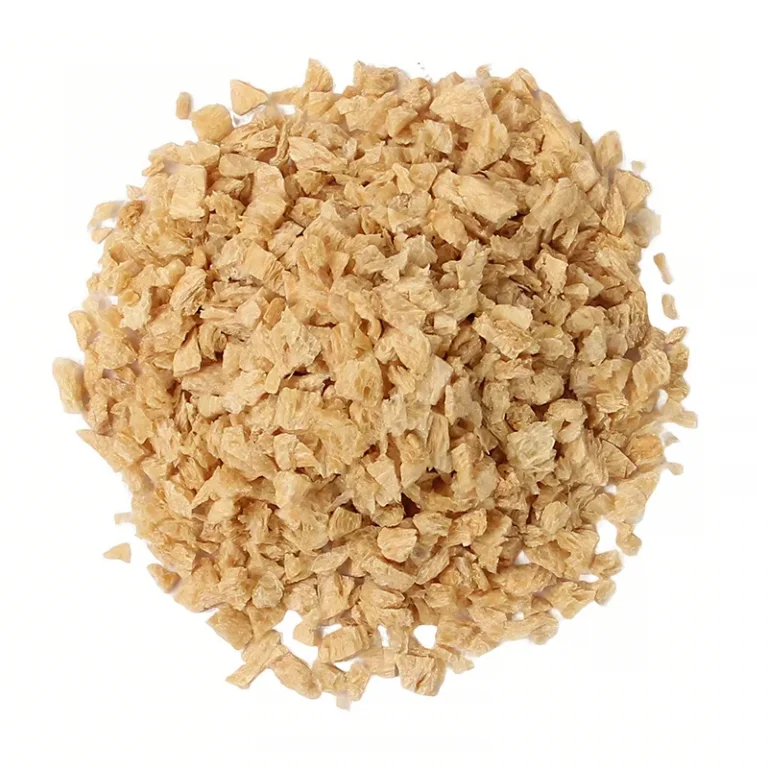
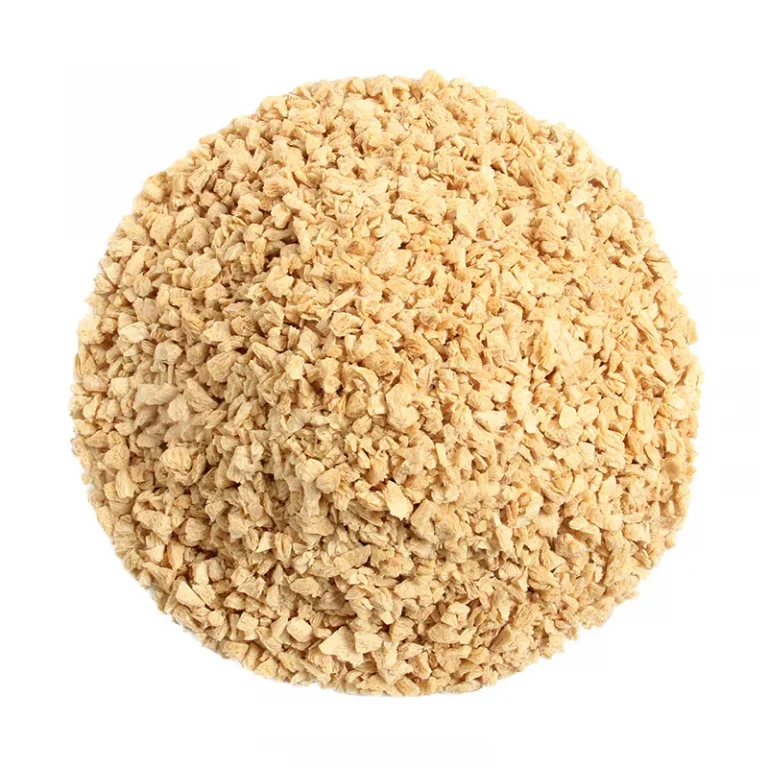
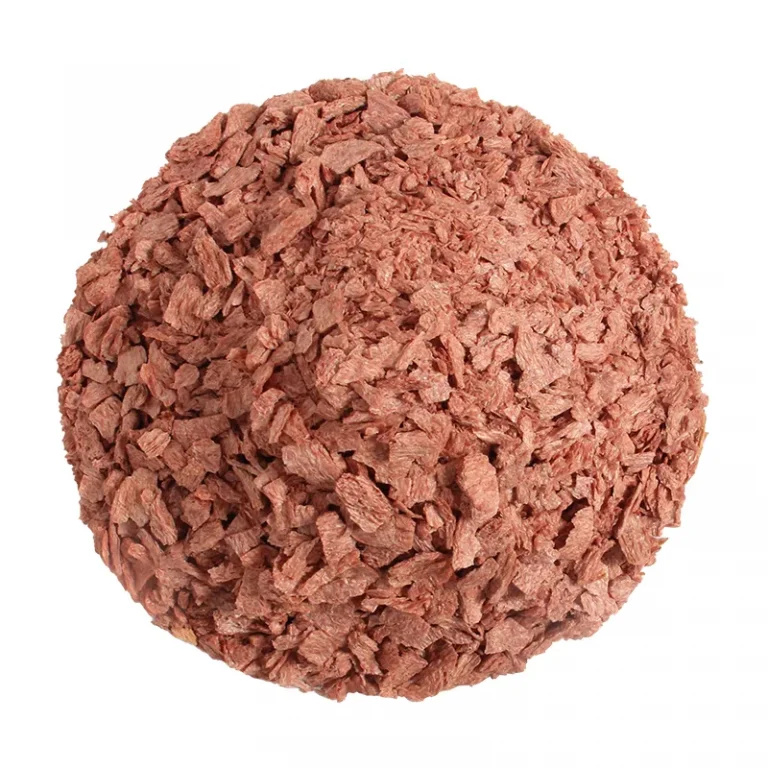
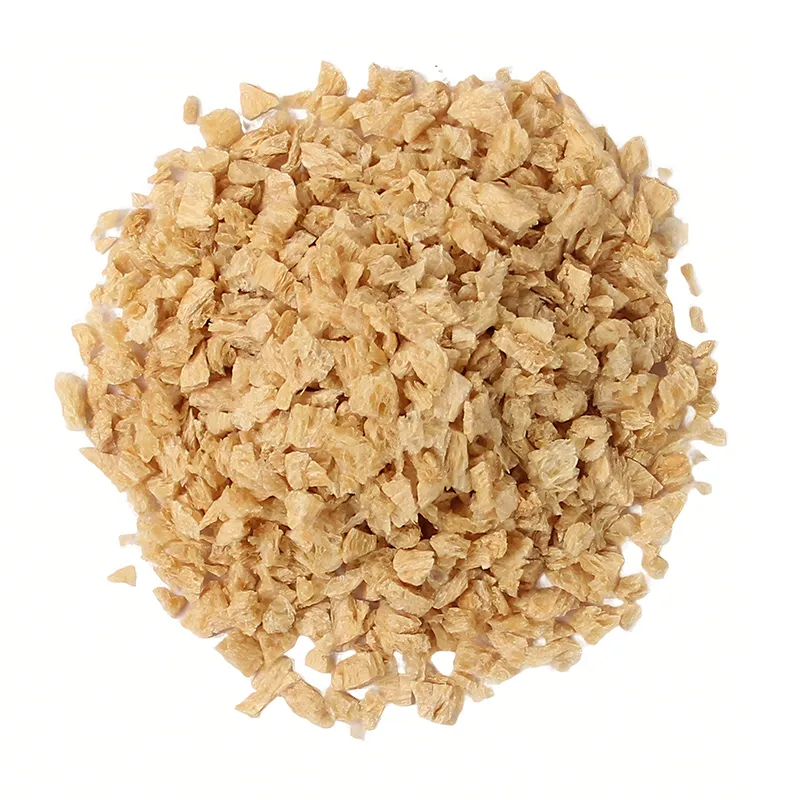
Baichuan’s public product directory lists textured soy protein formats including chunks, cylinders, flakes, granules, steaks, and strands. That range illustrates why a buyer should request a defined format and application discussion instead of asking for “alternative protein” without a physical or functional brief. The Baichuan TVP product range can be used to identify a starting format; suitability, specification, packaging, minimum order quantity, lead time, certificates, and destination-market compliance remain product- and order-specific checks.
How do ingredient format and function change the product-development decision?
plant based alternative protein is not a single technical class. A dispersed ingredient may be selected for protein contribution within a batter or matrix, while a textured ingredient may be selected for visible pieces or a particulate bite. A format that is appropriate for a filling may not be appropriate for a formed product, and an ingredient that performs well before cooking may behave differently after chilling, reheating, or sauce addition.
The development brief should translate broad goals into observations that can be tested. “Meat-like” is too broad to approve a material; “retains a visible piece after mixing and cooking” or “distributes evenly through a mince-style filling” is more useful. The team should also record when hydration occurs, how the material is drained or mixed, which thermal route is used, and when the finished product will be evaluated.
| Formato | Potential development role | Questions to test | Decision boundary |
|---|---|---|---|
| Flour, meal, or dispersed base | Protein contribution within a broader recipe or matrix | Does it disperse, hydrate, and interact with water, oil, starch, and flavor as required? | Protein content alone does not prove finished texture or process compatibility. |
| Concentrate or isolate | A more concentrated protein input for a defined formulation target | How do solubility or dispersion, flavor, heat, and other ingredients affect the finished food? | A higher protein concentration does not automatically produce the desired eating quality. |
| Gránulos o escamas | Distributed or particulate structure in fillings, mince-style foods, sauces, or formed products | Is hydration even? Does the material mix without excessive breakage or unwanted clumping? | Particle size, water addition, and the finished process must be controlled together. |
| Chunks, cylinders, steaks, or strands | Visible, shaped, or directional structure where piece identity matters | Does the format retain its intended structure through preparation, seasoning, cooking, and holding? | One shape should not be treated as interchangeable with another without a new trial. |
A useful comparison records both the material and the process. Weigh dry and added liquid inputs, document the preparation time and temperature, use the same mixing and cooking sequence for each candidate, and assess the product at the point where the customer will use or eat it. These controls do not create a universal performance claim; they make the comparison between candidate alternative protein ingredients more defensible. The result can also show whether the chosen alternative protein sources remain compatible with the recipe after cooking and holding.

Which ingredient formats fit common food applications?
Application-led screening is more reliable than choosing a material from a catalogue description. A mince-style filling may need even distribution and controlled hydration; a visible piece may need shape retention; and a strand-like product may need a format that survives portioning and cooking. The starting format narrows the trial, but the formula and process decide whether it remains suitable at scale.
| Finished-food requirement | Formats to screen first | Primary risk to assess | Evidence for the next decision |
|---|---|---|---|
| Even distribution in a mince, filling, or sauce | Granules or flakes selected for the required particle profile | Uneven hydration, clumping, breakage, or texture loss during cooking | Hydration record, mixing observation, finished distribution, and cooked texture |
| Visible pieces in a prepared food | Chunks, cylinders, or other documented piece formats | Hard centres, excessive softening, shape loss, or a piece size mismatch | Internal hydration check, piece-retention review, and full cook-and-hold trial |
| Structured or directional bite | Strands or another format whose geometry matches the portioning method | Loss of structure during seasoning, forming, cooking, or reheating | Application sample, process notes, portion consistency, and post-cook structure |
| Portioned or steak-like presentation | Steaks or larger structured formats, subject to the product brief | Handling damage, uneven seasoning contact, or bite variation across the portion | Controlled portion trial and grade-specific preparation instructions |
For an application-led starting point, buyers can review Baichuan’s plant-based product solutions. The page can help frame the product conversation, but it should not replace a current specification, sample preparation instruction, allergen review, or test in the intended formula. A supplier’s category page and a buyer’s approval record serve different purposes.
What standards and compliance checks apply to alternative protein ingredients?
Compliance depends on the ingredient, intended use, finished food, marketing claims, and destination market. The U.S. Food and Drug Administration’s public guidance on food ingredients can help organize questions about ingredient categories and regulatory status. FAO/WHO Codex texts provide an international reference point, but national or regional rules still govern a product placed on a particular market. Neither source certifies the texture, nutrition, or commercial suitability of a specific supplier grade.
For a supplier evidence file, separate at least four questions: what the material is, how its quality characteristics are controlled, which safety or allergen information applies, and what any certificate actually covers. Request the current product specification, ingredient statement, allergen information, lot or traceability documentation, packaging and storage details, relevant analytical information, and certificates within the scope of the proposed product, site, and shipment.
Do not treat a company-level statement as automatic proof for every product or destination market. If a supplier presents Non-GMO, HALAL, IFS, or another certification or claim, check the issuer, validity, site, product scope, certificate dates, and customer or market requirements. A test method explains how a property was measured; it is not itself a product certification. The public Baichuan quality and safety information is the appropriate starting point for reviewing the supplier’s published quality information, followed by confirmation for the exact grade and order.
How should a food developer select and qualify a supplier grade?
- Definir el trabajo de producto terminado. Record the product form, target bite, visible structure, process route, storage or reheating conditions, destination market, and intended label position.
- Choose the starting format. Decide whether the application needs a dispersed base, even particulate, visible piece, or directional structure, then request the matching grade rather than a broad category.
- Run a controlled comparison. Keep the relevant water, time, temperature, mixing, drainage, forming, cooking, and evaluation conditions consistent across samples.
- Revisa el archivo de evidencia. Match the sample to the specification, ingredient and allergen information, traceability, certificates, packaging, storage, and destination-market requirements.
- Approve the sample and order scope together. Confirm that the tested grade is the grade ordered, and define which changes require a new trial or customer and regulatory review.
Baichuan can be included as one supplier in this evidence-based comparison because its public site lists textured soy protein formats across chunks, cylinders, flakes, granules, steaks, and strands. Buyers should evaluate the supplier against the same application, documentation, quality, and commercial checklist used for every candidate. Product suitability, specification, minimum order quantity, packaging, lead time, certificates, and destination-market compliance must be confirmed for the specific grade and order. That is the point at which plant based alternative protein becomes a documented procurement decision rather than a broad category label. A second controlled trial may be needed if the formula, process, or market changes.
What questions do product developers ask about alternative proteins?
What are examples of alternative proteins?
Examples can include plant-derived protein ingredients from sources such as soy, peas and other pulses, cereals, or seeds, along with different formats made from those materials. In commercial development, the useful description is more specific than the source: identify the exact ingredient, physical format, grade, intended use, and market documentation before selecting it.
What is poor man's protein?
“Poor man’s protein” is an informal historical phrase that has been used for different foods in different regions, so it is not a reliable technical ingredient category or purchasing term. A developer should avoid using it as a specification and instead identify the actual source, composition, format, allergen position, and intended application.
What are the disadvantages of alternative proteins?
There is no single disadvantage shared by every candidate. Depending on the material and application, the development risks may include unsuitable texture, uneven hydration, flavor, allergen or labeling requirements, process incompatibility, or incomplete supplier documentation. The correct assessment comes from testing the exact grade and formula of the selected alternative protein ingredients and checking the evidence file for the target market.
What food is almost 100% protein?
No ordinary finished food should be described as almost 100% protein without a defined analytical basis, moisture basis, serving basis, and verified product data. Food developers should use the current specification and finished-product nutrition analysis rather than a category claim. Protein concentration is only one part of deciding whether an ingredient fits a recipe, process, label, and market.
Which references support this alternative protein ingredient guide?
- U.S. Food and Drug Administration, “Types of Food Ingredients” — public context for food-ingredient categories and regulatory questions.
- European Food Information Council, “Plant-based protein: All you need to know to get enough of it” — background on plant protein sources and dietary context.
- FAO/WHO Codex Alimentarius, “Codex texts” — reference point for international food-standard texts alongside national requirements.
- PubMed Central, “A Narrative Review of Alternative Protein Sources” — published review background on alternative protein categories and development considerations.
How should a developer decide which alternative protein ingredient to use?
The key distinction is between a source, a physical format, and a verified job in the finished food. Start with the product and process; compare candidate formats under the same conditions; then review water behavior, structure, flavor, allergen and label requirements, certificate scope, and supply evidence together. Do not approve a material because its category name sounds appropriate, and do not generalize a supplier statement from one product or market to every grade. Baichuan’s public range provides one supplier set to screen, while the defensible next step is still grade-specific sampling and documentation review. For a product discussion, developers can contactar a Baichuan with the application brief, target market, and evidence requirements. The same evidence-first logic should govern any plant based alternative protein decision.