Comparar um pedaço de soja com uma proteína em pó de ervilha não revela qual cultura produz o melhor hambúrguer. Estão sendo comparadas duas formas diferentes de ingrediente. Tanto a origem quanto o processo de transformação influenciam as propriedades do ingrediente.
O útil proteína de soja vs proteína de ervilha A comparação começa com a mesma etapa: enriquecimento proteico, suporte à ligação ou um componente texturizado visível. Primeiro, compare as formas; em seguida, avalie o sabor, o valor nutricional, os alérgenos e o produto final. Não existe um ingrediente vencedor em nível de matéria-prima para todas as receitas.
Você está comparando pós ou peças texturizadas?
Farinha, concentrado e isolado designam categorias de ingredientes. Texturizado descreve a estrutura física. Um pó pode contribuir para uma mistura homogênea, enquanto peças texturizadas prontas proporcionam uma textura mais evidente na boca. Tanto os ingredientes de soja quanto os de ervilha exigem a identificação precisa do seu grau específico.
Proteína de soja texturizada Deve-se comparar com uma alternativa de textura adequada se o objetivo for a percepção de partículas na boca. A comparação com um pó sem textura ainda pode ser útil para uma reformulação completa, mas não constitui um ensaio de substituição direta, um para um. O proteína de soja texturizada na indústria alimentícia explains the textured-soy role.
What should you compare in soy and pea protein samples?
| Question | Soy ingredient check | Pea ingredient check |
|---|---|---|
| What form is supplied? | Powder, textured piece or blend | Powder, textured piece or blend |
| What does it taste like? | Evaluate the exact grade in the food | Evaluate the exact grade in the food |
| What nutrients does it contribute? | Product-specific data and basis | Product-specific data and basis |
| What allergens need review? | Soy and the complete formulation | Pea sensitivity and the complete formulation |
| What is the delivered cost? | Current quote and acceptable finished yield | Current quote and acceptable finished yield |
Do not assign a permanent flavor or price advantage from a crop name. Ingredient processing, formulation, origin, quantity and market conditions differ. A current quotation and a coded application test are more useful than a generic ranking.
Does switching to pea remove every allergen concern?
No. Soy is one of the major allergens covered by U.S. FDA labelling requirements. Pea is not one of the U.S. major nine, but people can still have an allergy to it. The absence of a major-allergen label category is not proof that an ingredient cannot cause a reaction.
A product marketed without soy also needs its other ingredients and cross-contact controls checked. Wheat binders, sesame seasonings and other components remain relevant. Use the current rules for the sales market and seek medical guidance for a diagnosed allergy.
Does soy protein contain estrogen?
Soy contains isoflavones, plant compounds with estrogen-like structures; they are not the same as human estrogen. Harvard’s soy overview explains why effects cannot be reduced to a claim that eating soy simply raises estrogen. It is also not a basis for making a medical promise about a particular meat alternative.
Para pea protein and soy alike, use the actual amino-acid and nutrition information when those values matter to the brief. Compare prepared servings rather than a dry isolate against a water-rich food. A discussion of dietary protein is separate from treatment for a hormone-related condition.
How do you compare soy and pea protein in the same recipe?
- Identify the exact grade and physical form of both ingredients.
- Prepare each according to its own documented instructions.
- Keep the reference recipe and cooking method consistent.
- Record adjustments needed to reach the same target product.
- Compare the finished texture, flavor, losses and reheated result.
If an equal-weight substitution fails, distinguish that result from a fully optimized alternative recipe. The first asks whether an ingredient drops into an existing formula; the second asks whether a different formula can achieve the same brief. Both can be useful, but they answer different questions.
Is an equal-weight replacement the same as reformulating?
| Trial | What stays fixed | What the result tells you |
|---|---|---|
| Direct replacement | The existing recipe and process, apart from the named ingredient | Whether that grade can work with limited changes |
| Separate formulation | The finished-product requirements and assessment method | Whether an adjusted recipe can meet the same brief |
Report these results separately. Failure in a direct swap does not establish that pea or soy cannot work in a redesigned food. Equally, a good result after several recipe changes should not be described as a simple one-for-one replacement.
Where can Baichuan support the soy side of the comparison?
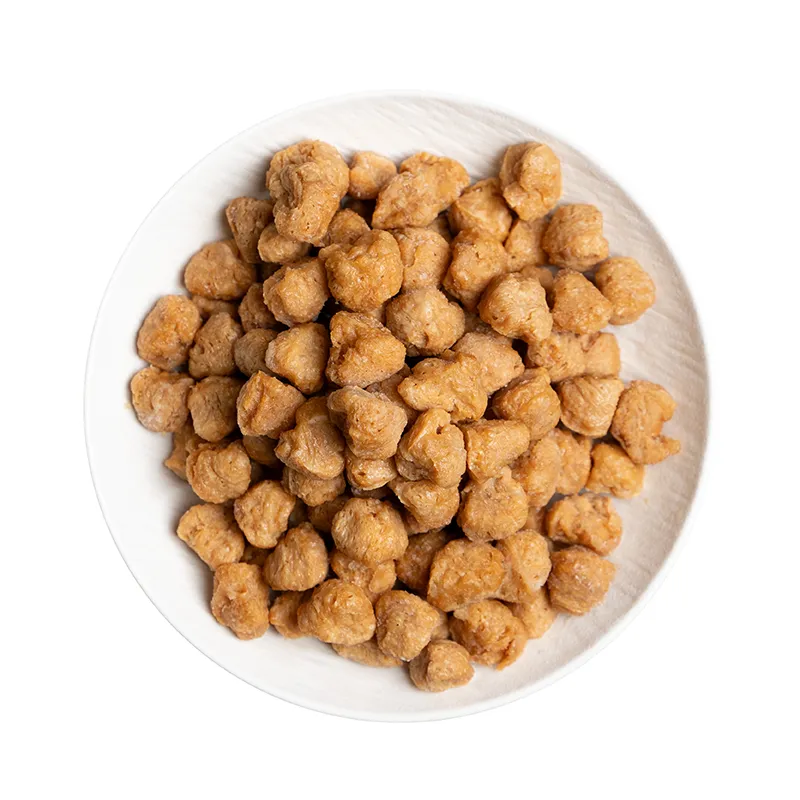
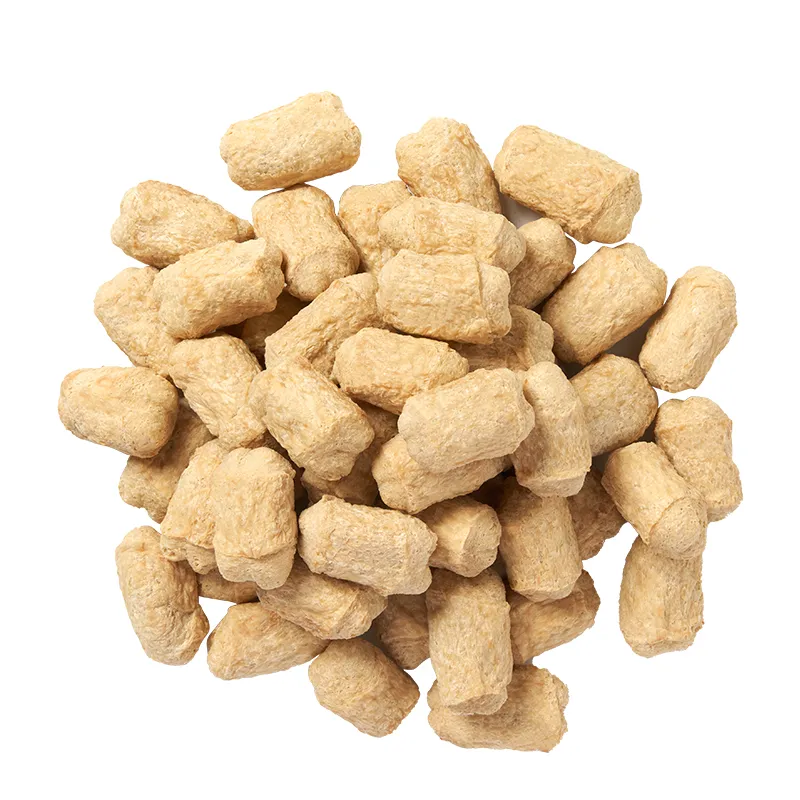
Baichuan textured product catalogue gives the available shape families. For a mince-style application, a sample of soy protein granules is a more relevant starting point than an unspecified soy ingredient. For larger pieces, compare the textured soy protein chunks.
Soy protein should be selected on the proposed grade’s documents and application results. This is a manufacturer-published comparison, not an independent ranking or evidence that Baichuan supplies pea ingredients. No claim of superiority is made for either source.
Perguntas frequentes
What is the drawback of pea protein?
Possible concerns include flavor, ingredient-specific functionality, cost and individual allergy or tolerance. None can be assigned one fixed severity to every pea grade. Test the actual ingredient in the intended food.
What is a drawback of soy protein?
Soy is a declared major allergen in many markets, and some recipes may need a different source. Flavor and functionality also depend on the grade and process. Those considerations do not mean soy is unsuitable for everyone.
Does pea protein have estrogen?
Pea protein is a plant protein ingredient, not human estrogen. Its exact composition depends on the product. A person with a hormone-related medical concern should discuss the specific food or supplement with their clinician rather than use a crop comparison as medical advice.
Who should not use pea protein?
Someone with a diagnosed pea allergy or medical advice to avoid it should not use it. Other people with dietary restrictions should check the complete product and ask a clinician when needed. Not being a U.S. major-nine allergen does not mean allergy is impossible.
Is pea or soy protein better?
For plant-based meat, the better choice is the grade that meets the flavor, texture, nutrition, allergen and supply brief in the complete recipe. Match physical forms and use a controlled trial instead of ranking crops in the abstract.
Does soy protein spike estrogen?
Soy isoflavones are not human estrogen, and soy intake should not be described simply as causing an estrogen spike. Harvard’s overview discusses the evidence and context. Individual medical questions belong with a clinician.
Does soy protein have a complete amino acid profile?
Soy protein contains all nine essential amino acids. The amount of protein in a portion still depends on the specific ingredient, recipe and serving size, so a complete profile does not establish one fixed nutritional value for every product.
Is there a fake meat that isn’t made with soy?
Yes. Meat alternatives can use pea, wheat, beans, mushrooms and other ingredients or blends. Check the complete label if soy must be avoided; a pea-based name does not by itself establish soy-free production.
Referências
- Harvard Nutrition Source: soy and isoflavone evidence
- FDA: food allergy and major-allergen information
- Baichuan: textured soy formats
Which ingredient meets the requirements of your finished food?
Decide whether you are testing a direct substitution or developing a new recipe. Compare matched forms, record the changes each needs, and judge the finished food before settling the ingredient and supply specification.