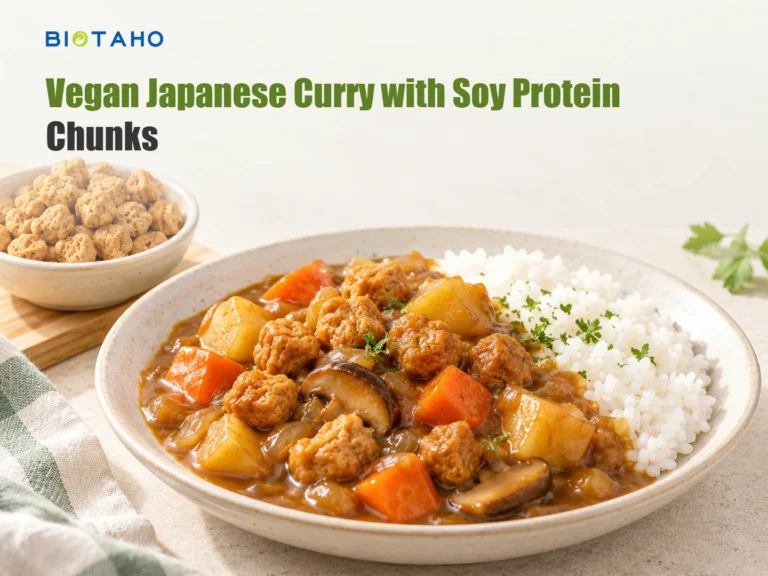
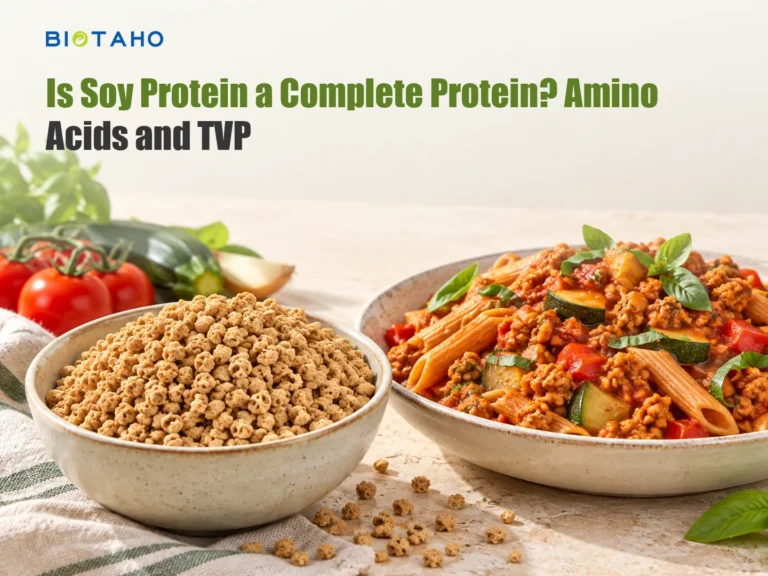
A good vegan curry recipe starts with the texture you want to eat: soy chunks give separate bites, while granules spread small crumbles throughout the sauce. Prepare the protein before adding it to the curry, give firm vegetables time to soften, and adjust the sauce liquid only after accounting for the moisture the soy brings into the pan.
The tomato, spinach and soy-granule curry below carries that sequence through one adaptable meal. It also shows where choosing chunks would change the preparation. For vegan or vegetarian curry meals, the same practical question comes first: should the sauce surround distinct pieces or hold a spoonful of fine crumbles?
Choose soy chunks for bites or granules for a minced curry
Choose Frutti di mare in polvere di proteine di soia when you want to pick up individual pieces with rice or bread. Choose granuli di soia for a minced-style curry in which the protein is distributed through an onion-and-tomato base. Neither format is an automatic one-for-one replacement for the other; shape changes how much sauce surrounds each mouthful and how you judge the finished texture.
Di Baichuan small fibrous soy chunks for catering are cubed pieces listed for catering and plant-based applications. Its compact textured protein granules for sauces have an irregular shape and are specifically listed for sauces and fillings requiring distinct granules. Those product forms make useful candidates for the two curry textures; the recipe below is a starting point, and current product directions govern preparation.
For this tomato curry, choose granules so the sauce can cling to small pieces throughout the pan. Chunks would give the dish larger, separate bites.
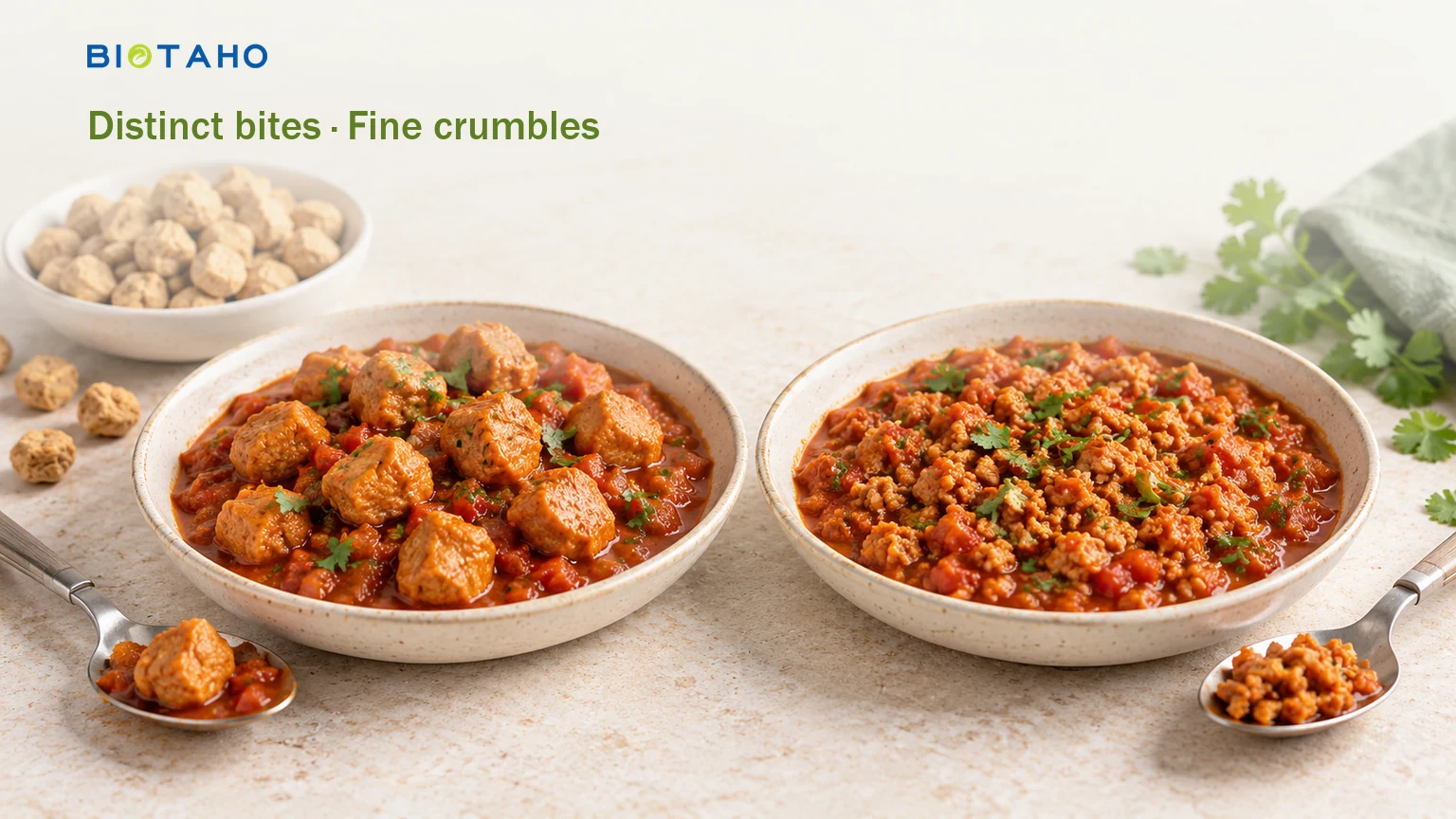
The comparison below places those formats alongside familiar curry ingredients. Use it to settle on one main protein before planning the sauce liquid and cooking sequence.
| Ingrediente | Role in the curry | Preparation choice |
|---|---|---|
| Soy chunks | Distinct bites in a generous sauce | Hydrate as directed; check the centre before adding |
| Soy granules | Fine crumbles distributed through sauce | Hydrate as directed and drain excess liquid |
| Cooked chickpeas | Separate bites with little preparation | Drain canned chickpeas and simmer in the sauce |
| Lentils | A softer, more integrated curry | Follow the variety’s cooking directions and allow enough liquid |
| Firm tofu | Soft cubes contrasting with vegetables | Drain, cube and optionally brown before adding |
Check composition at this stage too. Both linked products contain soy and wheat gluten; the chunks also list wheat starch, while the granules list wheat flour. They are soy-and-wheat blends, not pure soy isolates or gluten-free ingredients. Vegan does not mean allergen-free, so check the complete current label as well as the stock and seasonings.
Hydrate the protein before building the curry sauce
With granules selected, prepare them separately from the tomato sauce. This separates two jobs: softening the dry ingredient and reducing the sauce to a useful consistency. Adding an unfamiliar dry product directly to the measured sauce liquid makes both jobs harder to control.
Baichuan lists a hydration window of 40–55 minutes for the linked granules and 60–65 minutes for the chunks. Allow that preparation lead time separately from the recipe’s pan-cooking stages. These windows do not specify the complete method: use the current directions for water quantity, temperature, draining and any subsequent cooking.
The following Indian-inspired tomato and soy-granule curry serves about four with rice or bread; it is not presented as a regional recipe. Keep the ingredient amounts below as the starting formulation, with extra sauce water added only as needed.
| Ingrediente | Suggested amount |
|---|---|
| Dry soy granules | 80 g, prepared according to the pack |
| Neutral oil | 1 cucchiaio da tavola |
| Cipolla | 1 medium, finely chopped |
| Aglio e zenzero fresco | 2 minced cloves; 1 tablespoon grated ginger |
| Ground cumin, coriander and turmeric | 1 teaspoon each cumin and coriander; ½ teaspoon turmeric |
| Chilli flakes | ¼ teaspoon, optional |
| Pomodori a pezzetti | One 400 g can |
| Carrot | 1 medium, cut into thin half-moons |
| Water or vegan vegetable stock | 250 ml initially, plus more as needed |
| Spinach | 100 g |
| Lemon juice and salt | 1–2 teaspoons juice; salt to taste |
- Prepare the granules according to the packet directions. Drain excess soaking liquid if instructed, keeping it separate from the measured sauce water or stock.
Check that the granules are evenly softened before proceeding. For chunks, check the centre as well as the surface for a dry, hard core. These are texture checks; follow any required cooking instructions too. Avoid changing the draining method from batch to batch, because wetter prepared soy carries more water into the curry even when the dry weight stays the same.
Cook the sauce and vegetables around the prepared soy
Once the granules are ready, set them aside while the sauce develops. The carrot needs the first simmer; the prepared soy enters later, and spinach finishes the dish. This order lets the vegetables determine their own cooking time without making the protein wait in the pan throughout.
Think of vegetables in three groups: dense vegetables, tender vegetables and leafy greens. Carrots and potatoes usually need a head start, peppers and courgettes need less time, and spinach needs only enough heat to wilt. Equal-sized cuts do not make different vegetables soften at the same rate. In this recipe, thin carrot half-moons go into the tomato sauce well before the spinach.
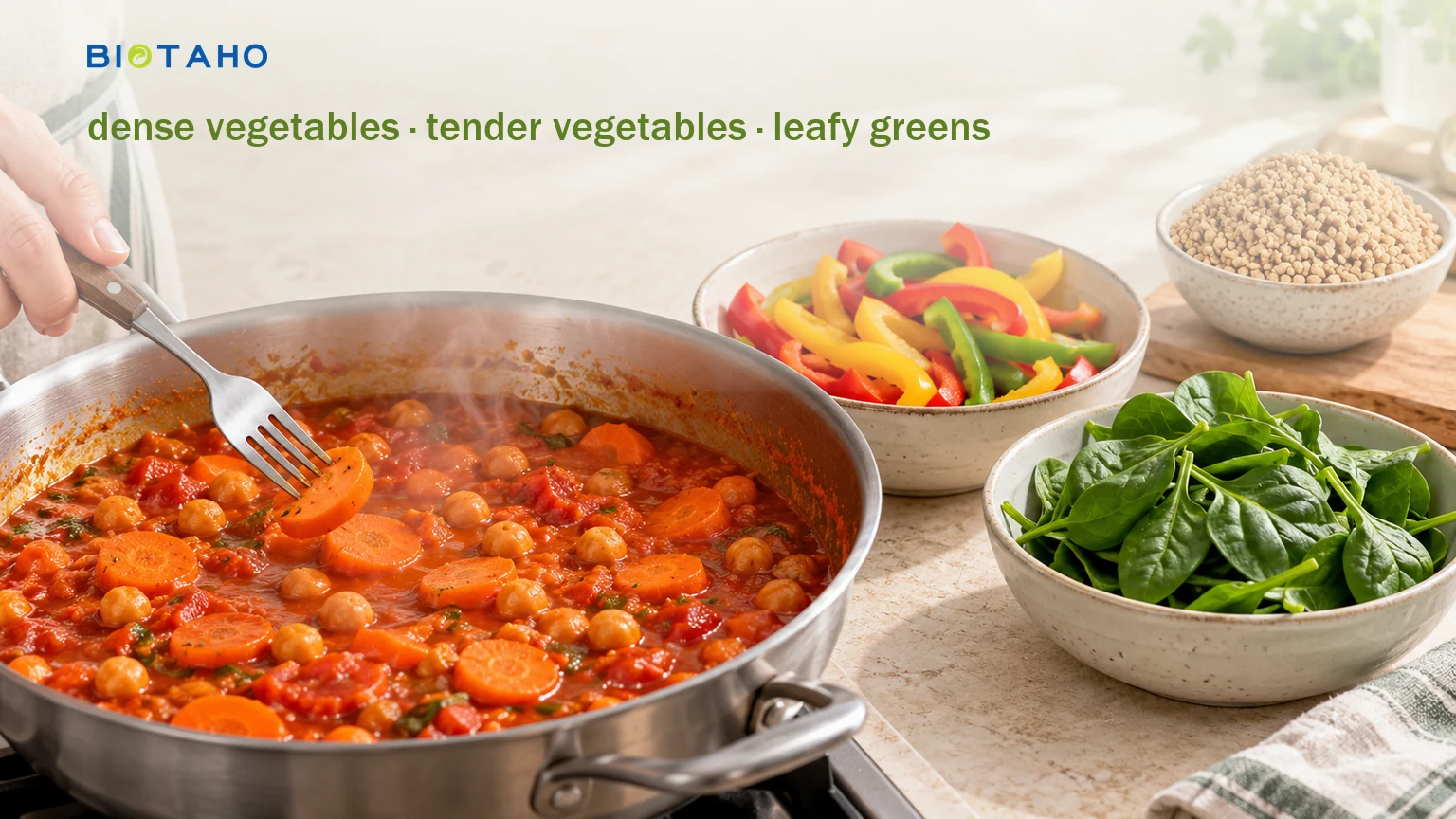
- Heat the oil in a wide saucepan over medium heat. Add the onion and cook for about 6–8 minutes, stirring, until softened. Add the garlic and ginger and stir for about 30 seconds.
- Add the cumin, coriander, turmeric and optional chilli. Stir briefly until fragrant, then immediately add the tomatoes, carrot and measured water or stock.
- Bring to a gentle simmer. Cook for about 12–15 minutes, stirring occasionally, until the carrot is almost tender and the tomatoes have cooked into a sauce.
At this point, the carrot should be close to ready but still hold its shape. If it remains firm, continue cooking the sauce before adding the granules. That is more useful than adding everything together and extending the final simmer.
This staged approach also matters when developing other sauce styles. Just One Cookbook’s vegetarian Japanese curry illustrates cooking vegetables in stages and replacing butter with vegan butter or oil when needed. Cookie and Kate’s Thai red curry offers a coconut-and-paste sauce approach. Those recipes support sauce and vegetable choices, not preparation instructions for these soy products. Keep the tomato base fixed for the first batch so you can judge the granules without also changing the sauce.
Adjust the liquid without overcooking the protein
Now add the prepared granules to the nearly finished carrot and tomato base. The goal is a moist, spoonable curry with sauce clinging to the crumbles, not a dry mixture or a pool of thin liquid around them.
- Add the prepared granules and simmer for another 5–10 minutes, or as required by the product directions. Stir, adding small splashes of water if the mixture catches on the pan.
- Fold in the spinach until wilted. Taste, add the lemon juice and season with salt. Serve when the carrot is tender and the granules are evenly softened.
Make any substantial liquid correction before folding in the spinach. If the curry is watery, simmer uncovered, checking frequently. If you notice excess liquid before the granules go in, reduce it then so the protein does not need an extended simmer just to thicken the sauce. If the curry is too thick, stir in water a little at a time and let each addition mix through before adding more.
Do not treat the listed 250 ml as the total water used to prepare the meal: hydration water is separate, and the recipe explicitly allows more sauce water as needed. What matters in the pan is how much liquid remains with the prepared granules, how far the tomatoes have reduced and how quickly the saucepan loses moisture.
For extra richness without coconut milk, take the finished pan off the heat and stir in a spoonful of unsweetened plant-based yogurt, checking its ingredients. Make this optional finish after the basic consistency is right; it should not replace controlling the sauce liquid.
Repeat the curry with the same product and preparation
Once the curry has the texture you want, record the product used, dry quantity, hydration method, draining method and extra sauce water. Keep the carrot cut and saucepan consistent too. These details help explain why one batch is spoonable and another becomes dry, even with the same ingredient table.
For a chunk version, retain the same preparation sequence but treat the change as a separate recipe trial. Hydrate the chunks according to their directions, bring the vegetables close to tenderness, then complete the required cooking with enough sauce around the pieces. Do not assume the granule quantity or finishing time transfers unchanged. The supplier’s catering and sauce applications identify possible uses, not a tested result for this curry.
Keep dietary choices equally consistent. A vegetarian curry recipe may include butter, ghee, cream or yogurt; a vegan version excludes those animal-derived ingredients. Check curry paste, stock and roux as carefully as the main protein, especially when moving to Thai-style sauces that may contain shrimp paste or fish sauce.
For US home kitchens, FDA guidance calls for refrigerating perishables within two hours, or one hour when the outside temperature exceeds 90°F. Divide leftovers into shallow containers and keep the refrigerator at 40°F or below. Reheat leftovers to 165°F, measured with a food thermometer; FDA also advises bringing sauces to a boil when reheating. Add water to loosen thick curry and stir for even heating. Soft vegetables and softened soy are texture cues, not measures of safe reheating.
Domande frequenti
What goes in a vegan curry?
This version combines prepared soy granules, onion, garlic, ginger, spices, tomatoes, carrot and spinach. Water or vegan stock supplies the sauce liquid, with lemon juice and salt added at the end. Check every ingredient, including stock and optional yogurt, for animal-derived components.
Can you make a 3-ingredient curry sauce?
Yes. Vegan curry paste, coconut milk and water can form a simple sauce. Prepare the soy separately and adjust the sauce around its retained moisture. This is a different sauce formulation from the tomato recipe above.
What can I put in a curry instead of meat?
Soy chunks provide separate bites, while granules create a minced texture. Chickpeas, lentils and tofu are other options, but their preparation and liquid needs differ. Choose the texture first instead of swapping ingredients solely by weight.
Which curry is usually vegan?
Lentil and chickpea curries may be vegan, but the name alone is not enough. Check for ghee, butter, cream, meat stock and fish-based seasonings. The tomato-and-granule recipe here uses plant-based ingredients, subject to the labels you select.
Why is green curry not vegan?
Green curry can be vegan. Some curry pastes contain shrimp paste, and some preparations use fish sauce. Choose an explicitly vegan paste and plant-based seasonings, then check the protein ingredient separately for allergens.
Can I make vegan curry without coconut milk?
Yes. The onion-and-tomato sauce above needs no coconut milk. Its body comes from cooked tomatoes, aromatics and distributed granules. Adjust with small additions of water instead of assuming a coconut-milk substitute will need the same quantity.
Referenze
- The Vegan Society: definition of veganism — dietary exclusion of animal-derived foods.
- Just One Cookbook: vegetarian Japanese curry — staged vegetable cooking and vegan alternatives to butter.
- Cookie and Kate: Thai red curry with vegetables — coconut-based sauce and checks for fish or shrimp ingredients in paste.
- FDA: safe food handling — cooling, refrigeration and reheating guidance.
- FDA: allergie alimentari — major allergens, including soy and wheat, and label reading.
For ingredient samples to compare in your curry, contact Baichuan about chunks or granules and request current preparation directions.