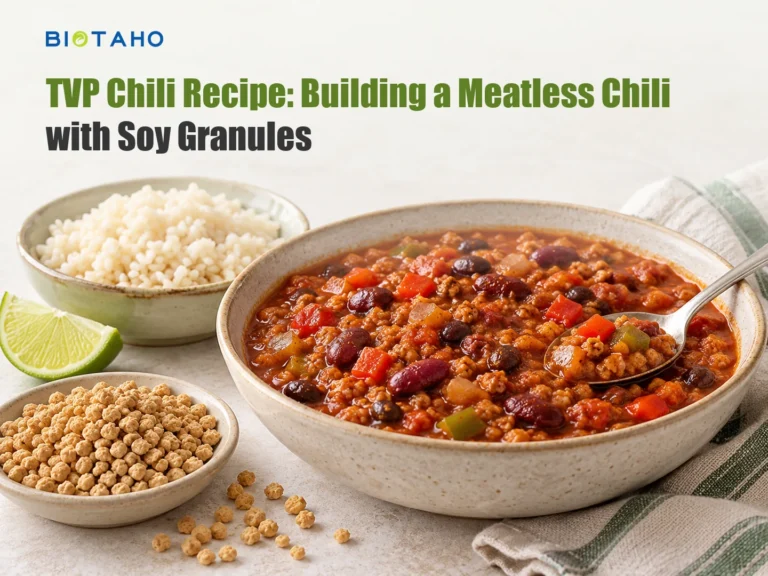
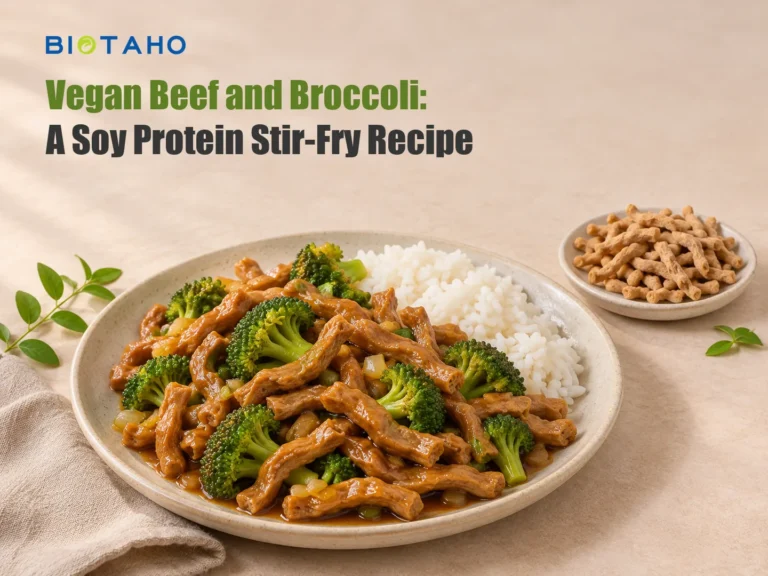
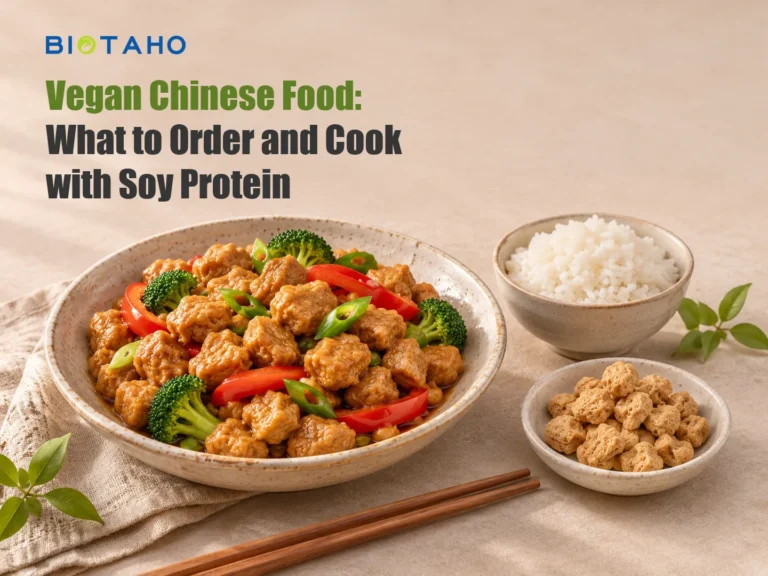
For vegan dinner recipes with soy protein, choose chunks when you want distinct bites in coconut curry and strands when you want thin pieces coated in a garlic-vinegar stir-fry sauce. Both dinners work from the same preparation principle: hydrate the protein separately, drain it appropriately, and then control the liquid that reaches the pan.
The two meals below keep vegetables, sauce and rice or noodles central to dinner. Their shared pans are vegan; if you also prepare vegetarian dinner recipes with dairy or eggs, offer those additions separately.
Choose soy chunks for curry or strands for a stir-fry
Start with the texture you want on the plate. Small chunks give cauliflower curry separate pieces to spoon over rice. Strands mix with thinly cut vegetables and noodles, so the sauce needs to coat their surfaces without leaving a watery pool underneath.
Baichuan offers small fibrous soy protein chunks for catering and shredded soy protein strands for catering. The chunk product is cubed, while the strand product is shredded. Those forms make useful starting choices for these two preparations, although each recipe still needs trials with the selected ingredient.
Both products combine soybean ingredients with wheat gluten and wheat starch. They are not pure soy isolates or gluten-free ingredients. Check the current pack and the sauces you plan to use before cooking for someone avoiding soy or wheat; the FDA identifies both as major food allergens.
| Dinner decision | Coconut curry | Yuxiang-style stir-fry |
|---|---|---|
| Protein form | Small fibrous chunks for distinct bites | Shredded strands to mix with vegetable strips |
| Preparation priority | Hydrate through the centre before adding to sauce | Hydrate, then drain thoroughly before stir-frying |
| Liquid control | Keep soaking liquid separate from the measured curry sauce | Keep excess soaking water out of the pan |
| Desired finish | Tender cauliflower and chunks in a lightly clinging sauce | Separate strips with a glossy coating and no excess liquid |
Prepare the protein before starting either sauce
Once you have chosen the form, allow time to prepare it before heating the sauce pan. Baichuan lists a hydration window of 60–65 minutes for both products. Treat that as separate preparation lead time, not part of the curry simmer or the brief stir-fry stage. The current product directions must govern water quantity, temperature and any required cooking; the time window alone is not a complete soaking method.
Use these recipes as starting points. Hydrate the textured soy protein as directed, checking that a chunk has no dry, hard centre. Drain, and gently press out excess water if appropriate under the product instructions. For strands, let trapped water drain away before they enter the stir-fry. Do not use the small amount of sauce liquid to rehydrate either dry ingredient.
During hydration, slice the curry onion, chop its garlic and ginger, and cut the cauliflower into small florets. For the stir-fry, cut carrot, pepper and mushrooms into similar-sized strips and mix the sauce. This leaves the prepared protein ready when each pan needs it, without prolonging the cooking of the vegetables.
Cook coconut curry around tender soy chunks
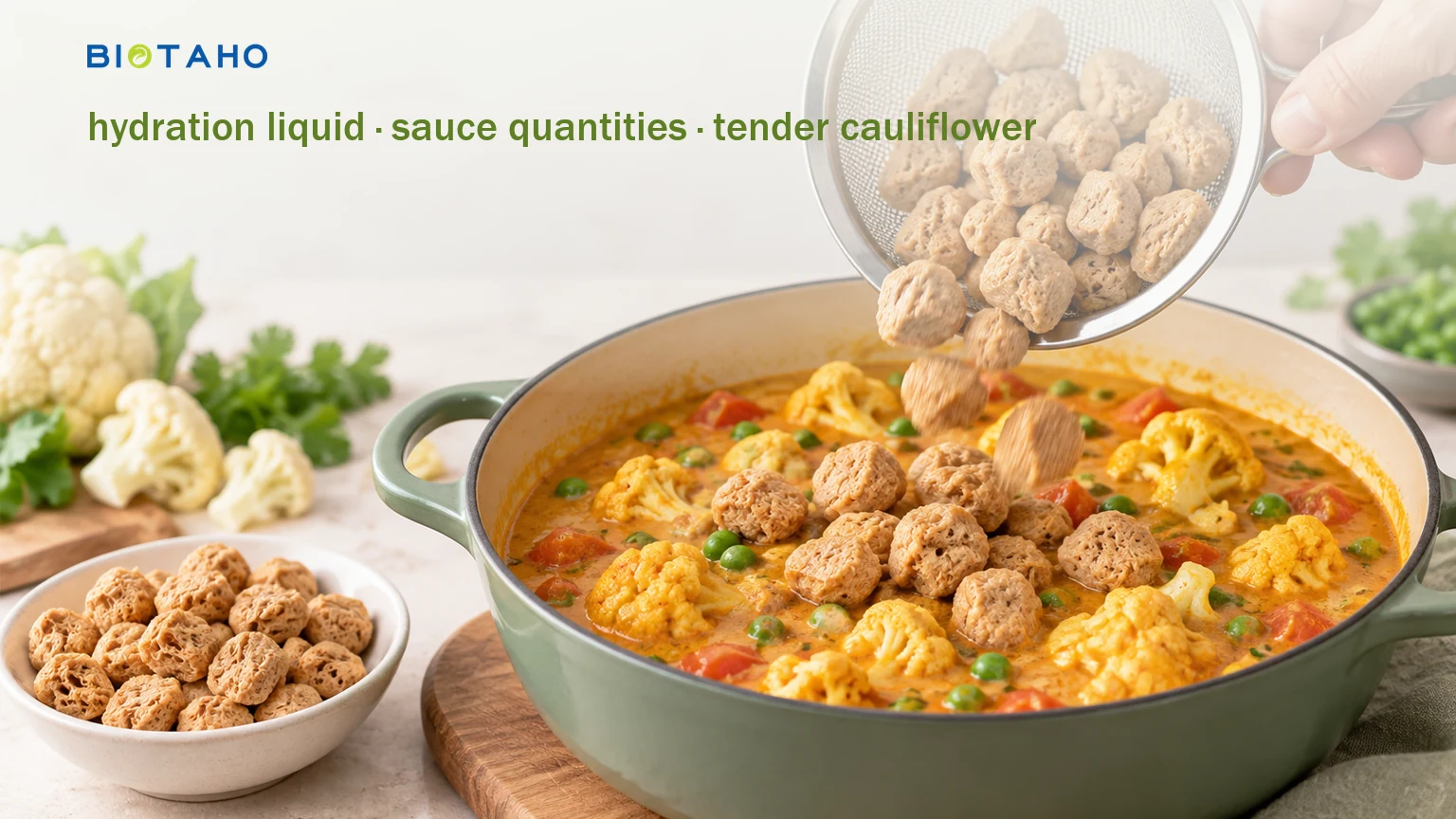
This coconut soy-chunk curry starts with enough ingredients for two generous dinners. Hydration liquid is separate from the sauce quantities in the table. Once the chunks are prepared, the cauliflower determines when to check the simmer: it should become easily pierced while the sauce stays loose enough to move around the pieces.
| Ingredient | Starting amount |
|---|---|
| Dry soy chunks | 60 g, hydrated according to the pack |
| Dry rice | 140 g |
| Rapeseed or other cooking oil | 1 tablespoon |
| Onion | 1 small, sliced |
| Garlic and fresh ginger | 2 cloves and a 2 cm piece, finely chopped |
| Curry powder | 2 teaspoons, or to taste |
| Chopped tomatoes | 200 g |
| Coconut milk | 200 ml |
| Water | 100 ml initially, plus more if needed |
| Cauliflower and frozen peas | 250 g small florets and 100 g peas |
| Lime juice and salt | To taste |
- Hydrate the soy chunks according to the pack, check the centre, then drain and gently press if directed. Start cooking the rice according to its packet.
- Heat the oil in a wide saucepan. Soften the onion over medium heat for about 5–7 minutes. Add the garlic, ginger and curry powder, stirring briefly until fragrant without scorching the spices.
- Add the tomatoes, coconut milk and 100 ml water. Stir in the cauliflower and prepared chunks, bring to a gentle simmer and partially cover.
- Simmer until the cauliflower is easily pierced and the chunks have completed the cooking required by their directions. Small florets may take around 10–15 minutes. Add a splash of water if the sauce catches before they soften.
- Add the peas and simmer until hot and tender. Uncover to reduce a thin sauce, or add water to loosen a thick one. Finish with lime juice and salt, then serve with the rice.
Check consistency after the peas are hot, when all the ingredients have contributed their moisture. The sauce should cling lightly to the chunks without becoming a dry paste. If it is thin, allow gentle uncovered reduction instead of adding more dry protein to absorb the liquid.
Small broccoli florets can replace the cauliflower, but add them later so they retain some bite. Plain plant-based yoghurt is an optional vegan topping. Dairy yoghurt can be offered separately as a labelled vegetarian option.
Use drained soy strands for a sauce that clings
The curry allows some adjustment during a gentle simmer; the strand dinner needs tighter moisture control before the sauce enters the pan. Drain the prepared strands well, and keep the vegetables in thin, similar-sized strips. A wide pan helps them cook without crowding and releasing more liquid than can evaporate.
For a two-person yuxiang-style sauce, mix 1 tablespoon soy sauce, 1 tablespoon rice vinegar, 1 teaspoon sugar, 1 teaspoon cornflour and 4 tablespoons water. Adjust chilli separately to taste. The combination gives a garlic, ginger, chilli and vinegar direction with a little sweetness; check soy sauce and any chilli paste for animal ingredients and allergens.
- Have the hydrated, drained strands ready before stir-frying.
- Cook the firmer vegetables first in a little oil. If the pan is crowded, cook the vegetables in batches.
- Briefly stir in the garlic and ginger, then toss in the prepared strands.
- Stir the sauce again to redistribute the cornflour before pouring it into the pan. Cook until it thickens into a glossy coating, allowing any further cooking time required by the soy product.
The finished soy protein stir-fry should have sauce clinging to the strands, with no pool of liquid underneath. Excess hydration water would dilute the measured sauce and extend the time needed to reach that finish, potentially softening the vegetables too much.
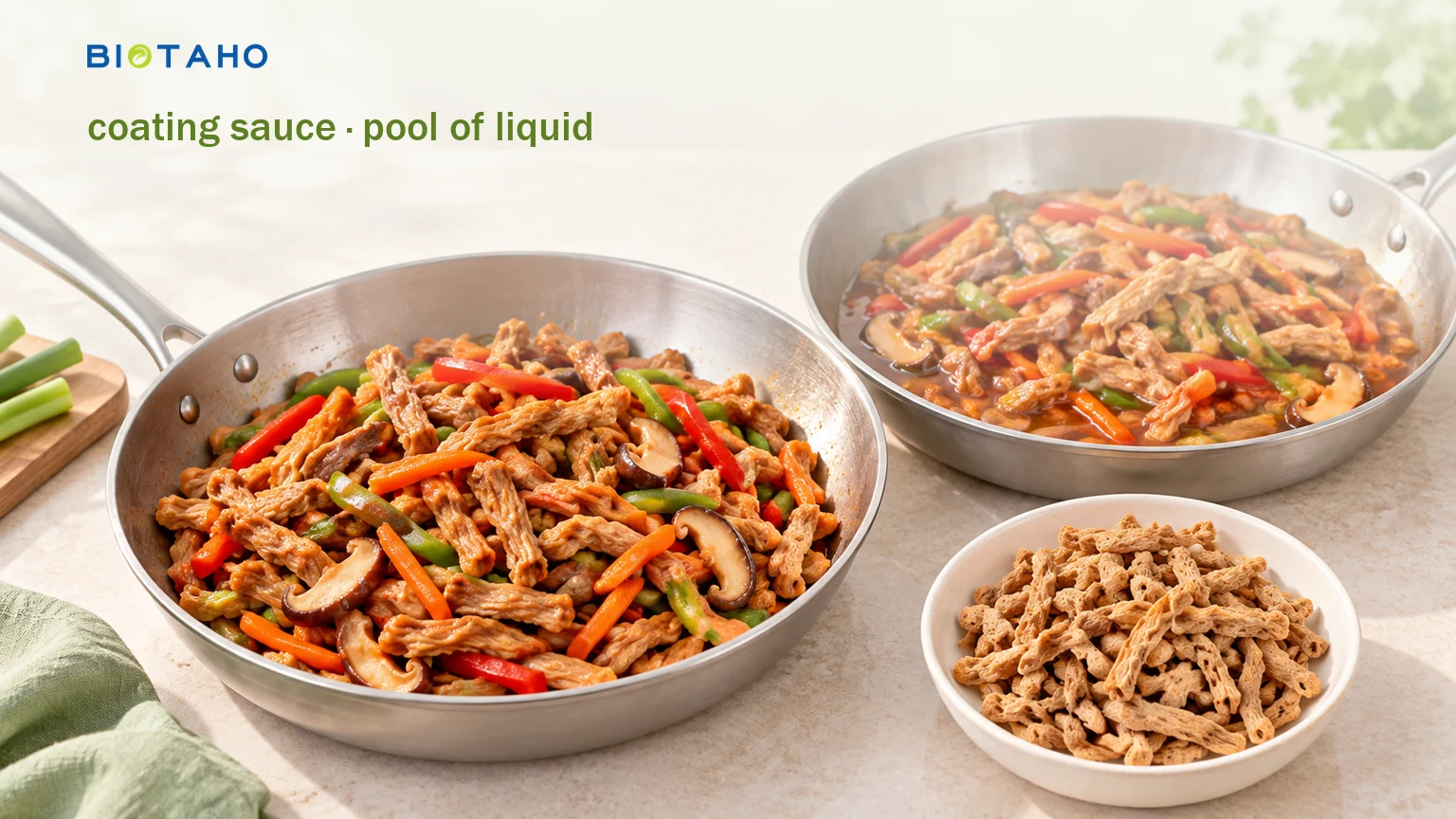
Serve over rice or alongside wheat noodles made without egg. For a vegetarian variation, offer a thoroughly cooked egg separately. Keep the main pan unchanged so everyone can choose their addition.
Plan the next dinner from the same preparation notes
After cooking, note the protein form, dry quantity, hydration method and draining approach alongside the sauce result. For the curry, record whether you needed extra water before the cauliflower softened. For the stir-fry, note whether the pan was crowded or the strands carried excess water. Change one element at a time on the next batch so the adjustment is useful.
Use ingredient labels to calculate protein per portion. The curry begins with 60 g of dry chunks; soaking increases their weight with water, not with additional protein. Match the label’s dry or prepared basis to your measurement, include the rice and other ingredients, and divide the batch total by the servings. Product-specific nutrition data are needed before assigning either dinner a protein total.
These meals combine a protein ingredient, vegetables and a starchy accompaniment. The NHS places that pattern within a varied vegan diet that also needs attention to nutrients such as vitamin B12. Neither dinner alone establishes the adequacy of the whole diet.
For leftovers, FDA guidance is to refrigerate perishables within two hours, or one hour when the outside temperature exceeds 90°F. Divide large batches into shallow containers and keep the refrigerator at 40°F or below. Reheat leftovers to 165°F, checking with a food thermometer, and bring sauces to a boil when reheating. Tenderness and a glossy coating are texture cues, not safety checks.
Domande frequenti
What are some good vegan dinner ideas?
Use chunks in the coconut curry with cauliflower, peas and rice, or drained strands in the garlic-vinegar vegetable stir-fry with rice or egg-free noodles. Choose the form before planning the sauce.
What is a good 4-ingredient vegan meal?
Prepared soy strands, frozen stir-fry vegetables, a vegan ready-seasoned sauce and egg-free noodles make a simple four-ingredient option. Prepare the strands fully according to their directions before combining them with the other ingredients.
What are some quick and easy vegan meals I can make in 30 minutes?
A strand stir-fry can suit a short cooking session if the protein is already prepared and safely refrigerated. The products discussed here list 60–65 minutes for hydration, so starting from dry ingredients would exceed that window before cooking.
What is the easiest vegan meal to make?
Of these two dinners, the curry is more forgiving because its sauce can be loosened or reduced during simmering. Prepare the chunks first and keep the cauliflower florets small.
How to get 30g protein per meal vegan?
Add up protein from the measured ingredients using their labels, then divide by servings. Adjust portions to your intended total; hydrated soy weight alone cannot establish whether a meal provides 30 g.
What can I do with TVP?
Use chunks for distinct curry bites, strands for coated stir-fries and granules for sauces or fillings. Each form needs its own preparation directions and moisture adjustment; they are not interchangeable by appearance or hydrated weight.
References
- NHS: The vegan diet — varied meal planning and nutrients requiring attention.
- Harvard Nutrition Source: Protein — protein sources and the wider nutritional composition of foods.
- FDA: Safe Food Handling — refrigeration, cooling and reheating guidance.
- FDA: Food Allergies — major allergens and label reading.
To develop either dinner with these ingredients, contact Baichuan about chunk or strand samples and current preparation directions.