A flavorful soya chunks curry recipe starts with two things: properly prepared chunks and a well-cooked onion-tomato base. Extra spice cannot make up for a raw-tasting gravy or pieces full of plain soaking water. Prepare the soy nuggets first, cook the sauce, then simmer them together so the chunks take on the seasoning.
Soya chunks are a chunky form of textured soy protein. Prepare them according to the packet and drain before adding them to the gravy. The cooking approach below follows Swasthi’s published curry, with notes on coconut-free variations and reheating. Use the source recipe’s quantities together; variations need a small trial with the product you are using.
What goes into a soya chunks curry?
Swasthi’s soya chunks curry brings together onion, tomato, ginger, garlic and spices. The method includes cumin, mustard seeds and curry leaves, with coconut or a blended mixture among the options. Other soy chunk curries use different combinations, so choose one recipe as your starting point.
Have the aromatics chopped, the spices measured and the liquid ready before cooking. Check the heat level of an unfamiliar chili powder or blend. Start with the recipe’s amount and taste the cooked gravy before deciding it needs more.
Swasthi’s batch starts with 1¼ cups dry chunks. The base uses 1 cup finely chopped onion, 1½ cups tomato and 1½ teaspoons ginger-garlic paste, with 1¼ cups hot water for the gravy. The blended mixture uses ¼ cup raw coconut; the source offers 10 cashews or ⅓ cup thick coconut milk as alternatives. Follow the full recipe for oil, spices and cooking steps. Keep these amounts together rather than mixing them with another recipe’s quantity of chunks or liquid.
| Ingredient group | Job in the curry | Decision before cooking |
|---|---|---|
| Onion and tomato | Body and a savory-acid base | Chopped, grated or blended according to the recipe |
| Ginger, garlic and spices | Aroma and seasoning | Heat level and the particular spice blend |
| Prepared soy chunks | The main pieces in the gravy | Piece size and consistent draining |
| Coconut, nuts or another finish | Changes richness and consistency | Recipe style and allergen requirements |
How should you prepare the soya chunks?
Follow the manufacturer’s directions, then split a large chunk to check for a dry center. Rinse if the product or recipe calls for it. When cool enough to handle, drain and press gently, keeping the pieces intact. If thick pieces are still firm inside, more squeezing will not solve the problem.
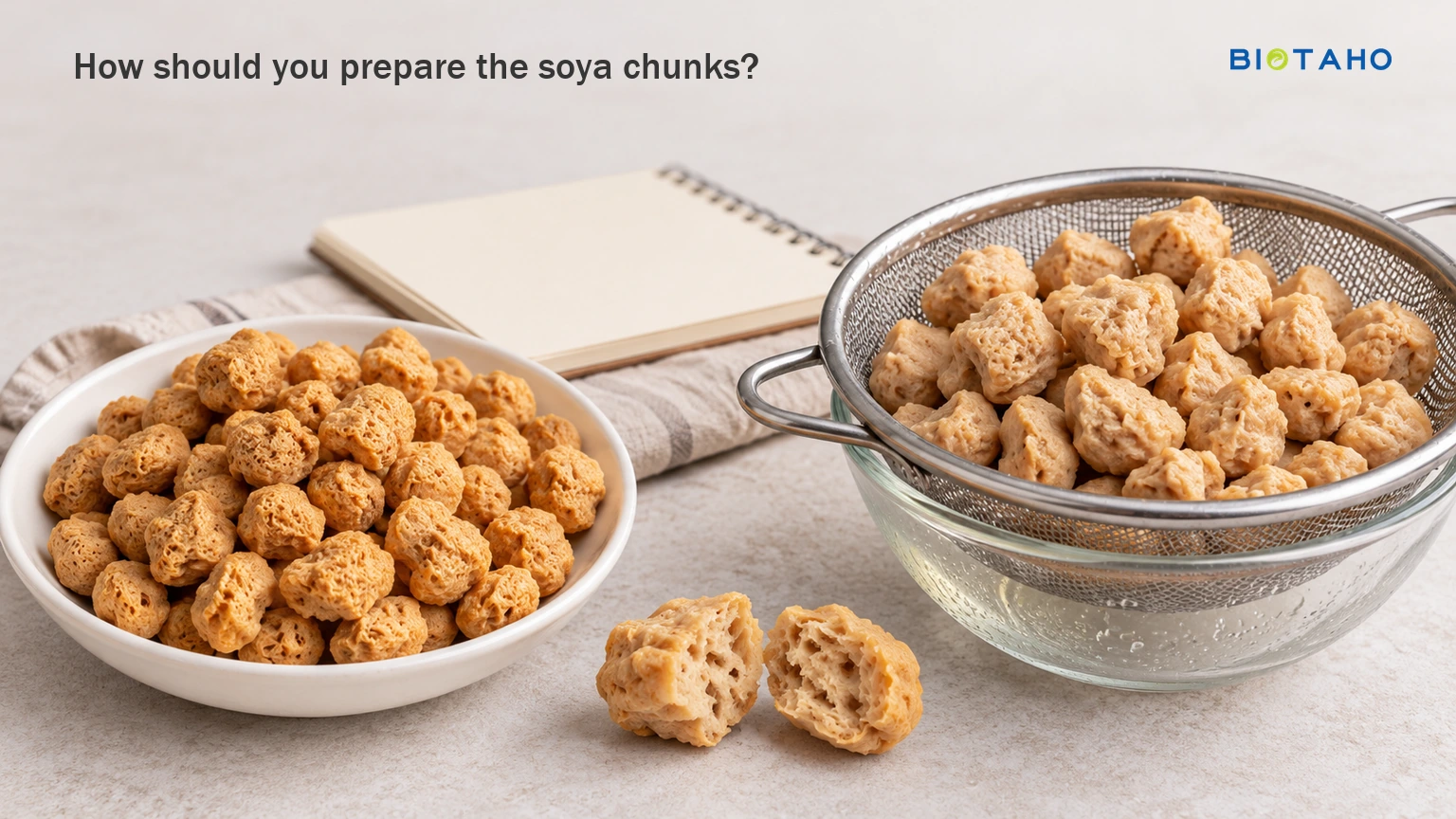
Baichuan’s soya chunks page shows the dry ingredient. For a repeatable batch, weigh the dry chunks and the prepared, drained pieces separately. Use the same method each time; equal cups of different products may not give equal amounts after cooking.
When should the chunks go into the gravy?
Add them after the onion and tomato base has cooked. Soften and brown the onion as directed, then add ginger, garlic and spices without scorching them. Give the tomato mixture time to cook before adding the final liquid. The prepared chunks can wait until this base is ready.
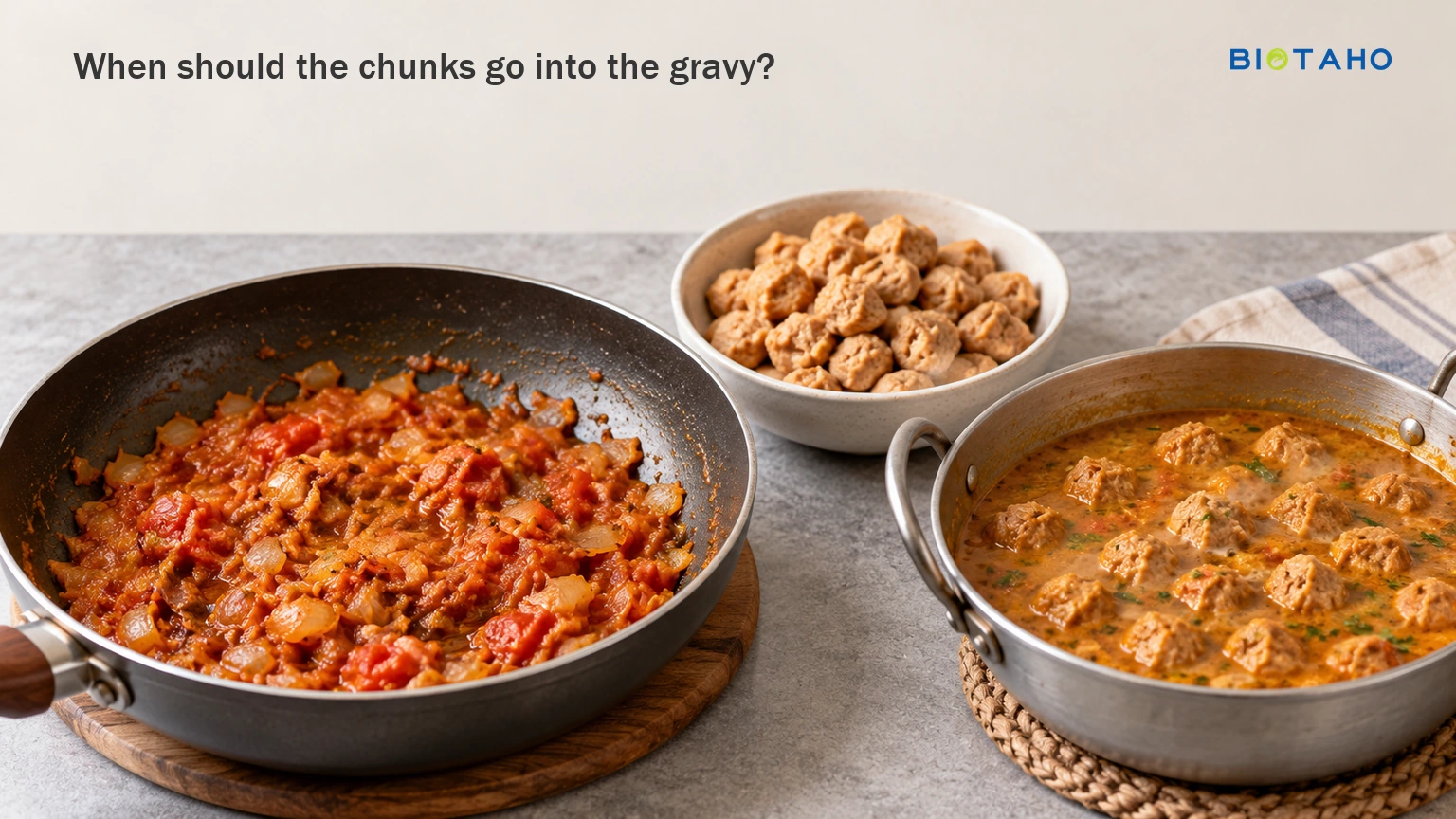
Add the chunks and the recipe’s liquid, then simmer gently. Taste once the curried soya chunks have cooked in the gravy. If the sauce is too thick, add a little hot water. If it is thin, reduce it gently while checking that the pieces stay intact.
Can you make the curry without coconut milk?
Yes. For a plant-based curry without coconut milk, use an onion-tomato gravy or follow a recipe with cashews or another plant-based finish. Coconut milk, dairy cream and water differ in flavor and thickness, so swapping equal volumes will not always give the same curry.
For a coconut-free soy nugget curry, choose a recipe designed that way or try a small batch first. Cashews add a tree-nut ingredient, and the chunks still contain soy. The FDA’s food allergy guidance explains why each substitution needs checking for the people you are serving.
How do you fix a thin, bland or overly thick curry?
| What needs attention | What to check | A reasonable next step |
|---|---|---|
| Thin gravy | Liquid added and water retained by the chunks | Reduce gently or follow the recipe’s thickening method |
| Raw-tasting base | Whether onion and tomato cooked before dilution | Give the base its own cooking stage next time |
| Bland pieces | Hydration, draining and time in the seasoned gravy | Taste after simmering before adjusting the whole pot |
| Too thick after cooling | Liquid absorbed during standing | Add a little liquid while reheating and taste again |
How do you reheat soya chunks curry?
Cool and refrigerate leftovers promptly, following appropriate food-safety guidance, and reheat thoroughly. A meat-free curry still needs careful handling. If the gravy has thickened, add a little liquid and stir as it reheats so the center warms evenly.
For catering, check the sauce and chunks after the planned chilling and reheating steps. A freshly cooked curry may thicken or soften during storage. The textured protein recipe guide covers other uses of the ingredient, but fine TVP granules give a different texture from a chunky curry.
What do cooks ask about soya chunks curry?
How to use soya chunks in curry?
Prepare and drain them separately, then simmer in a cooked gravy. Taste after simmering before making the final salt and liquid adjustments.
Do we need to boil soya chunks before cooking?
Follow the product directions. Some products call for simmering, while others use soaking followed by cooking in the dish.
Does cooking destroy protein in soya chunks?
Cooking changes the structure of protein; it does not make the protein disappear. To work out the nutrition of the curry, use the complete recipe and the weight of the finished dish.
Is it better to use coconut milk or cream in a curry?
Neither is universally better. Coconut milk and dairy cream have different flavors and compositions, and dairy cream is not vegan. Choose the ingredient the intended recipe calls for.
Can I make vegan curry without coconut milk?
Yes. A tomato-onion gravy is one option. A nut-based variation is another, provided the recipe and allergen requirements suit it.
How long should soya chunks be soaked?
Use the packet instructions and check the center of a piece. Size and grade make a single fixed time unreliable.
What is the best way to marinate soya chunks?
Drain them before seasoning. In a curry, a well-cooked gravy and a final simmer may be more useful than a separate long marinade.
How do Indian restaurants make curry so thick?
It depends on the dish. Well-cooked onion, reduced tomato, blended ingredients or nuts can all give a curry body. There is no single thickener used in every Indian restaurant curry.
How do you get a consistent soy chunk curry?
Make your first soya chunks curry with a measured recipe, consistent draining and a fully cooked gravy. Taste after the chunks have simmered, then adjust the salt and liquid. For larger-scale cooking, Baichuan’s catering applications outline possible ingredient uses. Check a batch after your actual reheating or holding process before setting portions and instructions.