Soya chunks get their shape and bite during manufacturing, before they reach the kitchen. A producer prepares a protein mixture, combines it with water, textures it through extrusion, then cuts and dries the pieces. Soaking a packet at home softens that existing structure; it does not create the chunks.
Understanding how soya chunks are made helps explain why products with similar names can behave differently in a curry, filling or formed food. The raw materials, processing conditions and piece shape all matter. The sequence below describes a common route for dry textured soy products; individual manufacturers use their own formulations and settings.
What are soya chunks made of?
Many dry chunks use defatted soy ingredients, but there is no single recipe for every product. Manufacturers may use soy flour, concentrate, isolate or a blend. Some formulations also include wheat gluten or starch, so the full ingredient list matters more than the word “soya” on the front of the pack.
For example, Bob’s Red Mill lists defatted soy flour for its TVP and describes cooking it under pressure before drying. That is one manufacturer’s product, not an ingredient declaration for all chunks. Baichuan’s chunk products discussed below use soy-and-wheat blends.
Textured soy protein describes soy protein that has been given a physical structure. It does not specify a protein percentage. Codex distinguishes soy flour, concentrate and isolate by protein content on its stated dry-weight basis; texturing is a separate characteristic.
How does extrusion turn the ingredients into soya chunks?
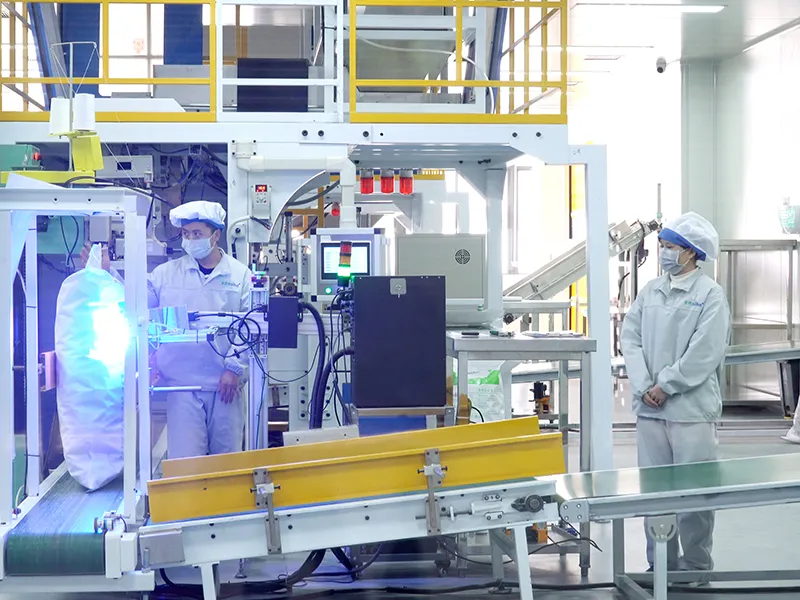
In a common extrusion process, the prepared ingredients are mixed with water and worked inside an extruder. Heat and mechanical action change the mixture’s structure. A die shapes the material as it leaves the machine, and cutting determines the length of the pieces.
The formulation and processing conditions work together. Changing the blend, moisture or mechanical treatment can change the finished structure, so one temperature or pressure cannot serve as a recipe for every chunk. A supplier’s product specification and preparation guidance are more useful to a buyer than a generic machine setting.
Why are soya chunks cut and dried before packing?
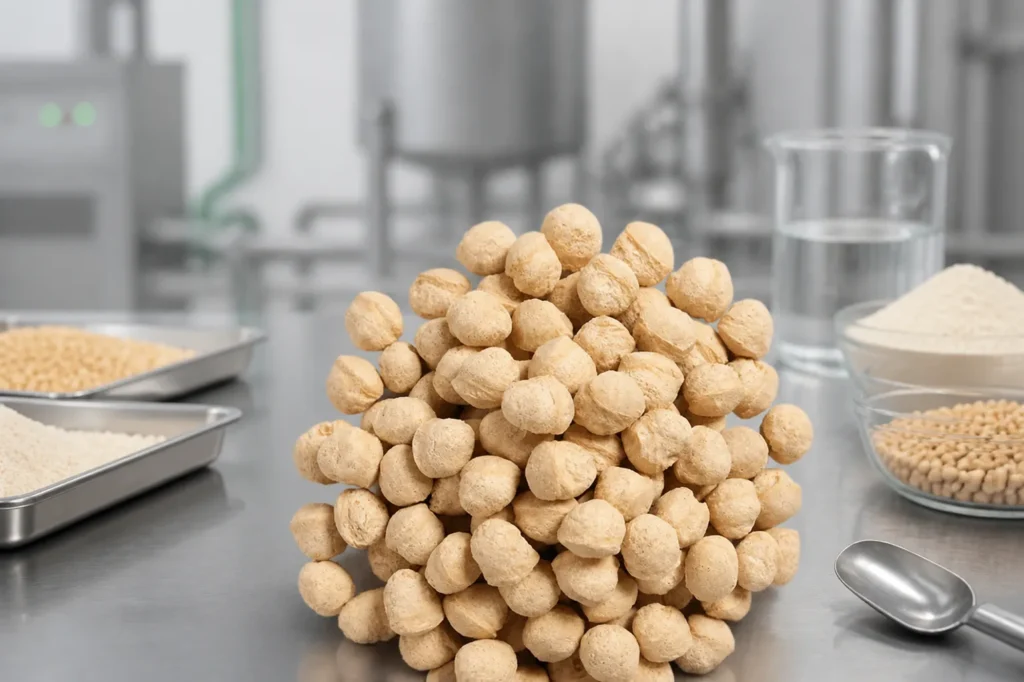
Cutting makes pieces of a usable size. Drying reduces their moisture so the finished ingredient can be supplied and stored under its specified packaging and storage conditions. The product’s moisture limit and shelf life must come from its own specification; neither can be inferred from appearance.
Once packed, a batch code connects the supplied ingredient to the manufacturer’s records. For repeat orders, keep the approved product code and sample details alongside the specification. That gives the supplier a clear reference if a later batch differs in size or preparation behaviour.
How do formulation and shape affect hydration and texture?
Dry chunks absorb water during preparation. Their size and internal structure affect how they soften, while the formulation influences the texture they bring to a dish. A fine granule may suit a mince-style sauce; a larger piece may be preferable where the finished food needs a distinct bite. The same preparation time should not be assumed for both.
Baichuan’s soy fiber protein chunks are small cubed pieces listed for catering and plant-based meat. Its textured vegetable protein chunks have a cylindrical shape and a tight fibrous structure, with listed applications including meatballs and sausages.
The catering product lists low-temperature edible soybean meal first; the cylindrical product lists isolate soy protein first. Both also include wheat gluten, soy protein concentrate and wheat starch. They are different blends, not simply one ingredient cut into different shapes.
The respective product pages list hydration windows of 60–65 and 50–55 minutes. Use those as preparation lead times, then confirm the current water temperature, quantity and draining instructions for the selected grade. Test the hydrated ingredient in the actual cooking and reheating process before approving it for a recipe.
Does the manufacturing process tell you how much protein the chunks contain?
No. Extrusion creates structure, but a process description does not establish the finished nutrition. Protein per 100 g depends on the formulation and the basis used to report it. A dry product, a dry-matter analysis and a hydrated portion are different comparisons.
Water absorbed during preparation also increases the weight without adding protein. A lower protein figure per 100 g after soaking therefore does not, by itself, measure protein loss. Use the nutrition information for the selected grade and record whether you weighed it dry or prepared. Neither the ingredient name nor its position in a blend can supply a missing nutrition value.
Can you make commercial soya chunks in a home kitchen?
Ordinary mixing and boiling will not reproduce commercial extrusion. You can make soy-based patties or fillings at home, but those are different foods. If you already have packaged chunks, the task is to rehydrate and cook the finished ingredient.
| Question | Commercial production | Kitchen preparation |
|---|---|---|
| What do you start with? | A selected protein mixture | Finished dry chunks |
| What happens to the structure? | Extrusion creates the textured form | Hydration softens the existing structure |
| What determines the method? | The formulation, equipment and target product | The pack instructions and intended dish |
| What is the result? | A textured ingredient ready for packing | Prepared chunks to cook into a meal |
For kitchen use, follow the product’s preparation instructions, drain as directed and add the chunks to the dish. The guide to cooking and rehydrating soya chunks covers the preparation stage in more detail.
What should buyers check before choosing a soya chunk product?
Start with the finished food: does it need separate pieces in a sauce, or an ingredient that will be mixed into a formed product? Then compare the available shapes, full ingredient lists, allergen declarations and nutrition specifications. Confirm the moisture and protein reporting basis before comparing numbers.
Request a sample of the exact grade and run it through the planned soaking, draining, cooking and reheating steps. Record the prepared yield and texture. A product’s listed application gives you a place to start; a recipe trial shows whether it fits your own process.
Frequently asked questions
Are soya chunks made from soybeans?
Yes, the soy ingredients originate from soybeans. The chunks are processed ingredients rather than whole beans. Check the ingredient list because some products also contain wheat or other components.
Are soya chunks made of maida?
Maida is refined wheat flour, while soya chunks are soy-based. However, that does not make every product wheat-free. The two Baichuan blends discussed here include wheat gluten and wheat starch.
Are granules and chunks made from different plants?
Not necessarily. Both can be soy-based, and their names mainly describe physical formats. They can also have different formulations, so compare the full ingredient lists rather than treating them as identical recipes in different sizes.
Can you make soya chunks by boiling soy flour?
Boiling flour in a saucepan does not reproduce an extruder’s mechanical action and shaping process. For meals that need the familiar texture of packaged chunks, start with a finished textured ingredient.
What is the difference between soy protein isolate and soya chunks?
Isolate is a concentrated soy ingredient; Codex specifies at least 90% protein on its stated dry-weight basis. Chunks are a textured product that may contain isolate or other ingredients. The isolate threshold cannot be transferred to a finished blend.
Is TVP the same as soya chunks?
Soya chunks are one soy-based form of textured vegetable protein. TVP also includes granules, flakes and other shapes, and products made from other plant proteins. The ingredient list identifies the actual source.
References
- Codex CXS 175-1989: General Standard for Soy Protein Products — soy-protein categories and reporting basis.
- Bob’s Red Mill: TVP ingredient and processing description, linked above.
- Baichuan: catering and cylindrical chunk product pages, linked above; ingredient lists, forms, applications and hydration windows checked on 30 October 2026.
Choose the chunk for the dish, then confirm the recipe and preparation method with a sample. Knowing the manufacturing stages helps explain the differences, but the finished grade is what you will cook or process. Contact Baichuan for product specifications and samples matched to your application.