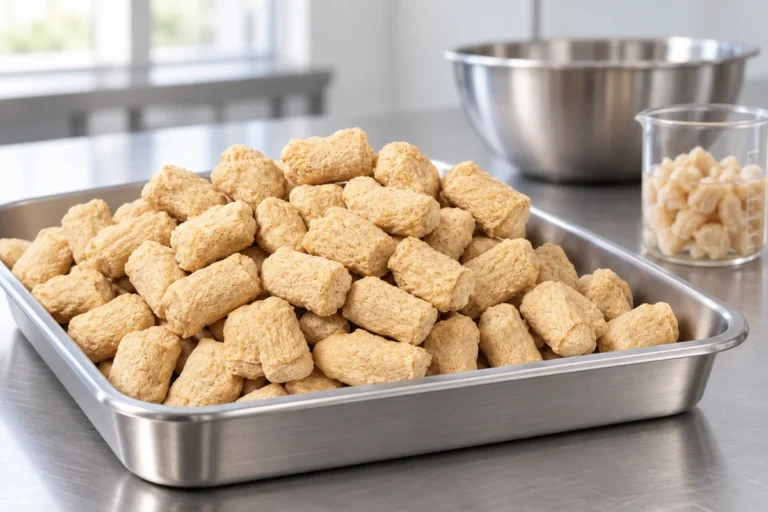
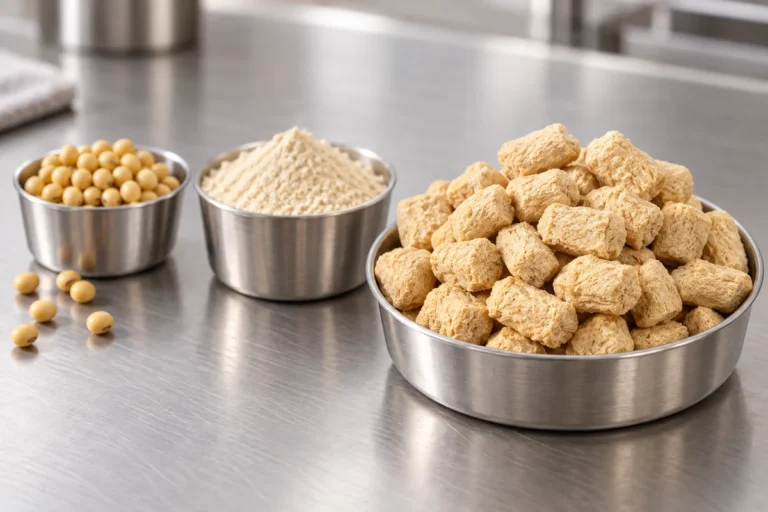
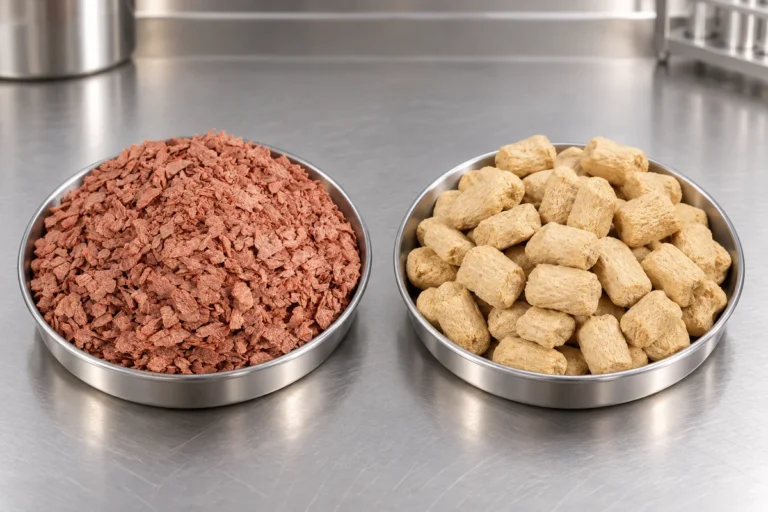
Textured soy protein for food manufacturers
Build a dependable plant-based food ingredient program with textured soy protein in the format, texture and documentation your application requires. Baichuan Biotechnology supports overseas manufacturers, importers, private-label brands and foodservice buyers from product matching through export coordination.
What should buyers expect from a TVP manufacturer in China?
Illustrative buying scenario: a procurement manager in São Paulo is preparing a plant-based filling for a regional food manufacturer. She compares several samples, runs them in the real seasoning system and sees a quick failure: one sample hydrates unevenly, another loses its bite after cooking, and a third carries a stronger beany note than the pilot formula. The reversal is useful. The problem is not automatically “bad TVP”; it may be a mismatch between format, particle size, process conditions, flavor system and the buyer’s finished application.
Summary: a good TVP Manufacturer China should help you define the application before quoting a format. Ask for a clear specification sheet, representative samples, batch documentation, allergen information and the quality checks relevant to your destination market. Then approve the ingredient in your own recipe before moving to a repeat order. The lowest price on a dry ingredient can become expensive if it changes yield, cooking behavior, seasoning balance or production speed.
TVP, or textured vegetable protein, is a dry plant-based ingredient commonly made by extruding a soy-based raw material into a porous structure that can be rehydrated and seasoned. “Textured soy protein” usually describes soy-based TVP more specifically; in commercial conversations, the terms can overlap, but the actual product still needs to be judged by its composition, format, process behavior and intended use.
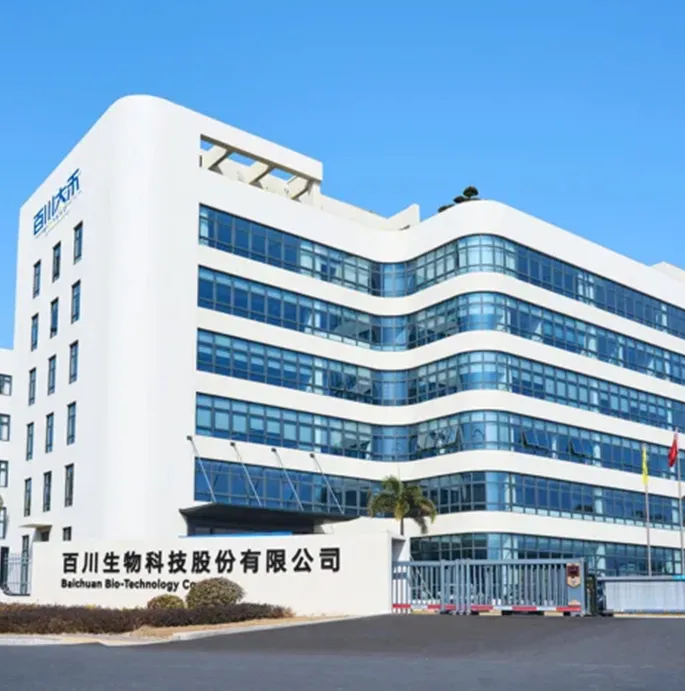
For an overseas buyer, China sourcing is about more than factory location. The right textured vegetable protein manufacturer China should be able to discuss product fit, customization, application guidance and the records needed for internal approval. Baichuan Biotechnology says it was founded in 2008, is headquartered in Wenzhou, Zhejiang, and operates manufacturing bases in Zhejiang and Henan.
Which soy protein term matches your sourcing need?
Supplier pages do not always use the same terminology. A buyer may search for Soya Fiber Protein, “SoyaFiber protein,” textured vegetable protein or textured soy protein, but those phrases can point to different product scopes. Clarifying the term before requesting a quotation helps prevent a mismatch between the sample, the specification and the finished food application.
| Search term | What it usually signals | Question to ask before sampling |
|---|---|---|
| Soya Fiber Protein / SoyaFiber protein | A fibrous, soy-based textured ingredient intended to contribute structure or a layered bite. | Which format, fiber structure and end-use process are covered by the specification? |
| Textured vegetable protein | The broad TVP category, which may include different plant-protein bases, shapes and grades. | What is the protein base, shape, particle size and ingredient declaration? |
| Soy protein supplier | A wider supplier search that may include textured products as well as other soy ingredients. | Does the supplier manufacture the textured grade you need, or only trade other soy products? |
| Textured soy protein manufacturer | A more specific search for a producer with extrusion, forming, drying and quality-control capability. | Which manufacturing site produces the sample, and can its records be reviewed? |
| TVP manufacturer China | An origin-and-intent search for a Chinese TVP producer suitable for commercial sourcing. | Can the supplier support samples, documentation, export coordination and repeat orders? |
This distinction is useful when comparing a textured soy protein manufacturer: the strongest match is not necessarily the company with the longest product list, but the one that can connect the requested term to a defined format, documented process and buyer approval method.
Choose the TVP format that fits your finished product
Shape is not a cosmetic choice. It affects how the ingredient disperses, hydrates, holds seasoning and contributes bite to the finished food. Use the product family as a starting point, then confirm the exact grade, size and process instructions with the supplier.
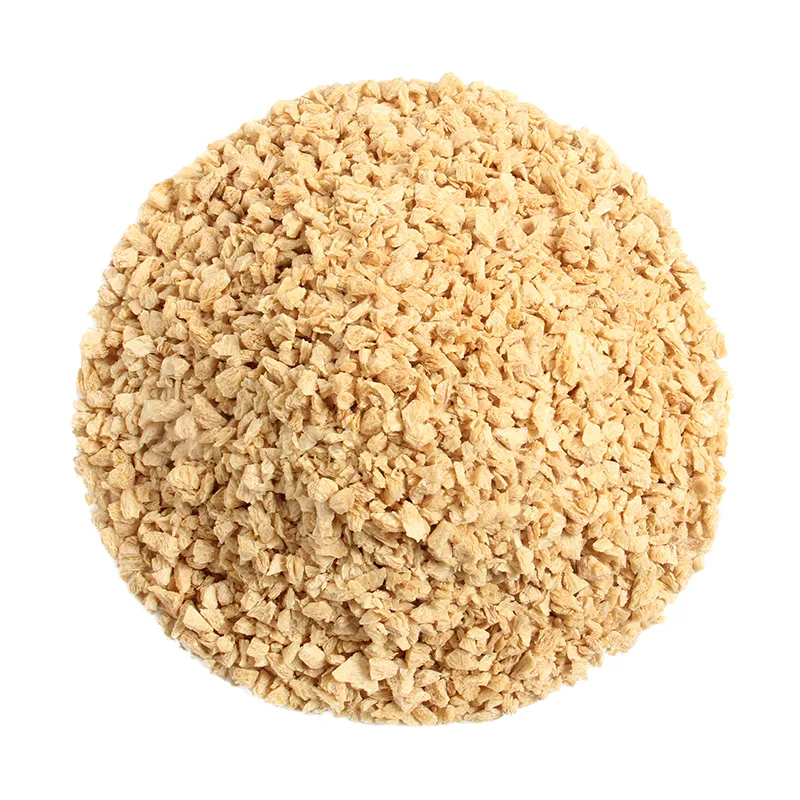
Granules
A practical option for minced products, fillings, sauces, instant foods and recipes where an even distribution is important. Confirm particle size, fines and hydration behavior in the target formulation.
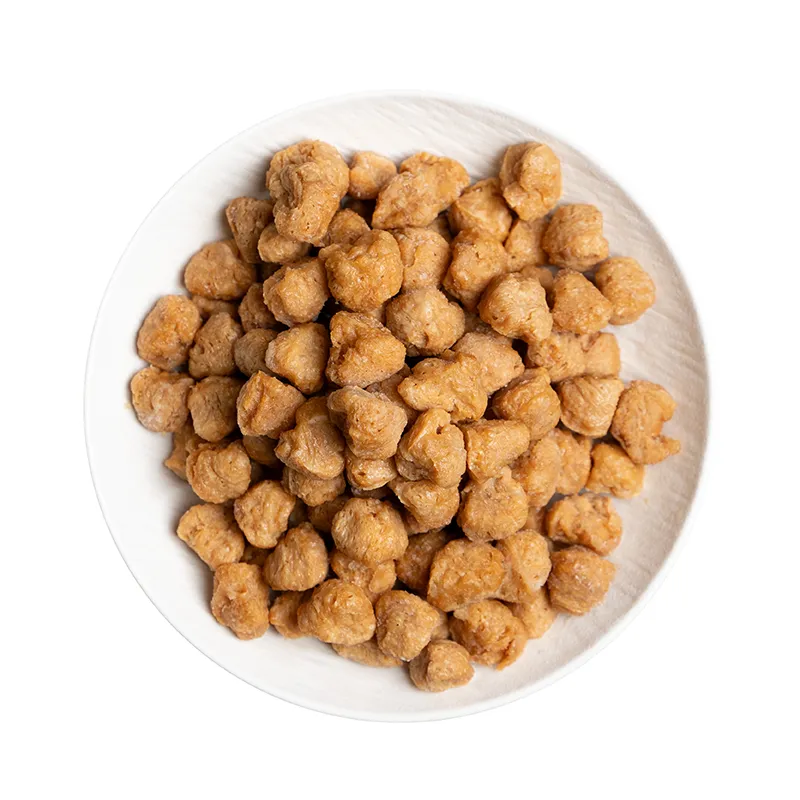
Chunks
Useful where the finished food needs visible pieces and a more substantial bite, including prepared meals, stews, snack applications and foodservice recipes.
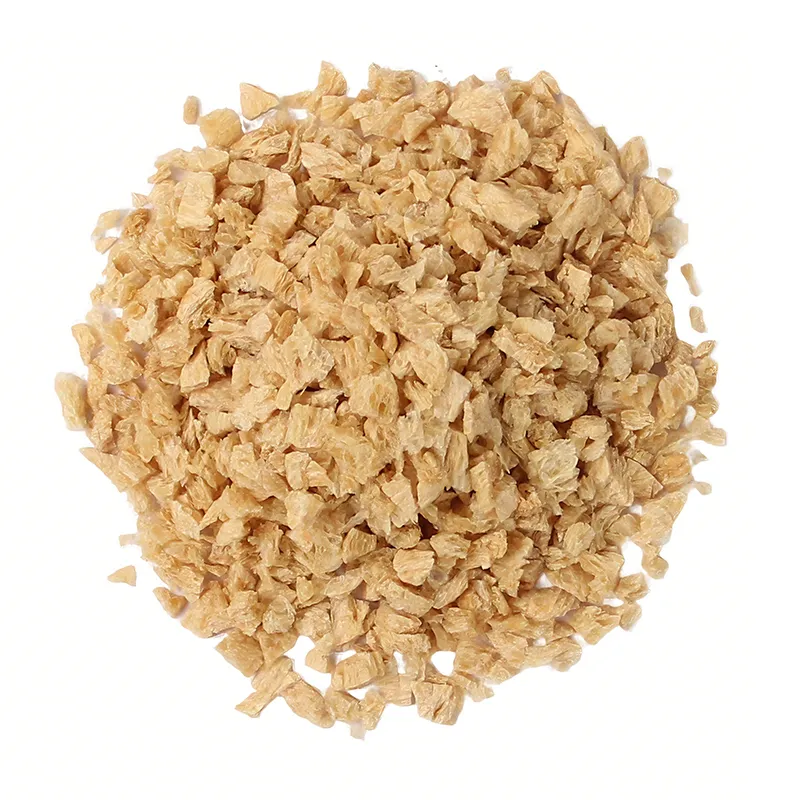
Flakes
Flakes can be selected for fillings, formed foods and blended recipes that need a textured protein component without a large piece format.
Strips and strands
Suitable for recipes that use a pulled, layered or elongated visual. Test how the strands hold together through mixing, cooking, freezing or reheating.
Steak format
Designed for larger, formed or plated plant-based applications where appearance and bite need to be considered together.
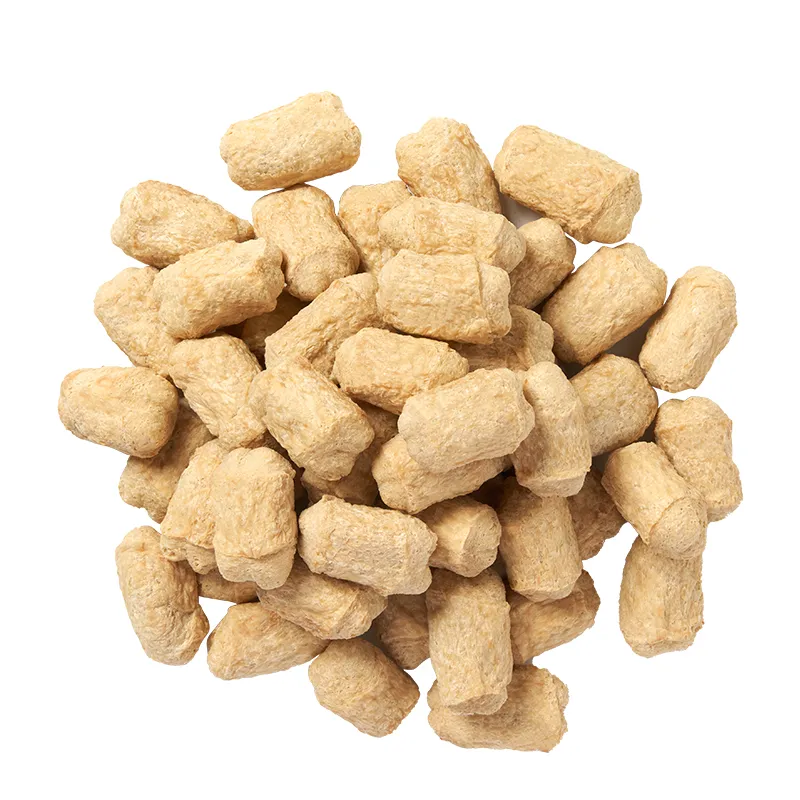
Cylinders
A distinct shape for product concepts that need a more defined piece profile. Confirm diameter, length, seasoning uptake and end-use processing.
How should a buyer evaluate TVP before a bulk order?
A sample is a useful beginning, not a finished qualification. A disciplined review connects the dry ingredient to the product that will be sold.
- Application fit: define whether the ingredient will be used in a filling, formed product, sauce, frozen meal, snack, seafood-style product, catering recipe or pet-food application.
- Particle size and density: check visual distribution, fines, piece integrity and how the format behaves in your mixer, filler, depositor or forming line.
- Hydration and cooking performance: test using the water quality, temperature, time, salt, oil, seasoning, starches and cooking or freezing steps used in production. Record the method so the result can be repeated.
- Flavor carry: evaluate the base note after hydration and after cooking. Seasoning can mask some differences, but it should not be used to hide a formulation problem that returns in scale-up.
- Documentation and destination-market requirements: ask what your quality team, customs broker and destination-market rules require. Certificates must be current and checked for issuer, site, product scope and validity.
- Batch repeatability: compare the approved sample with a pilot or commercial batch using the same internal checks. Agree how changes, complaints and retained samples will be handled.
This is where an experienced TVP supplier China can add practical value: not by choosing a format from a photograph, but by helping you connect the ingredient to your product brief and approval process. When comparing a textured soy protein supplier or a broader soy protein supplier, ask the same questions about samples, documentation and repeat-batch control.
Application and format comparison for food manufacturers
The table below is a screening tool, not a substitute for a product specification or pilot trial. Product performance depends on the selected grade and the buyer’s process.
| Food application | Format to discuss | What to check with the supplier |
|---|---|---|
| Plant-based mince, dumpling or bun filling | Granules or flakes | Distribution, hydration uniformity, seasoning carry and filling-machine behavior |
| Ready meals, stews and canned-style recipes | Chunks | Piece integrity through cooking, sauce absorption, final bite and package process |
| Plant-based strips or pulled-style products | Strands | Fiber appearance, mixing tolerance, cutting or forming behavior and reheating result |
| Formed steak or larger plated pieces | Steak format or fibrous soy protein | Dimensions, structure, visual consistency and performance in the full recipe |
| Snack, seafood-style or catering ingredients | Granules, flakes, chunks or cylinders | Shape retention, flavor profile, packaging format and service conditions |
| Pet-food applications | Application-specific format | Ingredient approval, destination-market rules, process conditions and complete documentation |
What sourcing support can Baichuan provide?
Baichuan’s public company information describes six major product series and more than 2,000 specifications, with applications across meat products, quick-frozen food, snack food, seafood products, catering ingredients and pet food. For a buyer, the useful question is not the size of a catalog; it is whether the supplier can narrow the options to a workable starting point.
Baichuan says it supports color, shape and size customization, texture customization, application recommendations and on-site application guidance. Its R&D resources include university and research partnerships, a provincial enterprise research institute and laboratory. The company also reports, as of 2025, 20 invention patents, 34 utility model patents and participation in drafting or revising three industrial and three group standards. Treat these as company-page statements and request the supporting details that matter to your project.
- Product matching: share the finished product, target bite, visual format, process and pack size.
- Sample review: compare candidate formats in the recipe and document the test method.
- Specification discussion: align the agreed characteristics, test methods, packaging and change-control expectations.
- Application support: discuss hydration, mixing, forming, cooking, freezing or reheating questions with the technical team.
- Export document coordination: confirm the documents required by your quality team, broker and destination market before shipment.
See the company’s food application solutions before sending a detailed request.
Why food manufacturers work with Baichuan
Choosing a supplier is easier when the company can support the full path from product idea to repeat shipment. Baichuan Biotechnology combines textured soy protein manufacturing with product development, application discussion and export support for international buyers.
Quality and documentation: a checklist for international buyers
Baichuan’s quality and safety page describes traceability from raw-material admission through production, finished-product inspection and packaging delivery. It says incoming checks include protein, urease activity, microbiology and heavy metals; in-process checks include extrusion temperature, pressure, speed, fiber structure, moisture, toughness and color; and final checks include microbiology, heavy metals, moisture, crude protein, urease activity, sensory checks and packaging checks.
Request the records that apply to your product and market. A practical document pack may include:
- Current product specification and agreed test methods
- Batch-specific COA and relevant analytical results
- Allergen statement and ingredient declaration information
- Microbiology and, where applicable, heavy-metal documentation
- Current certificate copies, with site, product scope, issuer and validity checked
- Packaging specification, lot identification, shelf-life information and export documents
Certification should never be treated as a generic promise. Buyers should request current certificates and verify the scope, issuing body and validity for the actual site and product. Review the supplier’s quality and safety information with your own approval checklist.
Certificates and quality records to review
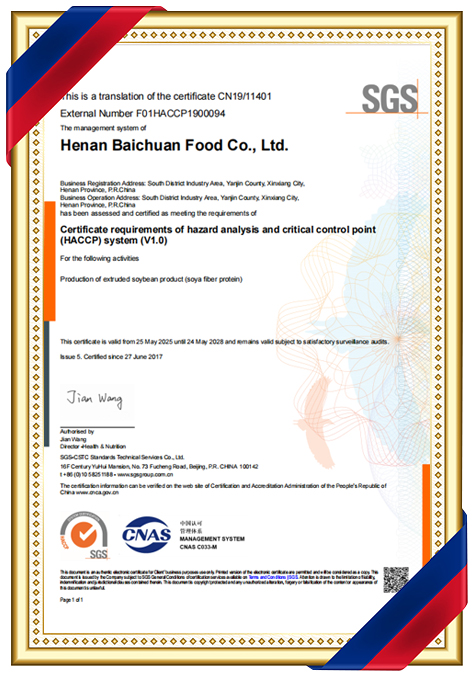
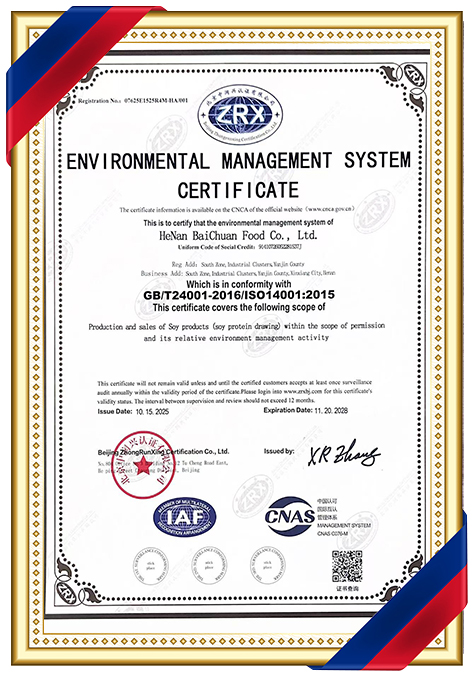
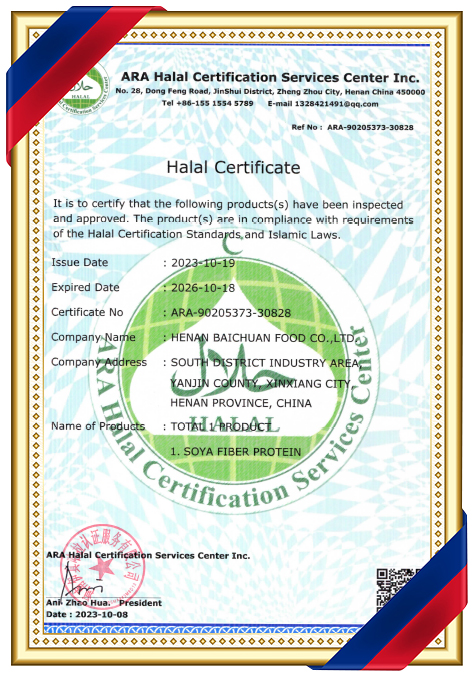
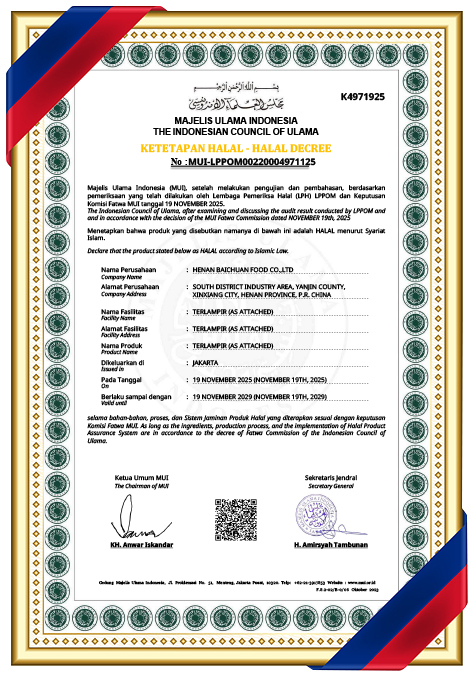
Baichuan’s public quality information lists HACCP, ISO 9001, ISO 22000, ISO 14001, ISO 45001, HALAL, MUI Halal and IFS certifications. For a commercial order, request the current copies and confirm that the certificate applies to the manufacturing site and product being purchased.
Certificate names alone are not a substitute for a buyer’s approval. Check the issuing body, certificate number, validity period, covered site, product scope and destination-market requirements.
A five-step TVP sourcing workflow that reduces surprises
- Write the product brief: state the finished food, target texture, format, process, pack, destination and documentation needs.
- Shortlist the format: compare granules, chunks, flakes, strands, steak, cylinders and fibrous options against the application.
- Run a controlled sample test: use your own recipe and record hydration, cooking, flavor, texture and yield observations without assuming that a supplier’s example method is your final method.
- Approve the paperwork and pilot batch: align the specification, COA expectations, allergen statement, certificate scope, packaging and change-control process.
- Set the repeat-order routine: retain an approved reference sample, compare batches consistently and review export documents before each shipment.
What should a complete TVP supplier quote include?
A review of public China supplier pages shows that a useful commercial offer usually covers more than a product name and a price. The following checklist turns those recurring supplier-page fields into a practical request template. It is a market benchmark for due diligence, not a promise of any particular specification or delivery term.
TVP questions food buyers ask before sourcing
What is the difference between TVP and textured soy protein?
TVP is a broad term for textured vegetable protein, while textured soy protein identifies soy as the protein base. In supplier conversations the terms are often used interchangeably, but buyers should still confirm the ingredient declaration, format, specification and intended application.
Who makes TVP?
TVP is made by food-ingredient manufacturers that prepare a suitable plant-protein raw material and use extrusion to create a textured structure. The manufacturer’s raw-material controls, process checks, product range and documentation determine whether the ingredient suits your production needs.
What is TVP production?
TVP production generally involves preparing a plant-protein blend, controlling moisture and extrusion conditions, forming the product into a selected shape, then drying, inspecting and packing it. The specific recipe and process must be confirmed with the supplier rather than assumed from the word “TVP.”
Where is TVP from?
TVP can be produced in many countries and is commonly made from soy-based ingredients. For Chinese supply, ask where the product is manufactured, which site is covered by the documentation, how raw materials are controlled and which export records can be provided.
Is TVP actually healthy?
TVP can be a useful protein ingredient, but “healthy” depends on the finished product, serving, formulation, processing and the claims permitted in the destination market. Review the ingredient and nutrition information, allergen status and applicable labeling requirements with your regulatory or quality team.
Is TVP cheaper than tofu?
There is no universal answer because TVP and tofu are purchased, stored, transported and processed differently. Compare landed cost and cost per usable finished portion, including hydration, seasoning, cold-chain needs, yield, labor, packaging and the process used in your factory.
Useful public references for buyer due diligence
- FAO/WHO Codex Alimentarius standards list — a starting point for identifying standards relevant to the product and destination market.
- FAO/WHO Codex codes of practice — useful background for food hygiene and good practice discussions.
- U.S. FDA food allergy guidance — a public reference for U.S.-market allergen review; other markets may apply different rules.
Ready to compare formats with a TVP Manufacturer China?
Send Baichuan your finished product, target format, process, destination market and documentation checklist. Start with the TVP product range, then contact the team to discuss samples, specifications and application support.
The right supplier decision is made when the dry ingredient, the factory process and the buyer’s documentation all agree.