Soy protein sources include whole soybeans, tofu, tempeh and textured soy ingredients, but the most useful choice depends on what you want to cook. For crumbles in a sauce, shredded pieces in a stir-fry or substantial bites in a stew, start with the textured format and its preparation directions. A familiar soy name alone will not tell you how it behaves or how much protein a prepared serving supplies.
The practical sequence is to identify the food or ingredient, read its composition, select a shape, then hydrate and cook it before comparing portions. That keeps texture, meal yield and nutrition on the same basis.
How textured soy differs from tofu and whole soybeans
Tofu is a moist curd made by setting soya milk. Cooked soybeans retain individual bean shapes, while tempeh is commonly made from fermented soybeans. These foods arrive with structures you can slice, crumble or serve as distinct bites. Dry proteína de soja texturizada is an ingredient whose usable texture develops through preparation and cooking.
TVP means textured vegetable protein; soy-based versions come in several shapes. Granules distribute small pieces through a mixture, strands provide a shredded form, and chunks give larger bites. Dry textured soy ingredients therefore need a different starting point from moist tofu or cooked beans, as the comparison below shows.
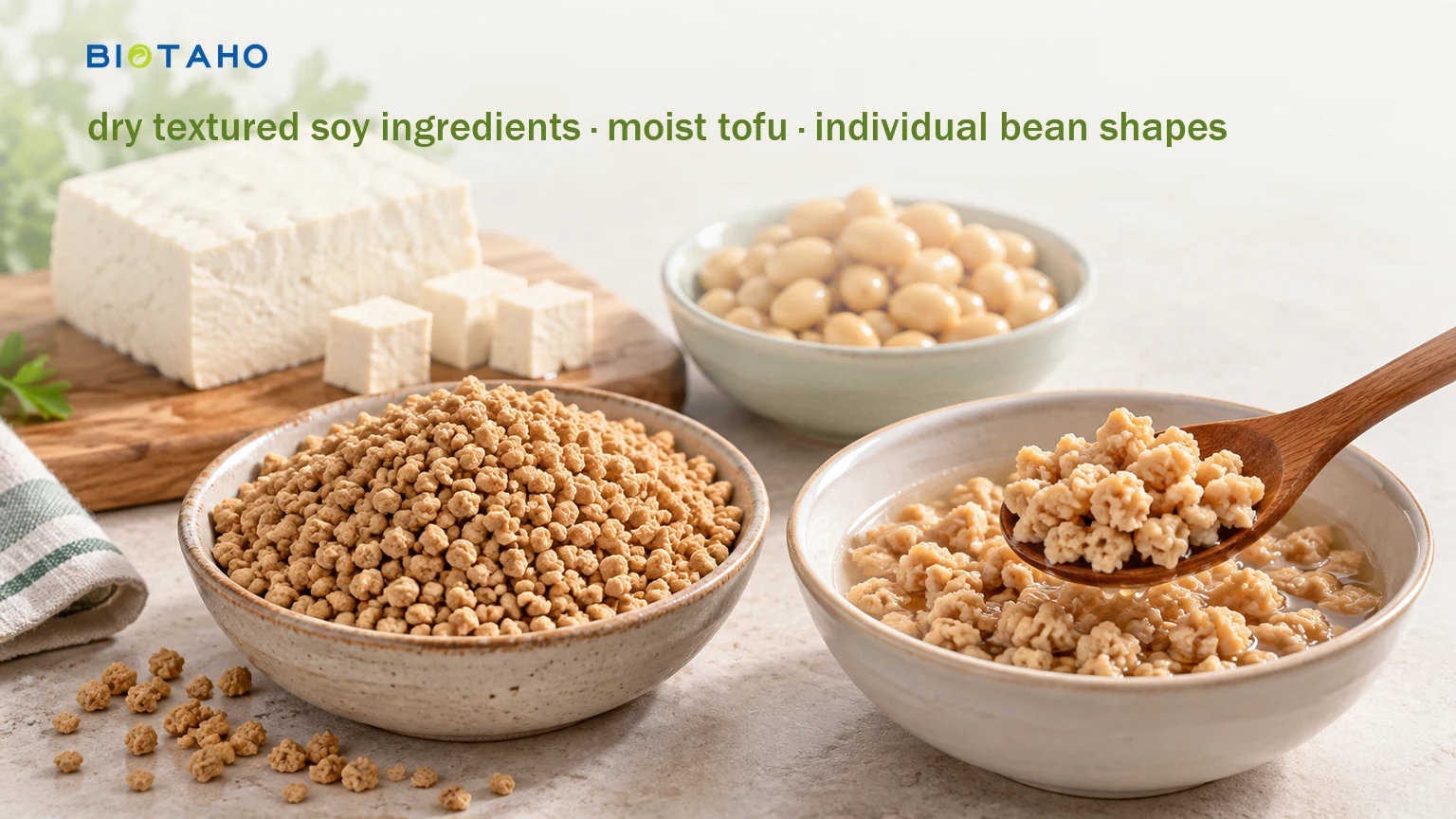
De Baichuan textured vegetable protein granules for sauces and fillings are irregular granules with a compact structure. The supplier lists sauces and stuffing among their applications. That makes them a relevant ingredient to consider when you want distinct crumbles throughout a tomato sauce or vegetable filling, not a smooth curd or an intact bean.
Choosing that form narrows the cooking task, but it does not settle the formulation. A textured ingredient may contain several protein and starch ingredients, so read its composition before treating it as interchangeable with another soy food.
Read the ingredients behind the soy product name
The granules above contain soybean meal, wheat gluten, isolated soy protein and wheat flour among the listed ingredients. They are a soy-and-wheat blend, not pure soy isolate. Wheat gluten is a structure-forming protein, so its presence matters to both the ingredient’s texture and its suitability for someone avoiding wheat or gluten.
The related fibrous soy protein strands for catering contain soybean meal, wheat gluten, isolated soy protein, soy protein concentrate and wheat starch. The small fibrous soy protein chunks list the same ingredient types. These are ingredients for further preparation, not ready-made chicken pieces or finished meals.
Check the current full ingredient list and allergen declaration when selecting a product. These particular blends contain soy and wheat and are not gluten-free. In the United States, FDA-regulated packaged foods must identify applicable major allergens through ingredient names or an appropriate declaration.
Composition also sets the limits of a nutrition comparison. The product-family name “Soya Fiber Protein” does not state a dietary-fiber amount, and a product name containing “high protein” does not supply a numerical protein value. Use the actual nutrition specification for the grade you intend to cook. With its identity established, you can choose the shape that serves the dish.
Choose the soy format for sauces, stir-fries or stews
Choose the size of bite first, then consider how much liquid the dish should retain. Small pieces should distribute through a sauce; shredded pieces should mix readily with vegetables; chunks should remain recognizable in a stew. The following choices are starting points for development, with recipe-specific trials needed to establish the finished result.
| Formato | Relevant supplier detail | Practical cooking direction |
|---|---|---|
| Gránulos | Irregular, compact pieces listed for sauces and fillings | Use for distributed crumbles; control free liquid more closely for fillings than for sauces. |
| Hebras | Shredded protein listed for catering applications | Consider for stir-fries where elongated pieces should mix with sliced vegetables and sauce. |
| Small chunks | Cubed fibrous protein listed for catering applications | Consider for stews where separate bites and sauce coverage matter. |
For a tomato sauce or vegetable filling, prepare soy granules according to the product directions. Combine them with softened onion, mushrooms and seasoning, then adjust the liquid. A sauce can remain loose enough to coat pasta; a filling should be moist without a pool of liquid that could soak its wrapper. The same granules do not automatically bind into a burger simply because they work as crumbles.
For a stir-fry, prepare the strands before they enter the pan, then manage surface moisture so the vegetables and protein do not sit in excess water. Add sauce with the ingredient’s retained moisture in mind. For a stew, prepare the chunks as directed and assess their bite during cooking; their cubed form suggests a different eating texture from granules, but it does not establish a universal simmering time.
These application choices depend on consistent hydration. If the ingredient enters the dish partly dry or carrying variable amounts of water, both seasoning and sauce consistency become harder to control.
Hydrate the ingredient before judging its serving weight
Baichuan lists a hydration window of 40–55 minutes for the granules and 60–65 minutes for the strands and small chunks. Allow for that preparation lead time separately from the dish’s cooking time. These windows are not complete soaking instructions: water quantity, temperature and any draining or pressing steps must follow the current directions for the selected product.
Measure the dry ingredient before hydration if you need to track yield or calculate a batch’s protein contribution. After preparing it as directed, note the hydrated weight and use a consistent draining method. Added water changes weight and volume without adding protein, so a dry portion and a hydrated portion cannot be compared as though they were the same material.
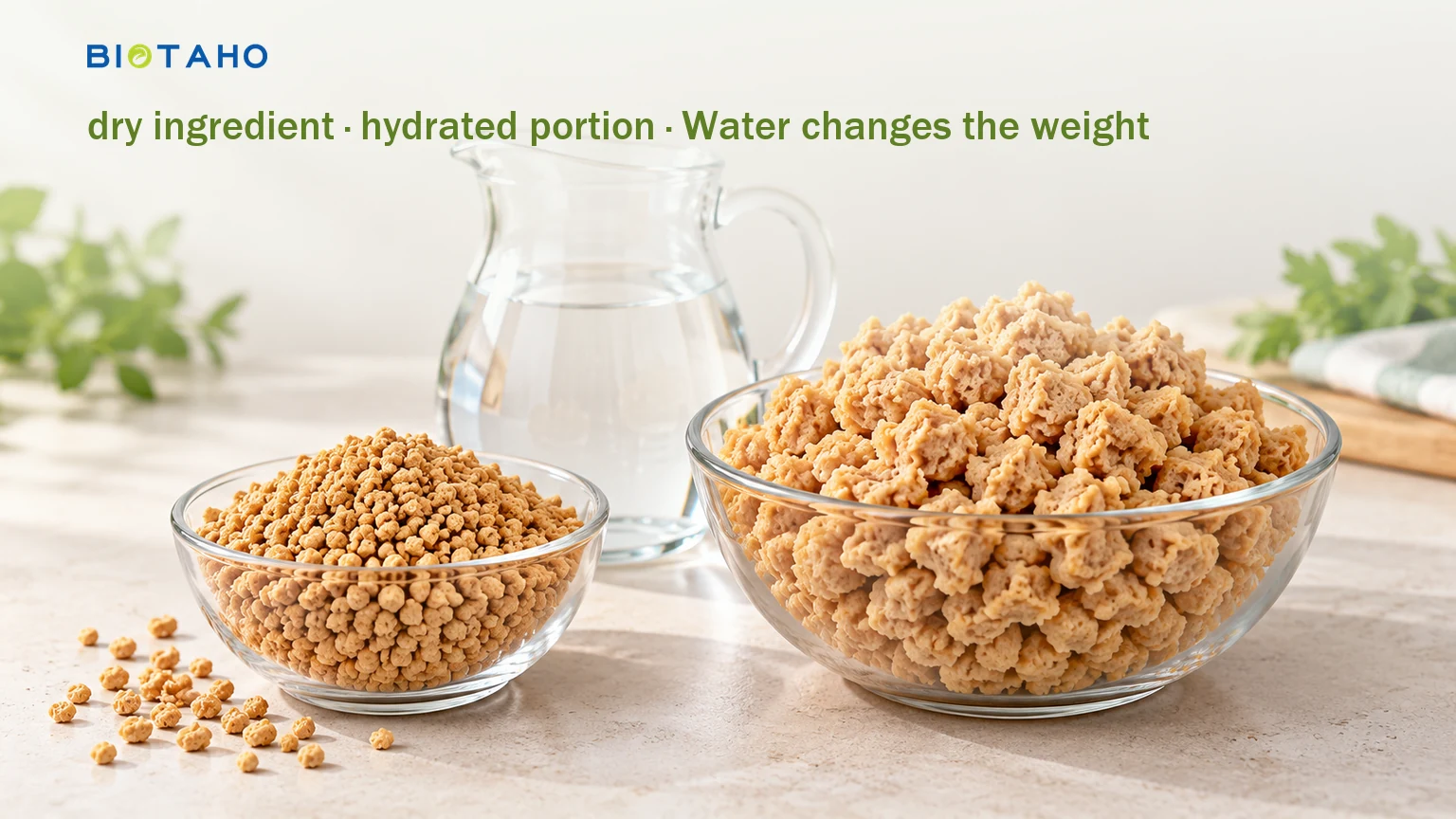
Assess moisture against the application selected earlier. Granules for a filling should not release a puddle into the mixture. Strands for a stir-fry need controlled surface moisture. Soy protein chunks for a stew can sit in a more fluid sauce, but the quantity of retained water still affects seasoning and the final yield. Make small liquid adjustments during cooking instead of assuming that every prepared batch absorbs or releases the same amount.
Follow storage directions for unused dry ingredients. For prepared perishable dishes, FDA guidance is to refrigerate within two hours, or within one hour when the outside temperature exceeds 90°F, keeping the refrigerator at 40°F or below. Divide large batches into shallow containers for cooling, and reheat leftovers to 165°F. Chewiness and appearance are texture cues, not measures of food safety.
Compare protein using the product you will actually cook
Once hydration and moisture handling are consistent, the nutrition comparison becomes useful. When comparing soy protein sources, establish whether each figure describes a dry ingredient, a hydrated ingredient or a finished dish. Do not compare a dry TVP label directly with moist tofu and conclude that the difference reflects protein quality alone; water content accounts for part of the difference in concentration.
| Comparison basis | What to use | What it tells you |
|---|---|---|
| Dry ingredient | The selected grade’s nutrition specification and dry quantity | The ingredient’s contribution before water and other foods are added |
| Hydrated ingredient | Dry quantity plus measured prepared yield | How hydration changes protein concentration by serving weight |
| Finished sauce, stir-fry or stew | All ingredients, final yield and portion size | What the served meal contributes, including sauce, vegetables and oil |
| Tofu or cooked beans | The relevant label or food-composition entry in the same prepared state | A fairer comparison with another food as eaten |
Harvard’s Nutrition Source identifies soy protein as a complete protein containing all nine essential amino acids. That general description does not assign an amino-acid score or protein amount to these formulated blends. No ingredient-specific nutrition values are supplied here, so request the current specification before calculating a portion or developing a nutrition claim.
Look beyond protein to sodium, fat and dietary fiber on the actual label, then account for the sauce and other additions. Harvard’s protein guidance emphasizes this wider nutritional “package.” Evidence about soy foods also should not be treated as proof of identical health effects for every textured blend. The useful endpoint is a portion of the dish you will serve, made with the ingredient and preparation method you have selected.
Preguntas frecuentes
¿Qué alimentos son ricos en proteína de soja?
Soybeans, edamame, tempeh and tofu are familiar soy protein foods. Textured soy ingredients can also contribute protein, but amounts vary by formulation and preparation. Check the actual label and whether its serving is dry or prepared.
What is the best soy protein?
For cooking, the best choice fits the intended texture. Choose granules for small crumbles, strands for shredded pieces and chunks for distinct bites. Tofu and cooked beans suit different textures. Compare composition and prepared portions before ranking products nutritionally.
What are the symptoms of a soy protein allergy?
FDA guidance lists symptoms including hives, mouth itching, swelling, vomiting, diarrhea, wheezing and difficulty breathing. Reactions can become life-threatening. Stop eating the food and seek medical attention; severe reactions require prompt emergency treatment.
Where can I buy soy protein?
Grocery shops, specialist food retailers and online sellers carry soy foods and some textured ingredients, depending on location. For commercial development, ingredient suppliers offer different grades. Confirm the format, preparation directions and pack size before ordering.
Does peanut butter have soy?
Not necessarily. Some peanut butters contain soy-derived ingredients, while others do not. Read the jar’s ingredient list and allergen information; the product name alone does not establish its composition.
Is soy protein just tofu?
No. Tofu is one soy food. Whole soybeans, tempeh, soya drinks and textured soy ingredients are other sources, with different moisture levels, structures and preparation needs.
Referencias
- Harvard Nutrition Source: Straight Talk About Soy — soy food types, essential amino acids and the context of soy research.
- Fuente de Nutrición de Harvard: Proteínas — evaluating the nutrients that accompany protein.
- FDA: Alergias alimentarias — allergen labeling, symptoms and response.
- FDA: Manipulación segura de los alimentos — orientación sobre refrigeración, enfriamiento y recalentamiento.
To explore a format for your sauce, stir-fry or stew, contact Baichuan about ingredient samples and preparation information for a recipe-specific trial.